Jessica Cobb – committed suicide because of bullying.
Suicide rates among middle-aged men and young women in Britain increased to their highest level in almost a decade during 2011, according to newly released figures.
There has been a ‘significant’ rise in the overall number of people who have taken their own life in the United Kingdom over the past 12 months, the Office for National Statistics (ONS) said yesterday.
A teenager from Abbots Langley is the latest teenager to be driven to suicide by bullying. Jessica Cobb, 15, was bullied ‘for being pretty’. Girls in their teens and twenties are the group with the biggest rise in the suicide rate over the past six years.
BBC3 is set to screen a comedy about assisted suicide this month. For those who have lost loved ones, suicide is anything but funny. Christian Voice is among those pleading with BBC3 controller Zai Bennett, to drop the show. Alarm has also been raised about websites promoting suicide viewed by young people.
Stephen Green, National Director of Christian Voice, said today:
‘The rise in suicide amongst two groups in particular – middle-aged men and young women – should be of great concern. There is a growing culture of suicide becoming acceptable in Britain today. Websites encouraging young people to take their own lives should be shut down, and as for the BBC3 comedy ‘Way to go’, the word ‘irresponsible’ hardly conveys the enormity of what they are adding to the cultural mix.
‘At a time when every country of the UK has a scheme trying to reduce suicide, for our national broadcaster to make light of it is a total abuse of their privileged position. I am not sure what can be done about the pro-suicide websites, but BBC3’s Controller, Zai Bennett, could and should scrap ‘Way to go’ especially in the light of these newly-released figures.’
* In 2011 there were 6,045 suicides in people aged 15 and over in the UK, an increase of 437 compared with 2010.
* The UK suicide rate increased significantly between 2010 and 2011, from 11.1 to 11.8 deaths per 100,000 population.
* There were 4,552 male suicides in 2011 (a rate of 18.2 suicides per 100,000 population) and 1,493 female suicides (5.6 per 100,000 population).
* The highest suicide rate was in males aged 30 to 44 (23.5 deaths per 100,000 population in 2011).
* The suicide rate in males aged 45 to 59 increased significantly between 2007 and 2011 (22.2 deaths per 100,000 population in 2011).
* The overall male suicide rate is the highest since 2002.
* From an all-time low of 5.0 suicides per 100,000 population in 2007, female suicides have tended to increase and the suicide rate of 5.6 deaths per 100,000 population in 2011 was significantly higher.
* Female suicide rates were highest in 45 to 59-year-olds in 2011 (7.3 deaths per 100,000 population).
* Females aged 15 to 29 had the lowest suicide rates of any age group. However, the rate in this age group has increased significantly from a record low of 2.9 deaths per 100,000 in 2007 to 4.2 deaths per 100,000 in 2011.
Suicide prevention programmes accross the United Kingdom
In September 2012 the Department of Health launched ‘Preventing Suicide in England: a cross-government outcomes strategy to save lives’.
Following a public consultation in 2009, the Welsh Assembly Government published ‘Talk to Me: The National Action Plan to Reduce Suicide and Self Harm in Wales, 2009-2014’.
In Scotland, a 10-year ‘Choose Life’ suicide prevention strategy and action plan was launched in 2002 with the overarching aim to reduce suicide in Scotland by 20% by 2013 (Scottish Executive, 2002).
In 2006, the Department of Health, Social Services and Public Safety in Northern Ireland (DHSSPS) published ‘Protect Life: A Shared Vision – The Northern Ireland Suicide Prevention Strategy and Action Plan, 2006-2011’. The strategy includes two targets:
i. to obtain a 10% reduction in the overall suicide rate by 2008
ii. to reduce the overall suicide rate by a further 5% by 2011
Find out how to join Christian Voice and stand up for the King of kings (clicking on the link below does not commit you to join)
Please note that persons wishing to comment on this story must enter a valid email address. Comments from persons leaving fictitious email addresses will be trashed.
We have now finally finished the mammoth job of organizing all the archives that were on our previous website. Below is a complete list of all our articles from when we first started back in 2005.
Find out how to join Christian Voice and stand up for the King of kings (clicking on the link below does not commit you to join)
Please note that persons wishing to comment on this story must enter a valid email address. Comments from persons leaving fictitious email addresses will be trashed.
The Prince of Wales if right to raise concerns about the way the Succession to the Crown Bill is being rushed through Parliament without adequate attention being given to the possible ramifications, Christian Voice announced today.
While it may seem like a nice gesture to remove the prohibition on the monarch marrying a Roman Catholic, Prince Charles is right that doing so could set off a chain of unintended consequences that would ultimately destabilize the institution of the monarchy.
But first, what is the Act of Settlement and how did it arise?
Background to the Act of Settlement
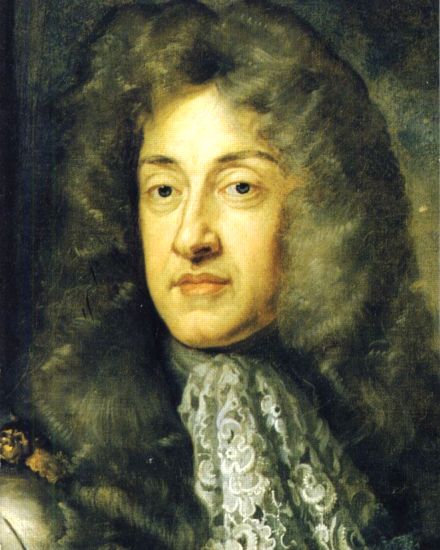
James II of England and VII of Scotland
During the reign of James II of England and VII of Scotland (r. 1633 –1701), James managed to alienate himself from his fellow Englishman through his Roman Catholic, pro-French and absolutist policies. When his wife, Queen Mary, produced a Roman Catholic heir in 1688, it was too much for English Protestants to endure. Hoping to divert a Catholic dynasty, seven English nobleman (known later as the ‘Immortal Seven’) invited James’ eldest Protestant daughter, Mary, to come to Britain and rule. She agreed on the condition that she would rule the country jointly with her Dutch husband, William the Prince of Orange.
William came over with an army prepared to fight for the throne against his father-in-law. However, knowing it would be impossible to win a war without popular support, James II retreated to France. This bloodless revolution, known as ‘the Glorious Revolution,’ established the Hanoverian line of British monarchs – a line preserved through the present House of Windsor.
In order to give legal legitimization to Hanoverian rule, Parliament passed the Bill of Rights in December 1689. This was designed to protect Parliament from arbitrary rule of another Sovereign such as the deposed James II, to ensure the continuation of the Protestant faith, and to preserve common law freedoms.
Princess Sophia of Hanover (1630-1714)
Towards the close of the reign of King William III (r. 1650 –1702), it began to look as if the king would die without a legal heir. Since the Bill of Rights had not specified the line of succession far enough into the future to cover such an eventuality, Parliament began to worry that the deposed James II or his offspring might try to capitalize on the situation and claim the throne. In order to simultaneously solve this problem and fix the line of succession ad infinitum, a law known as the Act of Settlement was introduced. It specified that the heirs to the throne would always be descendants of Princess Sophia of Hanover (1630-1714), who was also appointed heir presumptive by the same Act. Sophia was the granddaughter of James I of England.
The Act of Settlement also specified that the monarch must always be Protestant, and it states that if the monarch is ‘reconciled to the See of Rome’ or ‘marries a Papist’ ‘…in all and every such Case or Cases the People of these Realms shall be and are thereby absolved of their allegiance’.
The Act of Settlement, which was extended to Scotland in 1707, also lays down other rules of constitutional import, including male preference primogeniture. The Act of Settlement came to apply to all of the Commonwealth realms in 1931 through the Statute of Westminster. The Statute of Westminster 1931 actively forbids any alteration to the rules of succession without the agreement of all 16 nations that share the throne. That is why current attempts to ‘modernize’ the laws of succession must first be approved by all 16 legislatures, from the little island of Tuvalu with a population of 11,000 to the United Kingdom. If even one nation disagrees, the proposed changes cannot be enacted. (See Zoe Kirk-Robinson’s article ‘Why Kate’s First-born May Not Be Crowned.’)
So each of the nations in the Commonwealth who share the Queen as monarch (the ‘realms’) must ask themselves whether the Act of Settlement is still relevant in the modern world. Is there any reason to think that this relic from the early 18th century should still be preserved?
As each of the Commonwealth realms considers this question, they must take into account the fact that constitutional experts believe that changing the laws could precipitate a constitutional crisis. As soon as the monarch is allowed to marry a Roman Catholic, the possibility exists that the future heir to the throne could be raised Catholic. Indeed, Roman Catholic common law mandates that if even one of the parents is Catholic, the children must be raised catholic. If that were to happen, then there would either have to be an abdication crisis, or the law would need to be changed to allow Roman Catholics to succeed to the throne, reversing Henry VIII’s historic break with Rome. If the latter course prevailed, then it could lead to the bizarre situation of having a Roman Catholic as the supreme head of the Church of England.
In his 2003 Spectator article ‘The Price of Liberty’, Adrian Hilton presented a strong case for preserving the prohibition on the monarch marrying a Roman Catholic:
Since [Roman Catholic] canon law requires that all children of Roman Catholics be brought up in that faith, such a proposed amendment would eventually create an exclusively Catholic royal dynasty, whose primary allegiance would be to the higher spiritual and temporal authority — the Papacy….
The Papacy is, by its own admission, a political institution, and still claims universal legislative authority or jurisdiction. It would be intolerable to have, as the sovereign of a Protestant and free country, one who owes any allegiance to the head of any other state.…
It is not possible to discuss the removal of the bars on Catholics and the monarchy without at the same time discussing the constitutional position of the Church of England; and therein lies the principal division among Catholics. There are many who regard the establishment of the Church of England as a great advantage for the faith because it perpetuates Christianity as the ‘official’ religion through its presence in Parliament. For those who hold this view, a minor historical relic of anti-Catholic discrimination is a lesser evil to be tolerated than the alternative. For when the protective barrier of Anglican establishment is torn away, Christianity would lose a political voice and Britain its cultural governmental foundation as a Christian nation.
The Act therefore demands that the sovereign must ‘join in communion with the Church of England as by law established’. While earlier monarchs have come from Calvinist and Lutheran traditions and have not been prevented by their own Church discipline from receiving the Eucharist, the position of Rome is quite different. These difficulties do not emanate from the Church of England but from the Roman Catholic Church, which prohibits its adherents from receiving Holy Communion at Anglican services. To forbid an Anglican Eucharist to a Roman Catholic monarch who remains Supreme Governor of the Church of England is not only absurd but plainly regressive.
Further, since Rome does not recognise the Church of England as a Christian Church in the full and proper sense of that term, it does not recognise the Holy Orders of Anglican clergy, which Pope Leo XIII condemned as ‘absolutely null and utterly void’. The present Pope has reiterated this view. A Roman Catholic monarch who followed the teaching of the Mother Church would therefore have to regard the archbishops, bishops and clergy of the Church of England (and, incidentally, of the Church of Scotland) as lay people, lacking the ordained authority to preach and celebrate the sacraments. And further still, a Roman Catholic monarch would be unable to be crowned by the Archbishop of Canterbury. As long as the coronation service involves a priestly anointing, no ‘utterly void’ Anglican could administer it. Presumably a future Roman Catholic monarch would receive the crown from the Pope, and the wheel would have come full circle.”
More recently Telegraph journalist Charles Moore has tried to raise awareness of these and other potential problems. Writing in the Telegraph in December 2011, Moore drew attention to the chain of unintended consequences that could be set in motion by lifting the prohibition on a monarch marrying a Roman Catholic:
Suppose the heir to the throne does marry a Catholic, which, under the new rules, he/she will be permitted to do. Suppose that they have a child. Suppose the child, as the Catholic Church requires, is brought up a Catholic. Under the law, even as reformed, that child cannot become Monarch. “Are you asking me,” the doubting MP might inquire, “to vote for a reform which could precipitate a constitutional-cum-religious crisis?”
If, on the other hand, the law were changed to permit a Catholic to come to the throne, there would be a lot more questions. What would happen to the monarch’s headship of the Church of England? How would he/she be crowned? “Are you proposing, Prime Minister,” the awkward MP could ask, “to disestablish the Church? If so, please lay before us your legislation for doing so.” Untune that string, as Shakespeare famously put it, and hark what discord follows. There may be a way around these problems, but at the least Government should be inviting a rigorous public debate about these implications, instead of conducting the changes in a semi-secret environment
Implications for Hereditary Titles
Halsbury Laws of England
What about Prince Charles’ other concern, regarding hereditary titles? Here again, the Prince has identified a problem that has received almost no attention in the public discourse.
Changing the succession laws for the crown will almost certainly result in gender equality being extended to the inheritance of peerages. Although succession of hereditary peerages forms no part of any proposed change, it would be hard to preserve the older system of inheritance once male primogeniture had been abandoned with respect to the crown. This is especially true given that the heir to the throne succeeds to a number of peerages. If male primogeniture is changed, then will succession in the dukedoms, earldoms and baronetcies attached to the throne devolve to the eldest child, or will there be a two-tier system whereby the titles to which the throne is attached will still devolve to the eldest male?
Hereditary peerages are created by writ, by Act of Parliament, by charter, or by letters patent. The rules governing the order of succession of future heirs are specified in the original grant for the peerage in question. The preferred method by which peerages are created is by letters patent. With few exceptions, the patents transmit titles only to male offspring, a system known as “tail male.” As Halsbury’s Laws of England states:
“Letters patent creating a peerage must specify the patentee, the name of the dignity and its limitation to future heirs of the patentee. The limitation must be one known to the law. The rule in England is a limitation to heirs male of the body with an occasional addition of special remainders to bring in the daughters and their issue, brothers, nephews and collaterals, but ultimately the descent is always fixed in an heir male line.”
This “limitation to heirs male of the body” for the succession of peerages is even stricter than the rules regulating the succession of the crown (which allows a female to inherit when she is without brothers) and can result in peerages becoming extinct. As Regency Researcher Nancy Mayer has explained,
The descent of most hereditary English peerages is determined by the patent by which the peerage was created. Except in very rare cases, the patents say that the peerage should descend to heirs male of the body of the one for whom it was created. That means that ordinarily the peerage becomes extinct if the first earl, for instance, doesn’t have a son. Once in a while patent will let a brother or a nephew inherit if the man does not have a son. When Admiral Lord Nelson died without a son, his patent allowed his brother to inherit. On the other hand, and much more typical, was what happened to Admiral Lord Collingswood’s peerage. It became extinct on his death because he had only daughters.
In the event that a statute were to change the presumption of male descent with respect to the Crown, it would only be a matter of time before the eldest daughter of a peer will challenge original letters patent on the grounds that these too are unfair and out of step with the rules governing the thrown. Such a challenge would be hard to resist once male primogeniture has been abandoned with respect of the monarchy.
There is good reason to be cautious about equal absolute primogeniture with respect to peerages. It is true that under the current system a peerage may become extinct in the absence of male heirs or it may move to another branch of the family. While this may seem undesirable, the alternative is that this inheritance passes out of the family completely. Indeed, if current letters patent were to be altered by law to remove the distinction between the sexes, the title and its associated property could only then be traced in future through a complicated maze of ancestors, one generation passing perhaps through the mother, the next through the father. Without the tribal system and the periodic restructuring of the ancient Hebrew Jubilee laws, it would be difficult to ensure that property remained in the original family if daughters could succeed to a title.
As this suggests, a change in the order of succession does not just affect the Monarchy, but could have ripple effects in every dukedom, earldom, baronetcy in the land. Prince Charles is right to raise the concerns that he has.
Find out how to join Christian Voice and stand up for the King of kings (clicking on the link below does not commit you to join)
Please note that persons wishing to comment on this story must enter a valid email address. Comments from persons leaving fictitious email addresses will be trashed.
Shirley Chaplin, Gary McFarlane and Lillian Ladele lost their employment tribunal hearings in England and argued that their employers’ actions went against articles 9 and 14 of the European Convention on Human Rights, which protected their rights to “freedom of thought, conscience and religion” and prohibited religious discrimination.
Shirley Chaplin was moved to a desk job by Royal Devon and Exeter NHS Trust after they changed the uniform code to a v-neck, exposing the necklace bearing a cross she had been wearing. Chaplin’s employers suggested that her cross on a chain might get caught on somebody. There was no evidence it ever had. At the same time, however, the employers allowed two Muslim doctors to wear a close-fitting hijab.
Gary McFarlane is a Christian counsellor who was sacked from his job with Relate in 2008 because he confided that he would not be comfortable counselling homosexual couples about sexual problems. Even after Relate conceded that they were wrong to sack Mr McFarlane without giving him notice, they still didn‘t give him his job back.
Lilian Ladele was a Christian Registrar for the London Borough of Islington, appointed before the Civil Partnership Act 2004 changed the law. Originally she was allowed to swap shifts with colleagues so she would not have to compromise her convictions. However, in March 2006 two homosexual registrars complained about Ladele’s refusal to perform gay unions. The local authority changed its rules in December 2007 and she was dismissed. Even though she initially won her case against Islington Council in July 2008, the Employment Appeal Tribunal ruled against her later that year.
In all three cases, the European Court Judges held that the UK had not violated the applicants’ rights.
In the fourth case, British Airways was held to have violated the rights of Nadia Eweida under Article 9 when it told her to remove or cover up a necklace with a cross.
Ms Eweida, 60, a Coptic Christian from Twickenham in south-west London, told the BBC she was “jumping with joy” after the ruling, adding that it had “not been an easy ride”.
The four made individual applications to the ECHR after losing separate employment tribunals but their cases were heard together.
David Cameron faced charges of hypocrisy after calling for a Christian ‘fightback’ and then instructing ministers to contest the claims. As a result, the UK argued that the rights of the employees were only protected in private.
The ruling severely limits the extent to which Christians who take their beliefs seriously can hold down jobs in the public sector and is a step back for religious freedom in the United Kingdom.
Elizabeth Oldfield, Director of Christian think-tank Theos, said:
‘One does not have to agree with the beliefs of the applicants to support their cases. It should not be beyond the wit of an employer to work with strongly-held religious commitments, rather than dismiss them. However, what we are increasingly seeing is an unwillingness to accommodate them reasonably.’
Find out how to join Christian Voice and stand up for the King of kings (clicking on the link below does not commit you to join)
Please note that persons wishing to comment on this story must enter a valid email address. Comments from persons leaving fictitious email addresses will be trashed.
Liam Fox MP said the proposed legislation would appease only a ‘a very small, if vocal, minority’ and risked alienating Christians, whom he described as ‘a large stabilising and normally acquiescent section of this country’.
Mr Fox singled out the so-called ‘quadruple lock’ under which the Church of England and the Church in Wales will be specifically prohibited from conducting gay marriages.
The ‘Quadruple Lock’ would:
1 Ensure the legislation states explicitly that no religious organisation, or individual minister, can be compelled to marry same-sex couples or to permit this to happen on their premises;
2 Provide an ‘opt-in’ system for religious organisations who wish to conduct marriages for same-sex couples;
3 Amend the Equality Act 2010 to reflect that no discrimination claims can be brought against religious organisations or individual ministers for refusing to marry a same-sex couple or allowing their premises to be used for this purpose; and
4 Ensure that the legislation will not affect the Canon law of the Churches of England or the Church in Wales who will thereby not be allowed to ‘opt in’ under point 2.
But Mr Fox said: ‘Banning the Church of England from what would be an otherwise legal activity is anomalous and absurd. If the “exemption” is, as stated, because the Church had made clear their objection to same-sex marriage then why not exempt the Catholic church, which has been even clearer in its opposition?
‘The idea of making certain practices illegal for one Christian church, but not others, risks further weakening and splintering Britain’s traditional religion at a time when many Christians feel that they are under threat on a number of secular, political and cultural fronts.’
This legal anomaly, he said, could allow the European court of human rights to ‘drive a coach and horses through the legislation’.
Christian Voice has urged other denominations to press the Government to be included in the ‘Quadruple Lock’, not that we believe it will make any difference to the European Court when it considers the matter, as it undoubtedly will.
In its response to the consultation, the Government said homosexual couples would not need to consummate their ‘marriages’, tacitly acknowledging that they lack the full set of equipment to do so. Nor would a homosexual be able to commit adultery within a ‘gay marriage’, unless it was in the normal way with a person of the opposite sex. No ‘lesser act of sexual gratification’, which covers homosexual practice, can in law amount to adultery.
The Government also propose to amend marriage vows so that homosexual couples are ‘referred to as ‘husband’ and ‘husband’, or ‘wife’ and ‘wife’ for legal purposes.’ Where that leaves ‘butch and femme’ homosexual relationships, where one party adopts a male role and the other a female, has not been addressed.
Find out how to join Christian Voice and stand up for the King of kings (clicking on the link below does not commit you to join)
Please note that persons wishing to comment on this story must enter a valid email address. Comments from persons leaving fictitious email addresses will be trashed.
Plans to introduce same-sex ‘marriage’ will erode civil liberties and invite unprecedented government meddling in public life.
The Coalition for Marriage has warned of the following threats to civil liberty that are likely to arise in the wake of introducing same-sex ‘marriage.’
Teachers in state schools will be forced to endorse the new definition of marriage. Those that refuse could be disciplined or even dismissed. Such action would be legal.
Parents will ultimately have no legal right to withdraw their children from lessons which endorse the new definition of marriage across the curriculum.
NHS/University/Armed forces chaplains could be lawfully fired by their employers if they express, even outside work time, the belief that marriage is between one man and one woman.
Foster carers could be legally rejected by local authorities on the basis that they fail to embrace the new definition of marriage.
Public sector workers could be demoted or dismissed for expressing support for marriage between one man and one woman.
Registrars who have a conscientious objection to the new definition of marriage will be dismissed unless they are prepared to act against their beliefs.
Churches/mosques/synagogues could ultimately be forced to perform same-sex weddings if a Government ban on such weddings in religious premises is overturned by the European courts.
The Church of England may have to disestablish or face the prospect of court action because, as the established church, it must provide a wedding to any person who is legally eligible to get married.
Faith-based charities could be banned from hiring public facilities if they refuse to endorse the new definition of marriage.
Clergy who disagree with same-sex marriage, but who are in a denomination which has no such objection, could be taken to court if the Government allows religious same sex weddings.
WRITE: to your MP and ask for your concerns to be forwarded to the appropriate minister. This is one issue where Government is allowing MPs to have a free vote, so writing to them has the potential to make a huge difference.
David Davies, who represents Monmouth, made his comments over the weekend.
The Christian Voice National Director spoke about the issue on Radio Leeds this morning.
Stephen Green said today: ‘ Most parents want their children to have children themselves. They want to be grandparents. It is how Almighty God has designed us. But that is not all. Parents want the best for their children, and anyone who knows anything about the homosexual life would not wish its depravity and emptiness on anyone.
A Sexual Dead-End
In his book The Sexual Dead-End, Stephen Green quoted a number of homosexuals who spoke about their lives.
A man called “Jeremy” wrote in the Evening Standard Magazine (08/01/88): ‘The gay is more visually aware than a hetero; he’ll see something in a shop that he wants, he’ll see others running around with it and instantly he’ll feel “I must have it!” … We’re talking about an almost psychopathic fashion-consciousness. At the end of the day it’s always a search – and this is what makes it irrational and hard to please – for true love. If I have a lovely home, I’ll impress someone who’ll adore me. If I get a new hairstyle, or a new car, or the cassette recorder, I’ll be loved as well. Much of gay consumerism boils down to a constant search for Mr. Right.’
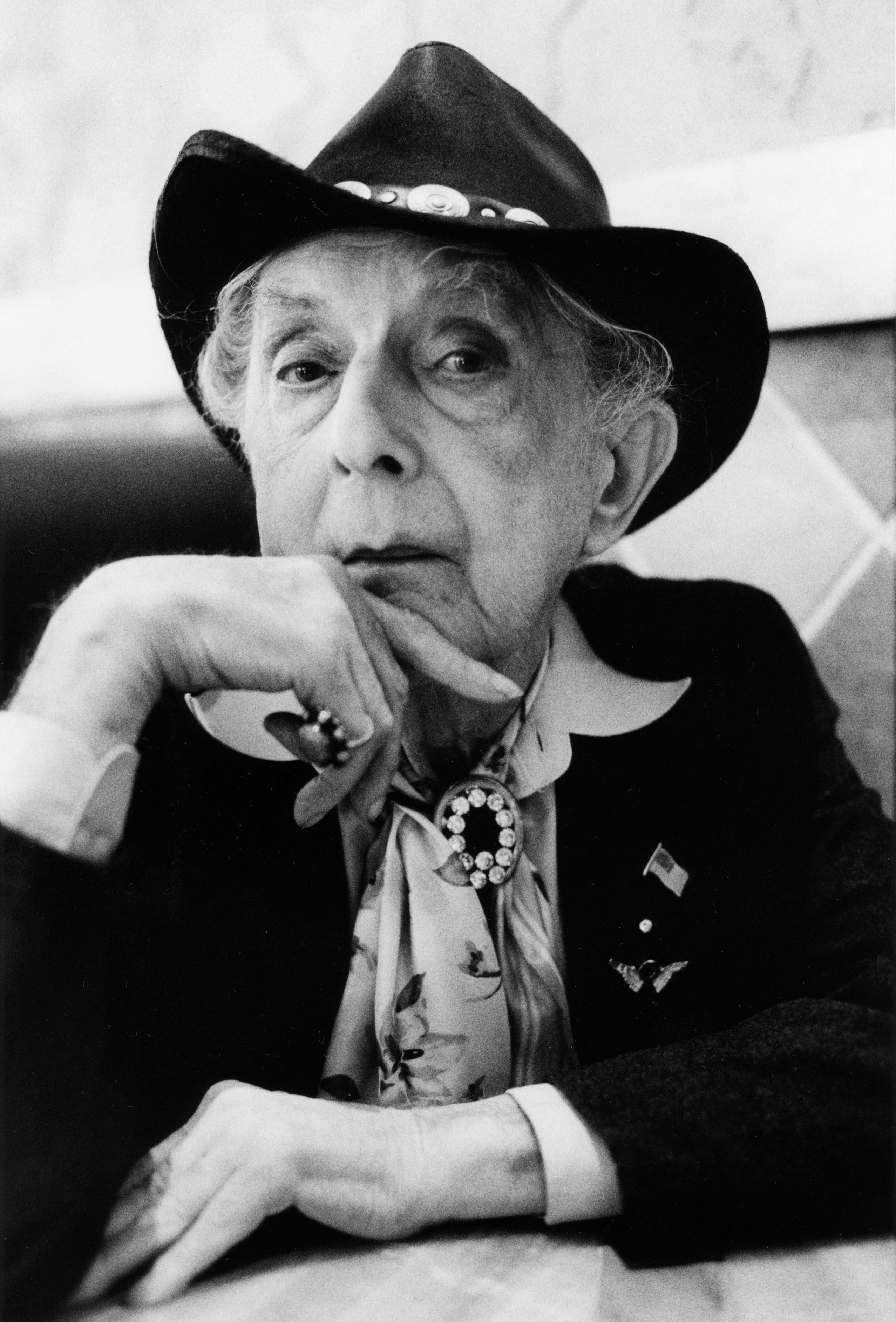
The late Quentin Crisp was a stereotypical queen, and observed that the effeminate homosexual in particular desires nothing more than the love of a real man. Yet a real man will not love a homosexual, ergo the search is unending.
Activist John Shiers, in a sad piece of writing, defended his involvement in what he describes as the “gay world” with poignant honesty: ‘I choose to use commercial gay facilities; I consent to the one-night stands; I also have a fairly satisfying and enjoyable social life quite independent of all this. Yet my choices are not “free”: I have needs which gnaw away under the surface and which gay bars, clubs and sex do provide temporary relief for. But it is temporary; the underlying issues remain and I have no idea how to begin to go about fully understanding them, let alone sorting them out in such a way as to give me a constant feeling of personal integration. (John Shiers in (ed Gay Left) “Homosexuality Power and Politics” Allison & Busby London 1980 p146)
Trying to stay young
When a regular on the homosexual “scene” grows old, there becomes progressively less that “gay consumerism,” or fashion, can do to help him maintain his “sex appeal”:
‘As we grow older we continue to slide up the line between “young” and “old.” A really young faggot usually tries to look and act older because of the drinking and age of consent laws. But most of us try desperately to look younger than we are. As we age, we resort to a whole array of hair pieces, contact lenses, sprays, sun lamps, oils and other artifices to look younger. We run after the latest fashion of the young consumer market hoping to find some magic fountain of youth. …
‘Older gays just aren’t happy with each other’s company generally …. Or if we are willing to share our time and lives with older homosexuals, we often draw a strict line between sex and company, preferring sex with young strangers (often anonymous) and camaraderie with others our own age. Couples over thirty are an exception, and they have usually met before one or both became thirty.’ (Charley Shively in “Pink Triangles” edited Pam Mitchell, Alyson Publications Boston 1980 p77)
‘It was a sordid life. As you get older, anything good about homosexuality passes away and you are left with all of the bad things. You no longer are attractive and you cannot make contact. You have to pay for any sex you get. And then there is no involvement, there is no love. No friendship is involved; just a business transaction.’ ((Interview in Philpot “The Gay Theology” Logos 1977 p17)
Nobody loves a fairy when she’s forty
Arthur Le Clerq was responsible for writing many of George Formby’s songs, often with double-entendre. But there was scarcely any hiding the meaning of his 1934 offering, which had the following chorus:
‘Nobody loves a fairy when she’s forty,
‘Nobody loves a fairy when she’s old,
‘She may still have a magic power but that is not enough,
‘They like their bit of magic from a younger bit of stuff.
‘When once your silver star has lost its glitter,
‘And your tinsel looks like rust instead of gold,
‘Fairy days are ending when your wand has started bending,
‘No-one loves a fairy when she’s old.’
That is the stark reality of the homosexual life, and no parent would want a child anywhere near it. We should pray that parents will be alert to attempts through school sex-education to groom their children for homosexuality.
We should also pray that more churches would be moved to minister the healing power of the Lord Jesus to those struggling with same-sex attraction. No-one has to ‘stay gay’.
Find out how to join Christian Voice and stand up for the King of kings (clicking on the link below does not commit you to join)
Please note that persons wishing to comment on this story must enter a valid email address. Comments from persons leaving fictitious email addresses will be trashed.
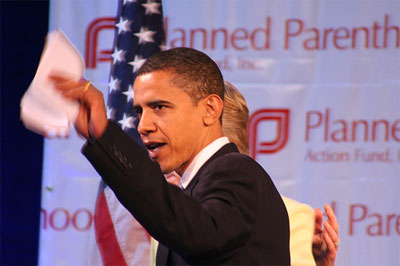
What Obama’s Re-Election Tells us About America (Part 4)
Obama’s re-election has huge symbolic value, since he epitomizes changing attitudes towards liberty in America. He represents a growing constituency which believes that maximization of liberty means removing all barriers to sexual license.
It is common knowledge that no president has been as virulently pro-abortion and pro-homosexual as Obama. But the real significance of this is that as Obama attempts to overturn centuries of Christian morality, he does so in the name of liberty.
In the case of Obama’s support of abortion, the policies he embraces actually remove liberty from the weakest and most vulnerable members of society. Similarly, his recent support of same-sex ‘marriage’ could see unprecedented restrictions on freedom of speech and even thought. However, Obama pursues these policies in the name of greater freedom for the American people. This is significant since it shows that America is involved in a sea-change shift of what liberty actually means.
In the older tradition, the government’s role in preserving liberty was primarily negative, with the state acting as a hedge against outside threats to life, property and the pursuit of happiness. In this framework, liberty was as much a restriction of the state as it was anything else. Put another way, liberty was essentially negative.
Since roughly the time of Franklin Roosevelt, however, rights and liberties have increasingly come to be seen as something the state has a responsibility to proactively create. In his 1944 State of the Union Address, Franklin Roosevelt created the template for a new way of thinking about liberty when he called a “second Bill of Rights” on the grounds that “Necessitous men are not free men”. If a man is necessitous—that is, if there are things he needs but doesn’t have—then he is lacking true liberty. Of course, if this be granted, then the only way for the state to preserve liberty is to satisfy people’s needs. Roosevelt thus went on to suggest that the state should provide a “new basis of security and prosperity” which included “The right to adequate medical care and the opportunity to achieve and enjoy good health.”
Now there is nothing wrong in principle with the state providing medical care to its citizens, provided it can afford to do so. The problem is when we assert that anything less represents a deficit of liberty, and that I can only be truly free in a society where government meets my needs. To confuse freedom with provision in this way is to imply that for most of the United States’ history the citizens have never been truly free and that the ideals of liberty can only be realized under modern activist government.
This new concept of liberty is analogous to evolving notions of human rights. No longer are rights God-given conditions that the state simply protects; rather, rights become benefits that government is responsible to actually create.
It’s interesting to see how this played out in two of the most contentious issues during the election: contraception and Obamacare. Significantly, Obama has not simply argued that the state should provide free contraception and healthcare to all its citizens. On the contrary, again and again he has suggested that government must do this because Americans have a right to it. By converting a growing amount of needs and desires into inalienable rights, Obama has given the American government a burden it cannot afford (literally) to bare.
The shift in the concept of liberty and rights arises from confusion over where our rights actually originate. Do our most basic inalienable rights and liberties come from God, who then ordains the state to protect those rights and liberties? Or are our most basic inalienable rights the creation of the State?
According to America’s Declaration of Independence, our inalienable rights come from God. It reads, “We hold these truths to be self-evident, that all men are created equal, that they are endowed by their Creator with certain unalienable rights, that among these are life, liberty and the pursuit of happiness.” Because our most basic rights come from God, the role of the state in preserving liberty is primarily negative, acting as a hedge against people and forces who would take away those rights.
Obama has made it clear that he disputes the notion of negative liberties. In a 2001 interview on Chicago’s public radio station WBEZ FM, he referred to needing to “break free from the essential constraints that were placed by the Founding Fathers in the Constitution” and he criticized those who believed ” the Constitution is a charter of negative liberties.” Bruce Walker had this to say about the utter absurdity of these new “positive liberties” that Obama hoped to introduce:
The 2001 audio tape of Barack Obama describing the Constitution as a document of “negative liberties” reveals an utterly Orwellian Obama. How can liberty be anything other than negative? Liberty is the absence of external control. Only in our age of collective thinking and untidy language could such a thing as “positive liberty” be conceived. The state power to coerce is not liberty.
Notions like “positive liberty” are part of the web of thought control by language manipulation which Orwell described in 1984. If Obama cannot think of “positive liberty” as a contradiction in terms, then he simply cannot think. The conscious surrender of language to the needs of the party creates a self-made prison from which escape is, quite literally, inconceivable. These unguarded remarks by Obama display a mind trapped in a reality in which words are phantoms.
Obama could have spoken about the limited value of liberty. Government does some things which reduce our private rights and yet which increase the common good. Politics is all about where the boundary between broad notions of promoting the general welfare by state coercion and preserving liberty should be. Politicians on the Left have often argued that liberty should be reined in more tightly so that “the people” can live better. But implying that more state power somehow increases liberty is beyond mere Leftism. It is entry into that dead realm of Newspeak in which language is pureed into nonsense, and then nonsense is presented as argument.
Behind Obama’s Newspeak is a certain worldview that we must be attentive to. In Obama’s world, because liberties and rights do not have any objective a priori grounding, it is totally consistent to turn them into the plaything of an all-powerful state. Since rights and liberties do not come from God but from the state, government has the responsibility to invent and then dispense these positive liberties to the populace (and indeed, to the world).
But how do we know that Obama does not believe that rights and liberties originate with God? Listen to Obama when he tries to quote this passage (taken from a speech made at a fundraiser for the Democratic Senatorial Campaign Committee in Rockville, Md:
As wonderful as the land is here in the United States, as much as we have been blessed by the bounty of this magnificent continent that stretches from the Atlantic to the Pacific, what makes this place special is not something physical. It has to do with this idea that was started by 13 colonies that decided to throw off the yoke of an empire, and said, “We hold these truths to be self-evident, that all men are created equal, that each of us are endowed with certain inalienable rights, that among these are life, liberty and the pursuit of happiness.”
Do you notice something missing when Obama quotes the Declaration? He leaves out part which says that our certain inalienable rights are endowed to mankind “by their Creator.” Could this be a simple oversight on Obama’s part? Perhaps, if it was only this one speech. But in fact, Obama has misquoted the Declaration on at least two different occasions, making it difficult to dismiss as a simple mistake. This apparently deliberate omission is a powerful statement about Obama’s worldview, in which it is not God who gives us our most basic rights and liberties, but the State.
Ken Myers put his finger on the pulse of this attitude in his Mars Hill Audio Journal, when he commented that “Modern liberal societies are structured around the assumption that since there is no one definition of happiness that everyone can agree on, the state and state-approved social institutions will promote freedom and equality so that everyone will be able to pursue happiness on their own terms. However, in the absence of any substantive understanding of happiness—of the ends of human life—freedom and equality become variable, plastic, elusive terms, defined relative to the cultural status quo and not objectively.”
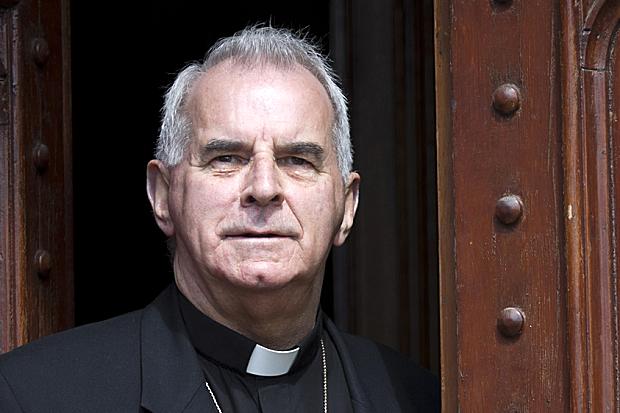
A Roman Catholic cardinal has been named ‘Bigot of the Year’ by the publicly-funded Stonewall pro-sodomy lobby group.
Cardinal Keith O’Brien is the leader of the Roman Catholic Church in Scotland, and is said to have stated that same-sex relationships are “harmful to the physical, mental and spiritual well-being” and compared equal marriage to slavery and child abuse.
In a newspaper article earlier this year, the cardinal wrote that the proposal for same-sex marriage represented a “grotesque subversion of a universally accepted human right”.
Under his leadership the Catholic Church in Scotland has pledged to “declare war” on marriage equality and committed an additional £100,000 for the fight.
Other nominees included Christian politician Alan Craig, who complained of the ‘Gaystapo’ and Simon Lokodohe, the Ugandan ethics and integrity minister, who ordered the disbanding of meetings of gay equality groups, the arrest of pro-sodomy activists, insisting that they ‘recruit children’ into homosexuality and supported David Bahati’s proposal of the death penalty for those convicted of sodomy.
‘By giving the award to Cardinal Keith O’Brien, Stonewall deem the free expression of religious conviction and Christian theological tradition to be more ‘bigoted’ than active persecution … Is any more evidence needed of Stonewall’s blind hypocrisy, perverse immorality and vicious bigotry? They don’t even permit the nominees of this award to attend the ceremony and make an acceptance speech in their own defence.’
Scottish Conservative leader Ruth Davidson picked up ‘politician of the year’ at the £180-a-head bash last night in recognition of her being a lesbian. But she used her acceptance speech to criticise the bigot of the year category, saying it was “simply wrong” to use such terminology.
Ms Davidson, who attended the ceremony presented by broadcaster Gok Wan, said: “There are many voices in this debate and just as I respectfully express my sincerely held belief that we should extend marriage to same-sex couples, I will also respect those who hold a different view.”
She said: “But where I disagree with Stonewall in these awards is the need to call people names like ‘bigot’. It is simply wrong.
“The case for equality is far better made by demonstrating the sort of generosity, tolerance and love we would wish to see more of in this world.”
Christian Concern’s Andrea Minichiello Williams said she regarded Cardinal Keith O’Brien as “a courageous Christian leader who has stood for the truth”.
Coutts and Barclays, who were sponsoring categories at the awards dinner, have also strongly criticised the ‘Bigot of the Year’ award and will not longer fund the event if it contains the insulting nomination. The Coutts decision came just one working day after a Christian Voice witness outside their London HQ. (see our 31st October story below)
Their decision follows that of the Nationwide Building Society to drop their £65,000 sponsorship of the event after Christian Voice members prayed and wrote to them last year. (See our 21st July story below)
The London Borough of Newham is inviting objections to a planning application for a project dubbed the West Ham ‘megamosque’.
An Islamic separatist group, Tablighi Jamaat, have submitted the application for outline planning permission for a project that would have a capacity of 9,350, including 1,830 segregated places for women, with an additional dining hall for 2,000.
Tablighi Jamaat’s followers have been linked to a number of planned and actual terrorist atrocities. They are said to operate as a charity in England and Wales under the name Anjuman-E-Islahul-Muslimeed of London (UK), in whose name the application has been made.
Christian Voice members have been meeting for prayer on the Greenway overlooking the site on the first Saturday morning of every month without fail since January 2007, in response to Tablighi Jamaat’s boast that they would have their mega-mosque up and operating in time for the London Olympics. They failed to do that. In the time we have been praying we have seen two sets of architects and one bunch of public relations people sacked and general confusion has reigned, all in answer to our prayer.
Battersea Power Station
According to the group’s latest architect, Richard Owers of NRAP in Cambridge, the project will be the size of Battersea Power Station, with almost 50′ (15m) minarets which will dwarf even the local landmark of Channel Sea House.
In May 2011, Tablighi Jamaat won the right to stay on site with temporary planning permission for a further two years during which time they are required to put in a planning application setting out their plans in full.
The Planning Application is HERE on Newham’s Planning Portal. Over six hundred comments have been left, the majority of which are supportive, because emails and texts from Tablighi Jamaat went around the world urging the ummah, the Muslim faithful, to support the application. However, we understand that comments will be given more weight the nearer the respondent lives to the site itself.
PRAY for wisdom for all those opposing the application of Tablighi Jamaat. Pray that the project’s opponents will enjoy favour with Newham Council Planning Officials so that they will reject this application. Pray the Council will follow all proper procedures so that there are no loopholes which may be exploited at the appeal stage. Pray for Alan Craig and the Megamosque No Thanks team as they raise local awareness. Pray for confusion amongst the enemies of the sovereign incarnate Son of God, the Lord Jesus Christ, King of kings and Lord of lords. Pray also for those taking the Gospel to Muslims in the UK and around the world. May they see a mighty move of the Holy Spirit and the lost turing from their dead prophet to the living Saviour .
RESPOND to the application in any one of three ways:
1 In writing to:
Mr Sunil Sahadevan,
Planning and Building Control,
London Borough of Newham,
1st Floor, West Wing,
1000 Dockside Road
LONDON
E16 2QU
Gigi Chao Sze-tsung (right) and her civil partner Sean Eav (left) – we honestly thought at first that the one on the left was her father!
One of Hong Kong’s richest men has offered a reward of nearly £40 million to the man who can woo his lesbian daughter, reports the Daily Telegraph.
Cecil Chao Sze-tsung, a property magnate, announced the HK$500 million bounty this week after reports that his daughter Gigi Chao, 33, a University of Manchester graduate, entered a civil partnership in France with Sean Yeung, her girlfriend of seven years, who also uses the name Sean Eav, on April 4.
The Facebook profile of Miss Chao, an architecture graduate, reads: “Helicopter pilot. Social entrepreneur. Creator of expressions in colour and emotion.” It also describes her as an executive director at her father’s Hong Kong-based property firm, Cheuk Nang.
Miss Chao has yet to comment on her father’s offer but her Facebook and Twitter accounts have been bombarded by people keen to become her friend. “No longer accepting Facebook friend requests … sorry,” she wrote.
“My father took a hands-off approach in parenting,” Miss Chao said of her father in a 2007 interview for HK Magazine. “I see him as a friend more than a father. My parents never pressure me with high expectations.”
Mr Chao made headlines in 2003 when his Rolls-Royce caught fire while he and his girlfriend were inside. The tycoon has never married and once claimed to have had “intimate relations” with about 10,000 women.
Miss Chao is one of three daughters born to Mr Chao by three different women.
“I don’t mind whether he is rich or poor. The important thing is that he is generous and kind-hearted,” Mr Chao told the South China Morning Post, describing reports about his daughter’s civil partnership as “false”.
Stephen Green, National Director of Christian Voice said today:
“An emotionally distant father, having loose relationships with women other than his daughter’s mother, is a classic theme in lesbian lifestories. According to reports, Miss Chao’s father has sadly not been the sort of fatherly male role model who would inspire his daughter’s emotional confidence in men as a group.
“There are many testimonies of people who have walked away from the homosexual lifestyle and been released from same-sex attraction through the power of Jesus Christ. As the Bible says: ‘Delight thyself also in the LORD; and he shall give thee the desires of thine heart.’ (Psalm 37:4) But that person has to want to change, or if you prefer, the Lord has to place that desire on their heart, and they must fix their hopes in the Saviour of mankind.
“So there is no question that it is do-able, but it is something that even £40,000,000 cannot buy.”
PRAY: For Gigi Chao, and for her father. May he turn from his philandering and she turn from her lesbianism by the grace of God and through the saving, healing power of the Lord Jesus Christ.
Find out how to join Christian Voice and stand up for the King of kings (clicking on the link below does not commit you to join)
As the U.N. General Assembly continues its 67th session, two things have become clear about the Middle East: (1) it’s a mess; (2) the West cannot fix the endemic problems.
These two things were clear from day one of the General Assembly. Of course, the fact that the West cannot fix the problems in the Middle East does not mean that America will cease to try. All indications suggest that America’s involvement in the Middle East will only increase in the days ahead, even if it ends up plunging the nation (and, by extension, all the nations who depend on the dollar as a reserve currency) into economic Armageddon.
Is there a solution? Gary Johnson believes there is. Johnson is the former Governor of New Mexico and the Libertarian Party nominee for the 2012 Presidential Election. Writing in the Huffington Post earlier this month, he made a statement that at one time might have seemed axiomatic: “Foreign policy is supposed to make us safer, not get Americans killed and bankrupt us.”
Stop trying to manipulate and manage history on the other side of the globe and then being shocked when things don’t turn out the way we wanted. As far as what we do right now in response to the tragic events of this week, it’s actually pretty simple. Get our folks out of places they don’t need to be — and out of harm’s way — and cut off every dime of U.S. tax dollars we are sending to clearly ungrateful regimes.
Johnson went on to point out the irony that America’s ‘War on Terror’ is actually self-defeating, since it has been systematically empowering the most dangerous terrorist regimes:
Let’s review American foreign policy during the Bush-Obama years. Just imagine for a minute that, in 2002, President Bush granted Iran’s Ayatollah one wish above all others. It is not unreasonable to assume that the Supreme Leader would have said, “Can you please kill Saddam Hussein and make sure our mortal enemy Iraq can no longer threaten us. Then, we can get about our goals of destroying Israel, building a nuke and becoming a legitimate thorn in the side of the Western infidels.”
Well…
And then there are Afghanistan and Pakistan. After 9/11, going after Bin Laden and al Qaeda was exactly the right thing to do. We were attacked and we attacked back. We must defend ourselves, and we absolutely must have a strong defense. But within a few months, our troops had scattered al Qaeda like ants from a kicked anthill, and Bin Laden had set up housekeeping in Pakistan. Al Qaeda left, but we stayed — and kept fighting a war that was, in terms of our immediate interests, over. And we’re still fighting it today, ignoring the lessons learned at great cost by the Soviet Union and the British Empire.
While we’re fighting a war we don’t need to fight in Afghanistan, we’re pumping billions of dollars into the coffers of our new best friend Pakistan — making them the second largest recipient of our borrowed and printed dollars on the globe. When we finally found and killed Bin Laden, was anyone surprised that we found him — you got it — in Pakistan? And our new best U.S.-financed friends are treating the good Pakistanis who helped us find him like criminals.
Fast forward to Libya. Make no mistake, Muammar Gaddafi was a despicable human being and no reasonable person mourns his demise. But toppling dictators we don’t like has not worked out very well for us. We launched hundreds of millions of dollars’ worth of missiles to kill the guy, and what do we get? A Libya that cannot even keep its benefactors safe — and may not even be trying very hard. Somebody needs to ask, and I will be that somebody: As despicable as he was, would our ambassador and three other dedicated public servants have been killed in a Gaddafi-controlled Libya? Are we safer today after launching all those missiles and killing Gaddafi? Clearly not.
So much for Iraq, Afghanistan, Libya and Pakistan. But what about last year when America supported protests in Egypt to topple President Mubarak? At the time many Christians saw this as a good thing, and yet in all the excitement about democracy coming to Egypt, we felt compelled to offer some warnings. In our newsletter we wrote that,
Despite the criticisms that can be made against him, President Mubarack has provided a stabilizing influence in the region, helping Israel secure its borders and keeping radical Islam in check…. What Obama’s approach overlooks is that the “free elections” in Middle Eastern countries can often be a summons for the advancement of Islamic radicalism and fundamentalist groups like the Muslim Brotherhood.
We then went on to point out that American interference in Middle Eastern politics has normally backfired, and we predicted that President Obama’s support of the Arab Spring in Egypt could prove to be an uncanny repeat of what happened in Iran during the Middle of the last century.
In an attempt for the West to regain control of Iran’s oil, Britain had urged the United States to intervene in Iranian politics during the Truman’s administration. Truman’s Secretary of State, Dean Acheson, refused, urging that the British were “destructive and determined on a rule or ruin policy in Iran.” It was not until General Dwight Eisenhower was elected President in 1953 that Britain had another chance to regain control of Iran’s petroleum reserves. Churchill put an embargo on Iran’s oil industry while the CIA began spreading anti-Mossadegh propaganda, hoping to convince the Shah to dismiss Mossadegh from the post of prime minister. At first the Shah refused to go along with the American plan to overthrow his democratically elected government (a plan known to the CIA as ‘Operation Ajax’). However, after continued pressure from America the Shah relented. The prime minister was then arrested and kept under house arrest until his death in 1967.
With Iran’s democratic government out of the way, the Shah’s rule became increasingly autocratic. While he made friends of America (granting US companies the majority of the country’s oil contracts, which had been the intended outcome of Operation Ajax), he steadily alienated his own people by crushing all political dissent. This set the stage for Iran’s Revolution in 1978 when the religious leader, Ayatollah Ruhollah Khomeini helped to mobilize opposition to the Shah and his pro-American policies. The following year 98% of the country voted to replace the monarchy with an Islamic Republic, unaware that Khomeini was planning to use the new government as a front to rule as a dictator. Since then Iran has suffered under a theocratic Shiite government and remains a focal point for militant Islam and is one of the worst countries for the persecution of Christians. How much better it would have been had America never got involved in undermining Iran’s government.
We haven’t had to wait that long before being able to say, of Egypt, “How much better if America had never got involved.” (And yes, America did act behind the scenes to topple President Mubarack.) Since President Mubarack was forced to step down, the one thing that has stepped-up is the killing of Christians. Compass Direct News has been regularly reporting on the violence against Egypt’s Christian population, which has escalated relentlessly since President Mubarack was forced from power.
…it would require “an all-out effort” involving squadrons of bombers and fighter jets, interceptor missiles, drones, Navy carrier strike groups—in other words, a war. …the mission would begin with at least 90 fighter jets launching simultaneous attacks on the country’s extensive air-defence network and numerous missile sites. B-2 stealth bombers would then drop 30,000-pound bunker-busting bombs on Iran’s nuclear sites, some of which are buried beneath mountains. After that first strike, U.S. warships and minesweepers would fight for months to stop Iran from blocking the Straight of Hormuz and cutting off 20 percent of the world’s oil supply. Despite our best efforts, Cordesman warns, Iran’s retaliation against Israel and U.S. allies in the Gulf would be fierce, with “devastating regional consequences.”
Is there a solution to this mess? Probably not, as long as Islam reigns supreme in the Middle East. Behind the Middle East’s increasing political problems is a spiritual problem, and the only way for that to be adequately addressed is through the power of the gospel.
PRAY: Sometimes human problems are so complex that only God can solve them. Pray that He would turn around the mess in the Middle East and bring glory to His name as a result. Also pray for the struggling Christian population throughout the Middle East and for the safety of Israel as her enemies are growing in both strength and number.
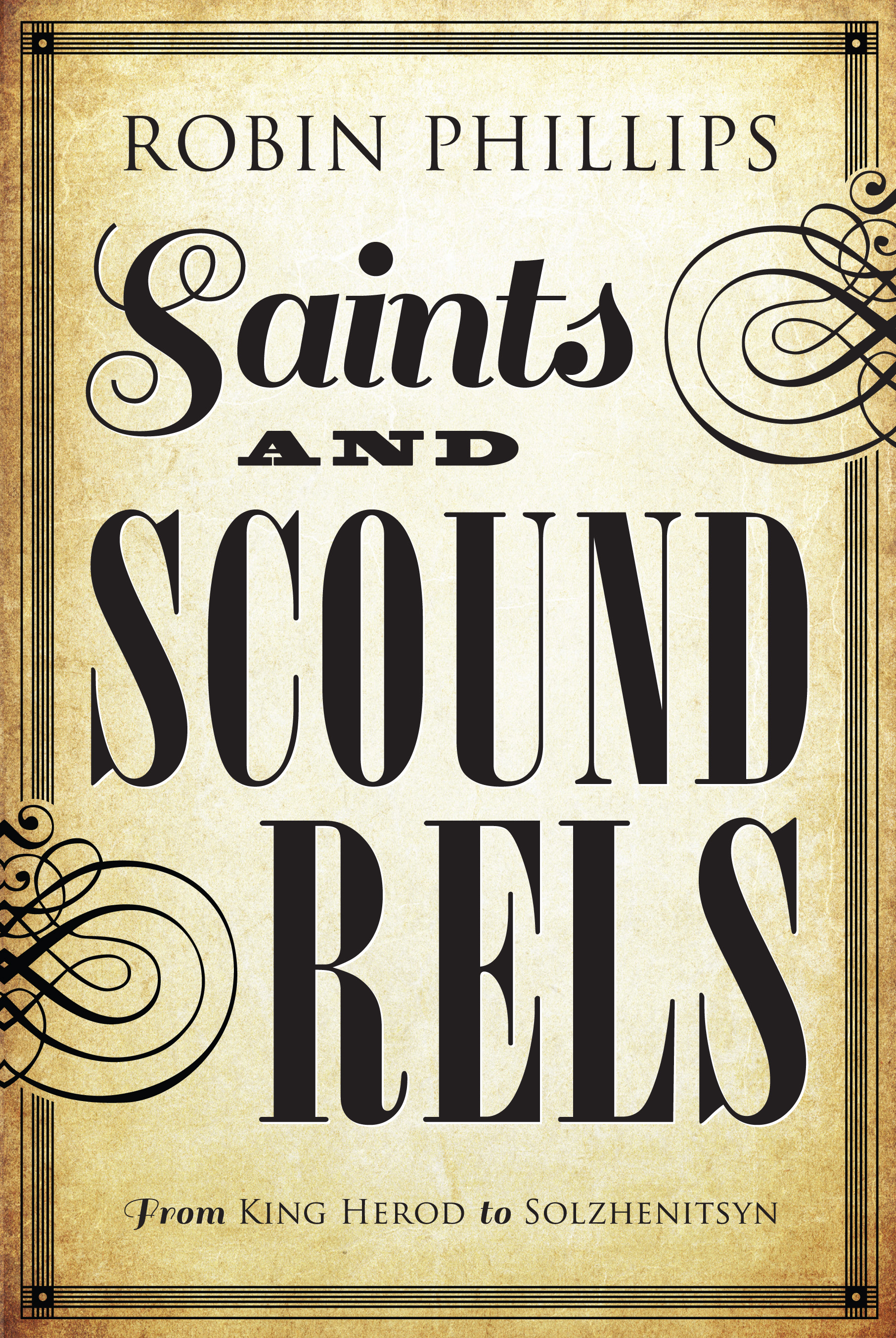
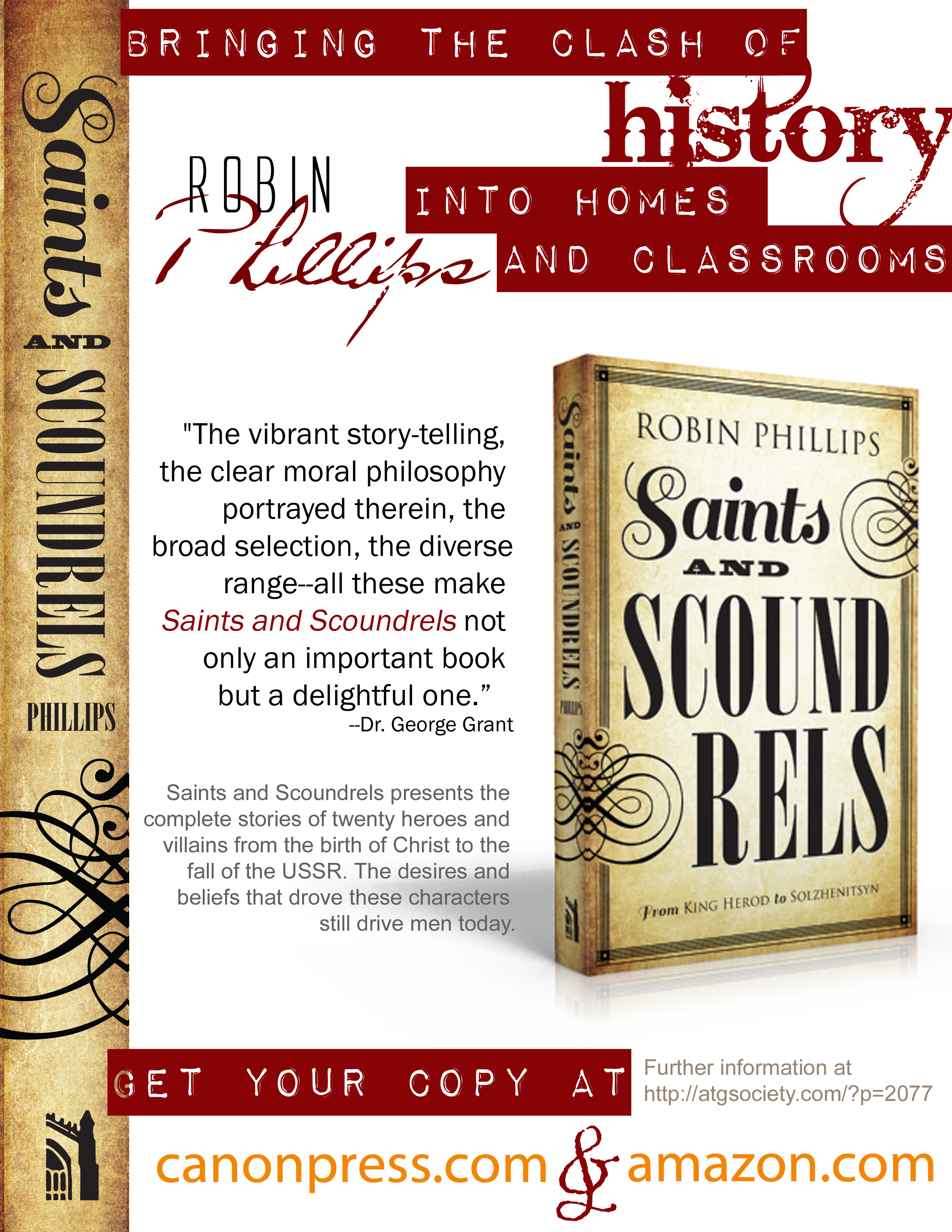
Christian Voice journalist, Robin Phillips, has released a book about some of the good guys and bad guys of history.
Titled Saints and Scoundrels and available through Amazon,co.uk, the book promises to be rewarding to Christian Voice members who enjoy reading Robin’s column on Christian reformers in the monthly newsletter, or have been inspired by the Heroes of the Faith section of this website.
The book presents complete stories of twenty heroes and villains from the birth of Christ to the fall of the USSR. At the end of each chapter are discussion questions relating the chapter’s themes to larger issues and a personal challenge applying the lessons from these lives to the reader and current society.
What Others Are Saying
Author and public speaker Dr. George Granthas called Saints and Scoundrels, “not only an important book but a delightful one.”
Reviewer Matthew Simshas commented, “His writing was approachable for the average reader and engaging …Everything is covered from a Christian world-view and will help nurture discernment in the young and up-and-coming reader in your family.”
In an interview with Robin Phillips for the program Trinity Talk, Pastor Uri Brito commented, “The book is not just biographical you actually deal with the implication of their lives and how their lives testify to a particular worldview whether good or bad.”
The Good and the Bad
Mr Phillips covers the following men and women in the book:
Herod the Great (bad guy)
Saint Perpetua (good woman)
Saint Irenaeus (good guy)
Saint Columbanus (good guy)
Alfred the Great (good guy)
King John (bad guy)
William the Silent (good guy)
Richard Baxter (good guy)
J. S. Bach (good guy)
Jean-Jacques Rousseau (bad guy)
Edmund Burke (good guy)
William Wilberforce (good guy)
Thomas Chalmers (good guy)
Joseph Smith (bad guy)
George MacDonald (good guy)
Dietrich Bonhoeffer (good guy)
Dorothy Sayers (good guy)
Jim Elliot (good guy)
Aleksandr Solzhenitsyn (good guy)
In discussing each of these good guys and bad guys, Phillips draws lessons that can be applied not only to our personal lives, but which also offer a vision for a godly society.
What is just as important as defeating or converting God’s enemies is the positive work of building up the culture of Christendom. For every Berlin wall that crashes to the ground, there are dozens of churches to be raised up, schools to be created, homes to be established. For each Roman coliseum that decays into ruins, there remain hundreds of libraries to be built, hymns to be composed, families to be nurtured in the faith. Here again, God does not work ex nihilo but calls men and women to be agents in His kingdom-building work.” Saints and Scoundrels, pages 13-14
On Goodness, Truth and Beauty
“…the greatest defense against evil is to enjoy the good…the strongest bulwark against unbelief is our capacity to love what is beautiful…the surest support against the lies of the devil is to be attracted to what is true.” Saints and Scoundrels, page 14
On the Messiah’s Kingdom
“…throughout the Old Testament, first-century Jews looked forward to a climactic event that would establish the God of Israel as the sovereign God of the entire world. While many have supposed Christ’s coming to be something which changes people’s hearts but makes no difference to the public order, this was not the hope of the Jews. Had they expected that kind of a kingdom, Herod may not have lifted an eyebrow when the news reached him that the Messiah had been born in Bethlehem. As it was, however, Herod knew what Zacharias knew and had prayed about— that when the Messiah came, the game would be up for tyrants like himself, and a new order of justice and peace would be introduced. (Lk. 1:67–79).” Saints and Scoundrels, page 35
On Christ’s Kingdom being for this World
“Jesus never said that His kingdom is not of this world, despite wrong translations of John 18:36. The Revised Standard Version translates John 18:36 closest to the original Greek: “My kingdom is not from this world.” Christ’s kingdom is certainly of and for this world, but it does not arise from the authority of worldly powers in the way that Herod’s kingdom did. Rather, it descends from heaven to earth, like Jesus. Thus, Christ taught us to pray, “Thy kingdom come on earth . . . as it is in heaven” (Mt. 6:10). As used in the gospels, the expression “kingdom of heaven” refers to God’s lordship being brought to bear in the present reality. This draws on the theology of passages like Daniel 7: 26–27 and is the same crowning vision we find in Revelation 11:15: “The kingdoms of this world are become the kingdoms of our Lord, and of his Christ.” Saints and Scoundrels, page 36
On Jesus vs. Caesar
The Christians, like the Caesars, applied the language of euangelion (“gospel” or “glad tidings”) to their movement. The Christians, like Rome, taught that they held the answer for bringing justice, order ,and peace to the world (Lk. 2:13–14; Jn. 14:27). The Christians, like the Romans, claimed that a single man had rightful dominion over the whole earth (Mt. 28:18). The Christians, like the imperial religion, offered a sense of community to previously warring pluralities (Gal. 3:28). The Christians, like the religion of Rome, were intent on evangelizing the world (Mt. 28:19). But whereas the Caesars sought to Romanize the world through brutality, force, and bloodshed, the Christians sought to evangelize the world through love, self-giving, and sacrifice. The glad tidings of Jesus was therefore bad news for Caesar, since it proclaimed there was another way to transform the world that was superior to Caesar’s way. It announced that God had called out a people whose vocation was to work for peace and justice on Jesus’ terms, not Caesar’s.
Even when the early Christians submitted to the ruling authorities, there was an implicit challenge. In writing to the Romans, Paul made clear that the reason Christians were to submit to the civil magistrates is because the rulers have been placed there by the higher authority of God (Rom. 13:1). Though the Caesars liked to think of themselves as subject to no one, Christians proclaimed that earthly rulers are God’s ministers, responsible for carrying out His business here on earth (Rom. 13:2–7). The idea that Caesar’s authority was derivative rather than ultimate was nothing less than fighting talk in the politically tumultuous days of the first and second centuries.” Saints and Scoundrels page 43-44
On Growing in Wisdom
“The Christian life is both practical and intellectual, and that we separate these two facets at our peril. The Christian life should be practical, since the effectiveness of our witness for Christ depends on the gospel flowing out of our fingertips, being constantly applied to the material of our daily lives. But in order for a Christian to serve Jesus in practical ways, he must also grow in wisdom and understanding.” Saints and Scoundrels, page 85
On Christendom
The life of the nation, no less than the life of the individual, needs to be regulated by Christ’s lordship. The Bible is not simply a devotional manual for our private lives, but a template for bringing all of culture into subjection to Christ… “Christendom” is not simply a collection of Christians living together in society, but it comprises the institutions, literature, manners, works of arts, educational values—in short, the entire fabric of culture—which emanate from Christian civilization. A moment of time is all it takes for a person to turn from unbelief to faith in Christ, but it takes hundreds of years to build Christendom out of a previously pagan society.” Saints and Scoundrels, page 87-88
On Culture
Geniuses do not arise out of a vacuum. They are the product of years—often centuries—of collective input from dozens of individuals. Most of these individuals will probably be unaware of the heritage they are contributing to, yet their collective efforts help to foster and sustain a culture in which greatness can thrive.” Saints and Scoundrels, page 142
On Self-Regulation
Those who have never learned to be responsible and self-regulating have difficulty conceiving solutions to life’s problems apart from the extremes of complete antinomianism, on the one hand, or complete totalitarianism on the other.”Saints and Scoundrels, page 169
On the Weapons of our Warfare
We remember Wilberforce for what he achieved. Yet the most valuable lesson from his life comes not from what he accomplished, but how he accomplished it. Unlike in America, where abolitionists were willing to use violent force to achieve their ends, in England abolition remained a peaceful movement. This was no accident, for Wilberforce steadfastly refused to pursue revolutionary means for achieving his goals. This is because he recognized that the slave trade was not itself the root problem but merely a symptom of a society that had rejected God’s laws. It followed, he believed, that spiritual rather than revolutionary means were necessary in the fight for justice.” Saints and Scoundrels, page 193
On Faithfulness
God calls us to be faithful in the jobs He has given us, but He does not guarantee the consequences of doing right. Faithfulness, not success, is what truly matters in the Lord’s economy.” Saints and Scoundrels page 194
On Changing the World
Thomas Chalmers teaches us the importance of having bold and outrageous vision. He once remarked, “Regardless of how large, your vision is too small.” Chalmers lived by these words, always seeking ways to expand his vision. His vision was so large that it went beyond the confines of his own country and was international in its scope. He was concerned, not just with Scotland, but with Christendom. But although Chalmers’ vision for God’s kingdom was a vision for the whole world, it always started with the needs that lay closest to home. Unlike Rousseau, who neglected the needs of those closest to him in order to save the world, Chalmers’ love for mankind always manifested itself in his love for the person next door. The key to changing the world was to change the neighborhood.” Saints and Scoundrels, page 206
On Liberty
Liberty is not a natural right of man (as Rousseau had claimed), but the product of tradition, family, and faith. It is passed on in much the same way as property is transmitted, from one generation to another, namely, through inheritance. To support this notion of liberty as an inheritance, Burke pointed to the great freedoms of the British tradition, showing that they had accumulated over a period stretching back to the Magna Carta, the Declaration of Rights, and the entire network of common law freedoms which the hereditary succession of the monarchy helped to preserve. The legacy of these liberties would not long abide a generation that was willing to cast off the heritage of their ancestors. Because of this, whenever Burke wished to reform, it was in order to conserve.” Saints and Scoundrels, page 181
On False Prophets
false prophets always speak what the people around them want to hear. Though false prophets usually like to think of themselves as modern-day Jeremiahs, going against the grain of popular opinion in order to proclaim God’s truth, their messages are usually carefully constructed to mesh with the biases already popular within the wider community.”Saints and Scoundrels, page 255
On Christian Parenting
The task of Christian parents is not merely to pass on the truth to their children, but also to show the next generation that the truth is lovely. Many Christian young people have willingly walked away from a faith they once believed to be true because they were enticed by the illusory attractiveness of idols. But few will abandon a faith they believe to be both true and beautiful.” Saints and Scoundrels, page 227
On Suffering
George MacDonald helps us to understand that suffering can be redemptive. His was not an easy life. Providing for eleven children was always a great weight on his mind, even after his books began to sell. Witnessing the death of four of his children was even harder. MacDonald also experienced physical suffering, struggling all his life with eczema, asthma, and bronchitis. Moreover, he often experienced periods of intense doubt, depression, and dryness. However, throughout all these trials, he retained a childlike trust in God, believing that his heavenly Father was using everything that happened to him—including the challenging circumstances—to make him more like Jesus. This perspective helped him to see his periods of spiritual dryness as gifts sent for the perfecting of his faith. “That man is perfect in faith,” he once wrote, “who can come to God in the utter dearth of his feelings and desires, without a glow or an aspiration, with the weight of low thoughts, failures, neglects, and wandering forgetfulness, and say to Him, ‘Thou art my refuge.” Saints and Scoundrels, page 249
On Bonhoeffer’s Gratefulness
Even in the midst of the agonizing circumstances of a Nazi prison, Bonhoeffer never ceased to overflow with gratitude to God. Facing the daily possibility of death, he regarded each day as a precious gift from the Lord, to be received with thankfulness and joy. One English officer imprisoned with him later commented: “Bonhoeffer always seemed to me to spread an atmosphere of happiness and joy over the least incident and profound gratitude for the mere fact that he was alive.” Thankfulness did not come easy to Bonhoeffer. He had much to be troubled over. His worst torment was the separation from his beloved fiancee, Maria, and the uncertainty of not knowing whether she was safe. During these sufferings, Bonhoeffer’s approach was not merely to refrain from complaining. Nor was it to be joyful in spite of the hardship. Rather, he teaches us that we can be grateful not just in suffering but for the suffering itself. Bonhoeffer believed that difficult circumstances, no less than pleasant ones, come from the hand of God.” Saints and Scoundrels, page 264
On Bringing Communism to the Inner Man
Communism, as such, never worked. Even during the heyday of the Soviet Union, the outcomes that Marx predicted never materialized. Yet even as the visible symbols of Marxism came crashing down at the close of the twentieth century, there was another, more subtle, version of Marxism coming to fruition. The apparent downfall of communism merely masked the imminent victory of a new variant, one that was less visible yet more subversive, less observable yet more insidious.”
“Gramsci realized, that the proletariat revolution could never succeed until the integrity of the culture that was blocking it had been compromised. Before the political hegemony of communism could emerge, the ideological hegemony of Christianity would first have to be dismantled. Workers must begin to see themselves as being separated from the ruling classes not through economics but through ideology. Marxist categories must first be internalized by the masses before they could be externalized by the socialist political parties. This could happen only to the degree that such categories came to permeate every level of society, becoming part of the very air people breathed. Once the new values formed the unchallenged assumptions—the collective “common sense”—of society, the aims of the revolution could be brought to bear. When that happened, a revolution would not be necessary, for the people would willingly embrace the communist solution.” Saints and Scoundrels, pages 270 & 274
On The Cultural Revolution of Herbert Marcuse
Instead of seeking to give the working classes control over the means of production, Marcuse sought to give groups aligned with the Left control over the intellectual infrastructures of the West. One of the ways he approached the goal was through redefining the notion of tolerance. Marcuse considered that the traditional way of conceiving tolerance—permitting another person’s viewpoint regardless of how one personally felt—to be “repressive tolerance.” What was needed instead was what he termed “liberating tolerance.” Significantly, liberating tolerance involved “intolerance against movements from the Right and toleration of movements from the Left. Movements from the Left included various groups that Marcuse encouraged to self-identify as oppressed, including homosexuals,women, blacks, and immigrants. Only groups such as these could be considered legitimate objects of tolerance.”Saints and Scoundrels, pages 284-285
On the Medieval Vision
When medieval man looked up into the sky and contemplated the heavens, he was greeted not with a deep vacuity, but with a delightful dance; not a mechanical unwinding like clockwork, but a magnificent, unfolding play. It was a cosmos that C. S. Lewis described as “tingling with anthropomorphic life, dancing, ceremonial, a festival not a machine.” Saints and Scoundrels, page 291
On 20th Century Gnosticism
By the twentieth century, this separation of matter and spirit not only permeated universities like Oxford and Cambridge but had affected the outlook of much of the British church. In the Church of England, it began to be seen as a badge of intellectual sophistication for clergy to water down, and sometimes even reject completely, the supernatural aspects of the Christian faith. The Anglican laity were hardly any better, having imbibed a sentimentalized, moralistic faith that had become unhinged from any spiritual reference point. Even those Englishmen committed to espousing a biblical faith often colluded with the modernist separation of the physical from the spiritual. This false separation resulted in the British church imbibing a Gnostic-like spirituality which failed to see how the world of ordinary things—work, matter, creativity, culture, to say nothing of the universe itself—was spiritually infused and dynamic….The false separation of the physical and the spiritual had led to an unofficial theology which stressed that the fundamental Christian hope is immortality rather than physical resurrection. This notion was reinforced by the Platonic bent of post-Victorian evangelicalism, in which the word “resurrection” began to be used simply as an approximation for the soul’s immortality. It even became fashionable for Anglican bishops to spiritualize away Christ’s own resurrection.” Saints and Scoundrels, page 299
On Critical Thinking
In our era, young children are continually being pressured to engage in self-expression before they are shown how to think coherently, and they are pressured to engage in reasoning before they are given the facts with which to reason. The result is not intellectual freedom but enslavement, for someone that is never taught how to think is by default trained to be a bondservant to the latest fad or fashion.” Saints and Scoundrels, page 302
On Dorothy Sayers’ Integralism
She was particularly gifted at showing how things that people viewed as separate and distinct were in fact two sides of the same coin. The false antithesis between faith and fact, work and glory, spirit and matter, religion and reason, dogma and drama, the sacred and the secular, the head and the heart, and many other false dualisms came crashing down under the hammer of her incisive logic. By emphasizing that redemption involves the whole personality, she showed that there is no part of creation untouched by the magic of the Incarnation. There is no aspect of life separate from the demands of Christ’s lordship.” Saints and Scoundrels, page 304
On Solzhenitsyn’s View of Democracy
Given the crucial role that repentance played in his thought, Solzhenitsyn cautioned us not to put too much confidence in political solutions, including the solution of democracy. Democratic institutions, he warned, cannot act as a hedge against the latent corruption of the human heart any more than communism could. This is because democracy is just as capable of being corrupted, and Solzhenitsyn pointed to the triumph of mediocrity “under the guise of democratic restraints” as an example.”Saints and Scoundrels, page 334
Calling all Pastors and Elders in the Body of Christ
Worldwide National Day of Repentance
Wednesday 26th September 2012 (Yom Kippur “Day of Atonement”)
A season of repentance has already begun for many in the body of Christ with the Holy Spirit gift of spiritual discernment. Our world’s problems are more than political; they are spiritual and require a spiritual solution. It’s time to repent, individually and as nation’s such as USA, Australia and United Kingdom etc, A number of key prayer and repentance events are scheduled. Ten days of repentance will begin with Rosh Hashanah on September 16, with the blowing of shofars, leading up to Yom Kippur, the day of atonement, on September 26. God willing, there will be thousands of ministry or church events at the grassroots level across the body of Christ on this one key holy day– this year’s World Day of Repentance.
Individual fasting, prayer, taking the day off work to show the God we serve instead of mammon, time alone with God, or education praying silently at a place of government, prayer-walking your neighbourhood, participation in a church or ministry service– time to do a spiritual inventory with our Creator– these will mark all or a portion of the 25 hours beginning twenty minutes before sundown in each community on Tuesday, September 25, 2012 and concluding on Yom Kippur, Wednesday, September 26, forty minutes after sunset.
It is a holy day for those of us in the body of Christ to choose which God we will serve, . It is a day to mobilize His body to repent and choose Him. As we choose Him and love Him, and walk in His ways, and keep His commandments, His statutes, and His judgments, He will do miracles; our next generations will live and multiply, and He will bless us in our land.
Seek the guidance of the Holy Spirit as to an outline of a program for your group or church during all or a portion of this key day. Join with other churches in your community if possible. You may wish to begin and end with worship, giving plenty of time for silence and soul-searching. It’s not about judgment; we’ve all fallen short of the glory of God. If we confess our sins, He is faithful and just to forgive us our sins and to cleanse us from all unrighteousness. During any service or meeting you may wish to provide an opportunity for persons to pray. Pray for unity in the body of Christ [ ] around this event which seeks support by many ministries and denominations across the body of Christ. You may also wish to teach on the many Scriptures referring to repentance, refer to CDP website. You may consider taking time to teach the remarkable, true stories of how repentance was a key factor in God’s Victories through David [Psalm 51], Jehoshaphat, [chapter 20:1-22], Daniel [chapter 9: 1-19], Esther [chapter 4: 1-17], and Nehemiah [chapter 1: 3-11]. There are similar examples in British, Australian and American Christian history showing God’s Hand to bless our nation once there was a national call for repentance. You may also wish to focus on Christ and the Kingdom of God and the zeal of the Lord in establishing the increase of His government and His peace for which there will be no end. [ ] Previous National Days of Repentance – USA (1774), Australia and Israel etc.
This Worldwide National Day of Repentance is set to coincide with Yom Kippur, the Jewish Day of Atonement. The event taking place on Yom Kippur in no way is meant to pre-empt or replace what Yom Kippur means for the Jewish people, but is meant to honour the Jewish people’s divinely mandated calendar (), and to honour the holiness and seriousness of that day. It also honours the Jewish roots of the Christian faith. . The Lord Himself said [Lev 23:27] that the Day of Atonement would be a “holy convocation”, a day to “afflict” one’s soul, to do no work; a “statute forever throughout your generations in all your dwellings.”
It is also the one key day each year when our nations can re-covenant with its God. This year of 2012 is critical. Will we in the body of Christ repent and renounce other gods? Will “We The People” re-covenant with our Creator, the living God of Abraham, Isaac and Jacob? Will we have a government under God or under man? Using the blood of our Lord Jesus Christ, the perfect Lamb sacrifice, our kinsman Redeemer, will God at His mercy seat watch us turn from our wicked ways so that He can hear from heaven, forgive our sin and heal our land?
During the 25 hour holy day we suggest you set aside time for prayer for the Jewish people, who are now under attack. This Day of Atonement in 2012 is very relevant in September 2012 as Israel faces faces a real threat of total destruction by the Islamic nation of Iran.
Pray for the peace of Jerusalem. Pray also about the place of our Lord Jesus Christ in history: past, present and future. Thank the Living God of Abraham, Isaac and Jacob that applies to Israel primarily, but also now for us believers, and is a way to heal all nations, including our nation in 2012: “ If My people who are called by My name will humble themselves, and pray and seek My face, and turn from their wicked ways, then I will hear from heaven, and will forgive their sin and heal their land.“
Issued by concerned Christians of all Denominations and Para Church organisations: USA Coordinator Pastor Jeffrey Daly, Australian Coordinator Rev Hon Fred Nile, British Coordinator Steve Stevens, Israel Coordinator Peter Tsukahira Director of Mt Carmel School of Ministry Israel.
There was absolutely no doubt of his guilt. He was convicted on the evidence of many more witnesses than the ‘two or three’ required by scripture.
The Bible shows us that the law of God is based on the principle of restitution. The criminal pays back what was stolen to the victim. But in the case of murder, nothing can satisfy the dictates of justice except the life of the murderer. Anders Breivik should have been sentenced to death.
As it is, he has a three-room cell suite, complete with a laptop in which to communicate with his various supporters around the world.
Oddly enough, the prosecution wanted the court to conclude that Breivik was mad not bad. It used to be criminals in the United Kingdom who opted the soft option of manslaughter on the grounds of diminished responsibility. These days, with the tariff for murder set at around 11 or 12 years, the idea of a spell in Broadmoor is not so appealing. Breivik himself was given a minimum time in jail of a mere 10 years after the court acknowledged that he was perfectly sane.
The message ‘Boycott Israel’ greets the Norwegian Labour Party’s Foreign Minister on a visit to the Otoya youth camp
The nature of the Camp at which Anders Breivik went on his murderous rampage has received little publicity. In a horrible and ironic twist, the young people at the political youth camp on Utøya island were celebrating and endorsing the anti-Israel terrorism of Hamas as Breivik was plotting his own act of terrorism against them.
A visit to the camp by Norway’s Foreign Minister was greeted by a sheet advocating a boycott of Israel. Meanwhile a game was enacted on the water symbolising the Hamas flotilla, in which a small boat bedecked with Palestinian flags was manned by smiling Norwegian young people.
Playing terrorism – Norwegian Labour youth activists flourish Palestinian flags as they practice breaching Israel’s embargo.
Just days after American radio host Glenn Beck was criticised for comparing the camp to an excursion of the Hitler youth it emerged that the Fatah youth secretary general had taken part in it and had done so for the past 15 years. It is truly shocking that the Norwegian Labour Party should encourage its youth to team up so passionately with those who want to destroy the state of Israel.
Commentators have described Breivik as far right, but there seems nothing particularly right wing about spurning the rule of law and opening fire on political opponents. That could be better compared to the mechanism by which Adolf Hitler came to power, but how ironic that those at the Utøya youth camp should be proposing a solution to Israel as final as that which Hitler attempted for the Jews.
Join Christian Voice, or just have a look at whether to:
In a lecture urging us to use discrimination in the type of Great Books we elevate, Patrick J. Deneen contrasts two competing visions of liberty that have been given in the literature of the Western tradition. There is first what he calls the ‘older conception’ of liberty, which focused around self-government and the limitation of boundless desire. This is contrasted with a newer understanding which asserts that liberty gives us the right to pursue our desires ceaselessly. Deneen comments,
The older conception of liberty held that liberty was ultimately a form of self-government; in a constrained world, the human propensity to desire without limit and end inclined people toward a condition of slavery, understood to be enslavement to the base desires. This older conception of liberty as self-government was displaced by our regnant conception of liberty, the liberty to pursue our desires ceaselessly with growing prospects of ongoing fulfillment through the conquest of nature, accompanied by the constant generation of new desires that demand ever greater expansion of the human project of mastery.
Mr. Deneen’s insights (which can be read in context here) address the question of liberty as it relates to individuals, although the same distinctions apply when it comes to the state. Should the liberty of a nation be measured by its ability to constrain unbounded desire and therefore to pursue responsible self-government, or is a nation’s liberty predicated on government’s ability to grant fulfillment to an ever-expanding corpus of new desires – desire which are then converted into, so called, ‘rights’?
Questions such as these are important because they lie behind many of the issues our nation is currently having to face.
Join Christian Voice today and stand up for righteousness in the land:
Last week President Obama came out in support of gay ‘marriage.’ (Selections from the video in which he made the remarks can be viewed here). Moreover, the Presidents’ itinerary suggests that he will have more to say on the subject of same-sex ‘marriage’ in the days immediately ahead.
Everyone is talking about this announcement, together with the remarks of Vice President Biden that preceded it, as if it is a real shock. To those who have been carefully watching the president, however, it comes as no surprise. Last year we reported in our Newsletter how President Obama had told the Justice Department and Attorney General Eric Holder to no longer defend the Defense of Marriage Act (DOMA) in
the federal courts.
DOMA was signed into law by President Bill Clinton in 1996 and mandates that the federal government can only recognize a union between one man and one woman as being a ‘marriage’. DOMA also restricts benefits to married couples.
The Attorney General also announced last year (on Feb. 23) that the President believes DOMA discriminates against homosexuals by denying them marital benefits.
The final stage in this process will either be for individual states in America or the federal government itself to grant legal recognition to same-sex ‘marriage.’ If and when that ever happens, we know from the example of Sweden what the result will be. Ever since 2009 when the Swedish government passed a gender neutral marriage law, allowing for homosexual “marriages,” the nation has been working overtime to try to eradicate gender distinctions from every other facet of life. Here are just some examples, most of them taken from Nathalie Rothschild article “Sweden’s New Gender-Neutral Pronoun: Hen,”. While some of these examples are just plain silly, others indicate a type of social totalitarianism that should concern everyone who values freedom of speech and freedom of thought:
The country’s online National Encyclopedia has added the pronoun, hen, to the language. It explains the term as a “proposed gender-neutral personal pronoun instead of he [han in Swedish] and she [hon].” (The genderless pronoun “hen” had to be borrowed from the Finnish language since the Swedish language did not possess an appropriate equivalent.)
Sweden’s first gender-neutral children’s book has already been published, with the new pronoun used throughout. Similarly, the Swedish lifestyle magazine, Nöjesguiden, recently released an issue in which hen is used throughout.
A Swedish children’s clothes company has removed separate boys and girls sections from their stores, choosing instead to mix everything up.
A Swedish toy catalogue recently decided to switch things around, showing a girl in denim riding a tractor and a boy in a Spider-Man costume pushing a pink pram.
The Swedish Bowling Association is planning to merge male and female bowling tournaments to make the sport gender-neutral.
Law-makers have proposed installing gender-neutral restrooms in public places.
Various Swedish preschools have banned pupils making references to the gender of other students, so that teachers can no longer say things like, “good morning, boys and girls.”
These examples suggest that there is a relentless logic at work. After all, if the distinctions between men and women do not matter with respect to marriage, then we might legitimately ask where you draw the line. If it is the case (as advocates of same-sex “marriage”, and now the President, argue is the case) that trying to preserve gender distinctions with respect to marriage is an act of discrimination, sexism, and bigotry, then why is it legitimate to maintain these distinctions in any area of life? That is the question Sweden is now asking, and the answers they are giving are hardly reassuring.
In nations other than Sweden we see even even alarming trajectory once same-sex ‘marriages’ are legalized. After the Netherlands legalized same-sex ‘marriage,’ they began giving legal recognition to threesomes. After Spain did the same they began changing birth certificates so as to refer to ‘Progenitor A’ and ‘Progenitor B’ rather than ‘mother’ and ‘father’. In Mexico City, proposals were subsequently introduced to allow for fixed-term marriages. Canada introduced ‘gay marriage’ and there are now credible and logical attempts to use the measure as a precedent for legalising polygamy.
This should also serve as a warning to our nation, which is now in the process of attempting to legalize same-sex ‘marriage.’
To learn about why gay ‘marriage’ is wrong and what you can do about it, visit our new briefing paper on the topic at the following link:
Followingthe 2003 publication of Dan Brown’s publishing phenomenon, The Da Vinci Code, there has been a renaissance of interest in the ancient heresy of Gnosticism. This ancient heresy has exerted its tentacles deep into the fabric of contemporary life, even influencing the church in many unhelpful ways. (To read about some of the ways that Gnostic ideas have infiltrated the church, see my article, ‘Eight Gnostic Myths You May Have Imbibed’.)
At the heart of the Gnostic heresy was the notion that the material world is bad. If the fundamental antithesis for Christianity was between good and evil, for the Gnostics the fundamental antithesis was between the physical and the spiritual. The material world is bad, they argued, precisely because it is physical. True spirituality involves escape from this world. Whereas the Christian tradition taught that redemption history culminates in the resurrection of the body, Gnostics believed that the goal of salvation was eternal disembodiment.
The Gospel of Thomas… gives esoteric insight into the spiritual realm, but fails to offer either vision or hope for the present world. Whereas the canonical gospels carefully chart Jesus’ ministry within the context of Israel’s story line, showing how Christ brings the narrative of Israel to its climactic fulfillment, Thomas completely neglects this larger narrative of redemption history.
The absence of a redemptive-historical narrative in Thomas is not surprising. For the Gnostics, there is no redemption history of the world because salvation is not about what happens in this world. Rather, redemption is about escaping from the world.
Because of their anti-creational orientation, many Gnostics them taught that sexuality is at the heart of our fallen condition. Being immersed in the material world has given rise to the unfortunate reality of sexual differentiation, and the existence of beings that are capable of uniting sexually. In the Gnostic utopia, however, the gender polarity will be obliterated, as women migrate into a condition of masculinity. Thus in verse 114 of The Gospel of Thomas, we read,
Simon Peter said to Him, “Let Mary leave us, for women are not worthy of Life.”
Jesus said, “I myself shall lead her in order to make her male, so that she too may become a living spirit resembling you males. For every woman who will make herself male will enter the Kingdom of Heaven.”
There is more than mere misogyny going on in the idea that “Every woman who will make herself male will enter the Kingdom of Heaven.” For the world-hating Gnostics, the very idea of there being two sexes was anathema. Many Gnostics attempted to achieve a unisex society this side of paradise, teaching an ideal of asceticism that saw celibacy as the only truly spiritual option.
Unfortunately, Gnostic pessimism about sex influenced many of the church fathers, who imported into the Christian faith Platonic and Stoic notions concerning the body. The first-century Stoic Seneca expressed the mood well when he declared,
“All love of another’s wife is shameful; so too, too much love of your own. A wise man ought to love his wife with judgment, not affection. Let him control his impulses and not be borne headlong into copulation. Nothing is fouler to love a wife like an adulteress. . . . Let them show themselves to their wives not as lovers, but as husbands.”
This devaluing of conjugal love within the Gnostic and Stoic traditions was reinforced by the influence of Platonism within Mediterranean society. Though not all scholars agree that Plato took a pejorative view of the body, in Plato’s Phaedo Socrates talks about the body in ways that deeply resonated with the later Gnostic movement:
Plato
“We are convinced that if we are ever to have pure knowledge of anything, we must get rid of the body and contemplate things in isolation with the soul in isolation…. If no pure knowledge is possible in the company of the body, then either it is totally impossible to acquire knowledge, or it is only possible after death, because it is only then that the soul will be isolated and independent of the body. It seems that so long as we are alive, we shall keep as close as possible to knowledge if we avoid as much as we can all contact and association with the body…”
The idea here seems to be that the body holds the soul back from perfect knowledge, so that the philosophers’ task is to disengage himself as much as possible from the trappings of the physical body.
Given the fact that many of the church fathers were deeply influenced by Platonism, it is not surprising to find early Christian teachers imbibing a Platonic and Gnostic view of the body. Saint Jerome (c. 347 –420) reflected Gnostic assumptions when he taught that the more we love God, the less we will have leftover for human affection.
“It is hard for the human soul to avoid loving something, and our mind must of necessity give way to affection of one kind or another. The love of the flesh is overcome by the love of the spirit. Desire is quenched by desire. What is taken from the one increases the other….In paradise Eve was a virgin… virginity is natural while wedlock only follows guilt…”
For Jerome, Marriage was a necessary evil in order that virgins could be produced:
“I praise wedlock, I praise marriage, but it is because they give me virgins. I gather the rose from the thorns, the gold from the earth, the pearl from the shell.” The thirteenth-century French Dominican Vincent of Beauvais put the matter rather brusquely: “a man who loves his wife very much is an adulterer. Any love for someone else’s wife or too much love for one’s own is shameful.”
Jerome was not alone. Saint Augustine of Hippo (354–430) also reflected gnostic and neo-Platonic ideas about the body, arguing that sexuality only came about after, and because of, Adam’s fall.
St. Jerome
Despite the legacy of the church fathers, as well as the fact that a Gnostic devaluing of human sexuality continued to crop up throughout the history of the medieval church, on the whole the Christian tradition has done a good job in proclaiming the goodness of the world and our experiences in it, including the experience of marriage. The Roman Catholic church and the Eastern Orthodox church have even gone so far as to consider marriage a sacrament.
The Bible itself puts an especially high valuation on marriage. The material world was proclaimed good by God (Gen 1:31), and the marriage bed is particularly honourable (Heb 13:4). We glorify God not by denying our God-given sexual desires, like some in Paul’s day were teaching (1 Timothy 4:3), but by fulfilling those desires in honourable marriage. Marriage is thus the ultimate anti-Gnostic statement, in so far as it proclaims that the material world is good, and that we can glorify God by enjoying the good things in the world that He has given us, such as sex. Thus, the Bible puts a premium on the importance of frequent sex in marriage (1 Cor. 7:5; Proverbs 5:19), and even uses the one-flesh relationship between husband and wife as a type of the love between Christ and the church (Eph. 5:22-33).
What is interesting about the movement to legalize same-sex ‘marriage’ is that in many respects it is a return to Gnostic ideas about the body. Advocates of gay ‘marriage’ will frequently downplay the physical aspects of marriage, urging instead that marriage is not primarily about becoming one-flesh physically, but a spiritual and emotional connection for which our physical experiences are extrinsic rather than intrinsic.
In downplaying the importance of consummation in marriage, advocates of same-sex ‘marriage’ have tried to reduce the meaning of marriage to merely a loving and committed relationship between two adults. It’s an emotional and relational union that creates the necessary conditions for marriage, they argue, not what you do with your bodies. In fact, the physical anatomy of the adults in question is irrelevant. Marriage is first about the communion of souls in a committed and affectionate relationship and only secondarily about physical union.
By contrast, in traditional marriage one cannot disengage the relational and the physical aspects of union. As Robert George wrote back in 2009 in an article for First Things,
“A human person is a dynamic unity of body, mind, and spirit. Far from being a mere instrument of the person, the body is intrinsically part of the personal reality of the human being. Bodily union is thus personal union, and comprehensive personal union—marital union—is founded on bodily union.”…
“Arguments that true marriage is something other than or broader than the union of two sexually complementary spouses necessarily suppose that the value of sex must be instrumental either to procreation or to pleasure, considered as an end in itself or as a means of expressing affection, tender feelings, etc. Thus, critics of traditional norms of marriage and sexuality say that homosexual sex acts, for example, are indistinguishable from heterosexual acts whenever the motivation for such acts is something other than procreation. That is to say, the sexual acts of same-sex partners are indistinguishable in motivation, meaning, value, and significance from the marital acts of spouses who know that at least one spouse is temporarily or permanently infertile. Thus, the argument goes, the traditional understanding of marriage is guilty of unfairness in treating sterile persons of opposite sexes as capable of marrying while treating same-sex partners as ineligible to marry.”
For the homosexual community, what we do with our bodies is irrelevant because what really matters is the motivation behind it; therefore, if the motivation behind the sex acts of homosexual partners is the same as the motivation behind the sex acts of heterosexual married couples, then the former should be able to qualify as an instance of marriage. The fact that homosexual sex acts are completely different to full sexual intercourse in marriage is irrelevant within the neo-Gnostic paradigm of the gay community: for them what really matters is what happens in the mind, emotion and soul and not the body. In fact, if their mantra that “marriage is a relationship between two committed individuals” were taken at face value, the body has little or nothing to do with marriage at all. As Adam G. Mersereau pointed out,
Some gay activists try to meet that burden by claiming that marriage is, at its core, the legal recognition of a committed, loving relationship between adults. But that is incorrect. Marriage is not, and has never been, the mere recognition of committed and loving relationships between adults. Lots of adults love one another and are committed to one another (a grandmother and her adult grandchild, or war buddies, or close sisters, and the like), but these commitments have never been considered marriage. No one would argue that these relationships are essentially the same as a heterosexual marital relationship. So it remains an open question why two homosexuals should qualify for marriage merely because they claim to love one another dearly.
Within the Christian tradition, bodies are important and help to define who we are. Our bodies are not, as homosexuals claim, an irrelevancy like race.
Within the Christian understanding, on the other hand, our bodies are important and help to define who we are. I relate to the world as a man, and this is rooted in my biological experience as a male. Similarly, my wife relates to the world as a woman, and this is grounded in her experience being biologically female. The different perspectives we bring to the world as men and women is something to be embraced, relished and enjoyed, not trivialized. By contrast, many within the homosexual community argue that our experience as members of one particular gender is really irrelevant to our functioning in the world.
The biological sex that one happens to be is like one’s race, they argue. Indeed, one of the most frequent arguments for same-sex ‘marriage’ is that opposition to it is akin to opposition to interracial marriage. Just as race is, or ought to be, irrelevant to marriage, so they argue that one’s gender is similarly irrelevant, that my actual physical anatomy is as irrelevant to my experiences in the world as the colour of my skin.
This Gnostic-like trivializing of the body has led homosexual activists to claim that one’s biology as either male or female makes absolutely no difference to a person’s experience as a parent. A dad is just the same as a mom because our biological differences are irrelevant to our lived experiences in the world. Listen to what Dr. Jennifer Roback Morse said in an article reflecting on her debate with Judith Stacey:
I crossed swords with Judith Stacey…at a debate at Bowling Green State a few years ago. I asked her point blank if she believed men and women were completely interchangeable as parents. In front of that very friendly audience, she said absolutely: the gender of parents doesn’t matter….
Treating same sex unions like marriage amounts to saying that mothers and fathers are interchangeable. It is a coin toss from a child’s point of view, whether they have two moms, two dads, or one of each.
This trivialising of our identity as men and women is something that is completely alien to the earthiness of the Christian worldview. It is a throw-back to the Gnostic movement, and to the idea in The Gospel of Thomas that in paradise there will be no sex differences. The only difference is that while the Gnostics expected that to occur in the life to come, the homosexual community is attempting to bring it into the present age. It is an attempt to achieve the sexless utopia described by feminist writer Susan Moller Okin near the end of her book Justice, Gender and the Family: “A just future would be one without gender. In its social structures and practices, one’s sex would have no more relevance than one’s eye color or the length of one’s toes.”
By reducing our physical experiences as men and women to irrelevancy like this, the feminist and homosexual communities have colluded with the Gnostic lie that our bodies do not ultimately matter.
Join Christian Voice by clicking the Join button or send a donation via the Donate button below:
They have had the embarrassment of the ‘big price drop’ flop, the worst perfomance of the ‘big four’ over Christmas, the humiliation of their market share dropping below 30% for the first time since they achieved that milestone, a shock profits warning, their share price plummet almost 20%, wiping almost £5bn of their valuation, their UK operations CEO sacked, their local management in a spin and a plague of mice which shut their Covent Garden store.
What else could go wrong for Tesco and its investors? Watching the company is for many of them like watching a slow-motion car crash. Talking of which, Tesco’s online second-hand car sales venture has now run out of petroland closed. It is the latest problem to hit the stricken firm since it announced a £30,000 gift to London Gay Pride in November 2011.
Whether the Gay Pride decision has brought the wrath of God on the supermarket giant, or whether that ill-timed and ill-thought-out decision was simply a manifestation of a general and deep-seated incompetence, depends on one’s point of view.
The second-hand car business was a joint venture with the established firm Carsite, and began just twelve months ago with much fanfare, hoping to sell thousands of RAC-inspected cars at prices up to 20% below those offered by traditional forecourt dealers. Even at the halfway stage, although sales weren’t as high as hoped, things were still looking pretty good.
So what happened? Tesco said the site had come to the end of the road after it “couldn’t procure a good supply of cars”.
However, a Tesco source said that at the end of 2011, Tesco was only selling 150 vehicles a month, no more than Carsite did on its own. That suggests it was customers who couldn’t be found.
Last month the firm lost a battle when its plans to open a Tesco Express store in Herne village in Kent united the whole village against their planning application, with a local councillor branding the company ‘totally silly’.
Local parish councillor Carol Davis said: “Almost immediately the community was right against it.
“It would have meant the village store would never have survived, and that would be a tragedy. It was in totally wrong position, they are totally silly – why they ever considered it I don’t know.”
When Tesco launched its £30,000 donation to London Gay Pride, we put up an article with the headline: Prayer will humble proud Tesco. We called for a boycott and our members and friends began giving out leaflets at Tesco stores encouraging others to boycott to store in the run-up to Christmas.
Those prayers, backed up by our actions, certainly seem to have been answered in dramatic fashion.
Tesco and the £30,000 Gay Pride donation; what you can do:
1 Pray that God will send repentance into the Tesco boardroom, and that they will reverse their grant to gay pride..
2 In the meantime, Boycott Tesco and encourage others to do the same.
3 Mount a witness with banners and/or give leaflets out to shoppers outside Tesco’s high street stores ‘Tesco Direct’ (they can ask you to leave their car park, but you have every right to witness on the street). Contact us for leaflets on 01994 484544 or email info@christianvoice.org.uk (there is a spam arrest filter if you have not emailed us before). The text of the LEAFLET is HERE Always go in pairs or a group, not alone.
4 Email/write to the Tesco Group Chief Executive, Philip Clark, philip.clarke@tesco.com. You can also write to their new Chairman, Sir Richard Broadbent, at New Tesco House, Delamare Rd, Cheshunt, Herts, EN8 9SL. His email seems to be: richard.broadbent@tesco.com. Ask them what their policy is regarding freedom of speech and what advice they have given or will be giving to branch managers who have Christians leafleting outside their stores.
A rogue Tesco manageress has used the police to try to stop Christians giving out leaflets outside her store about Tesco’s £30,000 support of this year’s ‘London Gay Pride’.
Christian Voice member Raj Bhachoo was arrested in Gravesend on 21st January 2012 outside the Tesco Metro after the manageress called the police.
No other Christian Voice activist has reported any problem at all giving out the Tesco leaflets. Christian Voice National Director Stephen Green has not only given out the leaflets outside two Tescos near Baker Street in London, but also outside the very Tesco Metro in Gravesend where Raj was arrested, precisely two weeks after his arrest.
‘I and two Christian Voice ladies gave out 400 Tesco leaflets right outside the Gravesend Tesco on Saturday 4th February. We gave the police prior notice that this was what we were going to do. Again, the manageress came out and again she was abusive and again she called the police. But in my case the police came, walked past me, went inside Tesco, and engaged in conversation with the staff for what seemed like half-an-hour.
‘Eventually, having given out all our leaflets and getting tired of standing around in the cold, I had to go into Tesco and actually ask the police if I was going to be arrested. Receiving the answer ‘No’, I and the ladies left.
‘Clearly, Tesco staff in Gravesend do not believe in freedom of speech, but drafting in the police is counter-productive and heavy-handed. Such a problem has not been experienced anywhere else, and I call on the Tesco Chief Executive, Philip Clarke, to send a message to all his stores that we prize freedom of speech in this country and that a more mature approach is called for which does not waste police time every time a protest turns up on the doorstep.’
In view of Tesco’s action in Gravesend, there are six important and effective things Christians can do:
1 Pray that God will send repentance into the Tesco boardroom, and that they will reverse their grant to gay pride..
2 Boycott Tesco and encourage others to do the same.
3 Mount a witness with banners and/or give leaflets out to shoppers outside Tesco’s high street stores ‘Tesco Direct’ (they can ask you to leave their car park, but you have every right to witness on the street). Contact us for leaflets on 01994 484544 or email info@christianvoice.org.uk (there is a spam arrest filter if you have not emailed us before). The text of the LEAFLET is HERE Always go in pairs or a group, not alone.
4 Email/write to the Tesco Group Chief Executive, Philip Clark, philip.clarke@tesco.com. You can also write to their new Chairman, Sir Richard Broadbent, at New Tesco House, Delamare Rd, Cheshunt, Herts, EN8 9SL. His email seems to be: richard.broadbent@tesco.com. Ask them what their policy is regarding freedom of speech and what advice they have given or will be giving to branch managers who have Christians leafleting outside their stores.