
Britain’s Personal Independence Payment system (PIP) is clearly in trouble, and even the Government now seems prepared to admit it. The awkward part is that almost everyone agrees the system is failing, while ministers still appear hazy on the much larger question of why.
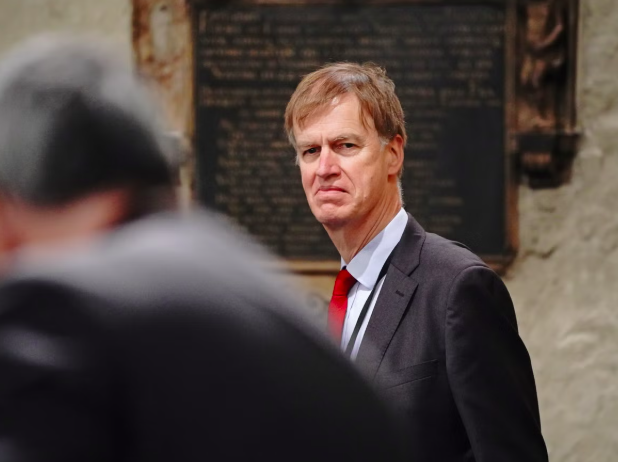
The Government’s own review says PIP is not serving the people it was intended to support, while the bill continues to rise with impressive speed. The review was co-chaired by Sir Stephen Timms, Sharon Brennan and Dr Clenton Farquharson CBE, and it drew more than 38,000 responses from individuals and disability organisations. It was also described as “co-produced by disabled people”, which in modern Whitehall usually means the conclusion has already been wrapped in a socially acceptable ribbon.
For those unfamiliar with PIP, the principle sounds straightforward. It is designed to support people aged 16 and over who have a long-term physical or mental health condition or disability that affects their ability to carry out everyday tasks or move around, with difficulties expected to last at least 12 months.
But here lies the uncomfortable part. The catch is that it is not awarded simply because someone has a diagnosis. It is assessed on how a condition affects daily functioning, which sounds sensible enough until one starts asking where genuine need ends and where the definition of need begins to float away from reality.
A benefit meant to help
Nobody serious disputes that people with severe disabilities deserve support. A civilised society ought to look after those who cannot fully support themselves. The problem is that PIP has grown into something much larger than the modest safety net it once pretended to be, and the numbers now look less like a policy adjustment than a budgetary landslide.
According to the review, PIP spending was around £15 billion in 2020, in 2026/27 prices. By 2031, the Department for Work and Pensions expects that figure to climb to more than £41 billion. That is not a rounding error. It is an extraordinary expansion of public spending, and one would think that alone might prompt a bit of alarm.
Instead, when Sir Stephen Timms was asked about the rising cost on the BBC’s Today programme, he replied: “My view is the current level of spending is not a great concern.” That is a bold line to take when the bill is ballooning so quickly. Taxpayers may have a less relaxed view of the matter than the minister who is helping oversee it.
The Government’s position is strangely split between acknowledgement and avoidance. On the one hand, the system needs reform. On the other, the scale of spending is apparently not really the problem. It is an odd way to approach a bill that keeps growing faster than the confidence of the people being asked to pay it.
Did you miss this week’s Nano-sermon? Watch it here:
The obvious question
The interim review does not yet contain recommendations; those are still to come. But before anyone gets to reform, there is a more basic question that ought to be answered: why has the number of disability benefit recipients risen so sharply? The review itself notes that disability benefit prevalence increased between 2009 and 2024 across all age groups.
What is especially striking is the pace of the increase in recent years. The review says the biggest rises came in the last five years, with growth between 2019 and 2024 almost double that seen in the previous decade. The increase has been particularly noticeable among 16–19-year-olds, people in their thirties and women. The report also says that almost one in four working-age people now report having a disability.
That figure does not automatically prove anything sinister. It does, however, demand serious scrutiny. Any welfare system worth defending has to ask whether rising claims reflect rising need, changing definitions, shifting incentives or some combination of all three. Pretending the question does not exist is not compassion; it is postponement.
The more uncomfortable possibility is that society has become increasingly willing to interpret ordinary hardship through a medical lens. Not every setback is a diagnosis. Not every difficulty is a disability. And not every expansion of entitlement is a triumph of social justice, however elegantly it is packaged.
2 Thessalonians 3:10 For even when we were with you, this we commanded you, that if any would not work, neither should he eat.
The danger of drift
Modern welfare policy often begins with a noble intention and ends with something much less coherent. Support for those in real need is right. But a system cannot endlessly expand while still claiming to be precise, sustainable and fair. At some point, good intentions have to survive contact with incentives, definitions and the public purse.
That is the central problem here. PIP should help people live more independently, not create a permanent structure of dependence built around ever wider assumptions of vulnerability. Nor should every increase in spending be treated as automatically virtuous simply because it is attached to a worthy cause. The real test is whether the system remains credible to the public and useful to those it is meant to support.
That means asking awkward but necessary questions. Are assessments working properly? Are the criteria stable enough? Have we widened the idea of incapacity so far that it now covers problems previous generations would have regarded as part of normal life? These are not cruel questions. They are the questions that keep a welfare state from drifting into self-parody.
Proverbs 14:23 In all labour there is profit: but the talk of the lips tendeth only to penury.
Reform or evasion
The autumn recommendations will show whether ministers are prepared to confront the problem honestly or whether they will do what governments so often do: declare that the system is broken while carefully avoiding the reasons why. That approach may preserve political comfort for a while. It will not preserve trust.
PIP was created to support people with real and lasting needs. If it is now failing them while costing vastly more than anyone expected, the answer cannot be to nod gravely, blame “complexity” and carry on as before. At some point, a broken system has to be named plainly and then fixed plainly.
The Government appears to know this much already. The harder part will be admitting what the numbers, and the incentives behind them, are actually saying.
Related Stories
Young Britons Trapped on Benefits Since the Pandemic →
Sir Keir Starmer taking control of people’s lives’? →
One in eight parents claim child has ‘a disability’ →
Social Media, the Weapon Fashioned Against Children →
How the SNP Spent £1m of Taxpayers’ Money on Paparazzi →
Read and pray
READ: Lev 19:35; Prov 29:2; Prov 11:1; 29:4; Isa 1:23; Isa 10:1-2;Micah 6:8; Luke 12:48; Micah 6:8; Rom 13:1..
PRAY: Pray for godly wisdom for Britain’s leaders, that they would promote truth, responsibility, meaningful work, and policies that strengthen families, young people, and the moral foundations of society rather than deepen confusion and division.
Let us know what YOU think in the comments below.
Support us!
We appreciate your support; it enables our research and helps us inform your prayers.
So click below to support Christian Voice and stand up for the King of kings
Or fill in the form below to keep in touch:
Click on the social media links below to share this post: