
Alarming figures now suggest that as many as one in eight children in Britain are claimed to be disabled by their parents. This includes soaring diagnoses of autism, ADHD, and behavioural conditions.
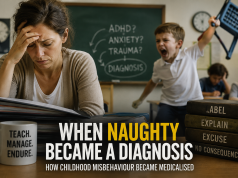
According to a Government-backed review commissioned by Wes Streeting, the rise in diagnoses does not necessarily reflect a genuine increase in illness. Instead, experts warn that ordinary childhood behaviours and distress are increasingly being “medicalised” and reframed as disorders requiring intervention.
If these figures had not come from official Government data, they could easily be dismissed as an April Fool’s headline. One in eight children now classified as disabled? Millions of young people labelled with conditions that barely registered a generation ago? It sounds absurd, yet it is being presented as reality.
Beneath the statistics lies something far more serious in the spiritual realm: a negative confession both from families and from the system itself. Where someone used to be a bit down, now he is ‘suffering from depression’. Someone concerned about something is now ‘suffering from anxiety’.
Prov 18:21 Death and life are in the power of the tongue:
What was once considered part of normal development is now too often labelled as pathology. The question must be asked: are children truly becoming more unwell, or is our society redefining normality itself? If so, are welfare schemes such as ‘Personal Independence Payments’, or PIP, to blame?
2 Timothy 1:7 For God hath not given us the spirit of fear; but of power, and of love, and of a sound mind.
The Human Cost of Welfare
Picture a young girl struggling, as children often do, with life, school, and emotions, a concerned mother seeking help coupled with a system ready not to strengthen, restore, or equip but rather to diagnose, label, and ultimately declare limitation. In today’s Britain, this is no longer an exception. It is becoming the norm.
Education support worker Mary Gileece wrote about 17 year-old Jane on Daily Sceptic. (Not their real names. And worth reading in full.) Mary noted that Jane has no qualifications, no work experience, no routine, no ambition and, tragically, no expectation that she ever will.
She is not physically incapacitated. She is not beyond help. Yet she is already being sustained by the state as though her future has been settled. What Mary reports is not support, it is surrender. A system designed to help the vulnerable is writing off an entire generation before they have even begun.
2 Thessalonians 3:10 That if any would not work, neither should he eat.
The Making of Inactivity
Mary writes that Jane’s decline did not happen overnight. It followed a pattern now becoming all too familiar. After lockdown, she simply stopped going to school. Days turned into weeks, weeks into years—spent largely in her bedroom, scrolling endlessly on her phone.
At age 15, the state intervened. A team of tutors, therapists and social workers was assigned to rebuild her life, five days a week, two hours a day at significant cost and with serious effort. But without a spiritual transformation it is all in vain. After all the effort, Jane still cannot tell the time. She cannot read a bus timetable. She cannot cook, write a CV, or navigate basic daily life.
None of it is because she is incapable. But somewhere along the line, both family and the state accepted that she should not even try and paid her to stay in cultivated helplessness.
At every attempt to build her up, resistance came, not just from the girl alone, but from her mother. Teaching her to tell the time was rejected. Encouraging her to walk to a bus stop was ‘too exhausting’. Cooking was deemed too dangerous: He mother said: ‘She’s no good with hot water’. A CV was ‘Setting her up to fail.’
Personal Indolence Payment
Even basic independence was treated as a threat. The message was clear: Jane must remain incapable. And why? Because the system rewards it. Jane receives £72 a week in PIP. Her mother receives a Carer’s Allowance as of April 2026 set at £86.45 per week. ‘Jane’ and her mum are together receiving over £150 per week, as long as ‘Jane’ stays doing nothing! At no point is Jane being ‘strengthened’ or helped into work:
Ezek 16:49 Behold, this was the iniquity of thy sister Sodom, pride, fulness of bread, and abundance of idleness was in her and in her daughters, neither did she strengthen the hand of the poor and needy.
For those on PIP, financial stability now depends not on progress, but on permanent limitation. Welfare compassion has been corrupted into dependency. ‘PIP’ could actually stand for ‘Personal Indolence Payment’. Idleness is what we are teaching our children. The scripture can be positive or negative:
Proverbs 22:6 Train up a child in the way he should go.
Scripture is clear. The genuine poor are to receive support, and to be strengthened to work. We can confess ‘death and life’ and either bless or curse ourselves and our children. We are not to accept a spirit of fear, but to live in power and love with a sound mind. Working for a living is the gift of God. We are to work quietly, and earn enough to eat our own bread. And if we refuse to work, we don’t eat.
Support NCCSS / Christian Voice →
ADHD, Autism and Mental Health Review
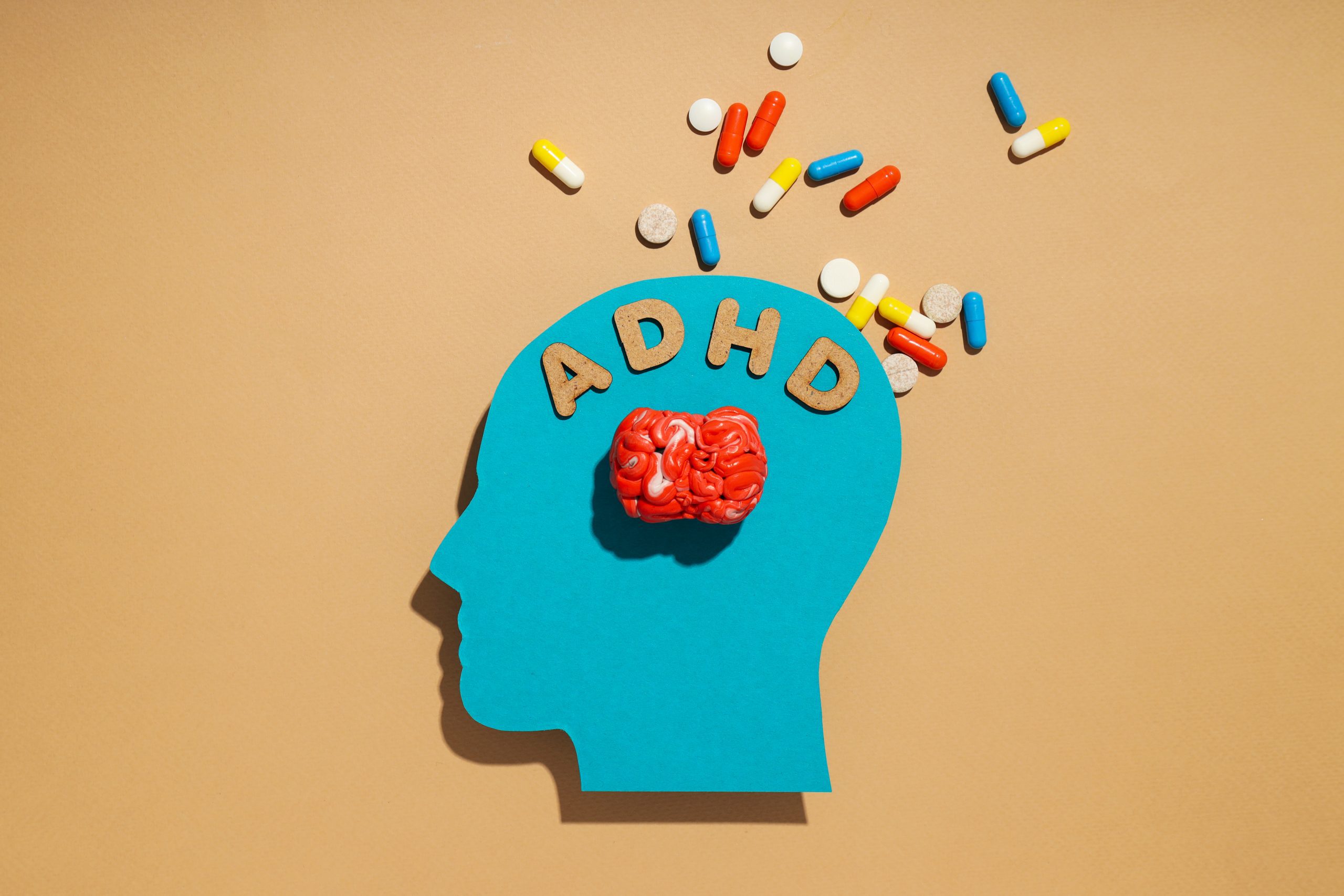
In December 2025, the Government launched a review into ADHD, autism and mental health services to examine rising demand for services. Experts have now reported on their initial findings.
The authors of the review said: “Historical analyses show that behaviours in children once regarded as within the range of normal variation, or even as something to be welcomed in some contexts, are now more often interpreted as requiring intervention or treatment.”
Adding that there is a “risk that a wide range of difficulties – particularly those arising from social, educational or environmental pressures – may increasingly be interpreted primarily through a medical lens”. Rising rates of diagnosis for ADHD and autism “does not necessarily mean rising prevalence” of the conditions, they added.
“Across both ADHD and autism, best currently available population-based estimates remain relatively stable, while administrative diagnoses, self-identification and recorded service demand have increased substantially. In autism, the evidence also points to particularly rapid growth in identified need within educational systems, including increasing identification among girls and among young people without learning disability.
The Figures
About 12% of children, or around 1.7 million young people, are now apparently living with a long-term illness, disability or impairment, according to fresh figures from the Department for Work and Pensions (DWP).
This has almost doubled since 2015, when roughly 7% of parents said their child had a disability, according to the department’s closely-watched Family Resources Survey (FRS).
It also comes amid a sharp increase in young people being diagnosed with behavioural issues as well as autism and ADHD. Almost two-thirds of children with a disability had a “social” or “behavioural” impairment – by far the most common issue cited by parents, the FRS found.
The figures involved ought to terrify everyone for they either reveal a population riven with ill-health and impairment or one playing the system. Perhaps a National Commission into ‘Physical Deterioration’ similar to the one conducted by Sir Almeric FitzRoy in 1904 into the poor health of Boer War recruits could find out what is causing the professed ill-health of young people. With such staggering levels of illness, there is no hope at all that our country will ever return to growth. But it could all be a complete fiction, financially, emotionally, economically, even spiritually unsustainable as well.
Brits living with a disability
As of February 2026, there are 34.33 million people aged 16+ in employment in the UK, with an employment rate of 75.0% for those aged 16 to 64. While the job market has shown resilience, unemployment has risen slightly over the past year, with 5.1% unemployment recorded in late 2025.
Those working are now supporting approximately 13.2 million state pensioners. Yet they are funding another 16.7 million people, representing a quarter of Britons, who now claim to live with a disability. More women than men claim they have an impairment, though ‘disability’ is more prevalent among boys than girls. Scottish people are more likely to say they are disabled than people living in England or Wales.
The figures show roughly 700,000 of children considered disabled are under 10. More people under 20 are also now in this category than Britons aged over 80. So we ask, who are the working class adults funding this? Should these ‘dreadful illnesses’ destroying Britons not be treated as a national crisis deserving of an immediate inquiry?
’Distress is Real’ Or is it?
Clinical psychologist at University College London and Chair of the Review Professor Peter Fonagy wrote in The Times: “Distress is real. But how we interpret and respond to it is shaped by the systems we have built.
“We need a system that is more proportionate, more responsive and less dependent on diagnosis alone. One that can offer support earlier, in a wider range of settings, and in ways that are aligned to need rather than determined by labels.
“That does not mean abandoning diagnosis. For many people, it remains essential, for understanding, for treatment, for access to support. But it does mean being more precise about what diagnosis is for, and what it is not.”
A Department of Health and Social Care spokesperson said: “The Secretary of State commissioned this independent review precisely because we know too many people are not getting the support they need, and we are committed to building a system that is fair and works for everyone, with a focus on early intervention.
Yet this raises more questions. What if the ‘early intervention’ is itself to blame? What if the crisis is not rooted in widespread illness at all? What if the system is funnelling large numbers of (to be honest) perfectly healthy children who in a bygone age were simply told to pull themselves together into diagnostic categories, enriching a network of private providers, casting a generation on to the scrap heap and impoverishing those whose taxes are demanded to pay for it all?
Only national repentance proclaimed by God-fearing leaders will save our United Kingdom. This welfare scandal is not all that is wrong with Britain. But it is stark enough to make us and those who lead us ‘consider your ways’ and return to the Lord.
Related articles
Social Media, the Weapon Fashioned Against Children →
Mother banned from seeing sex-ed materials →
Council cuts funding for ‘pride’ event →
Read and pray
READ: Exod 18:21; Lev 19:35-37; Deut 30:19; Psa 104:23; Prov 6:9-11, 18:21a, 22:6, 26:13; Eccl 3:13, 5:18; Ezek 16:49; Haggai 1:5-7; Matt 4:17; John 9:4; Thess 3:10; 1 Tim 2:1-6; 2Tim 1:7.
PRAY:Pray that God will restore truth in public leadership, and turn their hearts. Pray for Repentance and Godly conviction.
Let us know what YOU think in the comments below.
Support us!
We appreciate your support; it enables our research and helps us inform your prayers.
So click below to support Christian Voice and stand up for the King of kings

Click on the social media links below to share this post:





There is evidently unemployment. Capable people of working age at our church are all looking for work.