The appointment of an immigrant student-turned-politician who publicly rejects being identified as either a man or a woman would once have sounded like political satire. Yet this is now the reality of modern Scottish politics. What should be a serious national parliament increasingly resembles a bizarre Netflix parody of Western decline, where ideological symbolism appears to matter more than competence, credibility, or public confidence.
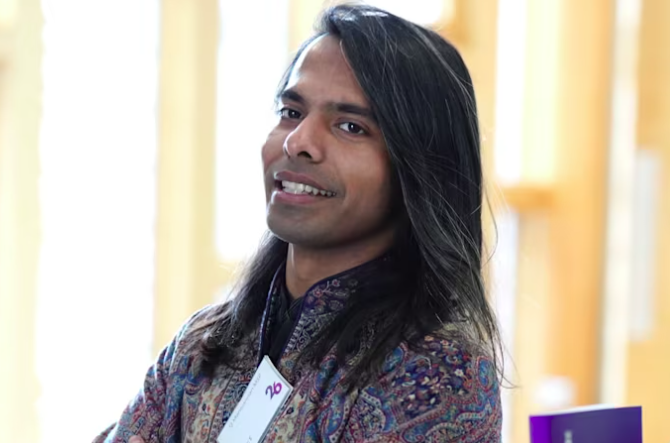
Q Manivannan was elected to the Scottish Parliament last week after securing a seat on the Edinburgh and Lothians East regional list for the Scottish Greens. Manivannan, who describes himself as a “queer Tamil immigrant”, identifies as “non-binary”, uses “they/them” pronouns, and is currently living in Scotland on a student visa. But he is clearly a man.he is currently living in Scotland.
Just days after the election, further questions emerged when Manivannan confirmed plans to apply for a graduate visa to remain in the UK for a longer period, alongside a Global Talent visa in order to continue a parliamentary career. The question remains how someone still navigating immigration routes and future visa approval was elevated into one of the country’s highest legislative institutions in the first place.
For many ordinary Scots, the issue is not race or nationality, but what the entire episode reveals about the state of Britain’s political class. A generation ago, candidates were expected to demonstrate competence, professionalism, and credibility before entering public office. Today, activist credentials alone often seem enough to secure a seat in parliament.
Ecclesiastes 10:16 Woe to thee, O land, when thy king is a child.
Call for Investigations
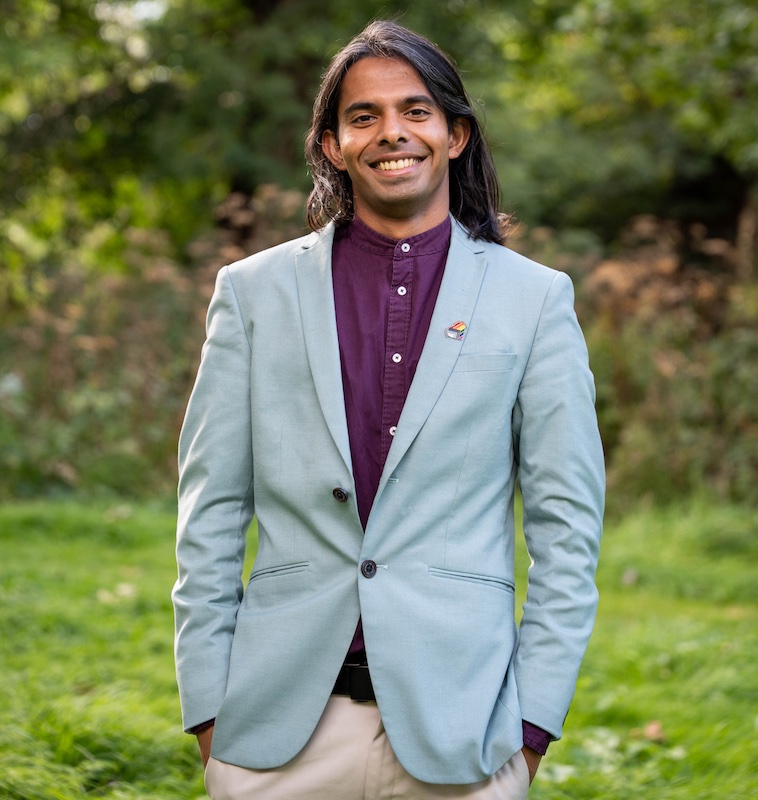
The Scottish Conservatives are calling on the Home Office to investigate a newly elected Green MSP accused of breaking immigration rules. Recent eligibility changes to become an MSP meant Manivannan could stand in the election. But the Scottish Conservatives have accused the new MSP of breaching the terms of their visa, saying the guidance was “clear that holders of student visas are only permitted to work for a maximum of 20 hours per week, whether voluntary or paid”.
One of the party’s 12 MSPs, Stephen Kerr, has written to Home Secretary Shabana Mahmood, urging her to investigate the alleged breach of rules.
“I’m calling on the Home Office to look into this case, because I can’t see how Q Manivannan can fulfil the duties of an MSP without breaching the strict terms under which a student visa is issued,” he said.
“Being an MSP is a demanding, full-time job that can’t possibly be carried out effectively by working less than 20 hours per week.”
Support NCCSS / Christian Voice →
Public Reaction
Former senior SNP figure Ian Blackford publicly questioned whether the Scottish Greens should withdraw the MSP entirely, arguing that uncertainty surrounding visa eligibility risked undermining confidence in parliament itself. Others asked how someone potentially requiring future visa approval could realistically guarantee the ability to serve a full parliamentary term.
Additional controversy emerged over past social media activity and activist positions linked to Manivannan, including criticism over comments involving Auschwitz-related social media content and support for highly controversial political activism.
Much of the public frustration stems from the perception that ordinary people are held to increasingly strict standards in daily life while public officers appear willing to relax scrutiny for candidates who align ideologically with progressive causes.
Isaiah 5:20 Woe unto them that call evil good, and good evil; that put darkness for light, and light for darkness.
Return to the UK’s Christian Constitution →
Failed Vetting
The Holyrood controversy has reignited broader concerns about political vetting failures across Britain. Increasingly, parties appear more focused on diversity optics, factional loyalty, and ideological alignment than on rigorous examination of candidates before elections.
In Sunderland, Labour previously faced criticism over candidate selection disputes and concerns around transparency within internal political processes. Questions were raised about how effectively parties investigate and scrutinise those standing for office before they are approved as candidates.
More recently, serious controversy emerged surrounding newly elected Sunderland Reform councillor David Barker. Reports resurfaced detailing Barker’s 2019 conviction for assault occasioning actual bodily harm against his former girlfriend, with prosecutors describing injuries that left the victim “black and blue.” Further allegations circulated online relating to abuse claims involving a child, leading many critics to question how such issues were not identified or addressed before his election campaign.
Across the UK, councils and political parties have repeatedly faced embarrassment after candidates were later linked to allegations involving sexual misconduct, abusive behaviour, racism, or extremist comments. In Aberdeen, councillor Alan Donnelly was suspended after being convicted of sexual assault and placed on the sex offenders register, yet initially resisted calls to resign from public office.
These repeated controversies point to a much deeper issue: Britain’s political parties increasingly appear more interested in winning elections and filling seats quickly than conducting serious vetting, safeguarding, accountability checks and finding a Godly leader.
All green party that has made anti-semitism comments green party
Ecclesiastes 10:2 A wise man’s heart is at his right hand; but a fool’s heart at his left.
How Did This Happen?
The recent election of the student migrant has also exposed how Scotland’s electoral system allows candidates to enter parliament without directly winning the support of a local constituency. Manivannan entered Holyrood through the regional list system, where party leadership and internal structures play a major role in determining who ultimately secures seats.
Recent reforms in Scotland expanded eligibility rules for election candidates, allowing more foreign nationals with valid immigration status to stand for office, even without British citizenship or permanent residency. Supporters framed the changes as “inclusive and democratic”. Critics, however, argue that the reforms weakened scrutiny and opened serious questions about long-term accountability and public trust.
The issue is not whether legal migrants can contribute positively to society, many already do across Britain but whether temporary visa arrangements should intersect with full-time legislative office. Whether someone who is neither a man or woman can understand policies relating to gender.
Hosea 4:6 states My people are destroyed for lack of knowledge.
Which Way, Britain?
Britain is shaped by Christian values such as truth, responsibility, service, humility, and moral accountability. Leadership is expected to carry a sense of duty and sound judgment, not simply activism, symbolism, or personal identity. Modern politics is increasingly moving away from those foundations and replacing them with ideology-driven culture wars that leave many voters feeling disconnected from everyday concerns.
The growing frustration is not only political but cultural. Many believe Britain is now gambling with important leadership positions by prioritising representation, identity, and headline politics over experience, wisdom, and character. Questions are increasingly being asked about whether public office is still rooted in competence, stability, and service to the nation.
For Christians, the issue ultimately points back to the need for moral and spiritual restoration. A country cannot thrive when truth becomes blurred and leadership loses its moral foundation. Scripture repeatedly stresses the importance of righteous leadership because leaders shape the direction, values, and stability of a nation.
Proverbs 29:2 When the righteous are in authority, the people rejoice: but when the wicked beareth rule, the people mourn.
Related articles
Why Are City Firms Still Defying the Supreme Court’s Gender Ruling? →
IWD: “Reject Hijacking by Men With Fetishes” →
Who is defying the Supreme Court’s biological realities ? →
NHS Nurses ‘Trans’ Dispute Cost Taxpayers £600k →
The promiscuous, predatory world of male homosexuality →
“Police should not march with pride” →
Council CEO rejects order to remove “pride flag” →
Christian councillor suspended for ‘Pride is a sin’ →
‘Ealing Council strikes at freedom of assembly →
Read and pray
READ: Gen 1:27; Gen 1:27; Exod 20:13; Lev 19:32; Deut 30:19; 1 Sam 2:3; 2Sam 23:3; Psalm 82:3–4; Prov 14:12, 31:8–9; Isa 1:17
PRAY: Pray for wisdom and discernment for Scotland’s leaders, that those elected to public office would govern with integrity, truth, and genuine concern for the people they serve.
Pray for moral and spiritual renewal in Scotland, that the nation would return to strong values rooted in truth, responsibility, and godly leadership.
Pray for unity and stability in public life, that political division, confusion, and ideology would not overshadow good governance, justice, and accountability.
Let us know what YOU think in the comments below.
Support us!
We appreciate your support; it enables our research and helps us inform your prayers.
So click below to support Christian Voice and stand up for the King of kings
Click on the social media links below to share this post: