
Christian Voice is to have a new logo. Our current logo, featuring the ‘Ripon Horn’, dates from when we started in 1994, thirty-one years ago.
The Ripon horn symbolises God’s protection. It is still blown every night at 9 pm to ‘set the watch’ over the North Yorkshire city. The tradition is believed to have originated when King Alfred the Great granted Ripon a Royal Charter and a horn in 886AD. This led to the appointment of a watchman, or wakeman, to patrol the settlement during the hours of darkness.
It also led to the Ripon motto, ‘Except the Lord Keep the Cittie the Wakeman Waketh in Vain,’ which you will recognise as a quote from Psalm 127:1:
Psalm 127:1 A Song of degrees for Solomon. Except the LORD build the house, they labour in vain that build it: except the LORD keep the city, the watchman waketh but in vain. (KJV)
Prayer for protection
We still pray that for our cities and our United Kingdom. That prayer was especially to the fore just over twenty years ago. We prayed for the Lord to protect our land in the aftermath of the 7/7 London bombings. Precisely two weeks later the Lord himself showed his power by bringing the devices of a further group of Islamic terrorists to naught.
Indeed, I made a video in 2016 outside the Maalbeek metro station in Brussels just after a terrorist attack on that city’s underground network. I explained how our security servivces need our prayers for God’s blessing. Take a look:
Since the inception of Christian Voice, we have prayed for national repentance for our leaders who have been legislating in stark rebellion from the righteous laws of God. But today, the United Kingdom is deep in sins which in 1994 we never imagined our elites would lead us into. With each day that passes we are seeing, not the Lord’s protection, but increasingly his judgment:
Psalm 81:12 So I gave them up unto their own hearts’ lust: and they walked in their own counsels.
J D Unwin discovered that no civilisation which allowed its family structure to crumble escaped going down the rubbish chute of history.
It was anthropologist J D Unwin who declared in his 1934 book ‘Sex and Culture’ that throughout human history, a nation with a self-confident deistic culture with strong sexual morality would always overtake and defeat a society which had set aside its sexual restraints. See Kirk Durston’s analysis. Unwin wrote: ‘Any human society is free to choose either to display great energy or to enjoy sexual freedom; the evidence is that it cannot do both for more than one generation.’
Judgment has been falling on us for decades now, as a result of the ungodly measures enacted first in the 1960s and increasingly to this day: Lack of respect for God, for life and for family has resulted in a lack of respect for our fellow men and women, in a society which holds nothing sacred and in which those in power enrich themselves and care nothing for those below them. But it can become much, much worse.
How many of the young men trying to enter Britain through Calais, or trudging through Europe, are genuine rfugees, and how many IS sleepers? No-one knows, but IS claim ‘thousands’.
In that light, it is difficult not to see the hordes of young Muslims arriving here daily and illegally by boat, encouraged by successive governments, topping up their fellow religionists already here, young men of second generation, as a slow-burn Islamic invasion.
Those in power still cannot see that their sacred cow of multiculturalism, designed to eradicate the Christianity upon which this nation was built but whose divine founder they hate, does not lead to sunlit uplands, but to disaster. Even now they act as apologists for Islam, the ideology which will destroy them. We are standing against their ungodly, defeatist idea of defining ‘Islamophobobia’. Sign our petition against that:
King Charles at the Saudi-funded Oxford Centre for Islamic Studies, of which he is Patron.
King Charles himself says it is ‘more imperative than ever’ to understand Islam and the Muslim world. Indeed it is, but not through his prism of multiculturalism.
In Deuteronomy 28, the Lord himself describes an invasion such as we are now experiencing as his judgment:
Deut 28:49 The LORD shall bring a nation against thee from far, from the end of the earth, as swift as the eagle flieth; a nation whose tongue thou shalt not understand; 50 A nation of fierce countenance, which shall not regard the person of the old, nor shew favour to the young:
Prayer for National Repentance
Christian Voice – new shofar logo
There is only one way to stop the judgment from falling and it is national repentance. In our case it would involve a whole-hearted return to our country’s Christian constitution, exemplified by His Majesty’s coronation on 6th May 2023 together with a fearless proclamation from our elite of our nation’s dedication to Jesus Christ, the King of kings.
That is why in the days to come we shall changing our logo from the horn of protection to the shofar, warning of judgment:
Joel 2:1 Blow ye the trumpet in Zion, and sound an alarm in my holy mountain: let all the inhabitants of the land tremble: for the day of the LORD cometh, for it is nigh at hand;
Scripture shows such repentance followed by God’s blessing is possible but rare. It depends on the king being a man of humility. Perhaps the best example is ancient Judah’s King Josiah:
2Kings 22:13 (cf 2Chr 34:21) Go ye, enquire of the LORD for me, and for the people, and for all Judah, concerning the words of this book that is found: for great is the wrath of the LORD that is kindled against us, because our fathers have not hearkened unto the words of this book, to do according unto all that which is written concerning us.
We shall speak more about this in the days to come. In the meantime, sign our petition calling for those in office to repent:
We appreciate your support; it enables our research and helps us inform your prayers.
So click below to support Christian Voice and stand up for the King of kings
Or fill in the form below to keep in touch:
Click on the social media links below to share this post:

A video circulating on social media shows Jesse Samuel, a Christian street preacher, being surrounded by police officers during an open-air service in Croydon, London.
In the footage, Samuel continues declaring the Gospel as officers appear to confront him over the content of his message.
This is not an isolated event. In recent years, similar scenes have played out across the UK, raising concerns that openly preaching Christ in public spaces is increasingly viewed as provocative by authorities and passersby alike.
Isaiah 59:14 And judgement is turned away backward, and justice standeth afar off: for truth is fallen in the street, and equity cannot enter.
This incident is part of a growing pattern across the UK. Pastor Oluwole Ilesanmi was arrested outside Southgate Tube Station in 2019 for “breaching the peace” while reading the Bible.
Another preacher, Dale Mcalpine, arrested in Cumbria, was charged for stating biblical beliefs on homosexuality. Meanwhile, John Sherwood, a 71-year-old pastor, was also arrested in Uxbridge for preaching traditional family values.
A former pastor at Cumnock Baptist Church, Angus Cameron, was detained for over an hour in Glasgow while preaching on Buchanan Street in January 2022. Additionally, he was awarded £9,400 in legal costs, and he chose to donate the entire amount to the Christian Institute, which supported him throughout the case.
Clive Johnson, a retired pastor from Northern Ireland faced prosecution for preaching the Gospel in an open-air Sunday service near Coleraine’s Causeway Hospital.
Despite the preacher not mentioning abortion, nor directly engaging with patients or staff, the 76-year-old was charged under the Abortion Services (Safe Access Zones) Act.
Street preaching is not disorder, it is a protected expression of conscience. Yet police frequently treat Gospel truth as a threat.
Acts 4:18-20 Whether it be right in the sight of God to hearken unto you more than unto God, judge ye. For we cannot but speak the things which we have seen and heard.
In today’s UK, rainbow crossings, trans flags, and drag performances are celebrated openly on our streets. Government buildings fly the transgender flag. Schools push gender ideology. Pride events receive police protection and funding.
Yet when a preacher quotes Scripture, it is met with police presence.
What is legal in Britain is no longer determined by truth, but by what offends the ruling moral order.
Romans 1:28 And even as they did not like to retain God in their knowledge, God gave them over to a reprobate mind.
Police guidance supports preaching, but not in practice
In past years, police chiefs have acknowledged street preaching as lawful.
The College of Policing issued training noting that “expressing religious beliefs in public places is lawful.” The Crown Prosecution Service has also recognised the right to preach in open spaces.
But on the ground, the law is often ignored. Preachers are moved on, arrested, or threatened, not for how they preach, but for what they preach.
Amos 5:10 They hate him that rebuketh in the gate, and they abhor him that speaketh uprightly.
Britain needs bold preachers, not silent watchmen
The Lord Jesus Christ did not avoid offence. He preached repentance. He warned of hell. He called sinners to salvation. A Gospel that offends no one saves no one.
Preachers on British streets are not extremists, they are watchmen. And if they are silenced, the blood of this generation is on our hands.
Ezekiel 3:18 When I say unto the wicked, Thou shalt surely die; and thou givest him not warning… his blood will I require at thine hand.
Let the Church arise and take her stand
The answer is not retreat—it is resistance. The Church must not let this nation go quietly into apostasy. We must raise our voices. We must defend those who are threatened for declaring the truth in public.
If the name of Christ is now a “public order” offence, Britain has lost her soul.
2 Timothy 4:2 – Preach the word; be instant in season, out of season; reprove, rebuke, exhort with all longsuffering and doctrine.
READ:Deut 27:25; Psalm 106:37-38; Prov 14:23; Isa 28:9; Matt 10:7; Luke 9:2, 10:1; John 3:16-18; Rom 1:16, 1Cor 6:9-11..
PRAY:Pray for street preachers. Pray for Christians in the UK and across the globe.
Let us know what YOU think in the comments below.
Support us!
We appreciate your support; it enables our research and helps us inform your prayers.
So click below to support Christian Voice and stand up for the King of kings
Or fill in the form below to keep in touch:
Click on the social media links below to share this post:

The East London Mosque - the Daily Mirror claimed 50% of British Muslims support Islamic State.
This ‘Consultation’ has now closed. The deadline was Sunday 20th July. But you can still pray, sign our petition, and be encouraged with how I (and maybe you) completed the ‘Islamophobia/Anti-Muslim Hatred Definition Working Group – call for evidence’.
We begin with the questions then I show you what I answered below. How each of us responds depends on our individual composition. The Lord can and will use each of us, from the brash to the introspective. You should give your own answers, not repeat mine. Mine might start thought processes going. The only ‘correct’ answers are those I give to questions 8, 10, and 12, which is in each case: ‘No’ or ‘None of the above’.
The LINK is now dead. Instead you can Sign our Petition against ‘Islamophobia’ (and watch our video):
Page 5:
Q1.Are you responding on behalf of an organisation or as an individual?
Click ‘Organisation’ and Page 6 asks:
Q2. What is your name?
Q3. What is your job title?
Q4. Which organisation do you represent?
Q5. Requests your email address.
Click ‘Individual’ and Page 6 asks:
Q2. Which age bracket do you belong to?
Q3. Please state your sex
Q4. Please state your ethnic group
Q5. Requests your email address.
Annoyingly, there is no ‘autocomplete’ so you have to manually type your name, email, etc in full.
There appears to be no Page 7.
The Substance Pages
Page 8:
Q6: When referring to discrimination, prejudice, bigotry, hatred or violence directed at Muslims, which term do you think should be used? For instance, ‘Islamophobia’, ‘anti-Muslim hatred’, ‘anti-Muslim racism’, ‘anti-Muslim prejudice’, ‘Muslimophobia’ etc.
Please enter at most 70 characters
Q7. Please tell us your reason for suggesting this term (600 characters at most)
Please enter at most 600 characters
Page 9:
Q8: Do you think the UK Government should adopt a definition of Anti-Muslim Hatred/Islamophobia? (any definition would be non-statutory)
Yes / No / Don’t know
Q9. Please could you tell us more about why you think that?
Please enter at most 600 characters
Page 10:
Q10. Do you think Anti-Muslim Hatred/Islamophobia is also a form of racism?
Yes in all cases / Yes in most cases / Yes in some cases / No / Don’t know
Q11. Please could you say more about why you think that?
Please enter at most 1000 characters
Page 11:
Q12. Should any of the aspects below feature in a definition of Anti-Muslim Hatred/Islamophobia? Please tick all that apply.
What Anti-Muslim Hatred/Islamophobia includes – (e.g. behaviours, words, beliefs)
What Anti-Muslim Hatred/Islamophobia does not include
Who the definition should apply to
When the definition should be used – i.e. situations and settings when the definition should be used, including online and in-person settings.
Other content or components that should be included. Please give an example of up to two things which the definition should cover that are not already included above (please detail below)
Other
Q13. If you wish to, please can you give an example(s) of anti-Muslim hatred/Islamophobia that you have witnessed, experienced or read about over the last two years?
Please refrain from disclosing personal information about other people involved in these examples – such as their name, address.
Please enter at most 1000 characters
Finally, on the same Page 11, you click ‘submit’. That’s job done. Immediately, it will ask you if you wish to ‘Save your response to edit?’. That means you sign up to a Microsoft account. If I were you, I should instead copy your answers into a ‘Word’ or ‘Notepad’ document as you go and save it.
My Responses – Introductory
Q1.Are you responding on behalf of an organisation or as an individual?
A1 On behalf of an organisation
Q2.What is your name?
A2: Stephen Green
Q3.What is your job title?
A3: National Director
Q4.Which organisation do you represent?
A4: Christian Voice
Q5.If you would be content for the working group to potentially contact you about any of your answers as part of their work on a definition of Islamophobia/anti-Muslim hatred, please leave your email address below
A5: stephen@christianvoice.org.uk
My Responses to Page 8
Islamophobia Consultation page 8
Q6. When referring to discrimination, prejudice, bigotry, hatred or violence directed at Muslims, which term do you think should be used? For instance, ‘Islamophobia’, ‘anti-Muslim hatred’, ‘anti-Muslim racism’, ‘anti-Muslim prejudice’, ‘Muslimophobia’ etc.
A6: Even asking for such a term is divisive and ridiculous.
Q7. Please tell us your reason for suggesting this term
A7: Asking for a definition to protect Muslims from legitimate criticism is going to backfire. Christians and Hindus are not asking for definitions of Christophobia or Hinduphobia.
Why? Because neither of them is engaged in violent jihad against the rest of the population, or asking for special favours such as sharia courts or halal food in schools and prisons, or forming rape gangs seeing indigenous girls as legitimate targets for rape, or calling for the expulsion of Jews from the Holy Land.
Government should not be appeasing Muslim demands in this constitutionally-Christian United Kingdom.
My Responses to Page 9
Islamophobia Consultation page 9
Q8.Do you think the UK Government should adopt a definition of Anti-Muslim Hatred/Islamophobia? (any definition would be non-statutory)
No!
Q9. Please could you tell us more about why you think that?
A9: Asking for a definition to protect Muslims from legitimate criticism is going to backfire. Christians and Hindus are not asking for definitions of Christophobia or Hinduphobia.
Why? Because neither of them is engaged in violent jihad against the rest of the population, or asking for special favours such as sharia courts or halal food in schools and prisons, or forming rape gangs seeing indigenous girls as legitimate targets for rape, or calling for the expulsion of Jews from the Holy Land.
Government should not be appeasing Muslim demands in this constitutionally-Christian United Kingdom.
(The Question was repetitive which is why I simply repeated my answer to Question 7.)
My Responses to Page 10
Islamophobia Consultation page 10
Q10. Do you think Anti-Muslim Hatred/Islamophobia is also a form of racism?
A10: No.
Q11. Please could you say more about why you think that?
A11: Islam started amongst pagan Arabs in the 7th Century, but Muslims soon demanded conquered people of all races submit to it. Today Islam is a politico/religious system with adherents of all races.
Christians believe there is only the human race, in which all are made in the image of God. It follows that people of all races are welcome in the United Kingdom so long as they recognise British culture and our Christian heritage and do not start to impose or demand a contrary religious culture.
Appeasing Muslims by forming a biased committee to impose an ‘Islamophobia’ definition and browbeat the rest of the population into silence is bound to backfire.
Indeed, it provides an opportunity to list the errors of Islam and the barbarity of many Muslims, not least in bombings, stabbings, rape gangs, etc.
We call on those who lead us to proclaim that Jesus Christ is King over this United Kingdom, end Muslim immigration and facilitate Muslims who wish to return to lands where Islam is established.
My Responses to Page 11
Islamophobia Consultation page 11
Q12. Should any of the aspects below feature in a definition of Anti-Muslim Hatred/Islamophobia? Please tick all that apply.
A12: Other: ‘None of the above’.
Q13. If you wish to, please can you give an example(s) of anti-Muslim hatred/Islamophobia that you have witnessed, experienced or read about over the last two years?
Please refrain from disclosing personal information about other people involved in these examples – such as their name, address.
A13: No, but I can recall numerous examples of Muslim hatred and violence against the rest of the population.
The Islamist Aldgate Bombing 7/7/05
Indeed, this very fortnight we are remembering the 52 innocent victims of the 7th July 2005 London bombings, carried out by Islamic terrorists, and giving thanks to the Lord for miraculous deliverance from a further four Muslim bombers on 21st July 2005.
We recall subsequent car and knife attacks around Westminster and London Bridge, and the Manchester Arena atrocity where Muslim suicide bomber Salman Abedi killed 22 victims in 2017.
For too long the British establishment has covered up Islamic atrocity. In the most egregious example, poor, white, working-class British girls from broken family backgrounds were sacrificed on the altar of a false community cohesion to Muslim rape gangs.
The United Kingdom’s elites must reject the anti-Christian multicultural falsehood and return to our Christian constitution. It is written:
Psalm 33:12 Blessed is the nation whose God is the LORD;
Submit!
You have done a little thing that only you could do. Now you can pray, and watch the Lord do what only he can do!
We appreciate your support; it enables our research and helps us inform your prayers.
So click below to support Christian Voice and stand up for the King of kings
Or fill in the form below to keep in touch:
Click on the social media links below to share this post:
Rachael calls for debate over coronavirus impact on care homes | Rachael Maskell MP - Rachael Maskell - Labour and Co-operative MP for York Central
Rachael calls for debate over coronavirus impact on care homes | Rachael Maskell MP – Rachael Maskell – Labour and Co-operative MP for York Central
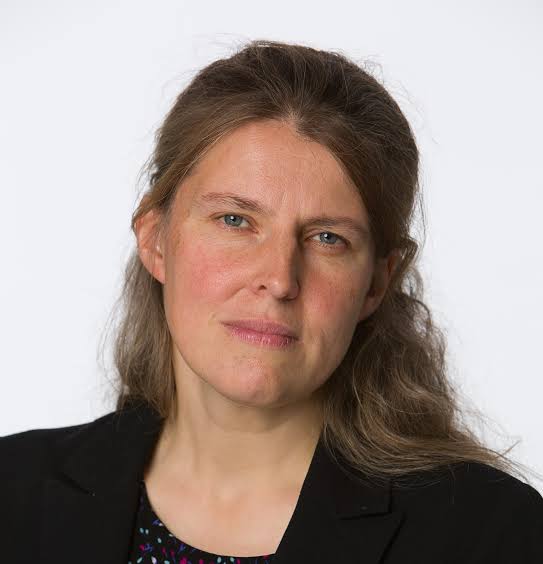
Christian MP for York Central, Rachael Maskell, has been suspended from the Labour Party by Sir Keir Starmer.
Ms Maskell, along with Neil Duncan-Jordan, Brian Leishman, and Chris Hinchliff, has had her party membership temporarily revoked after voting against the government on the controversial welfare bill.
Though the bill passed by a majority of 75, Ms Maskell’s stand helped carve out the largest rebellion Mr Starmer has faced since becoming leader.Ultimately, the PM scrapped the proposed PIP eligibility changes.
However, it must be said the Personal Independence Payment system is deeply flawed. It pays people 16 and over up to £74 per week to have a long-term health condition or disability, covering non-problems like the inability to cook, wash up or wait for a bus. A young person’s mother can then apply to be a carer, gaining even more money. This report shows it pays people to be indolent and does nothing to help them into work. The Bible says:
Proverbs 31:9 Open thy mouth, judge righteously, and plead the cause of the poor and needy.
But there are better ways to do that than to encourage them to consider themselves ill. The Bible says:
2Thess 3:10 For even when we were with you, this we commanded you, that if any would not work, neither should he eat.
Describing herself as “Labour to the core,” the MP for York Central explained her choice as a matter of principle, not politics. “I’m not angry,” she told reporters. “I’m upset—for the party.” She added: “The reason why I voted the way I did was because I believe in fighting for people.”
“As someone of deep conviction and faith,” she wrote, “I bring these values with me in all I do in representing my constituents.” She may be wrong on the PIP scandal, but Rachael Maskell has consistently voted pro-life, against abortion and euthanasia. On the other hand, she has supported transgenderism.
Well does the Bible tell us to put our trust in God, not in fallible leaders.
READ: Gen 1:27; Psa 118:9; 146:3; Prov 14:34; Micah 6:8; Matthew 5:10 Rom 3:13.
PRAY: For Christain MPs. May the Lord lead them thriough his word into all truth rather than the ways of the world.
Let us know what YOU think in the comments below.
We appreciate your support; it enables our research and helps us inform your prayers.
So click below to support Christian Voice and stand up for the King of kings
Or fill in the form below to keep in touch:
Click on the social media links below to share this post:
A Christian woman has been vilified for upholding biblical truth about gender, according to the Telegraph.
Victoria Culf, a professional artist with two decades of experience, was reported to the police and banned from her own art exhibition at Watford Museum, after expressing her Christian conviction that gender transition harms children.
Her quiet words — shared during a conversation over tea with a council worker — were later twisted into allegations of harassment. Shockingly, she was also falsely informed that she was under police investigation, though no such action existed.
Despite the friendly tone of the initial conversation, which Mrs Culf recalls as “calm and amicable,” she was later confronted with claims of harassment, threats to her professional work, and an unjust ban from her own exhibition.
Matthew 5:11 Blessed are ye, when men shall revile you… for my sake.
Though Hertfordshire Police stated clearly that what Victoria Culf said amounted to free speech and not a crime, the Watford Borough Council continued treating her like a criminal.
The council official falsely claimed the incident had been logged by the Hate Crime Officer and reportedly fabricated a crime reference number. Court documents show that the accuser went so far as to write to a senior council official insisting the matter was being pursued by police — a complete fabrication.
This deception resulted in Mrs Culf being marginalised from the very exhibition she had funded and organised.
Exodus 20:16 Thou shalt not bear false witness against thy neighbour.
Victoria’s contract was terminated. Her artwork, presented as part of a local creative initiative by BEEE Creative, was reportedly damaged during the course of the event.
Her exclusion from the project — based entirely on her views rooted in Christian morality and concern for children — has become the subject of legal action.
The Christian Legal Centre is representing her in a case that will test the boundaries of religious freedom and the creeping hostility toward those who dare to dissent from gender ideology.
John 10:13 The hireling fleeth, because he is an hireling, and careth not for the sheep.
Reflecting on the trauma, Victoria said: ‘I genuinely feared a knock at the door or a call asking me to explain myself — or worse. I now know this was a pack of lies, designed to intimidate me.’
Her words cut through the darkness surrounding the incident. She stood calmly for the truth, yet found herself accused, marginalised, and silenced — not by courts, nor police, but by unelected council employees willing to bend the truth to support an ideology.
The Bible says, 2 Timothy 1:7 God hath not given us the spirit of fear… but of a sound mind.
This is not merely a local council dispute. This is Britain in decline, where a council officer can override police truth, cancel an artist, and walk away unchallenged — all for the crime of saying children should not be given drugs to stop puberty.
Once again, Christians in public life are punished for speaking the truth in love. Mrs Culf’s case echoes other battles, including Sally Dixon, Franklin Graham, and Maya Forstater, where freedom of conscience and biblical conviction come under siege.
Christian Voice will continue to report such cases — standing with those who honour God, even when the state refuses to.
Isaiah 5:20 Woe unto them that call evil good, and good evil
READ: Gen 1:27;Lev 19:35-37; Isa 45:9-10, 45:9-10; Psalm 9:17; 144:15; Prov 14:34; Matt 9:12; Rom 3:13.
PRAY:Pray our leaders.
Let us know what YOU think in the comments below.
Support us!
We appreciate your support; it enables our research and helps us inform your prayers.
So click below to support Christian Voice and stand up for the King of kings
Or fill in the form below to keep in touch:
Click on the social media links below to share this post:
More than 700 migrants arrived in UK in 11 boats in a single day, new figures show | UK News | Sky News
The UK’s Prevent programme has designated concern over mass migration as a “terrorist ideology” – equating cultural apprehension with extremism.
Christian heritage under threat
Given the said designation, Christian Voice will have no option but to refer ourselves to ‘Prevent’. After all, we are adamant that this country’s Christian heritage is under threat from Muslim immigration and fecundity.
For many years we have been warning that a tipping point is coming at which Muslims will seek to overturn our Christian constitution and seize power. Such an evil may even be seen as a judgment of God on our elites, who have driven the antichristian ‘multicultural’ nightmare for decades now. A civil war could even be the result, all because those in office failed – and to this day refuse – to proclaim the crown rights of King Jesus.
We have characterised the arrival on our shores of thousands of young Muslim men of military age as a threat to our peace and security. Scripture says Islam and Christianity cannot co-exist even on equal terms in a commonwealth, let alone with Islam in the ascendancy:
Exod 34:14 For thou shalt worship no other god: for the LORD, whose name is Jealous, is a jealous God:
Isa 42:8 I am the LORD: that is my name: and my glory will I not give to another, neither my praise to graven images.
(That Islam is a pagan religion is seen from its practices and its followers’ veneration of a rock in the cube (or ‘Kaaba’) in Mecca.)
No other name but the name of Jesus
We have maintained consistently that secularism can neither contain nor defeat Islam. Only the name and the blood of the Lord Jesus have the power to defeat the barbaric ideology:
Acts 4:12 Neither is there salvation in any other: for there is none other name under heaven given among men, whereby we must be saved.
We have not come lately to this apparently ‘extremist’ position, constantly opposing planning permission for mosques and calling attention to the threat of militant Islam within them. In 2001 we recorded and posted ‘The Secret Halal Meat Scandal’, exposing halal meat secretly on sale in major UK supermarkets. The video has had 213,000 views to date, the second-highest figures for an anti-halal video on YouTube:
Call to arms in a spiritual battle
In 2010 we published our video asking ‘Is Allah Almighty God?’. The answer is ‘No’. Earlier this month in our video exposing the woke elitist ‘NEON’ network we described ‘unfettered immigration’, as ‘both despising and attacking our Christian heritage at the same time.’
We have stood against Sharia courts. We have been holding a monthly prayer meeting opposing the proposed West Ham ‘mega mosque’ since January 2007. In February this year we stood up for the man arrested for burning a Koran, while making clear that is not something we should do.
Christian Voice has long opposed ideological Islamisation—be it proposals, propaganda films on “Allah,” or the slow-burn invasion of fighting-age migrants.
Even before October 2023 we were alerting the faithful to the inherent antisemitism in Islam.
The atrocity inflicted by Hamas on Jewish people made it imperative to explain how the Hamas Charter (in Article 7) repeats a Muslim article of faith in the Hadith (the sayings of Muhammed) that Muslims must kill all Jews:
‘You (i.e. Muslims) will fight against the Jews and you will gain victory over them. The stones will (betray them) saying: ‘O ‘Abdullah (i.e. slave of Allah)! There is a Jew hiding behind me; so kill him.’ (Hadith reported by Al-Bukhari).
Hamas is committed by its founding Charter to destroy Israel ‘from the Jordan River to the Mediterranean Sea.’ (So, for that matter, is its sponsor, Shi-ite Iran.)
Although the Charter of the Palestine Liberation Organisation, which is dominated by Fatah and runs Judea and Samaria, popularly known as the ‘West Bank’, does not mention the Hadith, Fatah still aims to expel what it calls ‘Zionism’, that is the State of Israel, through ‘armed struggle’. Watch our video:
The elite hate Jesus Christ!
Christian Voice welcomes reasoned debate on these matters, but we are determined to let scripture illuminate any discussion:
Prov 9:10 The fear of the LORD is the beginning of wisdom: and the knowledge of the holy is understanding. Ephesians 6:14 Stand therefore, having your loins girt about with truth, and having on the breastplate of righteousness.
On GB News, Nana Akua ridiculed the absurdity: “It is more likely terrorists would come via dinghy” than people fearing the same.
But the Prevent stance isn’t merely a policy shift—it’s a declaration by the elite of spiritual war against Jesus Christ and the God-given conscience of the people. They must defend their multiculturalist sacred cow (to mix religious metaphors) even against honesty and reality. To suspect Biblical stewardship is to drift even further from any God-given moral compass.
Are we to submit to fear of Islamic migration, or fear of ‘Prevent’, or will we stand firm in conviction? We know which side, and who’s side, we are on! It’s time to speak up.
James 1:19 Wherefore, my beloved brethren, let every man be swift to hear, slow to speak, slow to wrath.
Silencing Concern, Stoking Division
This isn’t hypothetical—it has roots in real events. The 2015 European migrant crisis ignited public fear of cultural displacement (the so-called “Eurabia” narrative).
When ordinary Britons voiced similar concerns in Prevent training, they were marked as extremist.
Similarly, Channel 4’s documentary Islam: The Untold Story was pulled under pressure, silencing mainstream critique of Islamic doctrine. The same stifling mechanism now targets critics of mass migration.
A government that labels reasonable debate as disorder is no longer governing for the people but for itself. It’s not principle, it’s what they think they can get away with.
James 4:7 Submit yourselves therefore to God. Resist the devil, and he will flee from you.
Prevent claims to combat extremism—but in branding cultural nationalism as extremist, it severs the vital difference between violent ideology and legitimate national concern.
This mirrors accusations during the Southport atrocity, when violent violence went unchecked despite multiple Prevent referrals—and policy failed the vulnerable. There have been more convictions of people protesting against the Southport murders than of those exploiting and raping vulnerable girls.
It’s hypocritical and stupid to call citizens unsafe while real threats go untouched. If our safeguarding systems ignore real dangers and instead police conscience, we have become a fearful, unthinking nation.
2 Corinthians 13:5 Examine yourselves, whether ye be in the faith; prove your own selves. Know ye not your own selves, how that Jesus Christ is in you, except ye be reprobates?
READ: Exod 18:20; Lev 19:35-37; Rev 19:15-16; Matt 9:12; Rom 3:13.
Support us!
We appreciate your support; it enables our research and helps us inform your prayers.
So click below to support Christian Voice and stand up for the King of kings
Or fill in the form below to keep in touch:
Click on the social media links below to share this post:

If you had been at the Bell Inn, in Gloucester England in the 1720’s, you would have witnessed an unusual site. A small boy was acting out a sermon for the entertainment of the guests. It was not uncommon for this boy, the youngest among widow Elizabeth Whitfield’s seven children, to engage in theatrical re-enactments of sermons and Bible stories for the guests at his mother’s inn. But this time, something was different. Reciting the sermon he had heard on Sunday as a type of game, young George Whitfield was quite unprepared for the response he received as some of the onlookers began to weep.
It was a portent of things to come. When George grew up and became a famous preacher, he found that his words had a strange affect on people, provoking emotions for which he was often unprepared.
Born in 1714, George’s childhood was far from easy. His father died when he was only two, leaving the running of the inn to Elizabeth. After a disastrous second marriage and divorce, George’s older brother eventually took over the management of the inn, while George was sent to the cathedral school of Saint Mary.
From an early age George had showed a keen interest in matters of religion. However, as Stephen Mansfield reflects in his biography of Whitefield, the boy was not without a touch of paradox. “He stole money from his mother’s purse but then used it to buy religious books. He would fight viciously with boys in the streets and then fall weeping on the floor of his bedroom to pray for the souls of those he had just pummeled. His brothers and sisters thought he loved church just because it was a grand drama that suited his vain, theatrical little mind, but his mother later found him asking such astute questions that she knew something of the divine was penetrating his soul Sunday after Sunday.”
It didn’t take long for Daniel Bond, the master at the cathedral school, to appreciate George’s gifts. George thrived under the tutelage of Mr. Bond, who helped to hone George’s skills in the dramatic and rhetorical arts.
As a result of declining family circumstances, when he was fifteen George returned to work at the inn. He was prepared to spend the rest of his life as a common tradesman, but the Lord had other plans. Through the generosity of friends, George had an opportunity to attend Oxford two years later.
Oxford and the Methodist Movement
While studying at Pembroke College, Whitefield was exposed to a group called the ‘Holy Club’, which later became known as the Methodist movement. The small but growing circle included the Wesley brothers and was characterized by religious enthusiasm and a rigorous commitment to the disciplines of the spiritual life. Even before being drawn into the group, Whitefield had been attempting to order his life by the rigours of regular fasting, prayer, devotions, Bible study and self-denial. After meeting the Wesleys and reading a copy of Scougal’s The Life of God in the Soul of Man, Whitefield entered a season of extremes, seeking to pursue holiness by an even more rigorous schedule of legalistic disciplines, excessive fasting and self-inflicted suffering. He even spent long hours in the snow, went for days without sleeping, deliberately failed his classes, went about the university unkempt and endured long fasts in which he nearly starved to death.
George finally collapsed and had to be confined to bed for seven weeks. It was during his time in hospital that he experienced an event which he interpreted as being his conversion. It is best described in his own words:
“One day, perceiving an uncommon drought and a disagreeable clamminess in my mouth and using things to allay my thirst, but in vain, it was suggested to me that when Jesus Christ cried out, ‘I thirst,’ His sufferings were near at an end. Upon which, I cast myself down on the bed, crying out, ‘I thirst! I thirst!’ Soon after this, I found and felt in myself that I was delivered from the burden that had so heavily oppressed me. The spirit of mourning was taken from me, and I knew what it was truly to rejoice in God my Saviour and, for some time, could not avoid singing psalms wherever I was: but my joy gradually became more settled, and, blessed by God, has abode and increased in my soul, and, as I humbly hope, seal me unto the day of redemption.”
Despite his recovered joy, George was too sick to continue his studies. The excessive fasts had taken their toll and he would never be the same again. Nevertheless, he made up for this with a renewed spiritual energy that found expression in visiting prisoners, forming societies modeled on the “Holy Club”, attending prayer meetings, helping the poor, and theological study that resulted in him embracing the doctrines of grace. When he was finally able to return to Oxford, he entered into discussions with Bishop Benson about being ordained to the Anglican clergy. Thus it was that in 1736 at 22-years of age, George Whitfield became a priest for the Church of England, a position he would hold until the day of his death.
The Young Clergyman
Whitefield preached his first sermon in the church where he had been baptised and had gone to school. The message was nothing unusual – just a twenty minute talk on the need for Christian community. However, the effect on the crowd was electrifying. Fifteen onlookers reportedly became “drunk in the Spirit” while others deeply resented the “boy parson” for the disorder he allegedly caused in the church that day.
As he settled into the work of a clergyman, opinion continued to be sharply polarized about the young minister. Many of the clergy accused him of encouraging fanaticism or of having an ulterior agenda.
In order to be near the “Holy Club” and the Methodist movement, Whitefield assumed duties in the town of Oxford. Later he went to London and Bristol to minister. Larger and larger crowds began to flock to the churches where they could hear his moving oratory, while increasingly remarkable displays of the Holy Spirit began to be manifested in the lives of those listening to his sermons. Before long, all of England had become electrified by Whitefield’s message of repentance and salvation.
It is easy to appreciate why Whitefield held such appeal. In an age where clergymen prided themselves on sophisticated intellectualism, Whitefield offered a refreshing contrast. He spoke in language that was easily accessible to lay people, even incorporating jokes and stories into his sermons.
The reports from those who attended Whitefield’s preaching would be easy to dismiss as bizarre if it were not for the fact that they were repeatedly confirmed by hundreds of eye witnesses. Not only did sinners repent and turn to Jesus and not only did believers come away with a renewed commitment to faithfulness, but onlookers would begin to find themselves shaking uncontrollably while others would fall to the ground and weep hysterically. Still others would scream in terror as they perceived visions of hell. Some actually felt the sensation of being on fire.
It didn’t take long before Whitefield was a national phenomenon and could hardly walk to the store without being followed by a crowd of onlookers. Conscious of his own struggles with pride, Whitefield was careful always to deflect the glory to Jesus.
Awakening America
In 1738 when he was only 25 years old, Whitefield decided to follow John Wesley’s example and go to Georgia. It was the first of seven tours to the colonies. Whitefield was an immediate sensation in the New World, provoking enormous support as well as fierce opposition.
The size of the crowds he drew in America was phenomenal. As soon as news got out that Whitefield was preaching in a town, commerce would cease and the entire population would flock to hear him. One sermon he preached in the Boston Common drew more listeners than Boston’s entire population.
For the rest of his life Whitefield had a special burden for America. He studied the spiritual heritage of the land and urged his listeners to return to the vision of the Puritans who had been some of the first to colonize the land. Whitefield’s wish was largely granted, and even the skeptic Benjamin Franklin was obliged to remark that “From being thoughtless or indifferent about religion, it seemed as if all the world were growing religious, so that one could not walk through the town in an evening without hearing psalms sung in different families of every street.”
From Pulpit to Hedgerow
After returning from his first visit to America, Whitefield found the situation in England greatly changed. John Wesley had decided to publically attack Whitefield for his Calvinist views, causing the work of revival to be fractured. This deeply hurt Whitefield who, though a staunch Anglican Calvinist, had always put a premium on the unity of all believers and had worked hard to break down denominational barriers. Now, thanks to John Wesley, the revivalist movement began to be divided between “followers of Wesley” vs. “followers of Whitefield.” Although the two men were later reconciled, it was too late and the revival movement had become deeply fractured.
Opposition from other quarters increased, and Whitefield found that many of the English pulpits where he had previously preached were now closed to him. While this may have been Satan’s plan to stop his message from getting out, it was the best thing that could have happened because it forced Whitefield to do something previously unprecedented since the time of the early church: he began preaching out of doors.
Although heavily criticized for the move, Whitefield’s ‘field preaching’ allowed him take his message directly to the people, many of whom had never set foot in an actual church. The result was that larger and larger crowds began to attend his preaching, and there was nothing the sterile clergy could do to stop it. Everyone wanted to come and listen to Whitefield preach, even if they had to travel great distances. In a span of only few months, Whitefield preached to somewhere between eight hundred thousand to a million people. Thus, the revival movement later known as “the Great Awakening,” began to accelerate.
Marriage and Family
In 1737, an event occurred for which Whitefield was unprepared: he fell in love. He first met Elizabeth Delamotte in 1737 when he had been a guest in her parents’ home. Known for her stunning beauty, Whitefield became enamored with her.
With their emphasis on self-denial, the “Methodists” often had no understanding of how to enjoy the present life. Even God-given earthly pleasures like family, food and music, were seen to be a distraction from the pursuit of holiness. Similarly, with their emphasis on getting as many people as possible to go to heaven when they died, the revivalists often failed to have the generational focus that we find in evangelists like Boniface and Chalmers. Whitefield was not immune to these tendencies and viewed family as a possible hindrance to the work of ministry. Thus, when he proposed to Elizabeth, Whitefield made clear that his arduous travelling ministry would continue unabated even after marriage. In his proposal letter, Whitefield assured Elizabeth that he was free from the “passionate expressions” of love and coldly stated: “I have great reason to believe it is the divine will that I should alter my condition, and have often thought that you [were] the person appointed for me.”
It is not surprising that Elizabeth rejected the tepid proposal. Later Whitefield had another opportunity to marry. Whitefield’s friend, Howell Harris, had fallen in love with a woman, again named Elizabeth, but decided he wanted “no creature between my soul and God.” In order to remove Elizabeth from his life, Howell offered her to Whitefield.
It was not an easy marriage. During their honeymoon, George maintained a schedule of preaching twice a day. Most of his married life was spent away from home on his various preaching tours. During one season, when Elizabeth did try to travel with her husband, it was so stressful that she miscarried four times in sixteen months. On the day of his only son’s funeral, he preached even as the bells for the funeral service chimed.
Opposition to Whitefield
Whitefield had appeared on the scene at a critical time in England’s history. The secularism of the Enlightenment had eroded away the Christian fabric of the nation, making Deism the fashionable viewpoint for those who wished to appear ‘modern’ and intelligent. This paradigm shift had come with a heavy cost, with the result that England in the early 18th century was a brutal place to live. Rampant immorality, pervasive drunkenness, cruelty to the poor at home and to slaves abroad, gluttony, child abuse and violent public pastimes were all accepted as normal by the majority of the population. Moreover, the masses were becoming unstable, fuelled with the same revolutionary ideas that would later find expression in the bloody French revolution.
Even among the clergy, many of these vices had become fashionable pastimes. After returning from England in 1731, the French essayist Montesquieu revealingly commented that “A converted minister is as rare as a comet.”
It was against this decadent world that Whitefield set himself every time he opened his mouth to preach. And not surprisingly, he made many enemies from those who wished to carry on with business as usual. Whitefield’s enemies would frequently try to disrupt his meetings by blowing loud trumpets and shouting obscenities. On some occasions violent mobs would actually attack those who were listening to his preaching, maiming the men and stripping off the women’s clothing. There are even reports of women being raped during his services. Whitefield also suffered acutely from this vehement hatred, being stoned once, clubbed twice, whipped on at least half a dozen occasions and beaten an equal number of times. It was not infrequent for his sermons to be interrupted by having stones, dirt, manure and pieces of dead cat thrown in his face. On one occasion a man climbed a tree above where Whitefield was preaching. In an attempt to divert attention away from Whitefield, the man pulled down his trousers and exposed himself to the crowd. Failing to achieve the diversion he desired, the man began to urinate on Whitefield.
Spiritual Legacy
Considering his accomplishments, it is not surprising that the devil hated Whitefield. It is almost impossible to assess the cultural transformations spawned by Whitefield’s preaching in Great Britain and America. Many historians believe it was the preaching of Whitefield and Wesley that saved England from its own counterpart of the French revolution.
Although primarily remembered for his preaching, Whitefield was also a strategic builder involved in many projects, including having contributed to the founding of both Princeton and the University of Pennsylvania. He also started a number of publishing companies in addition to an orphanage in Georgia.
Despite the manifold legacy he left behind, George had no desire to be famous or to be remembered as a great man. “When I die,” he once wrote, “the only epitaph that I desire to be engraved upon my tombstone is ‘Here lies George Whitefield; what sort of man he was the great day will discover.’”
Those who join Christian Voice receive our monthly newsletter and have access to our regular column featuring a different Christian hero, interrupted only occasionally for a biography of a bad guy. For instructions on how to join Christian Voice, click Here.
Few would have expected David and Catherine Carmichael’s eldest daughter, Amy, to grow up to become one of the world’s most famous missionaries.
Born in 1867 in the small village of Millisle, Northern Ireland, there was nothing particularly unusual about this girl, who was known for her wilfulness, tomboyish attitude and a propensity to get into mischievous pranks.
Little did the Carmichael parents realize that their daughter would be God’s tool for rescuing hundreds of children from a life worse than death in the darkness of the Indian jungles.
Though Amy’s father died when she was five, the gap had been amply filled by the widower Robert Wilson. Cofounder of the Keswick Convention, Wilson was a catalyst for the holiness movement in England and a support for many missionaries around the globe. When she was in her young twenties, Wilson asked to be allowed to adopt Amy, for whom he felt a special fondness after the loss of his only daughter. Thus it was that Amy Carmichael moved in with Mr. Wilson and his sons to work as his secretary. The job put Amy in direct contact with many of the missionaries around the world, including Hudson Taylor, Theodore Monod and F.B. Meyer. This was no doubt instrumental in pressing upon Amy the call to mission work.
An Unlikely Missionary
Amy Carmichael was an unlikely candidate for the life of a missionary. She suffered from neuralgia, a disease that stimulates the nerves to feel pain and which caused Amy to have to spend entire weeks in bed. Moreover, she felt reluctant to leave Robert Wilson, as the two of them had grown extremely attached to each other. Yet the call of Jesus upon her would not go away. Around this time she wrote to her mother that
“Everything, everything seemed to be saying ‘Go’, through all sounds the cry seemed to rise, ’Come over and help us.’ Every bit of pleasure of work which has come to me, has had underlying it the thought of those people who have never, never heard of Jesus; before my eyes clearer than any lovely view has been the constant picture of those millions who have no chance, and never had one, of hearing of the love which makes our lives so bright.”
Amy initially had no idea where the Lord was leading her to go. She only knew that she needed to go somewhere. Rejected by the China Inland Mission because of her frailty, she was eventually able to go to Japan as a Keswick missionary with the Church Missionary Society. In the providence of God, however, Amy was only able to stay in Japan for fifteen months because of ill health. God had other plans for this young woman.
Amy remained restless, eager for a new assignment. The opportunity presented itself nine months later when she was accepted by the Church of England Zenana Mission to go as a missionary to India. Sailing for India in 1895, Amy had no idea that she would remain there for the next fifty-six years.
Rescuing Children
It took Amy Carmichael some time to settle down to life as a missionary in India. Having little in common with the other missionaries and being unable to speak to the natives, Amy experienced acute bouts of loneliness. Additionally, she struggled with ill health to such a degree that some of her fellow missionaries predicted that she would not last more than six months. Despite these setbacks, Amy persevered with a rigorous study of the Tamil language, longing to be able to share the gospel in a language the natives could understand.
It was after being appointed to minister in the Tinnevelly District that Amy first became aware of the horrifying practice of dedicating little girls to the Hindu gods. The practice, which had begun sometime around the 6th century, involved grooming girls, some of them only babies, for a life of ritualised prostitution. These girls were a valuable commodity since they would become the sex slaves of the Brahmin priests who ran the temples. Considered to be the property of the gods, the girls had no rights of their own and could be abused and tortured without censure.
Because the Hindus were taught that it was meritorious to donate their children to the gods, and since there were often financial rewards for parents who did so, many children were dedicated even before their birth. Some girls were simply kidnapped and forced to spend the rest of their lives as sex fodder in the darkness of the jungle temples.
Amy’s work in the Tinnevelly District brought her to Dohnavur, a small village thirty miles from the southern tip of India. Originally, Amy Carmichael and her fellow missionaries intended to use Dohnavur merely as a base for a few month’s missionary activity in the region. But again, God had other plans. Dohnavur became a base for one of the world’s most successful missionary endeavours, offering sanctuary to hundreds of girls, and eventually to boys too, who had escaped from a fate worse than death.
Preena’s Escape
It started when a small girl named Preena was given as a gift to the gods at the age of seven (possibly younger). Preena was removed from her mother and placed in the care of a woman charged with teaching her singing and dancing to order to make her more desirable to the Hindu priests. Like all the others in her position, she was also subtlety trained to find sin attractive, in order to break down the natural barriers that might inhibit her usefulness once she reached puberty.
Preena was too young and innocent to understand what it meant to be “married to the god,” but only longed to be back with her mother. When she could endure it no longer, Preena escaped and made the two day journey back to the town of Tuticorin where her mother lived. However, the woman into whose care she had been placed was quick on her heals. No sooner had Preena arrived home than the wicked woman caught up with her and demanded to have the girl returned. While Preena clung to her mother begging not to be sent away, the woman threatened wrath from the gods should she refuse to consent. Fearing the Hindu deities, Preena’s mother unloosed her daughter’s clinging arms and returned her to the temple’s service.
As a punishment for escaping, Preena had her hands branded with a red hot iron. Yet this incredibly painful procedure seems to have only made Preena more eager to be free. Not long after this, Preena overheard her captors making plans to marry her to the god as soon as possible. Misunderstanding the Hindu idiom “tied to the god”, Preena believed she was to be tied with ropes to the figure of an idol she had seen in the dark recesses of the temple. Terrified by the prospect, Preena made up her mind to escape again. This time, she was wise enough not to flee to her mother, but escaped to the town of Pannaivilai where she was found and offered accommodation by a Christian woman. Providentially Amy and her friends happened to be traveling through her old town at the same time and met Preena the next morning. Preena described her first meeting with Amy:
Our precious Ammai [‘Ammai’ means ‘true mother’ in Tamil] was having her morning chota. When she saw me, the first thing she did was to put me on her lap and kiss me. I thought, ‘My mother used to put me on her lap and kiss me – who is this person who kisses me like my mother?’ From that day she became my mother, body and soul.’
The stories Amy heard from Preena filled her with horror and made her more determined than ever to bring down the horrible industry of sex trafficking. Amy began finding out everything she could about the trafficking, developing a growing network of helpers and informants.
The Dohnavur Fellowship
After gaining a reputation for rescuing children, many escaped girls made their way to Dohnavur. But Amy did not just wait around for people to arrive on her doorstep. Whenever she heard about someone in danger, Amy would be proactive in doing all she could to rescue the child. She would sometimes travel incredibly long distances on India’s hot, dusty roads just to save one child.
Amy was even known to engage in covert activities of questionable legality in order to save girls and boys from the horrors of temple service. As the years progressed, Amy Carmichael became a shrewd detective, often finding missing clues supplied by a chance circumstance or even a dream that could only be explained by the Providence of God.
But she was not always successful. One child she had been unsuccessful in saving was drugged and (as she confided to her own private notebook after learning the horrifying facts) “then died in such agony that the one who was responsible fled from the house with his hands over his ears to shut out the sounds of her screams.”
In 1918 a boy arrived, the first in what would become a whole community of boys next to Dohnavur’s small village of girls. Amy loved working with the children, always finding time to play with them and let them know that they were loved and valued. Inspired by her example, many others came and joined the ministry at Dohnavur, offering their unique skills and gifts to the expanding operation.
As more and more children were rescued, Dohnavur became an expanding orphanage. But it was more like a family than an orphanage, with Amy functioning as the mother for hundreds of unwanted children. She was affectionately called ‘Amma’, by the children, the Tamil word for Mother.
The Dohnavur fellowship, as it came to be known, became a model of Christian living. Though not perfect, the growing community had few parallels in modern times for the unity, prayer and love that emanated from it. The following quotation, taken from a little manuscript Amy wrote for some of her closest co-labourers, shows what Amy’s heart was for all of Dohnavur:
We are trusted to spread the spirit of love. Tenderness in judgment, the habit of thinking the best of one another, unwillingness to believe evil, grief if we are forced to do so, eagerness to believe good, joy over one recovered from any slip or fall, unselfish gladness in another’s joys, sorrow in another’s sorrow, readiness to do anything to help another entirely irrespective of self- all this and much more is included in that wonderful word love. If love weakens among us, if it ever becomes possible to tolerate the least shadow of an unloving thought, our Fellowship will begin to perish. Unlove is deadly. It is a cancer. It may kill slowly but it always kills in the end. Let us fear it, fear to give room to it as we should fear to nurse a cobra. It is deadlier than any cobra. And just as one minute drop of the almost invisible cobra venom spreads swiftly all over the body of one into whom it has been injected, so one drop of the gall of unlove in my heart or yours, however unseen, has a terrible power of spreading all through our Family, for we are one body – we are parts of one another. If one member suffers loss, all suffer loss. Not one of us liveth to herself.
Confinement
When she was in her young sixties, Amy Carmichael broke her leg and twisted her spine in a fall. The injury left her bedridden for the remainder of her life and in almost constant pain. Rarely did she sleep through an entire night without waking up in pain.
Being convalescent did not come easy for Amy, who was naturally an energetic and active person. She would later reflect, “I never found patience easy, being by nature a most impatient mortal; even one week in bed seemed impossible in old days.”
Despite her own suffering, Amy Carmichael remained remarkably others-centred. Because of her own trials, Amy was able to have a remarkable empathy for the sufferings others had to endure, offering comfort and refreshment even when those trials were comparatively mild compared with hers.
Legacy
The love of God radiated from Amy like a power magnet, touching so many lives and irresistibly pointing people towards Jesus.
When Amy Carmichael died in 1951 at the age of 83, she left behind herself a remarkable legacy, both in the lives of those she had touched as well as in the literary output that she left behind.
From Dohnavur Amy wrote book after book, including the highly influential Things as They Are: Mission Work in Southern India (1903) and Gold Cord (1932). As a result of her books, more and more Westerners began following the work, supporting it with gifts and prayer. Moreover, these works alerted the West to the evils of the Hindu temple system and played a key role in the eventual downfall of the industry.
Lessons From The Life of Amy Carmichael
Amy Carmichael did not merely write about her missionary work. Many of her books are devotionals that have inspired countless men and woman into deeper love for their Saviour and a hunger to follow him more completely. Perhaps the greatest lesson that Amy’s life and writings teach us is how to know Christ in the fellowship of His sufferings.
Suffering was a constant companion to Amy Carmichael. Despite the bodily hardships she faced, her worst sufferings were not even physical. Having so much love and tenderness in her heart, words cannot describe her anguish when occasionally she would lose a child she thought she had rescued, sometimes from her very doorstep.
Despite the difficulties of her life, the Lord helped Amy to see these sufferings positively, as battle wounds and honours gained in the service of her Saviour. The following poem reveals something of this approach to suffering:
From prayer that asks that I may be
Sheltered from winds that beat on Thee,
From fearing when I should aspire,
From faltering when I should climb higher
From silken self, O Captain, free
Thy soldier who would follow Thee.
From subtle love of softening things,
From easy choices, weakening,
(Not thus are spirits fortified,
Not this way went the Crucified)
From all that dims Thy Calvary
O Lamb of God, deliver me.
Give me the love that leads the way,
The faith that nothing can dismay
The hope no disappointments tire,
The passion that will burn like fire;
Let me not sink to be a clod;
Make me Thy fuel, Flame of God
The above article first appeared in Christian Voice’s May 2010 newsletter. The monthly newsletter with its confidential prayer and action points goes free to all who join Christian Voice.
Join Christian Voice
Christian Voice is a prophetic ministry in the ‘forthtelling’ sense for those Christians who are fed up with the way things are, have had enough of secularist politicians imposing wickedness on the rest of us and who are not satisfied with trying to get ‘Christian influence in a secular world’ because they know ‘The earth is the Lord’s and the fullness thereof; the world and they that dwell therein’ (Psalm 24:1). If you want instead to lift high the Crown Rights of the King of kings, you have found the right place!
In Wessex England, sometime in the late seventh century, a group of boys gathered on the grass after church. While the rest of the villagers enjoyed their church’s fellowship meal, the boys were being led by one young man in his favorite sport – throwing boulders at one another.
The young man would be known to history by the name he would later adopt: Boniface. As this young man grew, he quickly distinguished himself as the roughest, toughest boy in the village.
Not only did Boniface excel in the virtues of strength, courage and manliness, but he also had a reputation for his aptitude in academics. This may be one of the reasons why, from an early age, he was attracted to the monastic way of life. In those days, the priests were the custodians of knowledge and it was in the monasteries that the great libraries were housed.
The Restless Monk
Still a young man, Boniface entered the monastic life of the Benedictines, where he remained until he was around forty years old, caring for the sick, ministering to the poor and discipling younger monks. He also gained a reputation through his scholastic endeavors, teaching theology and compiling the first Latin grammar ever to be written. Being sensitive to beauty and the arts, he also found time to write poetry.
Because of his devotion to the saints, his reputation in piety and his unequalled intellect, everyone assumed that Boniface would eventually become a bishop. However, Boniface was restless and had other plans. He is quoted as saying:
I yearn to go forth where the dangers are, not because I particular enjoy those dangers, but because I know it is there that the battle rages for the soul of men and nations. God set me before the front lines. Let me not end my days in comfort and complacency.
The restless monk began studying the missionary endeavors taking place throughout the world. He was particularly attracted to the most difficult mission fields, such as the land we now call Germany, where the Teutonic and Saxons tribes were so savage that few missionaries had dared to venture there, while those who did met with extremely limited success. One of the missionaries who had attempted to reach these lands had described them being fields of iron where a man would broken trying to plough them. That was all the prompting Boniface needed. Rejecting the opportunity to become a bishop and live a life of ease, Boniface sailed to the continent and into danger.
Before he could get started, Boniface needed to go to Rome to give the Pope an opportunity to examine him. Impressed with the middle-aged man, Pope Gregory II blessed Boniface in 719 and sent him forward.
Once among the wild Germanic tribes, Boniface encountered a sparse population of believers who had been reached by the efforts of previous missionaries. These Christians were scattered, discouraged and disorganized. Whenever Boniface entered a new area, his first task would be to bring these scattered Christians together, organize them and form missionary cells. When he later left the region, the missionary cells he had begun would continue the work of reaching the lost.
The fierce Norsemen who had settled along the Danish and German coast lived in constant fear of their pagan gods. To pacify the powers of the forest, they engaged in human mutilation, vestal sacrifices, and other brutal practices.
The priests who made their living worshiping these false gods were venomously opposed to the gospel. Boniface knew that every time he opened his mouth to tell people about Jesus he was taking his life in his hands. Yet Boniface unflinchingly proclaimed the truth regardless of consequences. This courageous attitude was demonstrated in the famous the Oak of Thor incident in 723.
The Oak of Thor
Near the present-day town of Fritzlar in northern Hesse (west-central Germany), Boniface had been ministering to the pagans with little success. Being a stronghold for the worship of the Norse god Thor (known among the West Germanic tribes as Donar), Boniface was convinced that reaching this area with the gospel would pave the way for the entire region to follow.
Outside the town stood Mount Gudenberg. At the top of this mountain was a sacred grove which marked the main point of veneration in the Thor cult. In the centre of the grove stood a mighty oak tree, known as the Oak of Thor. Pilgrims would walk for many miles in order to stand before this sacred tree and worship the god of thunder.
As Boniface was staying with the Hessians, it happened that a great ceremony was scheduled to take place in the sacred grove. Boniface spread word that during the ceremony he would be challenging Thor.
When the evening for the ceremony arrived, villagers came from miles around, some to worship Thor, other to see what this monk was up to. As Boniface marched with the procession up to the sacred grove, no one noticed the axe hidden in the folds of his priestly garments.
No sooner had the worshipers formed a circle around the sacred tree than Boniface stood up. Interrupting the chanting of the druid priest, he defiantly marched over to the holy tree and pulled out his axe.
In stunned silence, the worshipers looked on as Boniface began doing the unthinkable: he began hacking at Thor’s sacred tree!
“Stop!” yelled one of the chiefs. “Thor will strike you dead if you do that!” But Boniface, paying no attention, continued to cut.
The crowd, now stricken dumb with horror, expected Thor to intervene at any moment to strike the insolent Christian to the ground. But the fierce red-haired god, known for riding through the sky with a gigantic hammer, did not arrive.
Boniface continued to hack.
As he worked, sweat pouring down the rippling muscles of the middle-aged man, Boniface no doubt thought of Elijah on Mount Carmel. Boniface called upon Thor to strike him with his hammer. But Thor did not arrive. He did not even wield the lightning and thunderbolts with which he was traditionally associated.
Suddenly a great wind arose and the already weakened oak blew to the ground. But Boniface was still standing. Thor had not defended his property.
Realizing that their gods were powerless to protect their own sacred places, the crowd was now ready to listen to Boniface’s message.
In the days that followed, all the villagers were baptized and helped Boniface to build a chapel from the wood of the toppled tree.
A Once and For All Sacrifice
As the pilgrims who had come to watch the ceremony returned to their own villages, they not only took with them the story of what had happened, but they also took with them the good news of Jesus Christ. They told how a monk named Boniface had told them of a God of love who was stronger than the gods of the forest. As word spread, entire villages of Hessians converted en masse. This was a gradual process in those days when news could only travel as fast as a person. Thus, only three evenings after the incident, a young boy rushed into Boniface’s camp from a neighboring village with a report that his 15-year old sister was about to be offered as a vestal sacrifice to the gods of the forest.
Boniface and a small band of disciples wasted no time. They quickly followed the boy back to the site where the terrible event was about to take place. Not a moment too early, they entered the grove just in time to see the witch doctor raising his stone knife.
As the blade began its downwards descent towards the breasts of the young maiden, Boniface hurled himself forward, simultaneously knocking over the priest and receiving on himself the blow of the knife. Providentially, the knife embedded itself in a small wooden cross that Boniface was wearing, piercing it in two but preserving the missionary’s life.
Even as the stunned witch doctor shrieked at the monk, Boniface told of an ultimate sacrifice that had already been offered. Using the druid’s knife to cut down fur boughs, Boniface preached to the crowd about Christ’s finished work on the cross of Cavalry, explaining that because of this there was no longer any need for additional sacrifices. He urged the onlookers to take the branches home as a memorial of the provision achieved by Christ. Legend has it that this occurred on the first Sunday in Advent and that this was the origin of Advent wreaths.
Death
At the age of 73, Boniface decided to sail down the Rhine and preach to the pagan tribes in Fresia (modern day Holland), where he had begun his work many years earlier. While visiting a former mission station, a local warlord slaughtered Boniface and all his companions, thinking they were carrying gold. The distressed villagers found him laying face down in the snow with his head cudgeled.
For many years Boniface had been prepared for his death. “I know I shall die,” he once said, “and I shall die on time. Therefore, I must make the most of the moments between here and there. And the way I can make most of these moments is to live them in terms of that which I know to be absolutely true and unchanging. I will not be swayed from this conviction though my moments be short, though my moments be long.”
Lesson from the Life of Boniface
Boniface was not without his faults. Believing that only a strong centralized church could triumph over the warring pagan tribes, he refused to work alongside Celtic missionaries who would not acknowledge the authority of the Pope and who allowed their clergy to marry. Yet despite his problems there are a number of lessons we can draw from Boniface’s amazing life. In particular, the following four aspects stand out.
First, evangelism for Boniface was not about simply getting someone to pray the sinner’s prayer, securing them a place in heaven and then moving on to the next person. Like the apostle Paul, Boniface realized that evangelism needed to also include discipleship. Thus, wherever Boniface brought the gospel, he also established churches and equipped the saints to continue in the faith. Like the apostle Paul, he would always endeavor to return and visit these churches to see how they were doing and to encourage them to persevere in the faith.
The second lesson we learn from Boniface is the importance of having a generational focus. He believed that the success of his mission should be judged in terms of generations and centuries, not merely the fruit produced during one lifetime. Thus, he put mechanisms in place to assist the progress of the gospel after he was gone. This included planting schools to increase literacy so that the young could be more easily discipled and become strong in the Word.
Third, Boniface helps us to appreciate that the triumph of the gospel results, not simply in saved individuals, but in the total transformation of culture. He worked to bring civilization to the barbaric tribes, introducing them to the arts, to music, to poetry and to learning. He established libraries and put men to work copying manuscripts so that the next generation would have access, not only to the Bible, but to other great works of literature. The gospel was not only about transformed lives, but a transformed culture.
The fourth lesson that Boniface teaches us is the importance of spiritual warfare. When Boniface went into action, there was no doubt that he was waging war against principalities and powers in high places. In the raw paganism of the Germanic tribes, the power of the occult was very strong, but Boniface knew that the power of Christ was stronger. Not only was Boniface unafraid to challenge these powers head-on, knowing that Christ had defeated them through His death and resurrection, but he excitedly rushed towards the battle, always eager for a chance to demonstrate the power of Christ. He said:
Let us stand fast in what is right and prepare our souls for trial. Let us neither be dogs that do not bark nor silent onlookers, nor paid servants who run away before the wolf. Instead, where the battle rages, let us find ourselves. Run towards the roar of the lion! Run towards the roar of battle! That is where Christ’s most glorious victories shall be won.
The above article first appeared in Christian Voice’s May 2010 newsletter. Each month our newsletter has a biography of a different Christian hero, only interrupted occasionally to tell the story of a bad guy. Those who join Christian voice receive our monthly newsletter. Instructions on how to join are given below:
Join Christian Voice
Christian Voice is a prophetic ministry in the ‘forthtelling’ sense for those Christians who are fed up with the way things are, have had enough of secularist politicians imposing wickedness on the rest of us and who are not satisfied with trying to get ‘Christian influence in a secular world’ because they know ‘The earth is the Lord’s and the fullness thereof; the world and they that dwell therein’ (Psalm 24:1). If you want instead to lift high the Crown Rights of the King of kings, you have found the right place!
Membership Application
Yes, I/we wish to join Christian Voice. (Husband and wife may join as one)
I/we unreservedly support the aims of Christian Voice and agree with the Statement of Faith.
Please send me my free copy of Britain in Sin, which lifts the lid on the unrighteous legislation of the past fifity years and its devastating social consequences, my free copy of Understanding Islam, which will tell me all I need to know about Islam, my free copy of Labelling Halal, which exposes the secret sale of Islamic meat, and the latest Christian Voice newsletter, full of confidential prayer targets, which never goes up on the web.
I/we agree to computer storage of all information provided, solely for the use of Christian Voice.
Aims of Christian Voice
To uphold Christianity as the Faith of the United Kingdom.
To be a voice for Biblical values in law and public policy.
To defend and support traditional family life.
At all times to rely humbly on the blessing of Almighty God.
Statement of Faith
We believe in one creator God, eternally existent in three persons, Father, Son and Holy Spirit, as stated in the historic creeds of the Christian church.
We acknowledge Jesus Christ as Lord over all creation.
We believe the Holy Bible to be the inspired, infallible, written Word of God to whose precepts, given for the good of nations and individuals, all man’s laws must submit.
We believe all government to be under the authority of God and that its purpose is the maintenance of freedom and justice solely in accordance with Biblical principles.
Cost of annual membership is £20.00
If you agree with the Aims & Statement of Faith then click the button below.
If you wish to renew your membership please click the button below. We will match your details to our records.
It was the year 313, and the bishop of Alexandria stood at his window and looked out upon the city he was responsible for.
Beyond the line of houses, Bishop Alexander could see the city’s port bustling with the activity that had made Egypt such a rich trading centre during the height of the Roman Empire. Beyond that, stretching as far into the distance as the eye could see, the bishop looked upon the waters of the Mediterranean.
Just as Bishop Alexander was about to turn away from the window and prepare for some guests he was expecting for Sunday dinner, his gaze caught something he hadn’t seen before. On the shore of the harbor a group of boys were playing.
In itself this was nothing unusual; what was unusually is what the boys were playing. They seemed to be reenacting a baptism service. One of the boys was actually baptizing the other boys.
Concerned that the boys were making light of weighty matters, the Bishop sent his servant to break up the mock service and bring the boys to himself.
When the boys arrived at his house, the bishop began by asking the boys what they had been playing.
“It wasn’t our fault,” put in one of the company. “It was the bishop’s fault.” As he said this, the boy pointed towards a tall slim lad with ruddy hair, the one whom Alexander had seen baptizing the other boys.
“What is your name?” he asked.
“My name is Athanasius,” the young boy replied, a little nervous to find the bishop taking such an interest in him. “We were just playing,” the boy continued. “I was pretending to be the bishop and these [pointing to his companions] are my catechumens who have been awaiting baptism.”
As Bishop Alexander continued to question the boy, his response turned from one of censure to wonder. It turned out that the child had performed the baptismal rites on his companions with remarkable accuracy, perfectly reciting in Greek the liturgical formula used in the baptism of catechumens.
“Are you a Christian?” Alexander asked.
“Yes.”
Bishop Alexander continued his inquiries. “What do you want to be when you grow up?”
“I want to be a priest.”
The bishop stood silent for a moment eying the boy. “It is not an easy life,” he said softly, recalling the Diocletian persecution which had only just come to an end and in which many of his friends had been martyred for the faith. “Also, a priest must have learning.”
“I love to learn,” said the boy, “And I am not afraid of anything!”
Impressed by the boy’s enthusiasm, the bishop made inquiries into the names and whereabouts of his parents. Later that week Alexander paid Athanasius’ parents a visit and asked for permission to bring the boy up in order to train and educate him for the ministry. Athanasius’ parents, who always knew there was something special about their boy, gladly accepted the bishop’s offer.
Athanasius quickly grew to love the gentle bishop as a father. But Athanasius was not the only one blessed by the relationship. The busy bishop found his generosity to the boy repaid a hundredfold, as the lad became a most useful assistant. Together the two of them travelled around the vast diocese, strengthening local church leaders and ministering to the needs of the saints.
Six years later, when Athanasius was 23 years old, he was ordained as a deacon and continued to work closely with the aging Patriarch.
The Trouble Begins
In those days the church was expanding drastically under the new freedom afforded by Constantine’s Edict of Milan. The Edict, issued in the same year that Alexander had found Athanasius playing on the harbor shore, brought an end to centuries of persecution that Christians had faced under previous hostile emperors.
But this new freedom also gave new opportunities for the devil to sow seeds of disunity and heresy among the Lord’s flock, even as Paul had warned in Acts 20:29-30:
“I know this, that after my departing grievous wolves shall enter in among you, not sparing the flock. Also, men shall arise from your own selves and speak perverse things, to draw away disciples after them.”
The trouble that would mark Athanasius’ career began one afternoon when Bishop Alexander was lecturing on the Trinity at a pastor’s conference. In the course of the talk, a pastor from Libya named Arius stood up and opposed Alexander’s view that Jesus was co-eternal with the Father.
Like modern day Jehovah’s Witnesses, Arius argued that if Jesus was God’ son, then by definition he must have had a beginning to his existence and could not also be eternal God. Alexander tried to reason with Arius, but to no avail. It wouldn’t be long before Arius gathered a whole retinue of local pastors around himself, chanting “There was a time when he was not, there was a time when he was not,” indicating their belief that Jesus was a creature with a beginning rather than the eternal Son of God.
Soon followers of Arius could be heard throughout the whole empire singing their catchy songs.
It is not surprising that Arius’ heresy found such a ready audience. For hundreds of years Mediterranean culture had revolved around the worship of the emperor and various other demigods. If Jesus was simply a great man or angel, then serving Him was compatible with the worship of these other deities. Arianism was thus found to be highly attractive to those in positions of power.
Contending for the Faith
As the Arian controversy continued to spread like wildfire throughout the empire, it eventually caught the attention of the emperor. Division in the church deeply troubled the Constantine, who considered such in-fighting to be worse than war. In an attempt to resolve the conflict and restore unity to the fledgling church, Constantine convened a council at Nicaea in 325.
An innumerable company of churchmen, including 1,800 bishops, congregated at Nicaea from all over the empire. For three months the pastors debated the Arian heresy and other subsidiary matters.
As the proceedings continued, Bishop Alexander was overshadowed by his young assistant, Athanasius, who used his scriptural knowledge and rhetorical skills to persuade the congregants that this was no small matter. If Jesus is a created being, Athanasius argued, then He is not God; but unless Jesus is both fully man and fully God, He could not save us from our sins. This is because only one who was fully human can atone for human sin, but only one who is fully divine has the power to save us.
Under the force of these and other arguments,
Under the oversight of Emperor Constantine and with the help of young Athanasius, the Council of Nicea penned one of the most succinct statements on Christian doctrine that has ever been produced. Most importantly, the creed reaffirmed Jesus' divinity.
: “We believe… in one Lord Jesus Christ, the Son of God…very God of very God, begotten, not made, being of one substance with the Father.”
When he refused to say the creed, Arius was pronounced a heretic and exiled.
For Athanasius and Alexander, Nicaea was the beginning, not the end, of trouble.
Banishment
Only a few months after the council, trouble surfaced when the supporters of Arius urged the emperor to end Arius’s exile, persuading him that Arius had repented. Constantine responded by ordering Bishop Alexander to restore Arias to table fellowship. Alexander refused, pointing out that Arius had not actually retracted his view that Jesus wasn’t God.
Three years after the council of Nicaea, Alexander died, leaving Athanasius to become the next Bishop of Alexandria. The Arians in the city saw this as an opportunity to make a come-back, having greatly underestimated the strength of Alexander’s young successor.
When it became clear that Athanasius would not let anyone enter the church who refused to say the Nicean Creed, the Arian party started a mud-slinging campaign. They accused Athanasius of everything from murder to illegal taxation. When these false accusations reached the ears of Constantine, Athanasius was summoned to appear before representatives of the emperor to answer charges. The following account (from Book I of Theodoret’s Ecclesiastical History and adapted by Stuart Bryan for a 2008 edition of Saint Anne’s Public House) tells about some of the charges leveled against Athanasius.
One of these charges concerned a certain Arsenius, a bishop of the faction opposed to Athanasius. The men of his party put him in hiding, and charged him to remain there as long as possible. They then cut off the right hand of a corpse, embalmed it, placed it in a wooden case, and carried it about everywhere, declaring that it was the hand of Arsenius, who had been murdered by Athanasius. But the all-seeing eye did not permit Arsenius to remain long in concealment. The friends of Athanasius hunted Arsenius up, apprehended him and brought him to an inn in Tyre, where they kept him until the council was convened.
On the appointed day, early in the morning, the great Athanasius and his close friend Timotheus came to the council. His enemies first accused him of violating the chastity of a woman in whose house he had lodged. The woman herself was present as witness to the crime. She stood and reported (with loud tears and sighs) how she had invited Athanasius into her house only to be ravished by the unfeeling wretch. When she had finished, the court ordered Athanasius to reply, but Athanasius remained silent. Instead, Timotheus stepped forward, as though he were Athanasius, and addressed her, “Have I, O woman, ever conversed with you, or have I entered your house?” She replied with even greater effrontery, screaming aloud at Timotheus, and, pointing at him with her finger, exclaimed, “It was you who robbed me of my virginity; it was you who stripped me of my chastity.” The devisers of this calumny were put to shame, and all the bishops who were privy to it, blushed, while the woman herself (a local prostitute as it turned out) was dragged from the room still screaming and accusing “Athanasius” of violating her.
But Athanasius’ enemies were undeterred by this turn of events. This was not the only, nor the most serious charge against him. At this point the small, covered box containing the embalmed hand of the murdered Bishop Arsenius was produced. A gasp spread through the room when it was opened and all the spectators uttered a loud cry. Some believed the accusation to be true; the others had no doubt of the falsehood, and thought that Arsenius was lurking somewhere or other in hiding.
When at length, after some difficulty, a little silence was obtained, Athanasius asked his judges whether any of them knew Arsenius. Several of them replying, “Why, yes, of course we knew him!”, Athanasius gave orders that a man who had hitherto stood outside in a long cloak be brought before them. Then Athanasius again asked them, “Is this the right Arsenius? Is this the man I murdered? Is this the man those people mutilated after his murder by cutting off his right hand?” When they had acknowledged that it was the same individual, Athanasius pulled off Arsenius’ cloak, and exhibited two hands, both the right and the left, and said, “Let no one seek for a third hand, for man has received two hands from the Creator and no more.”
When Athanasius’ accusers found that their tricks had backfired, they attempted to murder him. He would surely have been killed had not the emperor’s soldiers stepped in and installed Athanasius safety on board a ship.
Not long after this Athanasius reported to the emperor the unjust treatment he had undergone at the council. The emperor commanded the men Athanasius had complained about to appear before him. Instead of urging any of the former accusations (which had been so easily refuted) they switched their tactics and told Constantine that Athanasius had threatened to prevent the exportation of corn from Alexandria. Believing what they said, Constantine banished Athanasius to a city of Gaul called Treves.
It was only when Constantine died two years later in 337 that Athanasius was able to return to Alexandria. However, upon his homecoming Athanasius found that Arianism had seeped into the city like a poison. This time it was the church leaders who plotted how they might get rid of Athanasius because of his continuing commitment to the deity of Christ. The opportunity presented itself the following year when Constantine’s son, the new Roman Emperor Constantius II, renewed the order for Athanasius’s banishment, even issuing orders that Athanasius should be put to death if he entered his home church.
In 346 Athanasius was finally allowed to return, only to be exiled on three more occasions by the next two Roman emperors (Julian, noted for his opposition to Christianity, and Valens, noted for his Arianism). In 366 Athanasius was able to resume his bishopric for the last and final time, holding it until his death in 373 at the age of 78.
He did not move with the times
Athanasius’ life stands out as one of the most remarkable in the entire history of the church. Rejecting the life of ease that would later come to characterize so many bishops, Athanasius was prepared to live in constant turmoil and suspense rather than compromise on the deity of Christ. Though he would not live to see it, his battle against Arianism was successful, as seen by the fact that the modern descendents of Arius (the Jehovah’s Witnesses) are now exiled from the true church.
Although Athanasius’ enemies had hoped to silence him by removing him, the result was actually the opposite. During the seventeen years that he spent in exile, Athanasius had a chance to visit Christians in far off places, spreading his influence as a learned teacher and opening up wider and wider ministry opportunities. These periods of exile also gave him a chance to write and enabled him to leave behind a rich legacy of books.
Athanasius’ most influential work,On the Incarnation, continues to help Christians to this day in understanding the importance of Jesus’ divinity and humanity. In other works Athanasius distinguished himself as a leading apologist, defending Christianity not only against the Ariun threat but also against pagan and Jewish opposition. Other influential works include his Easter or Festal Letter of 367 which is often credited as being the earliest surviving statement of the New Testament canon.
“The whole world is against you!” a colleague once exclaimed to Athanasius when it looked like the entire Roman empire was lapsing into Arianism. Unperturbed, Athanasius replied, “Then it is Athanasius against the world.” These words (usually known in Latin: Athanasius contra mundum) have rung out down the halls of history as an inspiration to all those who have held fast to the truth against powerful opposition. Reflecting on this in his introduction to a translation of On the Incarnation, C.S. Lewis commented:
He stood for the Trinitarian doctrine, ‘whole and undefiled,’ when it looked as if all the civilized world was slipping back from Christianity into the religion of Arius – into one of those ‘sensible’ synthetic religions which are so strongly recommended today and which, then as now, included among their devotees many highly cultivated clergymen. It is his glory that he did not move with the times…
.
.
The above article first appeared in Christian Voice’s March and April 2010 newsletter. Each month our newsletter has a biography of a different Christian hero, only interrupted occasionally to tell the story of a bad guy. Those who join Christian voice receive our monthly newsletter. Instructions on how to join are given below:
Join Christian Voice
Christian Voice is a prophetic ministry in the ‘forthtelling’ sense for those Christians who are fed up with the way things are, have had enough of secularist politicians imposing wickedness on the rest of us and who are not satisfied with trying to get ‘Christian influence in a secular world’ because they know ‘The earth is the Lord’s and the fullness thereof; the world and they that dwell therein’ (Psalm 24:1). If you want instead to lift high the Crown Rights of the King of kings, you have found the right place!
Membership Application
Yes, I/we wish to join Christian Voice. (Husband and wife may join as one)
I/we unreservedly support the aims of Christian Voice and agree with the Statement of Faith.
Please send me my free copy of Britain in Sin, which lifts the lid on the unrighteous legislation of the past fifity years and its devastating social consequences, my free copy of Understanding Islam, which will tell me all I need to know about Islam, my free copy of Labelling Halal, which exposes the secret sale of Islamic meat, and the latest Christian Voice newsletter, full of confidential prayer targets, which never goes up on the web.
I/we agree to computer storage of all information provided, solely for the use of Christian Voice.
Aims of Christian Voice
To uphold Christianity as the Faith of the United Kingdom.
To be a voice for Biblical values in law and public policy.
To defend and support traditional family life.
At all times to rely humbly on the blessing of Almighty God.
Statement of Faith
We believe in one creator God, eternally existent in three persons, Father, Son and Holy Spirit, as stated in the historic creeds of the Christian church.
We acknowledge Jesus Christ as Lord over all creation.
We believe the Holy Bible to be the inspired, infallible, written Word of God to whose precepts, given for the good of nations and individuals, all man’s laws must submit.
We believe all government to be under the authority of God and that its purpose is the maintenance of freedom and justice solely in accordance with Biblical principles.
Cost of annual membership is £20.00
If you agree with the Aims & Statement of Faith then click the button below.
If you wish to renew your membership please click the button below. We will match your details to our records.
In 202 AD, Emperor, Septimius Severus enacted a law prohibiting anyone to convert to Christianity. Perpetua was among thousands of Christians who died rather than deny Christ.
Persecution Under Severus
The date is 202 and the Roman emperor, Septimius Severus, has just enacted a law prohibiting the spread of Christianity and Judaism throughout the Roman empire.
Alarmed by the steady growth of Christianity (which may have been as much as 40% per decade throughout the second century), Emperor Septimius hopes his decree will contain the Christian threat and strengthen his kingdom.
Persecution was nothing new to Christians in the early third century. But this was the first time there was a universal decree forbidding conversion. If someone was discovered to have become a Christian, the choice offered by the emperor was simple. One could either curse Jesus and make an offering to the Roman gods or be executed.
“Many martyrs are daily burned, confined, or beheaded, before our eyes,” observed Clement of Alexandria, describing conditions during the “terrible reign” of Severus.
One particularly moving story from this period concerns the martyrdom of the young mother, Perpetua.
Under House Arrest
Perpetua was a noblewoman living in Carthage at the beginning of the 3rd century. Although it was unusual for women of that time to be educated, Perpetua was able to read and write. Indeed, she has left us an account of the events leading up to her martyrdom. Hers is the earliest known document written by a Christian woman.
In 203, when Perpetua was around twenty-one years old, she was preparing for baptism along with four other converts from Carthage. They also included a young woman named Felicity, who was eight months pregnant.
When the Roman authorities in Carthage learned of the conversions, Perpetua and her companions were taken to a dwelling. There they were put under house arrest.
Though under intense pressure from her pagan father to renounce the Christian faith, and still nursing her newborn son, Perpetua was determined to remain faithful to Christ.
From House Arrest to Jail
It soon became clear that the company were to be moved to an actual jail. Because of that, the local church authorities allowed them to be baptized ahead of their formal training. They received the sacrament of holy baptism and the Eucharist. Then the five converts prayed for strength to endure to the very end. One can only imagine Perpetua’s agony when the day finally arrived and she was sent to prison. Her baby, utterly dependent on his mother for sustenance, was stripped from her arms.
A Roman prison was a foul place and this was no exception. The five converts were put in a windowless cellar, where there was no means of escape from the hot stifling air.
Despite the dismal and unsanitary conditions of the dark cell, Perpetua’s worst torment was the thought of her child left helpless without her. However, two church deacons bribed the jailer to move them to a better part of the prison. It was here that Perpetua received a visit from her Christian mother. She brought her grandson, now faint with hunger, to be suckled. For the remainder of her time in jail, Perpetua was allowed to keep the child with her. Because she was a woman of high birth, she was also allowed to keep a diary.
“I am a Christian”
When the day of the trial finally arrived, the prisoners were brought before a tribunal, where Perpetua’s father was also waiting. Appealing to her love for him and her child, the elderly man tried in vain to persaude his daughter renounce her beliefs. Hilarian the procurator urged her similarly, saying, “Spare your father’s grey hairs. Spare the infancy of the boy. Make sacrifice for the Emperors’ prosperity.”
Perpetua answered simply, “I am a Christian.” This left Hilarian with no choice but to pass sentence. Perpetua, along with the others, was condemned to be killed in the stadium for the amusement of the crowds. Even at this point it was not too late for them to go free if they would simply agree to renounce Christ.
Martyrdom of Perpetua
Thus it was that on March 7, 203, Perpetua and the other converts were marched to the Carthaginian amphitheatre amid jeering crowds. Perpetua and Felicity were stripped naked and made to put on a net before entering the arena. A mad heifer had been prepared for the purpose of kicking, knocking and trampling the netted girls to death.
Though she was only twenty-one years old and still nursing her infant boy, Perpetua was put to the sword for not denying Christ.
However, when they were brought into the arena, even the callous Romans shuddered to see the tender girls. A contemorary account says milk was still dripping from Perpetua’s breasts. Consequently, Perpetua and Felicity were recalled and given robes with which to clothe themselves.
Even after being attacked by the cow, Perpetua did not die, but courageously stood up. Though covered in blood, she helped Felicity to her feet. Then she turned to her Christian friends in the audience. She encouraged them and urged them to stand firm in the faith and to love one another.
A swordsman was appointed with the task of completing what the cow had started. The man was a novice, so instead of piercing Perpetua right through, the blade accidently hit her collar bone. She shrieked but did not die.
Unafraid of death, the bleeding Perpetua picked up the blade and set it upon her own neck, in order that the swordsman might finish the job.
Why Were the Christians Persecuted?
So why were gentle Christians like Perpetua seen as such a hazard to Rome? Why did the emperor Severus believe that Christianity threatened the very being of his empire?
This question is especially puzzling when we realize that Rome tolerated all manner of different religious movements. In the city of Rome, for example, there was an array of various mystery cults. These were imported from all over the empire, but especially from the East. They offered their votaries privileged access to certain divinities but – and this is crucial – they did not dictate how life should be lived in the public world. It is this last point which helps to explain why Christianity was so different. Like the new age movements of today, the mystery cults occupied themselves entirely with one’s interior spirituality.
Over and above the vast array of mystery cults available to Romans stood the religion of the State. In contrast to the mystery cults, the imperial religion was public, structuring the lives of loyal Roman citizens.
The main feature of the imperial religion was not emperor worship, as is often imagined. It is true that many of the Julio-Claudian emperors claimed to be sons of a god, with some of them even claiming divine honors for themselves. However, this emerged out of, and did not form the basis of, the imperial religion. The latter revolved around loyalty to the empire. Such loyalty involved more than merely paying taxes and defending one’s country. It involved bringing all of public life, thought and allegiance into subjection to the priorities of the state.
Rome’s Religion – Public and Political
The Roman state offered a vision of the good life and peace for its citizens. It brought together previously warring pluralities. Moreover, the Roman state offered a sense of eschatological progress. Above all it provided a framework of meaning to answer the question “how should we live?” In short, the commitment that Rome demanded of its citizens was so complete that it can only be adequately described in religious terms. This was despite the fact that many votaries of the state would not have considered themselves Rome-worshipers.
Unlike the mystery religions, which were private and personal, the religion demanded by Rome was public and political. As Stephen Perks observed in his book Common-Law Wives and Concubines:
“The Eastern cults that were popular in ancient Rome, such as the cults of Mithras and Isis, did not structure the lives of their adherents – at least not if they were good Roman citizens. What structured the lives of the Romans was the religion of Rome, which was a political religion.”
Against this backdrop it is not hard to see why Christianity threatened the imperial credo while the mystery cults did not. The Christians, like the Caesars, applied the language of evangelion (“gospel” or “glad tidings”) to their movement. Like Rome, the Christians taught that they held the answer for bringing justice, order and peace to the world. (See Luke 2:13-14; John 14:27). Christianity, like the Romans, claimed that a single man had rightful dominion over the whole earth (See Matt. 28:18-19). Christianity, like the imperial religion, offered a sense of community to previously warring pluralities (See Gal. 3:28). Furthermore, Christianity, like the religion of Rome, was intent on evangelizing the world.
The Good News is bad news for Caesar
But whereas the Caesars sought to Romanise the world through brutality, force and bloodshed, the Christians sought to evangelize the world through love, self-giving, and sacrifice. The glad tidings of Jesus was therefore bad news for Caesar, since it proclaimed there was another way to transform the world superior to Caesar’s way. It announced that God had called out a people whose vocation was to work for peace and justice on Jesus’ terms, not Caesar’s.
Ruins of the amphitheatre in Carthage where Perpetua was martyred.
Had Christianity been merely one more mystery cult, offering its followers a new kind of spiritual experience, the Romans would have taken little or no notice of individuals like Perpetua. It was precisely because the totalising claims of Christ’s lordship competed at the level of the public imperial religion that Christianity could not be ignored.
Gospel is transforming nations
As Peter Leithart has observed in his book, Against Christianity, in the early church we do not find an essentially private gospel only secondarily applied to the public sphere, as if the public implications of the gospel were a second story built on the private ground floor. Rather, the Gospel is the announcement that a new creation has burst in upon the old order, transforming, not just individuals, but nations.
Even when the early Christians submitted to the ruling authorities, there was an implicit challenge. In writing to the Romans, Paul made clear that the reason Christians were to submit to the civil magistrates is because they have been placed there by the higher authority of God (See Romans 13:1). Though the Caesars liked to think of themselves as autonomous and subject to no one, Christians proclaimed that earthly rulers are God’s ministers, responsible for carrying out His business here on earth (cf Rom. 13:2-7). The idea that Caesar’s authority was derivative rather than ultimate was nothing less than fighting talk.
Personal Challenge
This helps us to understand why simply claiming the name of Christ was seen by Emperor Severus as being a subversive act. It also presents a challenge to us. We live in an age when there is mounting pressure to keep religion as a personal, private experience detached from the outward realm of public life. By coincidence, much modern Christianity resembles a 1st century mystery religion. It offers a new type of religious experience but makes little or no demands in the public square.
It is against such pressures that the witness of Perpetua still challenges us. Her martyrdom should convict us for accepting watered-down versions of the Gospel that may be devotionally inspiring but make no demands on our public life.
Perpetua challenges us to be a challenge to today’s Caesar. Her courage to stand firm for Jesus against the entire Imperial system inspires us to play our part against the ungodly political systems of our day.
The above article first appeared in Christian Voice’s June 2010 newsletter. Those who join Christian voice receive our monthly newsletter. More information about joining are given below:
Christians protest outside primary school over 'disgraceful' scrapping of Easter service to 'respect' other religions | Daily Mail Online
A secular primary school in England has been criticised for cancelling its annual Easter Bonnet Parade and church service.
Norwood Primary School in Eastleigh, Hampshire says the decision to cancel the event was made to create a more “inclusive” environment.
Around fifty Christians gathered outside Norwood Primary School in Eastleigh, Hampshire on April 4 to protest the school’s decision, according to The Telegraph.
Parents outraged after U.K. school axes Easter celebration because it’s not ‘inclusive’
Protesters from a Disciples of Christ church held signs that read, “Christ is King,” “End the persecution of Christians,” and “the one true faith.” They also held a banner that read, “Headteacher Stephanie Mander wants to cancel Easter – let’s cancel her!”
Meanwhile, Headteacher Stephanie Mander stated the decision was made “in the spirit of inclusivity and respect for the diverse religious beliefs represented” in the school’s community.
Instead, the school plans to celebrate Easter within the classroom setting, aiming to create an environment where all children feel included.
The decision has met with significant opposition from parents and community members.
Former Home Secretary Suella Braverman labelled the move as “cultural surrender,” emphasising the importance of preserving Britain’s Christian roots.
Dr. Gavin Ashenden, a former chaplain to the Queen, criticised the school’s leadership, describing the cancellation as an act of “Christianophobia” and a failure to uphold the nation’s cultural identity.
Many parents shared that they only learned of the cancellation through a quiet notice and felt blindsided. A few parents expressed frustration that their children had spent days preparing for the Easter Bonnet Parade, only to be told it was no longer happening.
While the school maintains that Easter will still be acknowledged through classroom activities, we argue that removing public celebrations diminishes the significance of the holiday.
The situation at Norwood Primary reflects a broader trend in the UK, where traditional Christian observances are increasingly sidelined in public institutions under the banner of inclusivity.
For instance, Adderley Primary School in Birmingham reportedly renamed Easter eggs to “chocolate eggs” to avoid Christian connotations. Such changes raise questions about the balance between “inclusivity” and the preservation of cultural traditions.
Who’s really in charge of this government? Is it the elected leaders, or the unelected cultural forces that seem to be pulling the strings behind the scenes? While this administration talks about unity and stability, it is clear that the ideological undercurrents shaping public life run far deeper than any manifesto.
From schools to media to corporate training rooms, a new orthodoxy dominates—one that prioritises identity politics, erases tradition, and dismisses dissent as bigotry. Under this climate, even long-standing Christian customs like Easter parades or nativity plays are deemed too controversial or “exclusive.”
And what has this government done to challenge it? Very little. Instead of reasserting Britain’s heritage and values, it appears to be tiptoeing around cultural radicals who demand endless appeasement.
Rather than defending common sense, the state has become a quiet accomplice in the redefinition of everything—from gender and family to faith and national history.
The concern is not only about who occupies 10 Downing Street, it is about who controls the narrative.
Christians protest outside primary school over ‘disgraceful’ scrapping of Easter service to ‘respect’ other religions | Daily Mail Online
Today’s children are growing up in an education system more focused on pronouns and cultural sensitivity than literacy and national history.
From early years, they’re taught about gender identity and diverse family structures, but what about traditional values, the Bible, or national heritage?
Confusion, not clarity, now defines childhood education. When Christmas, Easter, and even gender are treated as “offensive,” what morals do children develop? When schools preach the virtue of “self-identification” over self-discipline, where is the foundation for resilience and moral character?
The Bible says, Isaiah 5:20 Woe unto them that call evil good, and good evil; that put darkness for light, and light for darkness
Children need stability, clarity, and truth, not ideology dressed as education. If we fail to give that, we fail the next generation. The Bible says in Proverbs 22:6 Train up a child in the way he should go: and when he is old, he will not depart from it.
But today, it seems we are training children not in the way they should go, but in whatever direction feels politically correct.
A Nation at a Crossroads
Britain stands at a cultural and spiritual crossroads. Will it reaffirm its Christian roots and protect its children from ideological confusion, or will it continue down the road of cultural self-erasure? The time to decide is now.
The church, parents, and community leaders must reclaim their voice. Christianity is not an outdated relic—it is the moral and cultural bedrock of this nation.
In 2 Timothy 4:3-4, Paul wrote: For the time will come when they will not endure sound doctrine; but after their own lusts shall they heap to themselves teachers, having itching ears…And they shall turn away their ears from the truth, and shall be turned unto fables.
We are in that time. And unless this generation begins to speak boldly and clearly, Britain may soon forget who she is—and who she was meant to be.
READ:Gen 1:27-28; Exod 18:21; Lev 19:03 ;1Sam 08:03; Psa 144:12 ; Prov 3:12, 11:14, 29:2; Isa 03:04-05; Matt 15:04a; Luke 02:51.
.
PRAY:Pray for our education system. Pray for our children. Pray for our God-fearing leaders.
Let us know what YOU think in the comments below.
Support us!
We appreciate your support; it enables our research and helps us inform your prayers. So click below to support Christian Voice and stand up for the King of kings
Or fill in the form below to keep in touch:
Click on the social media links below to share this post:
Jennifer Melle takes legal action against her NHS Trust over allegations of harassment, discrimination, and breaches of her human rights.
A Christian nurse has launched legal action against her NHS Trust, alleging harassment, discrimination, and breaches of her human rights, according to the Telegraph.
Jennifer Melle from Croydon alleges that she was unfairly targeted and punished for refusing to conform to NHS policies on gender identity, which she says conflict with both biological reality and her religious convictions.
The 40-year-old, faced threats and racial abuse after addressing a convicted paedophile according to biological reality.
Instead of supporting her, Epsom and St Helier University Hospital Trust sided with the offender. The Nursing and Midwifery Council (NMC) now considers her a ‘potential risk’ for not affirming Mr X’s chosen gender identity.
Her case, supported by Christian Legal Centre, argues that the NHS Trust violated the Equality Act 2010 and her rights under human rights law.
On 22 May 2024, Jennifer began her shift under the shadow of the Pride Progress Flag flying above the hospital. Mr X, a convicted paedophile from a men’s prison, was admitted under guard.
His file listed him as male, yet a feminine name appeared on the bedside chart. When Jennifer referred to him as ‘Mr X’ while speaking to a doctor, the patient erupted in rage.
“Do not call me Mr! I am a woman!” he screamed. Despite her calm response, the situation escalated.
The offender, currently in a high-security male prison, was jailed for luring boys into sexual acts while posing as a teenage girl on social media.
Jennifer attempted to de-escalate tensions while standing firm in her beliefs. She politely stated that her Christian faith prevented her from lying about biological sex.
Mr X responded with racial slurs: “Imagine if I called you n*****!” He lunged at her aggressively before being restrained.
Despite this attack, hospital management showed no concern for Jennifer’s safety. Instead, she was later warned for failing to adhere to “equality and diversity” policies.
Following the incident, Jennifer was forced to provide a statement and later summoned to a disciplinary hearing. She was given a final written warning and referred to the NMC.
An investigation report subsequently concluded that: ‘the Code of Conduct outlines that in order to treat people as individuals and to uphold their dignity nurses should avoid making assumptions and should recognise Diversity and individual choice.’
The report cited the NMC Code of Conduct which states that nurses should ‘not express your personal beliefs (including political, religious or moral beliefs) in an inappropriate way. Therefore, although [Jennifer] felt unable to identity Patient X using the preferred pronouns due to her religion, as outlined in the NMC Code of Conduct, it could be perceived that [Jennifer’s] actions could…be seen as a potential breach of the code.’
She was accused of ‘not respecting the patient’s preferred identity’ and told her actions and behaviour had ‘fallen short of the Trust’s value of Respect’.
In the meantime, her shifts have been cut and her name erased from internal systems. The NHS has backed an abusive criminal over a dedicated nurse with an unblemished record.
In Matthew 5:10, Jesus says, Blessed are they which are persecuted for righteousness’ sake: for theirs is the kingdom of heaven.
Miss Melle’s case is part of a growing trend where NHS staff face discipline for rejecting gender ideology.
In 2019, Dr. David Mackereth, a Christian doctor, lost his job at the Department for Work and Pensions for refusing to use pronouns contrary to biological sex.
The tribunal ruled that his belief in Genesis 1:27—”male and female he created them”—was “incompatible with human dignity.” Similar cases expose the erosion of religious liberty in public institutions.
In Scotland, nurse Sandie Peggie faced suspension and disciplinary action after objecting to sharing a female-only changing room with Dr. Beth Upton, a transgender colleague at Victoria Hospital in Fife.
Meanwhile, student midwife at Edinburgh Napier University, Spencer was suspended from her training placement with NHS Fife after discussing her pro-life views in a private Facebook group for trainee midwives. Despite Sara Spencer being cleared of wrongdoing, she continued to face warnings about her social media activity, leading to concerns about potential discrimination in her future career.
Silencing Christian professionals
Jennifer’s ordeal mirrors the case of Maya Forstater, a tax expert who lost her job for stating that “sex is real, immutable and binary.”
Though she later won her tribunal appeal, the ruling did little to protect others. The culture of compelled speech remains deeply embedded in institutions.
The Bible warns of times when truth-tellers will face persecution. Jennifer’s experience is further evidence of that reality.
2 Timothy 4:3 For the time will come when they will not endure sound doctrine; but after their own lusts shall they heap to themselves teachers, having itching ears.
Meanwhile, Christian Voice has been vocal in criticising the NHS over alleged discrimination against staff who reject woke ideology, including Jennifer.
READ:Gen 1:27-28; Lev 18:22; Judg 2:10; Ezek 16:49; Prov 14:34; Psa 127:3-5; Rom 1:25-27; 1 Cor 11:3; Gal 5:19; Col 3:5; 1 John 4:19 Rom 1:25-27.
PRAY:Pray for the NHS. Pray for our God-fearing leaders.
Let us know what YOU think in the comments below.
Support us!
We appreciate your support; it enables our research and helps us inform your prayers.
So click below to support Christian Voice and stand up for the King of kings
Or fill in the form below to keep in touch:
Click on the social media links below to share this post:
Clive Johnston: Pastor facing court for preaching close to abortion clinic at Causeway Hospital | BelfastTelegraph.co.uk
A retired pastor from Northern Ireland is facing prosecution for preaching the Gospel in an open-air Sunday service near Coleraine’s Causeway Hospital.
Despite Clive Johnston not mentioning abortion, nor directly engaging with patients or staff, the 76-year-old has been charged under the Abortion Services (Safe Access Zones) Act.
This troubling case raises urgent concerns about the erosion of religious freedom in the UK, where preaching a core Christian message, as enshrined in John 3:16, can now be conflated with unlawful protest.
The Bible says, Isaiah 5:20 Woe unto them that call evil good, and good evil; that put darkness for light, and light for darkness; that put bitter for sweet, and sweet for bitter!
The slippery slope of censorship laws
The law used against Mr Johnston was introduced to prevent harassment outside abortion facilities, but his arrest demonstrates how such legislation can be weaponised to silence lawful, peaceful expression.
This mirrors the case of street preacher David McConnell, convicted in 2023 for offending a listener by quoting biblical views on homosexuality.
Though the judge later acknowledged a misinterpretation of the law, his conviction highlights the growing criminalisation of traditional Christian beliefs in public spaces.
Our Lord said: John 8:32 And ye shall know the truth, and the truth shall make you free.
Despite standing on the fringes of the so-called buffer zone, separated from the hospital by a dual carriageway, Mr Johnston was charged with seeking to “influence” people accessing abortion services.
Yet, how can a simple act of Christian worship, without reference to abortion, be reasonably considered a protest?
This recalls the case of American evangelist, Tony Miano, who was arrested in Dundee Scotland, for mentioning homosexuality among a list of sexual sins. The former police officer and chaplain with the Los Angeles County Sheriff’s Department was later released.
If personal conviction and lawful speech are now interpreted as “influence” or “harm,” the UK risks becoming a society where even silent dissent is punishable.
The Christian Voice has rightly questioned whether a law designed to prevent intimidation should be used to criminalise an elderly man playing hymns on a ukulele.
The issue at hand is far broader than one man’s court case; it is about whether the state has the authority to determine where and how faith can be expressed.
In a country where police have arrested individuals for silently praying near abortion clinics — as seen in the case of Isabel Vaughan-Spruce in Birmingham — the trend is clear.
Acts 5:29 Then Peter and the other apostles answered and said, We ought to obey God rather than men.
Public space and the double standard of expression
If preaching the love of God is now deemed an act of undue influence, then what of those who promote secular ideologies in public spaces? Activists for gender ideology, environmental groups, and political campaigners regularly use public areas to promote their views without interference.
Why, then, does Christian expression warrant a different standard? In 2019, Felix Ngole was expelled from his university course for expressing a biblical view on marriage.
His subsequent legal victory proved that Christian beliefs are protected, yet cases like Mr Johnston’s suggest authorities have not learned their lesson.
Politicians must clarify their intentions
The architects of the buffer zone law never openly stated that it could be used to ban religious gatherings, yet its application in this case suggests otherwise.
The Christian Voice has urged lawmakers to clarify their stance , but will they? If politicians truly believe in free speech, they must ensure the law is not misused to suppress it.
Otherwise, the UK will continue down a path where dissenting voices, particularly those of Christians, are censored under the guise of “safety.”
Timothy 1:7 For God hath not given us the spirit of fear; but of power, and of love, and of a sound mind.
The wider implications for Christian freedom
Mr Johnston’s prosecution is a stark warning to all believers. If a pensioner can be hauled before the courts for preaching a message of salvation, what does that mean for other forms of Christian witness?
If the authorities can so easily manipulate laws to suppress religious speech, how long before entire denominations face legal consequences for adhering to biblical doctrine? This is a defining moment for the UK’s religious liberties.
Jeremiah 1:8 Be not afraid of their faces: for I am with thee to deliver thee, saith the Lord.
Christians must stand firm, lest silence be mistaken for consent to the erosion of their freedoms.
READ:Deut 27:25; Psalm 106:37-38; Prov 14:23; Isa 28:9; Matt 10:7; Luke 9:2, 10:1; John 3:16-18; Acts 4:18-20, 5:29, 10:42; Rom 1:16, 1Cor 6:9-11..
PRAY:Pray for our God-fearing leaders. Pray for Christians in the UK and across the globe.
Let us know what YOU think in the comments below.
Support us!
We appreciate your support; it enables our research and helps us inform your prayers.
So click below to support Christian Voice and stand up for the King of kings
Or fill in the form below to keep in touch:
Click on the social media links below to share this post:
Militant atheists are trying to ban prayers before parliamentary sessions. They have found a Member of Parliament to table what is known as an Early Day Motion, calling for daily prayers to be abolished.
Their last attempt, in 2019, attracted a total of fifteen signatures. This time around, it looks as if nine MPs have signed so far.
According to the Parliament website, the Speaker’s Chaplain usually reads the prayers. The form of the main prayer is as follows: ‘Lord, the God of righteousness and truth, grant to our King and his government, to Members of Parliament and all in positions of responsibility, the guidance of your Spirit. May they never lead the nation wrongly through love of power, desire to please, or unworthy ideals,
‘but laying aside all private interests and prejudices keep in mind their responsibility to seek to improve the condition of all mankind; so may your kingdom come and your name be hallowed. Amen.’
(In the video, I mistakenly say ‘the’ instead of ‘his’ government. It’s important to remember the government is responsible to the king, because that puts it under the King of kings.)
The House of Lords prayers follow much of the Church of England’s Order for Morning Prayer, including a quote from Proverbs 8: ‘Almighty God, by whom alone Kings reign, and Princes decree justice; and from whom alone cometh all counsel, wisdom, and understanding;’
It’s powerful stuff, beginning from the premise that almighty God is indeed interested and involved in the national affairs of men. And Christian prayers have had a formal place in Parliament for at least four hundred and fifty years. Sign our petition:
The secularist motion starts off by demanding: ‘that religious worship should not play any part in the formal business of the House of Commons.’ This is despite the United Kingdom having an explicit Christian constitution, most eloquently expressed, of course, in our monarch’s coronation.
On the 6th of May 2023, King Charles kissed the Holy Bible and was anointed by the Archbishop of Canterbury to rule in the name, and under the authority of, the Lord Jesus Christ, the King of kings.
The motion continues to suggest having prayers means ‘Parliamentary meetings’ are not ‘equally welcoming to all attendees’, despite attendance being entirely voluntary.
Here’s the nub of their argument: ‘Parliamentary prayers are not compatible with a society that respects the principles of freedom of and from religion’.
Did you see what they did there? ‘Freedom … from religion.’ But of course, banning daily prayers would be to impose atheism on the United Kingdom. And that is what the God-haters are really after, to declare there is no spiritual aspect to our national life
‘Analysis by Pew Research Center last year revealed less than 10% of people in the UK pray every day – the lowest percentage out of 102 countries.’
Well, it’s good they give a link, because it allows us to see their claim is false. The UK isn’t the lowest. That’s Japan.
In fact, the UK beats Switzerland, Denmark, the Czech Republic and Estonia as well. But to be fair, we are sat on ten percent along with Sweden, Latvia and Finland, just below France, Belgium and Germany.
Pew Research Centre comment: ‘People in nearly all European countries surveyed are among the least likely to say that religion is very important in their lives.’
Another way of looking at the statistic might be to suggest that the reason the United Kingdom and much of Western Europe is in such a mess is that so few people are praying. But the atheists ought to be very careful what they wish for.
It’s not just that all our freedoms and traditions are based on Christianity, even their appeal to fair play, and that they are sawing off the very branch they are sitting on. No it’s worse than that.
To ban Christian prayers would be to create a spiritual vacuum. And there is an assertive, self-confident religion increasing numerically in our land which would rush to fill that vacuum.
It’s easy to see how the National Secular Society are stuck in their mid-nineteenth-century time-warp when Christianity was the only faith on offer in these islands, and it was everywhere, informing every aspect of national life, enjoying substantial privileges.
It’s not like that any more. And the only way to prevent Islam, which the secularists really will not like, from gaining hold, is to champion our Christian heritage before it’s too late.
“If the foundation be destroyed”
Far from banning prayers in Parliament, our leaders should be proclaiming the cause of Christ from the rooftops.
Secularists have had their day. But their much-vaunted freer and fairer society has now morphed into one where Christian views and those expressing them are being cancelled.
The word of God says: Prov 25:5 Take away the wicked from before the king, and his throne shall be established in righteousness.
Let us pray the Lord will take these God-hating secularists out of the corridors of power, and establish the throne with capable, God-fearing, honest men of truth. Sign our petition:
Keith Porteus Wood (left) and Terry Sanderson (in their younger days)
When we look behind the scenes, we see the secularists agitating for every godless idea, every abomination destructive of human society. It was run for years by two homosexuals, Keith Porteous Wood (still in charge) and Terry Sanderson.
The NSS is in favour of a completely atheistic state, including a ban on prayer in every public forum, disestablishment of the church, the eviction of bishops from the House of Lords and an end to our Christian coronation ceremony with a ‘secular’ head of state put in place instead of the monarch.
They want abortion on demand up to birth, abortion ‘buffer zones’, sodomy and gay ‘marriage’, no-fault divorce on demand, sex education unrestrained by any parental involvement, no faith schools at all, creation never contemplated as a possible explanation for life on earth, a ban on home education, and legalised suicide and euthanasia.
Churches would have their charitable status revoked, but of course any organisation promoting what the Lord hates would remain charitable. They fail to acknowledge that secularism, denying that any deity exists, is a ‘religious’ point of view. They have a founding myth for life on earth; they call it ‘evolution’.
Let your MP know the value of parliamentary prayers in safeguarding liberty and justice and ask your MP to let you know if he or she supports our United Kingdom Christian heritage.
Support us!
We appreciate your support; it enables our research and helps us inform your prayers.
So click below to support Christian Voice and stand up for the King of kings
Or fill in the form below to keep in touch:
Click on the social media links below to share this post:
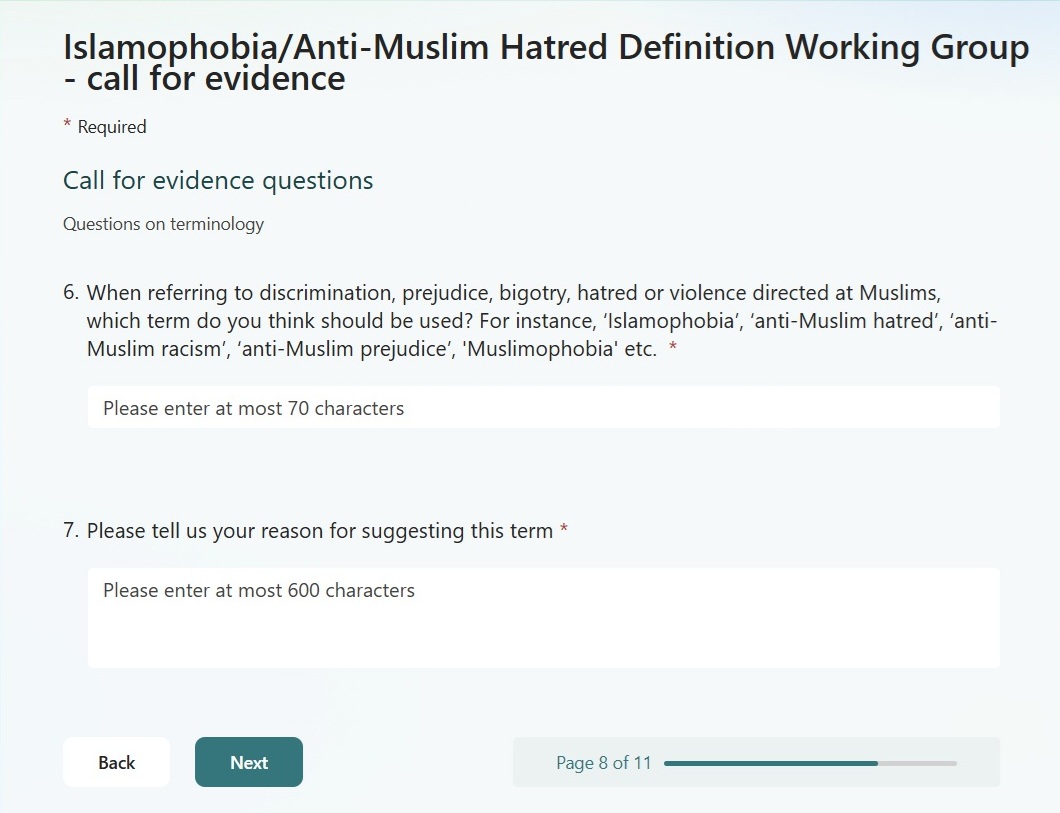
Dr Bernard Randall
A Chaplain who was fired for giving a sermon on Christian marriage and gender has won an appeal to challenge his dismissal.
The Court of Appeal has decided that Rev. Dr. Bernard Randall may challenge what he deemed “an unfair firing” for a teaching he delivered in his official capacity as a school chaplain.
“I am very pleased and thankful for today’s decision and am relieved that Judge Butler’s previous ruling has been acknowledged in court,” said Dr. Randall in a statement following the ruling.
“Nevertheless, the continuing long wait for justice is painful and holding back my life. I would not be where I am now if Educate and Celebrate (a pro-sodomy pressure group) had not been invited into Trent College, it is as simple as that,” Dr. Randall said.
“As an ordained Church of England minister working as a chaplain in a school with a CofE ethos, it was my duty to encourage debate and help children who were confused by the LGBT+ teaching to know that there are alternative views and beliefs on these contentious issues.”
Stop Transgenderism Now! →
Safeguarding or persecution?
In 2019, at Trent College, Dr Randall merely responded to students’ genuine concerns about LGBT ideology being forced upon them.
His sermon, which encouraged critical thinking, was met with institutional retaliation. The school, eager to appease an aggressive activist agenda, reported him to the government’s terrorist watchdog, as though Christian doctrine were a national security threat.
The farce continued when the Church itself, rather than standing by its own teachings, deemed him a “safeguarding risk.”
The bishop overseeing his case forced him into a psychological evaluation designed for sex offenders. This is not safeguarding; this is persecution.
Return to the UK’s Christian Constitution →
The LGBT agenda That consumed the Church
The CofE’s descent into ideological servitude did not happen overnight. The invitation of Educate and Celebrate, an extremist LGBT group, to indoctrinate children under the guise of inclusion was the catalyst that exposed just how compromised the Church has become.
The organisation, which demanded that teachers chant “smash heteronormativity,” was permitted unrestricted access to thousands of schools before collapsing under the weight of its own corruption.
Educate and Celebrate’s track record is nothing short of scandalous. One of its patrons, Stephen Ireland, now faces charges of child sex abuse, including rape and conspiracy to kidnap.
Peter Tatchell, another associate, in 1997 infamously suggested that children as young as nine could enjoy sexual relationships with adults. Yet, despite these disturbing connections, the Church of England remained silent, complicit in allowing this poison to infiltrate schools.
The real threat to children
The Church of England had the audacity to label Dr Randall a “safeguarding risk,” but the real threat to children was always Educate and Celebrate.
The group’s exposure as a haven for predators should have led to a full-scale inquiry, yet those in power continue to deflect attention onto innocent clergymen instead of addressing their own failures.
Educate and Celebrate’s perverse ideology was allowed to fester under the Church’s watch. The children who were subjected to its teachings were told to reject biological reality and embrace confusion. Instead of ensuring their safety, the CofE gave an extremist group access to their most vulnerable parishioners. Meanwhile, the man who sounded the alarm was vilified.
If there is a safeguarding concern here, it is not the presence of Christian doctrine in schools—it is the infiltration of radical activists who see children as ideological battlegrounds.
The Church of England, in its desperation to remain relevant in secular society, has become complicit in this disaster. This is an institution that has lost its moral compass entirely.
Support NCCSS / Christian Voice →
A show trial against Christianity
After being cast out from Trent College, Dr Randall sought justice through legal channels, but the rot extended even to the courtroom. His case was presided over by an openly anti-Christian tribunal member, Jed Purkis, who had previously declared that only atheists should hold office and derided Christians as a source of the world’s problems. Yet, this blatant bias was ignored until another case exposed his misconduct.
The same tribunal that condemned Dr Randall also presided over the case of a Christian teacher, ‘Hannah,’ who was dismissed for questioning the transition of an eight-year-old child under Stonewall’s guidance. When Purkis’s extreme biases were revealed, the entire panel was forced to recuse itself, acknowledging the appearance of prejudice. Yet, the damage to Dr Randall had already been done.
The corruption within the judicial system was finally exposed when the Employment Appeals Tribunal overturned the ruling against Dr Randall, declaring it “unsafe” and ordering a retrial. The fact that a supposedly impartial court had been so deeply compromised should shake every person of faith to their core.
Ask us to come and speak at your church →
The show of cowardice
The highest levels of the Church of England did not merely abandon Dr Randall, they actively obstructed justice. Archbishop Justin Welby (before his resignation), rather than addressing the injustice done to a faithful minister, sought to bury the case.
When Dr Randall filed a misconduct complaint against the Diocese of Derby for its disgraceful treatment of him, Archbishop Welby blocked it from proceeding.
Only when a senior church legal officer intervened did it become clear just how egregious the Church’s behaviour had been. The ruling found that Archbishop Welby had “plainly misunderstood the scope of his powers” and had acted wrongly in preventing the case from moving forward.
Even so, the Church has refused to restore Dr Randall’s Permission to officiate, effectively keeping him in ecclesiastical exile.
Will there be justice?
The latest ruling overturning Dr Randall’s conviction is a step in the right direction, but it raises a pressing question: when will true justice be served? His permission to officiate remains revoked. The Church’s internal review drags on with no resolution in sight.
Six years after his last sermon, Dr Randall remains in limbo while those who persecuted him continue unscathed.
This case is more than just an injustice against one man; it is a warning. The Church of England has aligned itself with forces openly hostile to Christianity, and anyone who resists will be silenced. If a minister can be treated this way for simply preaching scripture, then no faithful Christian is safe.
The corruption, cowardice, and betrayal exposed in this saga demand accountability. The question now is whether the Church will ever return to the very principles upon which it was founded, or whether it has become just another arm of the secular state
Gen 1:27; Exod 18:20; Lev 19:35-37; Deut 18:9-13; Prov 14:34, 28:07; Isa 29:16; Mark 10:6-8; Luke 17:28-29; Rom 1:25-27PRAY: for the UK government. Pray for Christian teachers. Thank God for Dr Randall. Let us know what YOU think in the comments below.
Support us!
We appreciate your support; it enables our research and helps us inform your prayers.So click below to support Christian Voice and stand up for the King of kings
Or fill in the form below to keep in touch:
Click on the social media links below to share this post:

For too long, Christians in the UK have found themselves silenced, punished, and ostracised for standing by their beliefs. Last week, the Court of Appeal handed down a ruling that corrects years of injustice—a decisive victory for free speech and religious liberty.
Kristie Higgs, a devoted Christian and former school administrator, was dismissed from her job for daring to voice concerns about gender ideology and same-sex marriage on her personal Facebook page.
The court’s decision affirms that dismissing an employee for simply expressing a religious belief is unlawful under the Equality Act 2010.
Ms. Higgs’ case is not an isolated one. Over the past decade, we have seen case after case where Christians have been targeted for their beliefs. Felix Ngole, a social-work student, was expelled from his course for expressing opposition to same-sex relationships on social media. Richard Page, an NHS director, was removed from his position for defending family structure. These cases have left many believers uncertain about their standing in a society that claims to uphold free speech.
While ‘progressives’ preach about tolerance, they have weaponised institutions to silence Christians. But the Court of Appeal has now drawn a line in the sand, reaffirming what should have always been clear: freedom of religion and expression are not subject to ideological trends.
The Bible says, John 15:18 If the world hate you, ye know that it hated me before it hated you.
The court has now reminded the world that Christians, too, have a right to speak.
For years, the legal system has sent mixed signals on religious expression. While Mr. Ngole was ultimately vindicated, Page was not. Such inconsistencies left Christians in a precarious position—unsure if their faith-based opinions might cost them their livelihoods.
Employers, emboldened by an anti-Christian bias, felt free to punish employees for their beliefs, confident that the courts would back them up.
This ruling, however, has set a powerful precedent that cannot be ignored. Employers can no longer justify discrimination against Christian employees who express their views outside of work.
This ruling is not just about one woman’s right to speak; it is about the broader battle against the ideological tyranny that has gripped Western institutions.
If a Christian can be fired for quoting Scripture, then the so-called ‘tolerance’ movement is nothing more than a mask for authoritarianism. The Court of Appeal’s decision is a crucial push-back against this overreach.
The erosion of free speech has never been more evident than in the past decade. We have seen academics, medical professionals, and even comedians lose their positions for failing to conform to radical ideologies.
This ruling signals that the power of truth cannot be drowned out by the noise of cultural coercion.
A win for all, not just Christians
Some may see this as a ‘Christian victory,’ but it is more than that—it is a victory for everyone who values free expression. Today, it is Christians who are under attack; tomorrow, it could be anyone who dares to voice an unpopular opinion.
This ruling upholds the principle that in a free society, beliefs—religious or otherwise—should not be policed by employers.
This case should serve as a wake-up call to the silent majority who have watched in fear as cancel culture and ideological purges take over workplaces.
Ms. Higgs’ victory is a clarion call for Christians to stand firm, unafraid, and unwavering in their convictions. The tide is turning, and this judgement has marked a pivotal moment in the fight for true freedom in Britain.
1 Kings 17:24; Psa 128:2; Prov 14:23; Rom 8:31; Gal 5:1; 2Tim 1:7 PRAY: for the UK. Pray for our leaders to lead in wisdom and the fear of God. Thank God for another victory.
Let us know what YOU think in the comments below.
Support us!
We appreciate your support; it enables our research and helps us inform your prayers.
So click below to support Christian Voice and stand up for the King of kings
Or fill in the form below to keep in touch:
Click on the social media links below to share this post:Read
US Vice-President J D Vance tells Europe's self-satisfied elite some home truths.
Script of video:
On Saturday 15th February, 2025, US Vice-President, J D Vance, gave a twenty-minute speech to assembled European dignitaries at the Munich Security Conference.
Of course the conference was already ablaze with outrage that President Donald Trump had called Russia’s President Putin and started negotiations on ending the war in Ukraine.
Euro-leaders shut down dissent
US Vice-President J D Vance tells Europe’s self-satisfied elite some home truths.
But J D Vance did not concentrate on that. He hardly mentioned it. His focus was to denounce his audience for shutting down domestic dissent, and to ask them what values they were defending.
For the BBC’s Security Correspondent Frank Gardner it was ‘a blistering attack decrying misinformation, disinformation, and the rights of free speech.’ He meant ‘upholding the rights of free speech’. I think Frank had lost his composure a bit.
He described the JDV speech as ‘a very weird 20 minutes – one met largely with silence from delegates in the hall.’ Indeed it was. Not just did the ‘speech go down very badly – unequivocally badly’, But ‘It was extraordinarily poorly judged,’ according to the affronted man from the BBC.
However, for Brendan O’Neill for Spiked Online, it ‘was a joy to watch’, ‘a delicious spectacle’, seeing ‘A Yank from dirt-poor origins sticking it to Europe’s turbo-smug ruling class’.
I’ve taken out some things you might find informative, even scriptural, from it. Well, it’s no secret that the new US administration ‘does God’, just as Tony Blair’s, according to his spin doctor Alistair Campbell, did not.
Nor, for that matter, do our present crop of UK politicians, even, I must venture, a great many who profess Christ. By ‘Do God’ I mean acknowledge that Jesus, the King of kings, is sovereign in the national affairs of men. Above all, to see faith in the Lord of life as more than a mere personal matter.
This may be a longer video than we normally post, but we’ll be going behind the scenes and drawing encouragement for those who pray and for those who recognise that there is indeed a spiritual dimension to our life here on earth. Sign our ‘Doing God’ petition:
It did not take long for the Vice-President to remind, in his own words: ‘all of us who have been fortunate enough to be given political power by our respective peoples, to use it wisely—to improve their lives.’
That is scriptural. Remember from the book of Romans, where the Apostle Paul is discussing the civil ruler? He writes: Rom 13:4 For he is the minister of God to thee for good.
Rulers, according to the Bible, are not there to impoverish their people, as the climate fanatics seem to think, but to create an environment in which we can prosper.
Threat from within
EU Leaders need to repent.
Bearing in mind this was a security conference, Mr Vance went on:
‘the threat that I worry most about for Europe is not Russia. It’s not China. It’s not any other external actor. What I worry about is the threat from within—the retreat of Europe from some of its most fundamental values, values that are shared with the United States of America.
‘I was struck that a former European commissioner went on television recently and sounded delighted that the Romanian government had just annulled an entire election. He warned that if things don’t go to plan, the very same thing could happen in Germany too.’
It was the Romanian constitutional court, as it happens, but Mr Vance regards the courts, correctly, you might say, as an arm of government.
Defence of Democracy
Mr Vance went on to point out that today: ‘Everything—from our Ukraine policy to digital censorship—is billed as a defence of democracy.’
Well even in the US, some claimed to be ‘defending democracy’ by trying to use the courts to stop Donald Trump from contesting the presidential elections.
And when the European elites use anti-democratic means to prevent the wrong people from participating in the democratic system, that too is ‘defending democracy’.
Because ‘Defending Democracy’ actually means, ‘Keeping us in power’.
The V-P reminded those present about the Cold War: ‘Consider the side in that fight that censored dissidents, closed churches, and canceled elections. Were they the good guys? Certainly not.’
’Shut down Social Media’
He went on to draw uncomfortable parallels between the old Soviet Union and today’s European leaders: ‘I look to Brussels, where EU commissars warn citizens that they intend to shut down social media during times of civil unrest, the moment they spot what they’ve judged to be “hateful content.”
‘Or to this very country (Germany), where police have carried out raids against citizens suspected of posting anti-feminist comments online, as part of “Combating Misogyny on the Internet: A Day of Action.”
‘I look to Sweden, where two weeks ago, the government convicted a Christian activist for participating in Quran burnings that resulted in his friend’s murder.’
The penalty imposed on Salwan Najem was a fine. His friend, Salwan Momika, was murdered by Muslim vigilantes just weeks previously. Either way, in Sweden, burning the Koran means consequences. Swedish judges have imposed an Islamic blasphemy law.
’Tolerant Country’
Stephen Green was convicted for standing outside Marie Stopes abortion facility in Ealing on 6th February 2023 .
As they have done in the United Kingdom, where one Martin Frost has now been convicted after a similar activity in Manchester.
‘This is a tolerant country, but we just do not tolerate this behaviour,’ said Judge Margaret McCormack in that case, apparently with a straight face.
And indeed, it was to the UK where J D Vance next turned his attention: ‘And perhaps most concerningly, I look to our very dear friends, the United Kingdom, where the backslide away from conscience rights has placed the basic liberties of religious Britain in the crosshairs. A little over two years ago, the British government charged Adam Smith-Connor, a 51-year-old physiotherapist and army veteran, with the heinous crime of standing 50 meters from an abortion clinic and silently praying for three minutes.
‘Not obstructing anyone. Not interacting with anyone. Just silently praying on his own. … Adam was found guilty of breaking the government’s new “buffer zone” law, which criminalizes silent prayer and other actions that could influence a person’s decision within 200 meters of an abortion facility.’
I too have been convicted of a buffer zone offence, for standing outside an abortion facility displaying a Bible verse. Neither obstructing nor interacting with anyone, just like Adam. And just like him, I have been, as J D Vance put it: ‘… sentenced to pay thousands of pounds in legal costs to the prosecution.’
Mr Vance went on: ‘To many of us on the other side of the Atlantic, it looks more and more like old, entrenched interests hiding behind ugly, Soviet-era words like misinformation and disinformation, who simply don’t like the idea that somebody with an alternative viewpoint might express a different opinion, or, God forbid, vote a different way—or even worse, win an election.’
He went on to ask what is their vision: ‘I’ve heard a lot about what you need to defend yourselves from, and of course, that’s important. ‘But what has seemed a little bit less clear to me, and certainly, I think, to many of the citizens of Europe, is what exactly it is that you’re defending yourselves for. What is the positive vision that animates this shared security compact that we all believe is so important?’
Keep themselves in power
It’s a good question. And I think the answer is their vision lies in keeping themselves in office, whilst advancing today’s secularist sacred cows, things which stupidly attack the Christian faith upon which their entire civilisation is built, ideas like sodomy, abortion, depravity, divorce and family breakdown, multiculturalism.
I think the new US administration even sees the European elite’s climate fanaticism as an example of what amounts to a cultural death wish. Sign our Petition:
As for multiculturalism being part of their death wish, how else, except from a spiritual perspective, do you explain their policy of opening the doors to Muslims, whose religion has supplanting the Christian foundation of their target societies with Islamism as an article of faith?
’nothing more urgent than mass migration’
Wreath laid after terror attack in France
The Vice-President certainly sees it like that: ‘I believe there is nothing more urgent than mass migration. Today, almost one in five people living in this country moved here from abroad. … The number of immigrants who entered the EU from non-EU countries doubled between 2021 and 2022 alone. And, of course, it’s gotten much higher since. And we know—the situation didn’t materialize in a vacuum.
‘It’s the result of a series of conscious decisions made by politicians all over the continent, and others across the world, over the span of a decade. We saw the horrors wrought by these decisions yesterday, in this very city. And, of course, I can’t bring it up again without thinking about the terrible victims—who had a beautiful winter day in Munich ruined.’
‘An asylum seeker, often a young man in his mid-20s, already known to police, rams a car into a crowd and shatters a community.’
As Vice-President Vance was speaking, a 23-year-old Syrian asylum seeker murdered a 14-year-old boy and wounded five others in an Islamist knife attack in Austria.
What did we vote for?
‘No voter on this continent went to the ballot box to open the floodgates to millions of unvetted immigrants.’
‘But you know what they did vote for? In England, they voted for Brexit. And, agree or disagree, they voted for it. And more and more, all over Europe, they’re voting for political leaders who promise to put an end to out-of-control migration. …
‘I just think that people care about their homes. They care about their dreams. They care about their safety and their capacity to provide for themselves and their children.’
Going further, he took aim at the elitist World Economic Forum, where King Charles has hob-nobbed with Klaus Schwab, Prince William launched his Earthshot Prize, where Justin Trudeau, Jacinda Ardern and the current secretary general of NATO, former Dutch prime minister Mark Rutte, emerged from the Young Global Leaders programme, and where ordinary people are envisaged as owning nothing and being happy:
‘Contrary to what you might hear a couple mountains over in Davos, the citizens of all of our nations don’t generally think of themselves as educated animals or as interchangeable cogs of a global economy.’
’Sacred Principle’
Moses. brings the Ten Commandments for the people to ratify
It might have come as a shock to those assembled, and to some of our judges, but the US Vice-President regards the thoughts and concerns of ordinary people as valid and worthy of consideration. ‘Democracy rests on the sacred principle that the voice of the people matters. There’s no room for firewalls. You either uphold the principle, or you don’t. Europeans—the people—have a voice.’
The ‘firewalls’ refers to the German elite ostracising the elected members of the AfD, of course. But does democracy rest on a ‘sacred principle’? I think it does. The people have to give their assent to those who rule.
When Moses brought the words of the Covenant given by the Almighty down from Mount Sinai, we read it was essential that it was ratified by the people. Three times in the book of Exodus, in chapter nineteen and twice in chapter twenty-four, we read of the democratic assent of the people, culminating in this:
Exod 24:7 And he took the book of the covenant, and read in the audience of the people: and they said, All that the LORD hath said will we do, and be obedient.
Fear not
J D Vance finished by quoting the late Pope John Paul II, a prominent supporter of democracy in his native Poland, who once said: ‘“Do not be afraid.”
‘We shouldn’t be afraid of our people, even when they express views that disagree with their leadership.’
It was the Lord Jesus who said ‘Fear not’ first, many times, but it is a constant theme in scripture and it depends on faith and love of God: 1John 4:18 There is no fear in love; but perfect love casteth out fear:
But actually, the arrogant European elites do have reason to fear their people. They know that the people have had enough of them. They are afraid of losing their positions in elections.
There is one higher than they
They will most likely ignore the witness of Mr Vance, and carry on just the same. Yet scripture says, in Ecclesiastes:
Eccl 5:8 If thou seest the oppression of the poor, and violent perverting of judgment and justice in a province, marvel not at the matter: for he that is higher than the highest regardeth; and there be higher than they.
Do not be afraid of them, because we have sure promises from the Lord on high. Here is his attitude towards those who deny the rule of King Jesus, from Psalm two and verse four: Psalm 2:4 He that sitteth in the heavens shall laugh: the Lord shall have them in derision.
How do we know that the arrogant will fall? From, for example, Psalm seventy-six: Psalm 76:12 He shall cut off the spirit of princes: he is terrible to the kings of the earth.
From Mary’s Magnificat in Luke chapter one: Luke 1:51 He hath shewed strength with his arm; he hath scattered the proud in the imagination of their hearts.
Luke 1:52 He hath put down the mighty from their seats, and exalted them of low degree.
Which itself is based solidly on the whole witness of scripture, for example, here in psalm one hundred and forty-seven: Psalm 147:6 The LORD lifteth up the meek: he casteth the wicked down to the ground.
’Turbo-smug ruling class’
And that is why the speech of the humble boy from ‘dirt-poor origins’ went down so ‘unequivocally badly’ with ‘Europe’s turbo-smug ruling class’.
If you agree, sign our ‘doing God’ petition below:
And please don’t forget, to do this work of weighing current affairs against scripture, and giving you the information you need, we rely on the Lord’s blessing and your prayers and financial support.
Support us!
We appreciate your support; it enables our research and helps us inform your prayers.
So click below to support Christian Voice and stand up for the King of kings
Or fill in the form below to keep in touch:
Click on the social media links below to share this post:
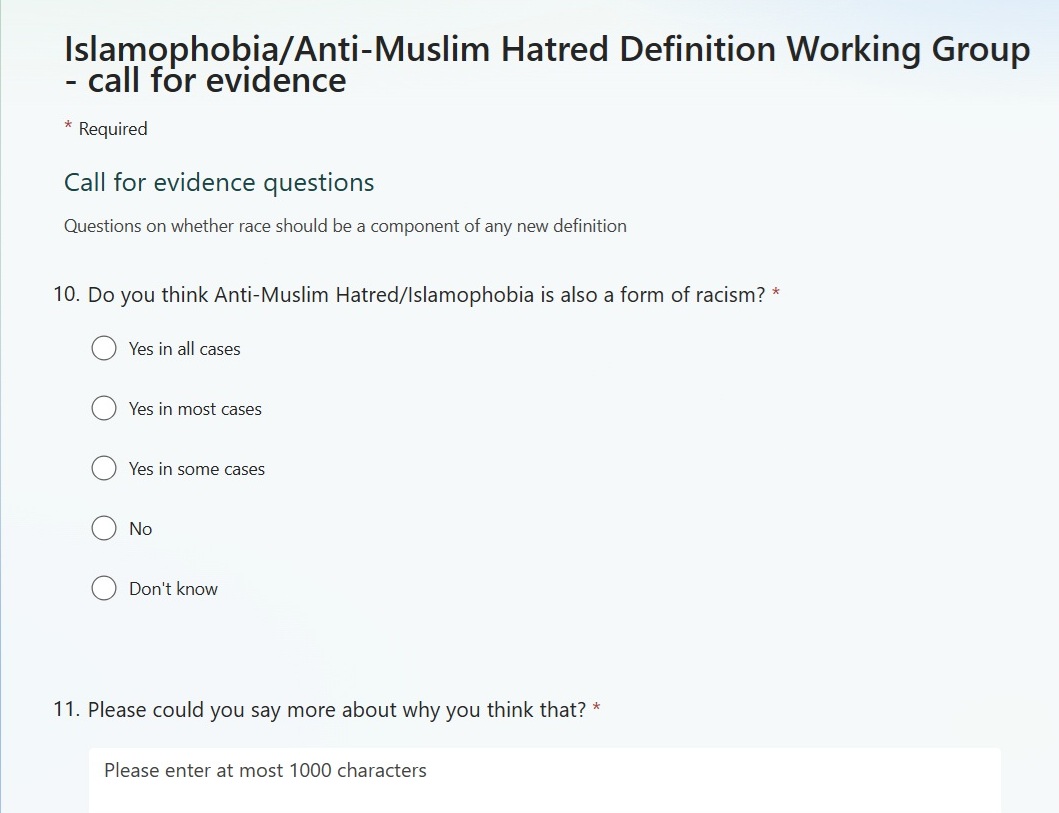
Irish teacher Enoch Burke jailed for a third time after he was arrested outside the school that sacked him for refusing to 'call a boy a girl'. (Mr Burke pictured here arriving at the court of appeal in Dublin in February 2023)
Irish teacher Enoch Burke jailed for a third time after he was arrested outside the school that sacked him for refusing to ‘call a boy a girl’. (Mr Burke pictured here arriving at the court of appeal in Dublin in February 2023)
Irish schoolteacher Enoch Burke has been sent to prison for the third time following his arrest outside the school that sacked him for refusing to ‘call a boy a girl’.
On 2nd September 2024, Mr Burke was placed inside a Garda vehicle outside Wilson’s Hospital School in Ireland’s Co Westmeath and driven to the Four Courts in Dublin, according to the Irish Independent.
The judge made the decision after Mr. Burke repeatedly refused to give a direct answer when asked if he would continue to ignore an order from Mr. Justice Alexander Owens, which prohibits him from attending the school.
Mr. Justice Quinn stated that he was ‘satisfied’ Mr. Burke was in contempt of court and noted that his presence at the school was ‘disruptive to the staff’s ability to provide orderly education to pupils’. He ordered that Mr. Burke be detained at Mountjoy Prison until he ‘purges his contempt’.
The case will be listed again on 11th October 2024 but the judge said Mr Burke could ‘purge his contempt’ before then.
Mr Burke pictured at Wilson’s Hospital School gate in 2023. photo :DailyMail
Following the ruling, Mr Burke told the judge: ‘You will answer to God for imprisoning me for my religious beliefs.’
‘This court is simply denying me my religious beliefs, and my right to my religious beliefs. I am a Christian. I have Christian beliefs. My belief is male and female, God made them male and female.’
During the hearing, Mr. Burke and his family argued that the numerous judges who have handled the case had failed to address a report made by the school’s then-principal, Niamh McShane, which prompted to the schoolteacher’s suspension in August 2022.
They said: ‘You can lie like your colleagues have over the past two years. The truth can be trampled into the ground but it will rise again.’
Luke 8:17 For nothing is secret, that shall not be made manifest; neither any thing hid, that shall not be known and come abroad.
Mr Burke said Ms McShane had claimed he was guilty of gross misconduct due to his refusal to call a ‘transitioning student’ by a new name and the pronoun ‘they’. He said the legality of that demand was never considered by the court.
However, last year, Judge Owens found the school was right to suspend Mr Burke over fears of ‘harmful and disruptive conduct’
The Bible says, Romans 14:10-12 But why dost thou judge thy brother? or why dost thou set at nought thy brother? for we shall all stand before the judgment seat of Christ…So then every one of us shall give account of himself to God.
In June 2024, an Irish High Court judge ordered the release of Enoch Burke from Mountjoy Prison.
Mr Justice Mark Sanfey directed that Mr Burke be freed from the Dublin prison, where he has been incarcerated since last September for his refusal to stay away from Wilson’s Hospital School in County Westmeath.
The judge said that following a review of the situation, ‘the fact examinations are now completed and the school is on holidays, and thereby directing Mr. Burke’s release.’
‘The court did not require Mr Burke to purge his contempt with an agreement to comply with the terms of an order made against him last year,’ the judge said.
Suspended for opposing ‘trans rights’
In May 2023, the High Court upheld Wilson’s Hospital School’s decision to suspend Enoch Burke in August 2022. The school sought the court’s affirmation that it was justified in placing Mr. Burke on paid leave pending the outcome of a disciplinary process.
Mr. Burke had contested the suspension, arguing that it was unlawful and driven by his opposition to the extension of ‘transgender rights’, which arose after the school directed him to address a former student by a different pronoun.
Additionally, the school had secured a High Court injunction requiring Mr. Burke to stay away from the premises during his suspension.
In a December 2023 ruling, Judge Brian O’Moore suggested that the “only plausible interpretation” of Mr Burke’s actions was that he was “exploiting his imprisonment for personal gain” and seeking fame; otherwise, he would have “taken the opportunity to end it” by simply complying.
However, this may be the “only plausible interpretation” from the perspective of a judge in the now heavily secularised Ireland, where the notion that a man might be acting out of genuine religious conviction is seen as absurd and unthinkable.
Meanwhile, inmates at Mountjoy Prison reportedly expressed their support for their new inmate, him, saying that he “should not be in here” and encouraging him to “keep [his] head up,” even leaving small gifts like popcorn and biscuits at his cell door.
This has been pointed out to highlight the view that, in Ireland, the moral compass of criminals now seems more aligned with the Almighty than that of judges.
Are Christian teachers the target?
The recent arrest, suspension, and termination of employment of Christian teachers seem increasingly like efforts to force educators to conform to ‘trans’ ideologies.
Joshua Sutcliffe, for example, was banned from teaching by the Teaching Regulation Agency (TRA) In July 2024 for stating that ‘a boy cannot be a girl’ and ‘homosexuality is a sin.’ Their ruling was upheld in court by one Justice Pepperall. (See our related story here.)
Also, In July 2023, a Christian councillor, King Lawal was suspended for tweeting that pride is not a virtue but a sin.
Meanwhile, another Christian teacher identified as Glawdys Leger was sacked after refusing to promote extreme ‘LGBT’ ideology, and for expressing her biblical beliefs on human sexuality in response to student questions.
In July 2023, a Christian social worker had a £25,000-a-year job offer revoked after his employer discovered his previous legal victory affirming his freedom of speech. Felix Ngole faced expulsion from a social worker training course at Sheffield University after sharing a Facebook post that referenced Bible passages on the topic of same-sex marriage.
Similarly, in 2019, Dr. Bernard Randall received a 5-year ban from his ministry for preaching traditional Christian views to students at Trent College, a private school in Derbyshire, where he was the chaplain.
He delivered a sermon titled ‘Competing Ideologies,’ where he reassured young people that they were ‘not obliged to accept someone else’s ideology.’ In his speech, grounded in Biblical principles, he encouraged students to be open to diverse viewpoints, whether on religion, Brexit, or ‘LGBT’ issues. See our story here.
Meanwhile, Irish state or schools could alleviate the situation by declaring God’s truth that a boy cannot be a girl.
READ: Lev 19:35; Deut 22:05; 1 Kings 17:24; Psa 128:2; Prov 14:23; Rom 3:23; 2 Corinth 5:10; Mark 10:06; 2 Tim 2:15; 1 John 1:8.
PRAY: For the repeal of woke laws.
Pray Christian Educators
Pray for children across the UK
Let us know what YOU think in the comments below.
Support us!
We appreciate your support; it enables our research and helps us inform your prayers.
So click below to support Christian Voice and stand up for the King of kings
Or fill in the form below to keep in touch:
Click on the social media links below to share this post:
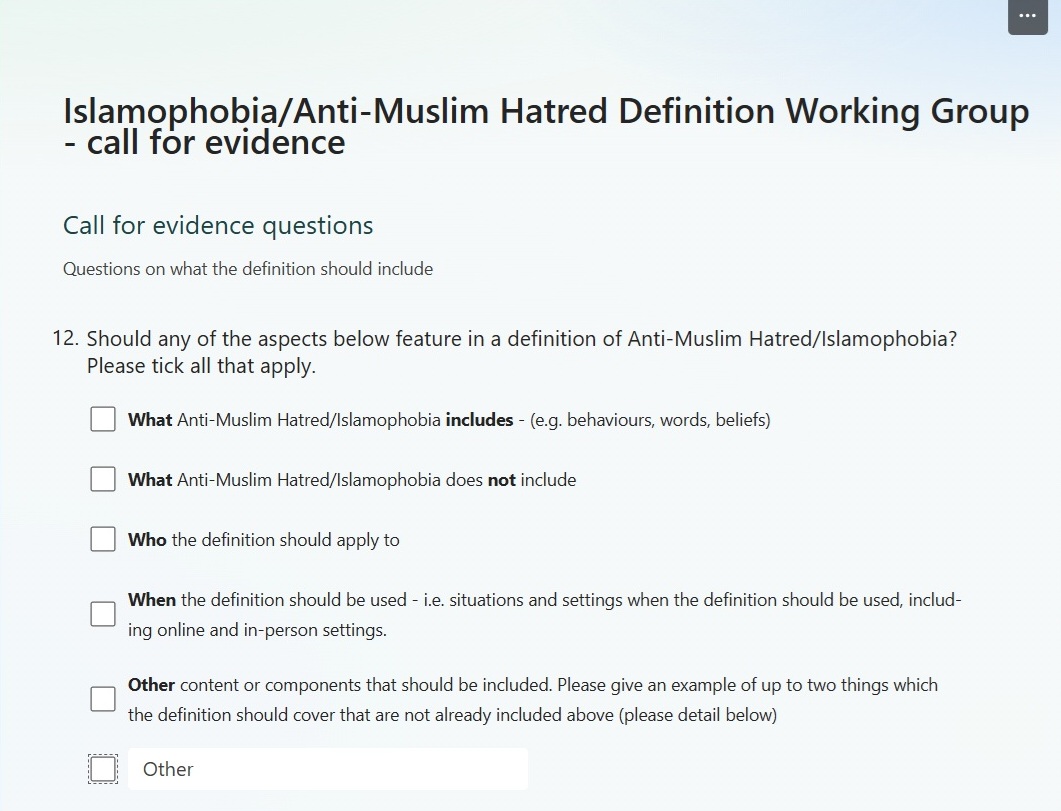
Reverend Dr Bernard Randall. Cred: Christian Concern
The Archbishop of Canterbury was ‘plainly wrong’ in dismissing concerns about the blacklisting of a gender-critical chaplain, a leading lawyer working for the church has ruled.
The Archbishop reportedly tried to block a serious complaint of misconduct being investigated in relation to the ‘egregious’ blacklisting of Reverend Dr Bernard Randall.
Dr Bernard Randall, 52, received a 5-year ban from his ministry for preaching traditional Christian views to students at Trent College, a private school in Derbyshire, where he was the chaplain. link
He told students during a sermon that they could question teaching on ‘LGBT’ relationships.
Dr. Randall was reported to Prevent, the terrorism watchdog, and was ruled by the Church of England to be a risk to children.
The Bible says, John 17:17 Sanctify them through thy truth: thy word is truth.
In 2019, Dr. Randall gave a sermon he titled ‘Competing Ideologies’, during which he reassured young people that they ‘are not obliged to accept someone else’s ideology’.
In his well articulated Bible standard speech, he told students that they were at liberty to listen to other points of view, whether on religion, Brexit or ‘LGBT ’.
Dr. Randall went on to say it was not wrong to think ‘that human beings are indeed male and female’. He also suggested that, according to the Christian church, marriage is between a man and woman and that a dim view is taken of sex outside of wedlock.
His words triggered complaints from pupils, parents and staff members. Some even claimed they were nearly left in tears.
Despite being cleared of wrongdoing over the 2019 sermon, he remains barred from preaching after a decision by the Bishop of Derby, the Right Reverend Libby Lane, the church’s first female bishop.
The Bible says, Ephesians 6:14 Stand therefore, having your loins girt about with truth, and having on the breastplate of righteousness.
Following an investigation by the church, Dr. Randall was exonerated for the comments he made during his sermon.
But the Derby diocese’s safeguarding team, under the watch of Bishop Lane, still stopped Dr. Randall from taking any position as a vicar.
In 2021, the diocese refused to grant him a licence to officiate without first going through a risk assessment, effectively banning him from preaching.
The diocese safeguarding team claims that the sermon itself was not the reason for this witch-hunt against Dr. Randall.
Rather, it supposedly raised concerns about how he might ‘support someone who came to him if they were struggling with their sexuality’. But Christian Concern, which took up Dr. Randall’s case, maintains that the Right Reverend Lane blacklisted him as a ‘risk to children’ because of his Christian beliefs.
Senior church leaders are taking the back seat and turning away from their parishioners, prioritising identity politics over spiritual and moral guidance.
This attempt to appeal to younger generations through a focus on progressive ideologies is misguided and out of touch with what most people, particularly the youth, truly seek. Instead of ‘woke’ ideologies, there is a growing desire for genuine unity and moderation within the church.
The Church, despite its increasingly diluted stance, has a unique chance to offer a balanced and unifying voice.
Unfortunately, its current leadership, exemplified by Archbishop Welby and Right Reverend Lane, seems more concerned with conforming to popular opinions rather than fulfilling their role as spiritual shepherds.
The Bible says John 4:24 God is a Spirit: and they that worship him must worship him in spirit and in truth.
Persecuted Christian professionals
In recent times, more Christians have been increasingly persecuted for speaking up against gender indoctrination and sodomy.
In July 2024, a Christian maths teacher, Joshua Sutcliffe was banned from teaching by the Teaching Regulation Agency (TRA) for stating that ‘a boy cannot be a girl’ and ‘homosexuality is a sin.’
Also, In July 2023, a Christian councillor, King Lawal was suspended for tweeting that pride is not a virtue but a sin.
Meanwhile, another Christian teacher identified as Glawdys Leger was was sacked after refusing to promote extreme ‘LGBT’ ideology, and for expressing her biblical beliefs on human sexuality in response to student questions.
In July 2023, a Christian social worker had a £25,000-a-year job offer revoked after his employer discovered his previous legal victory affirming his freedom of speech.
Felix Ngolefaced expulsion from a social worker training course at Sheffield University after sharing a Facebook post that referenced Bible passages on the topic of same-sex marriage.
PRAY: For our health system. Pray for leaders in power.

Let us know what YOU think in the comments below.
Support us!
We appreciate your support; it enables our research and helps us inform your prayers.
So click below to support Christian Voice and stand up for the King of kings
Or fill in the form below to keep in touch:
Click on the social media links below to share this post: