
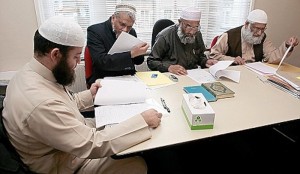
The Governments’ consultation into sharia courts opened in July and closed in August. It was said to be ‘part of an independent review into its use in England and Wales’.
Professor Mona Siddiqui, a Muslim herself, was appointed to lead it, ‘investigating the treatment of women in cases involving divorce, domestic violence and child custody’.
NO INFIDELS NEED RESPOND
It was not, as so many thought it should be, a consultation into the principle of whether a rival law system should operate under the established legal system in England and Wales. The Home Office only wanted to hear from ‘people with experience of sharia law.’
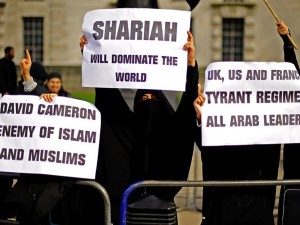
That meant ‘Kadhis’, sharia judges, and those on the receiving end of Islamic justice.
The consultation page said:
‘We would like to hear from you if you have knowledge, expertise or experience on the use of sharia law, especially if you:
‘work or have worked as part of a sharia council in the last 5 years
‘have used a sharia council in any capacity in the last 5 years,’
It meant only Muslims could respond and no-one, including a Muslim with misgivings about sharia councils, who had not paritcipated in such a court would be admitted to the consultation.
ARBITRATION SYSTEM
Sharia courts operate within the arbitration system which was set up in the nineteenth century by the Arbitration Act 1889. Arbitration is especially useful in commercial disputes and cases involving land or construction. Costs for parties are lower and by agreeing to arbitration, parties relieve time pressure on the overburdened courts. The outcome on parties who agree to arbitration is binding and enforceable.
Arbitration panels operating specifically for Muslims fall within this system.
The problem is that no-one is really sure what system of law is being applied by the Muslim Arbitration Tribunal (MAT), the main Islamic arbitration council which has sprung up.
KADHI COURTS
Is it true that Islamic arbitration, as Government ministers stoutly maintain, and Wikipedia announces: ‘operates within the framework of English law and does not constitute a separate Islamic legal system’?
Or is the Kadhi (the Arabic word for ‘judge’) secretly handing down Fatwa (Arabic for ‘judgment’) using Sharia (the Arabic word for ‘law’)?
Kahdi Courts using the Arbitration framework are said on the Muslim Arbitration Tribunal website (above) to be ‘a viable alternative for the Muslim community seeking to resolve disputes in accordance with Islamic Sacred Law’.
How can they be in accordance with Sharia and also with the law of England and Wales, or that of Scotland? The Scottish Government said in a response to a consultation that parties could explicitly agree to ‘apply Sharia law’ to their dispute. They also said: ‘Any final award must comply with Scots or UK law otherwise it would be unenforceable in the Scottish courts.’ What does that mean if a party has already agreed to Sharia?
SHARIA DIVORCE COURTS
In addition to Kadhi Courts operating within the arbitration system, there are others, including the Islamic Sharia Council (ISC), set up to apply Islamic law outside it. 95% or the work of the ISC is to do with divorce, enabling Muslim parties (mainly, it appears, women) to gain an Islamic divorce in addition to a UK civil divorce.
Although they say they do not settle matters of residence of children, Machteld Zee, a Dutch author, looking at the way these courts operate, concluded they do indeed decide those matters. In practice, a party would probably then concede the Sharia position decided by the Kadhis on his or her next appearance in the civil court.
She revealed there are around 85 such councils in England and Wales. She also said they invariably give custody or ‘residence’ of children to fathers. Some might add ‘it’s about time’ in view of the opposite tendency in civil divorce courts, but that is exactly the point. There appear to be competing parallel systems operating.
MUSLIMS ‘BENEFIT’ FROM SHARIA
Setting up the enquiry, Theresa May, as Home Secretary, claimed that many British Muslims “benefit a great deal” from the existence of Kadhi Courts. Nile Gardiner, a foreign policy analyst and former aide to Margaret Thatcher, was unimpressed by her comments, describing them as “unbelievable”.
Mrs May said: “Many British people of different faiths follow religious codes and practices, and benefit a great deal from the guidance they offer.
“A number of women have reportedly been victims of what appear to be discriminatory decisions taken by Sharia councils, and that is a significant concern.
“There is only one rule of law in our country, which provides rights and security for every citizen.”
The testimony of the MAP and the findings of Machfeld Zee indicate that rule of law is set aside the moment a Muslim agrees to be bound by a Sharia Kadhi Court.
EXPERTISE
Mrs May said, “Professor Siddiqui, supported by a panel with a strong balance of academic, religious and legal expertise, will help us better understand whether and the extent to which Sharia law is being misused or exploited and make recommendations to the Government on how to address this.”
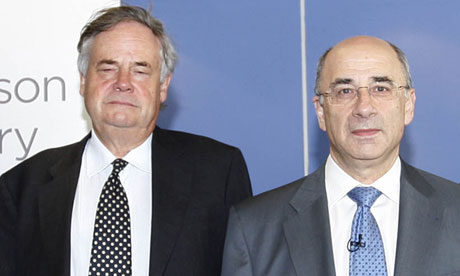
According to the Home Office, the panel includes ‘family law barrister Sam Momtaz, retired high court judge Sir Mark Hedley and specialist family law lawyer Anne Marie Hutchinson OBE QC’. Crucially, it will also be ‘advised’ by two ‘religious and theological experts’ who are Islamic preachers: Imam Sayed Ali Abbas Razawi and Imam Qari Asim.
Comments made by Imam Razawi reported in the Independent suggest he supports the death penalty in Islamic states, promotes negative views about homosexuality and believes Western clothing is a sign of corruption.
Imam Asim is attached to Leeds Makkah Masjid, one of the UK’s largest mosques. Secularist Muslim-origin signatories to a letter seen by The Independent pronounced the consultation a whitewash before it even began.
We await the consultation’s findings with interest to see if they will be proved right.






Islam, I’m afraid, is NOT going to accommodate itself to Wstern mores. Its always us “giving in” to them. We have these inter-faith services where muslims are invited and the muslim prayers are said: you don’t see many Christian prayers said in mosques do you? (yes I know, we are invited to VISIT them as part of their dahwwa). As I have said before, we will be muslim-majority within a couple of generations, if present trends (birth rates, muslim immigration etc) continue. We just need to continue to do nothing. Its happened in other countries, slowly but surely. As they say, “they have clocks we have time” (or words to that effect). One day we will wake to find that, eg as a woman, you need to wear a veil or you’ll get acid thrown in your face. Imo, this could well be God’s judgement for a civilisation built on Christian values and the Bible, which is now largely scorned. “You don’t like Me? try allah then”. Only national repentance can save us, imo. As I believe the Brexit vote, showed, the Lord desires to show mercy on us, perhaps He hasn’t finished with us yet.
As I say, imo we will be a muslim-majority country within a couple of generations. Will the Lord return before then?