Homosexuals in Scotland may only number around 1% of its population, but Alex Salmond is courting their votes in a final push for the ‘Yes campaign’, according to Pink News.
The First Minister told the ‘Equality Network’, a group of homosexual activists, that an independent Scotland would cement perversion in a new constitution.
Mr Salmond said: “Independence is a once in a lifetime opportunity to embed and enhance LGBTI rights. With Independence we will be able to enshrine LGBTI equality in a written constitution – ensuring our rights cannot be easily reversed by any government”. (‘Our rights’? What can that mean?)
“With a No vote we face the prospect of another Tory government committed to scrapping the Human Rights Act…It’s only with the full powers of an independent country that we can finally secure true equality for LGBTI people and a fairer society for all.”
The First Minister said the equality protections of a Scottish constitution would include: age, disability, gender identity, gender reassignment, intersex status, marriage or civil partnership, pregnancy or maternity, race, religion or belief, sex and sexual orientation.
In reality, the gay-friendly Conservatives are not going to repeal ‘gay marriage’ or the Equality Act whether the UK remains signed up to the European Convention on Human Rights or not. Mr Salmond is erecting an Aunt Sally. But it gets worse.
Alex Salmond being ‘gay-friendly’ at ‘Pride House’. The homosexual ‘Rainbow’ flag flew over St Andrew’s House during the Commonwealth Games 2014.
Mr Salmond went on: “With complete control over foreign policy and international development we will be able to make full use of diplomatic relations and actively promote LGBTI equality and human rights around the world.”
So Indy-Scotland will not lift a finger to help Christians in Iraq but will promote sodomy across the globe. The UK has been been bad enough at forcing its view through its aid budget down the throats of Africans, but under Mr Salmond, whips seem about to be replaced by scorpions.
Scotland will also give foreign homosexuals priority in asylum applications: “With independence we can have a new humane approach to asylum seekers and refugees in line with our values and commitment to upholding internationally recognised human rights. Our approach stands in stark contrast to Westminster’s aggressive approach that is best exemplified by their offensive ‘go home’ advertising campaign.
“Scotland has a very clear position on promoting lesbian, gay, bisexual and transgender and intersex rights both at home and abroad,” Mr Salmond concluded.
Christian Voice has remained neutral during the Scottish Independence debate, but Mr Salmond’s declaration now means that no Bible-believing Christian can vote for him or for independence, if it entails what its chief protagonist says it does.
Find out how to join Christian Voice and stand up for the King of kings (clicking on the link below does not commit you to join)
Please note that persons wishing to comment on this story must enter a valid email address. Comments from persons leaving fictitious email addresses will be trashed.
An independent Scotland won’t join an American/RUK coalition to defeat Islamic State, the Scottish First Minister has just said.
Responding to a question from Laurence Lee of Al Jazeera, Mr Salmond said in a press conference today that Scotland would only support military action against Islamic State if it were sanctioned by the United Nations. Presenting this as a ‘lawful’ way of going about things, it rules out action specifically requested by Iraq and puts an impossible obstacle in the way of intervention.
‘We will only participate in military action which has been sanctioned by the United Nations in accordance with international law,’ the First Minister said.
Mr Salmond added: ‘It is a vital matter and one in which we are being successful that we hold our own communities together in a difficult international circumstance’. He went on to say that the Muslim community of Scotland are ‘a vital part of our community and are not in any way responsible for the atrocities of the Islamic State and indeed have roundly condemned such atrocities in forthright terms.’
Community cohesion was an interesting context into which to place his opposition to action against Islamic State.
THE PURPOSE OF THE UNITED NATIONS
Mr Salmond raised the matter of the illegal invasion of Iraq, saying quite rightly that there was no United Nations sanction for it.
The need for a United Nations resolution would be perfectly valid in the context of the invasion of a sovereign state by another sovereign state, as was the case with the US/UK invasion of Iraq. The UN was founded to prevent war in the wake of the destruction of World War II. The UN Charter prohibits member states of the UN attacking other UN member states. That is central to its purpose. The United Nations deals, well or badly according to one’s perspective, with affairs between nations, or criticises or supports the actions of nations.
Iraqi Ambassador His Excellency Faik Nerweyi has asked the UK for military assistance to defeat Islamic State.
It can also call for peace between rival factions in a sovereign state or call for stability, as it did in Resolution 2103over instability in Guinea-Bissau. In Resolution 1701, it called for the withdrawal by Israel from Lebanon. Calls in the Resolution for the cessation of hostilities by Hezbollah against Israel and the territorial integrity of Lebanon were inserted at the request of those country’s allies balanced the resolution.But the rise of Islamic State, a rogue army arising and invading sovereign states, is quite different. There seems to be little precedent for a United Nations resolution for military action against some rag-bag international movement, however powerful or well-funded it is. (Check out this list of recent UN resolutions)
If a sovereign state requests the help of another state in an internal emergency such as the one faced by Iraq, and is not doing anything remotely hostile against its own citizens, that state does not appear, under international law, to require the permission of the United Nations to come to its aid. That is why people who were completely opposed to the invasion of Iraq, such as ourselves, are strongly calling for the UK and the US to help Iraq with military intervention against Islamic State now.
There is a big difference between the two and it is strange that Mr Salmond cannot see that.
SCOTLAND WILL FIDDLE WHILE IRAQ BURNS
Given that Iraq has actually asked the United States and the United Kingdom for military assistance against Islamic State, Mr Salmond is saying that Scotland will not help the Iraqi government to recover land lost to the Christians around Mosul, ancient Nineveh, even though the Iraqi government has requested it. Scotland will insist on a United Nations resolution. Of course Scotland would not immediately be a member of the UN in any case, and would need to apply, as Israel did in 1948, and a resolution on defeating Islamic State in Iraq will not be forthcoming.
So an independent Scotland under Salmond will fiddle while Iraq burns. That is very sad if it is indicative of future foreign policy of an independent Scotland under Mr Alex Salmond.
Find out how to join Christian Voice and stand up for the King of kings (clicking on the link below does not commit you to join)
Please note that persons wishing to comment on this story must enter a valid email address. Comments from persons leaving fictitious email addresses will be trashed.
Two top retired generals and the chairman of parliament’s intelligence and security committee are calling for collaboration with President Bashar al-Assad of Syria in order to defeat Islamic State, also known as ISIS and ISIL.
But HM Secretary of State for Foreign and Commonwealth Affairs refuses even to pick up the phone.
Former army chief and committed Christian Lord Dannatt, General Sir Richard Shirreff and Sir Malcolm Rifkind have all called on Philip Hammond to work with President Assad.
Lord Dannatt told BBC Radio 4′s Today programme: “I think whether it’s above the counter or below the counter, a conversation has got to be held with him. Because if there’s going to be any question of air strikes over Syrian air space, it’s got to be with the Assad regime’s approval.”
Sir Malcolm, the chairman of Parliament’s Intelligence and Security Committee, and a former foreign secretary and defence secretary, said that the US and its allies must be prepared to work with the Syrian regime of Bashar al-Assad to have any hope of defeating Isis. He said history had shown that “sometimes you actually have to make an arrangement with some nasty people in order to get rid of some even nastier ones”. Sir Malcolm also called for Saudi Arabia and Qatar to stop “the private funding and help that has been given to jihadi extremists by supporters in their countries for several years”.
Syrian President Bashar Al-Assad
But Philip Hammond rejected the calls, saying: “We may very well find that we are aligned against a common enemy but it would poison what we’re trying to achieve in separating moderate Sunni opinion from the poisonous ideology of Isil if we were to align ourselves with Assad.”
“There can be no eradication of Islamic State as a threat without a regional approach,” he said. “Islamic State is operating and has spread into Syria and therefore, there is likely to be – or inevitably going to be – a need to sit down and talk to difficult bedfellows.”
Christian Voice believes that Mr Hammond, like his predecessor, over-estimates his ability to turn the Syrian rebels into some sort of democratic body respecting the human rights of minorities such as the Christians and Alawites of Syria.
The Syrian regime was destabilised at the bidding of fanatical pro-democracy agitators like George Soros. Soros funded Syrian activists directly and through his links to avaaz.org. (See March 2011 in the link) (More on Avaaz here). It was only by the grace of God that a government motion to take military action against the Syrian Government was defeated in the UK House of Commons on 30th August 2013. But US intervention and UK and European logistical support inevitably fueled the rise of ISIS. Weaponry delivered to the rebels has inevitably found its way into the hands of Al-Qaeda and now ISIS.
We have held a consistent view that only President Assad stood between Christians in Syria and a blood-bath, that the UK Government was wrong to support the Islamic militants trying to oust him. Our Government are responsible for a colossal loss of life and property, in fact for what Sir Malcolm calls the ‘destruction’ of Syria. They now have a face-saving opportunity to switch sides.
Find out how to join Christian Voice and stand up for the King of kings (clicking on the link below does not commit you to join)
Please note that persons wishing to comment on this story must enter a valid email address. Comments from persons leaving fictitious email addresses will be trashed.
Theresa May: in favour of increased internet surveillance in Britain.
Theresa May has resurrectedplans for a “snooper’s charter” in order to counteract, she says, terrorist threats from British jihadists in Syria.
She stated againthat she wants to “equip the state with greater surveillance powers—including the ability to access citizens’ email and social media accounts.”
May claims that it is vital for security authorities to have enough power to counteract terrorist in a world with ever-increasing internet capabilities. She claims that having this power is a matter of “life and death, a matter of national security.”
She related how many Britons have travelled to Syria to fight the Assad regime, and how this could represent a threat when they return to the UK.
May also claimed that at least 20 cases, 13 of which involved a threat to a child’s life, were dropped by the National Crime Agency in the past six months for lack of communication data.
Speaking at the Lord Mayor’s Defence and Security Lecture, May said that “the real problem is not that we have built an over-mighty state but that the state is finding it harder to fulfil its most basic duty, which is to protect the public.”
She believes that internet technology has given criminals more ways to commit crimes, and that the Government needs to be able to match these criminals in technological advances, which includes accessing information that can help stop them. She even referred to the internet as a “breeding ground for criminals.”
Emma Carr, acting director of privacy campaigner group Big Brother Watch, assertedthat May differs from the majority opinion on this issue.
“Yet again the Home Secretary is clashing with the broad political consensus that no new powers should be introduced until a full independent review into the currently available surveillance legislation and oversight mechanisms has taken place,” she said in a statement.
“We know from surveillance transparency reports published by private companies that they largely comply with law enforcement requests for communications data.
“Therefore, if the Home Secretary is stating that communications data was unavailable in specific cases, then that would suggest that a warrant was either not submitted to, or was rejected by, the companies in question. The question therefore should be why is this the case?” Carr added.
May introducedthe “snooper’s charter” proposal last year to increase surveillance of people’s internet and phone communications, but it was blocked by Nick Clegg, the Deputy Prime Minister. He believed her plans would be opening up doors for all sorts of mass surveillance by the government.
If passed, the proposed legislation would require internet firms to keep records of all email and social media interactions for up to a year, in case these records need to be accessed in an issue of national security.
Based on recent reports, May appears to want this legislation passed before the next general election.
May also denieda “surveillance state” programme as alleged by Edward Snowden, and she affirmed that Britain did not rely on the US to illegally obtain internet records.
“There is no programme of mass surveillance and there is no surveillance state,” May asserted.
However, Government Communications Headquarters (GCHQ) has already been accused by privacy campaigners of spying on citizens by hacking unlawfully into personal information.
Privacy International allegesthat GCHQ was illegally spying on people and has broken the European Convention of Human Rights by doing so. This document ensures citizens a right to privacy and freedom of speech.
Privacy International claims that, based on information from whistleblower Edward Snowden, that the GCHQ and the U.S. National Security Agency (NSA) used a monitoring programmed called Tempora, which “taps into the network of fibre-optic cables which carry the world’s phone calls and online traffic.”
The deputy director of Privacy International, Eric King, said this was the “modern equivalent of the government entering someone’s house and reading their diary, correspondence and journals.”
May denied these allegations as well, calling them “nonsense” and affirming that everything the Government is doing in surveillance is perfectly legal.
The Government received more criticism when Charles Farr, Britain’s most senior security official, said in a statement in mid-June that the Government is allowed to access citizens’ personal messages on social media sites because they are regarded as “external communications.” These include searches on Google, Facebook, Twitter, and YouTube, in addition to emails from non-British citizens.
This is the first time that the Government openly stated that they intercept, without a warrant, what citizens believed were private messages.
Farr said that today the biggest threat to national security in the UK and beyond is from “militant Islamist terrorists,” and it is therefore necessary to find these suspects before it becomes too difficult to trace them. If the government was only allowed to monitor individual people or locations, this would not provide an adequate degree of protection which the people expect.
In addition, ministers have proposed this week to enact emergency laws that would require phone companies to keep records of people’s phone calls, texts, and internet history. Labour and Liberal Democrats are supporting this move but also warnedthat they will not allow this new law to reinstate a more extensive “snooper’s charter.”
Many allegations have been recently made against the Government regarding surveillance, followed by profuse denial from Theresa May. Are online terrorists really a threat to our national safety and is this the only way we can counteract terrorist threats? It is hard to say. But one thing remains certain: as much of a danger as terrorism may be, an even greater danger arises when a populace is willing to surrender substantial liberties for the promise of security. As we pointed out earlier this year, the normalization of the modern surveillance state arises from the universal human temptation to surrender freedom for the often illusory promise of increased security. That is why, when Government officials begin talking about “matters of life and death,” one must be cautious about the motivation behind it.
Find out how to join Christian Voice and stand up for the King of kings (clicking on the link below does not commit you to join)
Please note that persons wishing to comment on this story must enter a valid email address. Comments from persons leaving fictitious email addresses will be trashed.
Immigration levels are more than twice what David Cameron projected for the last year.
According to an official report released Thursday, immigration into Britain increased by 27% last year.
In fact, net immigration is currently twice Mr Cameron’s target goal of reducing immigration to “tens of thousands.” The results show that a net total of 201,000 EU citizens immigrated to the UK, as compared to the 158,000 immigrants last year.
The already strained relationship between the EU and Britain has been further weakened by these findings, with many people believing that immigration policy will not changeunless Britain secedes from the EU.
In 2013, a total of 526,000 people moved to the UK and 314,000 left, which resulted in the net figure of 212,000 immigrants. This is an increase from the 177,000 immigrants in 2012.
The ONS report further shows that the total number of people coming into the UK increased 5%, with 43,000 more EU citizens and 11,000 fewer non-EU citizens arriving. According to the Office for National Statistics, 125,000 of those immigrants came to find work, up from 95,000 in 2012.
In an Express report, Alan Murad, Deputy Campaign Manager of ‘Get Britain Out’ warned:
‘These figures demonstrate that while we remain in the EU we are completely powerless to control immigration to Britain. Unless Britain leave the EU the Government will continue to have no say on the hundreds of thousands of migrants entering the UK from EU countries every year. This is putting enormous pressure on our public services, presents a real threat to British jobs and is a major risk to our economic recovery.’
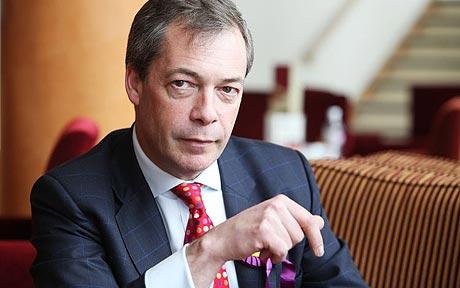
UKIP leader Nigel Farage condemnedDavid Cameron for “breaking a solemn promise to the British people to get net annual immigration down to the tens of thousands.” Mr. Farage further commented on immigration, which he called “one of the most important political issues,” saying that Mr Cameron “refuses to take back control of our borders in respect of more than 400 million people from more than two dozen countries on continental Europe.”
Mr Cameron recently “launched a full-blown attack” against Farage, saying that Farage is essentially an elite citizen who seeks to “‘destroy the Conservative party.'”
In addition to the changes mentioned above, there was a 150 percent increase in people coming from Romania and Bulgaria into the UK, even before work restrictions were lifted in January. The numbers increased from just 9,000 in 2012 to 23,000 in 2013. Approximately 70 percent of these immigrants came to find work.
Other increases came from countries like Poland (from 11,000 to 102,000), Italy (from 9,000 to 42,000), and Bulgaria (from 7,000 to 18,000).
Chairman of the Commons Home Affairs Select Committee Keith Vaz said: “Controlling EU migration is impossible without reform. It is clear that the Government’s aim is unrealistic and unachievable. The Government should drop its target now.”
Interestingly, reports in The Telegraph and BBC News UK say that net migration remains unchanged at 212,000 per quarter, although that number is still twice that of the Government’s target of less than 100,000 immigrants a year.
However, later on in the BBC News article, the reporter mentions the same figures as the other articles: 201,000 EU citizens migrated to the UK as long-term citizens, a statistical increase of 43,000 over the previous year. How does net migration remain the same if it increased by 43,000 people? Apparently the “movements of other categories of people” cancelled this effect, causing the net migration numbers to remain unchanged.
Mr Cameron is now drawing up new immigration laws to counteract UKIP and ameliorate anger over this rise in EU immigrants moving to Britain.
Not even David Cameron can reduce the number of immigrants to Britain, as long as immigration laws in the EU remain unchanged.
Find out how to join Christian Voice and stand up for the King of kings (clicking on the link below does not commit you to join)
Please note that persons wishing to comment on this story must enter a valid email address. Comments from persons leaving fictitious email addresses will be trashed.
It is coming to something when the Russian Foreign Minister is more believable than your own.
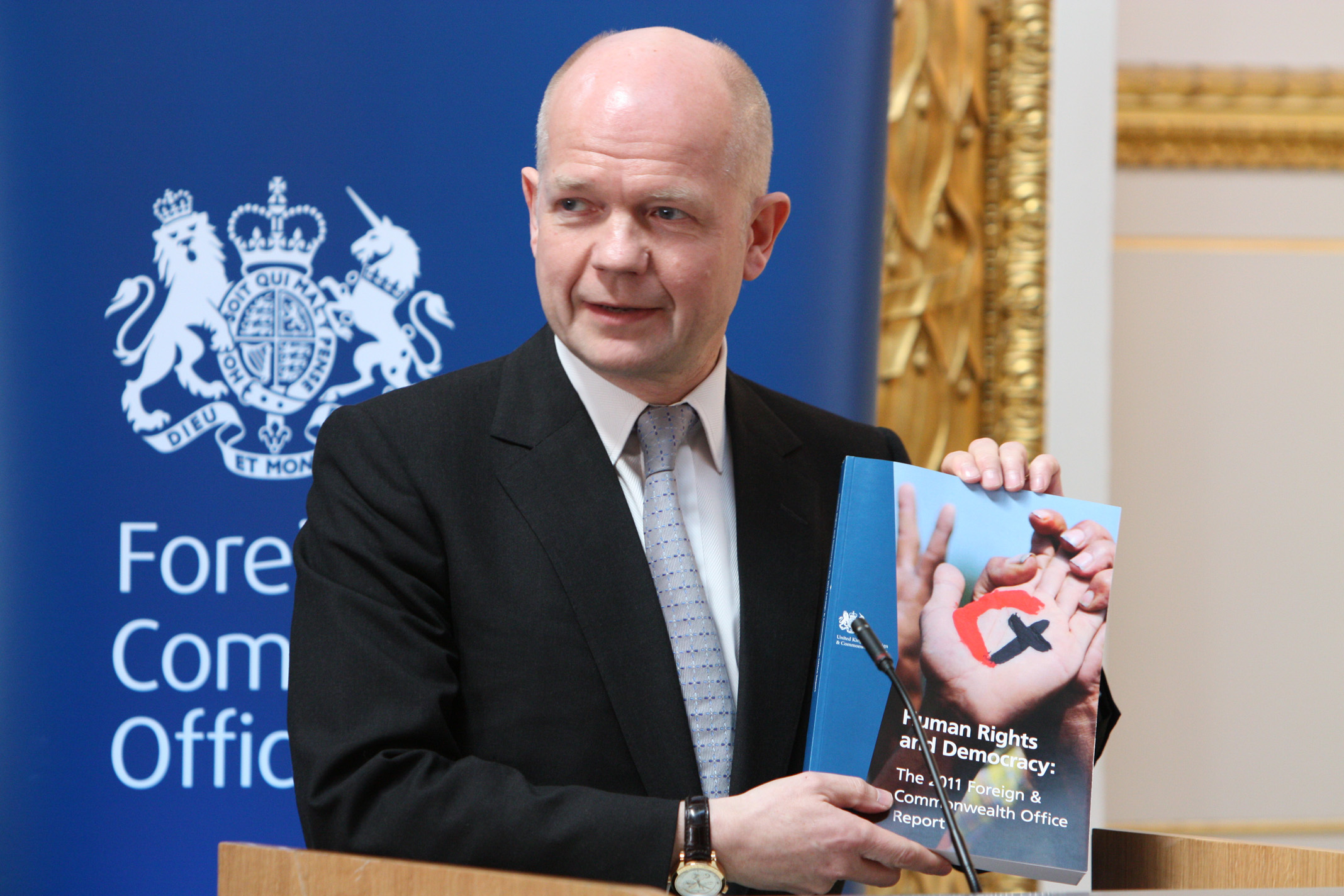
Four days ago, The Rt Hon William Hague, talking about the unrest in Eastern Ukraine, said, ‘There can’t really be any real doubt that this is something that has been planned and brought about by Russia. … violation of the independence and sovereignty of Ukraine … There has to be a clear and united international response.’
Back in March, President Obama said ‘Make no mistake, neither the United States nor Europe has any interest in controlling Ukraine.’ (Was that before or after US officals were overheard discussing who they wanted to install as Ukrainian president?) That video is admittedly published by Russia Today but those are his words.
In contrast, the Russian Foreign Minister has denied that Russia has stoked up the problems. And the truth is, Russia did neither fund nor organise the pro-EU demonstrations and take-over of government in Kiev, ousting pro-Russian President Yanakovich in the process, which started the Ukraine crisis in the first place.
We have already reported how Western NGO’s financed the ‘Maidan Square’ protest movement. But Christian Voice has discovered that millions of dollars have been pouring into Ukrainian NGO’s and ‘civil society’ organisations for the last couple of years. Principal donors include the Open Society Foundation and the Charles Stewart Mott Foundation.
The Foundation Centre lists over $18 million of grants by US NGO’s to Ukrainian ‘civil society’ recipients. The breakdown can be seen by clicking on each recipient. To take one example, the Open Society Foundation for Ukraine – directly fingered in the pro-EU rioting – received over $535,000 jointly from the Charles Stewart Mott Foundation and the National Endowment for Democracy. The Civil Society Institute, an EU sock-puppet, got $450,00 dollars. An Open Society front organisation, the Ukrainian Step by Step Foundation, was given $1,527,000. An organisation called Ednannia was given the most money, $1,550,000.
One grant of $250,000 from Mott to Ednannia was ‘to foster the development of community foundations in Ukraine.’ Indeed, one can read the whole grant profile (three-quarters of the way down this page) and be none the wiser what Ednannia actually do, apart from ‘social action’. The Mott Foundation’s own website says it especially likes ‘the development of community foundations’
What are those? Well, a click on the link reveals that they are ‘Rooted Locally, Growing Globally’ and are favoured for being ‘local leaders of positive change’. Call us cynical, but if positive change involves taking up arms, storming government buildings, ousting elected governments and trying to join the European Union by force, then it looks less than desirable.
Even Chatham House, an elitist body itself, admits that NGO’s in countries like Ukraine are funded entirely from the Western elite and almost entirely disconnected from ordinary people. Pretending to be ‘democratic’, they could not be less empowered with any semblance of a popular mandate.
William Hague said on Monday that the EU summit would focus on “how we support democratic institutions and the elections in Ukraine”. The EU’s idea of doing that is apparently funding exactly those NGO’s Chatham House identifies as the least democratic and overturning elected officials in sovereign states by force. It was Orwellian newspeak from Mr Hague.
The Bible says: Exodus 18:21 Moreover thou shalt provide out of all the people able men, such as fear God, men of truth, hating covetousness; and place such over them, to be rulers of thousands, and rulers of hundreds, rulers of fifties, and rulers of tens:
How many of members of the British Establishment would pass that test? Would William Hague?
What a sorry state we are in, when HM Foreign Secretary is the least believable man in Britain.
Find out how to join Christian Voice and stand up for the King of kings (clicking on the link below does not commit you to join)
Please note that persons wishing to comment on this story must enter a valid email address. Comments from persons leaving fictitious email addresses will be trashed.
A UKIP Councillor has been sacked for comments linking the recent floods with ‘gay marriage’.
Henley-on-Thames councillor David Silvester was suspended by the party on 19 January after blaming David Cameron for the floods and storms which have hit England and Wales.
UKIP initially said Mr Silvester’s views were “not the party’s belief” but defended his right to state his opinions.
But after protests from the party’s LGBT group he was suspended. Today he was expelled.
His house has been pelted with eggs and had a six-colour homosexual rainbow flag draped on it.
Ironically, Mr Silvester left the Conservative Party over David Cameron’s determination to force ‘gay marriage’ through Parliament. He made similar remarks during his time as a Conservative. He remains a Henley Town Councillor. UKIP, it must be said, opposes gay marriage and Councillor Sylvester has been accused of using party facilities to promote his views.
But was he right to make the link?
In Egypt, God sent hail on Egypt as one of the ten plagues:
Exod 9:23 And Moses stretched forth his rod toward heaven: and the LORD sent thunder and hail, and the fire ran along upon the ground; and the LORD rained hail upon the land of Egypt.
Elijah prayed for a drought and then prayed for rain upon God’s instruction:
1Kings 18:1And it came to pass after many days, that the word of the LORD came to Elijah in the third year, saying, Go, shew thyself unto Ahab; and I will send rain upon the earth. 2 And Elijah went to shew himself unto Ahab. And there was a sore famine in Samaria.
King Ahab blamed Elijah for the drought, although the prophet put him right about where the real responsibility lay:
1Kings 18:17 And it came to pass, when Ahab saw Elijah, that Ahab said unto him, Art thou he that troubleth Israel? 18 And he answered, I have not troubled Israel; but thou, and thy father’s house, in that ye have forsaken the commandments of the LORD, and thou hast followed Baalim.
Solomon heard from the Lord himself that God was both responsible for adverse weather and could be prevailed upon to lift it, but only as a result of heartfelt national repentance:
2Chronicles 7:13 If I shut up heaven that there be no rain, or if I command the locusts to devour the land, or if I send pestilence among my people; 14 If my people, which are called by my name, shall humble themselves, and pray, and seek my face, and turn from their wicked ways; then will I hear from heaven, and will forgive their sin, and will heal their land.
The Psalmist said that all our protection schemes and counter-terrorist measures are a waste of effort unless God himself is watching over us as a corporate group:
Psalm 127:1 Except the LORD build the house, they labour in vain that build it: except the LORD keep the city, the watchman waketh but in vain.
So Mr Silvester is not out on a Biblical limb but soundly in accord with Scripture in principle. God can bring disaster on a land as a result of disobedience to his laws, rulers do bear responsibility, and they should lead the people, not into sin, but to repentance if they want stability and prosperity on their watch.
Whether the Marriage (Same-Sex Couples) Act 2013 is enough on its own to move the Lord to send storms and floods, whether it was the last straw after all the other legislation passed in our land in rebellion from God over the last sixty years, or whether the storms have just been an over-the-top part of our natural weather cycle and, in the case of the Somerset levels, bad management, only God knows.
But he was right to remind us that Goid is not mocked. The words of 2Chr 7:14, Psalm 127:1 and a host of other scriptures remain to warn us that we cannot expect God’s blessing as a nation, a family, a business or as an individual, if we hold his laws in contempt and walk in rebellion from him.
As for UKIP, many Christians will be wondering whether they are the haven of free speech and the natural home for disaffected Bible-believers that they seemed.
Find out how to join Christian Voice and stand up for the King of kings (clicking on the link below does not commit you to join)
Please note that persons wishing to comment on this story must enter a valid email address. Comments from persons leaving fictitious email addresses will be trashed.
The present government has betrayed the family and suppressed our Christian heritage, announced Nigel Farage this week.
The MEP, who represents the UK Independence Party, expressed concern that fear of causing offense has resulted in “Notting Hill claptrap about diversity”.
“We need a much more muscular defence of our Judaeo-Christian heritage” added Mr Farage. “Yes, we’re open to different cultures but we have to defend our values.”
His comments were made in an interview with the largely unsympathetic Telegraph journalist Cristina Odone. During the interview Mr Farage criticized the present government for their “betrayal” of the family, adding “This has been the most anti-family government we have ever seen. The very fact that they pushed for gay marriage, and thought that it was important at a time when not even Stonewall was campaigning for it, shows you their twisted sense of priorities.”
The UKIP leader also criticized the type of ‘equality’ that takes cultural tolerance so far that it turns a blind eye on horrific practices such as female genital mutilation. “We go on about equality but under our noses, female genital mutilation has been going on in this country. Tens of thousands of women a year, but is anyone talking about it? It’s brushed under the carpet.”
Find out how to join Christian Voice and stand up for the King of kings (clicking on the link below does not commit you to join)
Please note that persons wishing to comment on this story must enter a valid email address. Comments from persons leaving fictitious email addresses will be trashed.
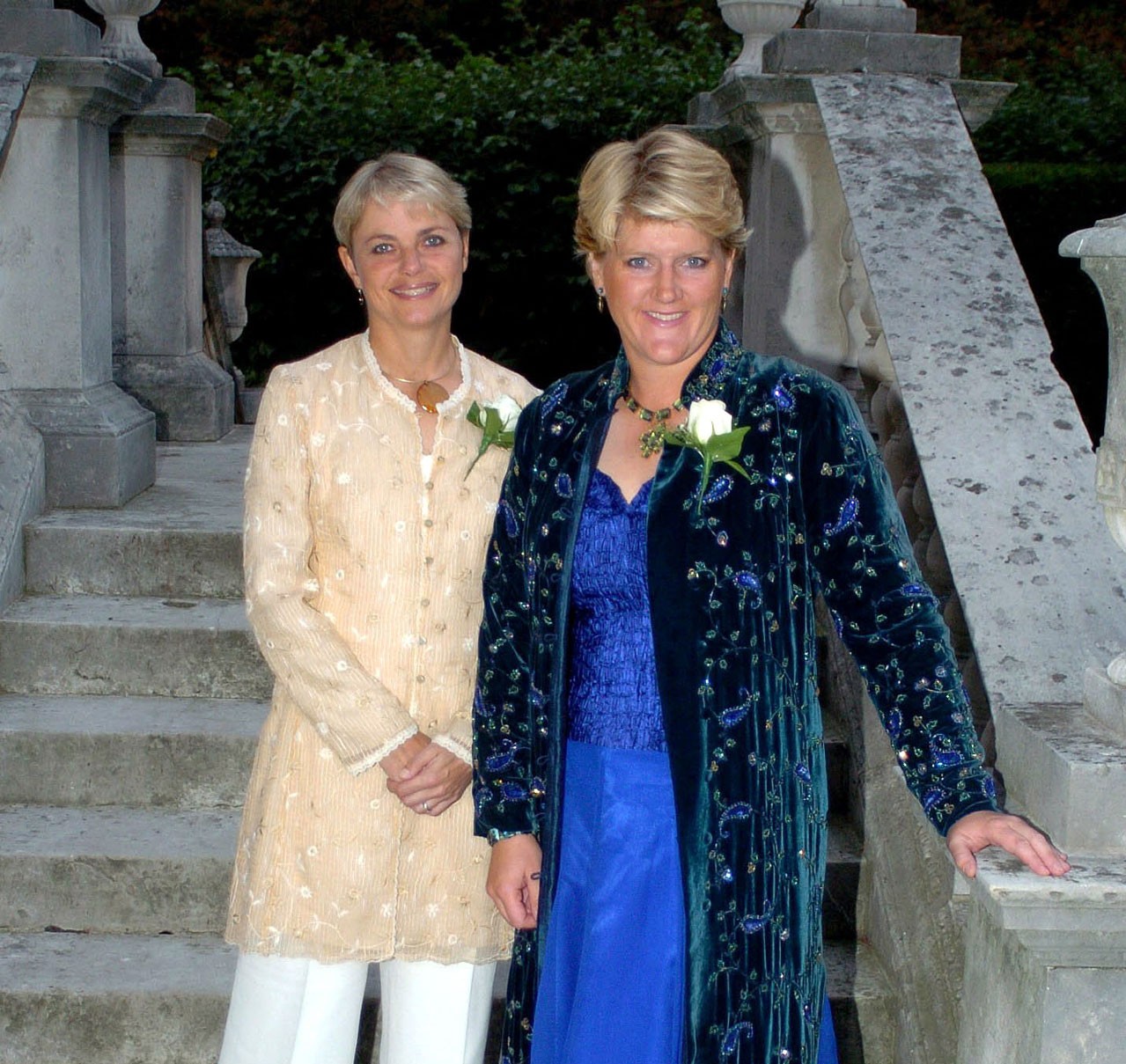
Claire Balding (r) with her ‘civil partner’ Alice Arnold
The lesbian BBC sports presenter Claire Balding and Peter Tatchell, ‘Outrage!’ leader and contributor to a 1980s paedophilia campaigning book, are joint second on the Independent’s 2013 ‘Pink List’ of 101 influential homosexuals.
Topping the list was a journalist by the name of Paris Lees, who was apparently born a man and has had a sex change.
Women’s Olympic boxing gold medal winner Nicola Adams MBE was fourth and Ruth Hunt, Deputy CEO of Stonewall, was fifth.
The judges included Ben Summerskill, Chief Executive of Stonewall, as well as a collection of Indy editors.
Matthew Parris, Sir Elton John, Stephen Fry and Sir Ian McKellen are among a celebrity-laden list of past or perhaps past-it campaigners, whom the Indy fervently hopes ‘don’t mind stepping aside to pass on the baton to those who campaign today’.
Find out how to join Christian Voice and stand up for the King of kings (clicking on the link below does not commit you to join)
Please note that persons wishing to comment on this story must enter a valid email address. Comments from persons leaving fictitious email addresses will be trashed.
In Hadley Arkes’ book Natural Rights and the Right to Choose, he makes some penetrating observations about American society which apply with equal force to some of the issues Britain is now facing. He writes,
In the name of ‘privacy’ and ‘autonomy’, [Americans] have unfolded, since 1965, vast new claims of liberty, all of them bound up in some way with the notion of sexual freedom. In the first steps, there was a liberty, for married couples, but then soon for unmarried persons, to have unregulated access to contraceptives. Next, the claim of privacy was extended into a private right to end a pregnancy, or destroy a child in the womb, at any time in a pregnancy, for virtually any reason. That same claim of privacy was soon extended to the freedom to end the lives of newborns afflicted with Down’s syndrome or spina bifda. After the briefest interval, that same doctrine of personal autonomy was applied to the other end of the scale of age and converted into a claim to assisted suicide.
Ironically, this unfolding scheme of liberation has advanced even while privacy, in other domains, has been progressively crimped and disrespected by the law. Private corporations, private clubs, private households, have found themselves under thicker regulation, and the overhanging threat of lawsuits. The combined effect has been to remove the attribute most prized about privacy: the freedom to arrange one’s own association, or private enclave, according to one’s own, private criteria. But this recession of privacy and freedom seems to count for very little when set against the expansion of rights associated with sexual freedom. The dismantling of restraints on sexuality has evidently been taken as far more liberating, even exhilirating, perhaps because it has been taken as a matter of the most irreducible ‘personal’ freedom. And yet these freedoms, celebrated as pre-eminently ‘personal,’ have required the assistance or intervention of surgeons and counselors, and they have quickly annexed to their cause the demand to have the support of public monies, drawn from tax-payers with the coercions of the law. It must surely count, too, as one of the paradoxes of this new phase in our law that people seem to identify their well-being, not with an obligation to preserve life or go to its rescue, but with the creation of vast new franchises to destroy human life, for wholly private reasons, without the need to offer a justification.
Each step in liberation has been marked, then, by a further detachment of people from the traditional restraints of the law. The corollary, of course, is that, as restraints have been removed, persons once protected by those restraints have been removed from that protection. Vast new liberties come along with vast new injuries – unless, of course, the victims no longer count. In any event, there is little doubt that these alterations in our law over the past thirty years have been taken as the hallmarks of a new regime of personal freedom; a freedom so vital to those who savor it, that any threat of having it qualified or diminished in any degree is taken as nothing less than an assault on the constitutional order itself.
Find out how to join Christian Voice and stand up for the King of kings (clicking on the link below does not commit you to join)
Please note that persons wishing to comment on this story must enter a valid email address. Comments from persons leaving fictitious email addresses will be trashed.
David Cameron is facing a groundswell of opposition that could culminate in him being ousted as leader of the Tory Party.
The Marriage (Same-Sex Couples) Bill cleared its final Commons hurdle today in a vote of 366 to 161, although the victory for Government comes at a costly political price.
More than half of the Tory party voted for one or more amendments that would have protected liberty of conscience, but these amendments were cut down by David Cameron.
The Prime Minister is now facing a rebellion of 130 Tory MPs in a groundswell of opposition that could culminate in him being ousted as the Conservative leader prior to the 2015 general election.
The bill, which seeks to redefine the meaning of marriage, will now move to the House of Lords, which is expected to hold its first debate in July.
‘SOVIET-STYLE PERSECUTION’
The cat was out of the bag that the marriage bill is not about freedom at all after Government rejected three amendments that would have protected liberty of conscience, including one that would have allowed registrars to opt out of conducting gay marriages where another registrar was available and willing.
Former Tory Minister Ann Widdecombe declared that “this Bill is not about liberty and equality but about oppression and state orthodoxy, about Soviet-style persecution in the work place for an opinion given in a private context, about compelling conformity even where conformity is not necessary.”
Many senior Tories are beginning to worry that David Cameron’s pro-Europe and pro-homosexual policies have come at the expense of being able to hold the party together. Secretary of State for Defence, Philip Hammond, echoed the concerns of many senior Tories when he stressed last week that voters are angry.
The infighting was punctuated by a YouGov poll that showed the Conservative Party is at their lowest rating since 2000.
Meanwhile, David Cameron not only faces opposition from his own ranks but also from hundreds of Islamic leaders. Church leaders as well have warned that the Bill could have the effect of isolating young Christians who believe in the traditional definition of marriage.
Find out how to join Christian Voice and stand up for the King of kings (clicking on the link below does not commit you to join)
Please note that persons wishing to comment on this story must enter a valid email address. Comments from persons leaving fictitious email addresses will be trashed.
Top losers, according to the political commentators, are David Cameron and Ed Milliband and their parties. Labour came fourth, whereas the Conservatives came third.
Top winners are the Liberal Democrats, whose candidate was returned to Westminster despite the circumstances of previous incumbent Chris Huhne’s resignation and the sexual harassment allegations concerning Lord Rennard.
The achievement of UKIP in coming a close second is an achievement in itself, making their leader Nigel Farage the second winner.
The third winner is the Christian candidate in the Eastleigh by-election, Danny Stupple, who polled 768 votes and came fifth. His website expressed a forthright position on marriage, castigating the Conservatives and indeed the whole political class for pressing ahead with its redefinition.
The success of UKIP and Danny Stupple came about despite the Conservatives fielding a candidate who was Euro-sceptic and pro-marriage.
The Italian election threw up a strong result for an anti-establishment candidate. Danny Stupple played the same card and did well. Mr Farage’s challenge is to tap into the same rich political seam.
Mr Stupple had no pretensions of winning but his presence and the arguments he made influenced events and helped change the debate. UKIP might have seen themselves as doing the same thing, but the BBC’s Nick Robinson said they might even have won if they had actually thought they could.
Conservative Party chairman Grant Shapps said dismissively: “UKIP are the obvious protest vote in this election.”
No doubt there will be future occasions in which we shall be able to judge whether the Eastleigh by-election was just a protest or a new dawn.
Christians will have to keep following the Biblical injunction to pray for those in authority and if their prayer leads them, to keep witnessing to our leaders about their responsibilities to govern subject to the power and empire of Christ our Redeemer.
Turnout was 52.7%, down from 69.3% at the 2010 general election.
Results in full:
Mike Thornton (Liberal Democrat) 13,342 (32.06%, -14.48%)
Diane James (UKIP) 11,571 (27.80%, +24.20%)
Maria Hutchings (Conservative) 10,559 (25.37%, -13.96%)
John O’Farrell (Labour) 4,088 (9.82%, +0.22%)
Danny Stupple (Independent) 768 (1.85%, +1.56%)
Dr Iain Maclennan (National Health Action Party) 392 (0.94%)
Ray Hall (Beer, Baccy and Crumpet Party) 235 (0.56%)
Kevin Milburn (Christian Party) 163 (0.39%)
Howling Laud Hope (Monster Raving Loony Party) 136 (0.33%)
Jim Duggan (Peace Party) 128 (0.31%)
David Bishop (Elvis Loves Pets) 72 (0.17%)
Michael Walters (English Democrats) 70 (0.17%, -0.30%)
Daz Procter (Trade Unionists and Socialists Against Cuts) 62 (0.15%)
Colin Bex (Wessex Regionalist) 30 (0.07%)
The Prince of Wales if right to raise concerns about the way the Succession to the Crown Bill is being rushed through Parliament without adequate attention being given to the possible ramifications, Christian Voice announced today.
While it may seem like a nice gesture to remove the prohibition on the monarch marrying a Roman Catholic, Prince Charles is right that doing so could set off a chain of unintended consequences that would ultimately destabilize the institution of the monarchy.
But first, what is the Act of Settlement and how did it arise?
Background to the Act of Settlement
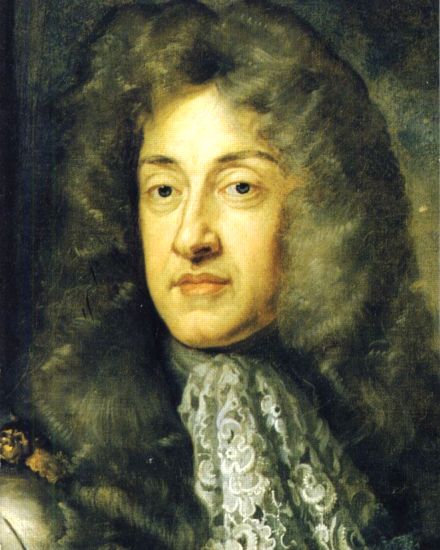
James II of England and VII of Scotland
During the reign of James II of England and VII of Scotland (r. 1633 –1701), James managed to alienate himself from his fellow Englishman through his Roman Catholic, pro-French and absolutist policies. When his wife, Queen Mary, produced a Roman Catholic heir in 1688, it was too much for English Protestants to endure. Hoping to divert a Catholic dynasty, seven English nobleman (known later as the ‘Immortal Seven’) invited James’ eldest Protestant daughter, Mary, to come to Britain and rule. She agreed on the condition that she would rule the country jointly with her Dutch husband, William the Prince of Orange.
William came over with an army prepared to fight for the throne against his father-in-law. However, knowing it would be impossible to win a war without popular support, James II retreated to France. This bloodless revolution, known as ‘the Glorious Revolution,’ established the Hanoverian line of British monarchs – a line preserved through the present House of Windsor.
In order to give legal legitimization to Hanoverian rule, Parliament passed the Bill of Rights in December 1689. This was designed to protect Parliament from arbitrary rule of another Sovereign such as the deposed James II, to ensure the continuation of the Protestant faith, and to preserve common law freedoms.
Princess Sophia of Hanover (1630-1714)
Towards the close of the reign of King William III (r. 1650 –1702), it began to look as if the king would die without a legal heir. Since the Bill of Rights had not specified the line of succession far enough into the future to cover such an eventuality, Parliament began to worry that the deposed James II or his offspring might try to capitalize on the situation and claim the throne. In order to simultaneously solve this problem and fix the line of succession ad infinitum, a law known as the Act of Settlement was introduced. It specified that the heirs to the throne would always be descendants of Princess Sophia of Hanover (1630-1714), who was also appointed heir presumptive by the same Act. Sophia was the granddaughter of James I of England.
The Act of Settlement also specified that the monarch must always be Protestant, and it states that if the monarch is ‘reconciled to the See of Rome’ or ‘marries a Papist’ ‘…in all and every such Case or Cases the People of these Realms shall be and are thereby absolved of their allegiance’.
The Act of Settlement, which was extended to Scotland in 1707, also lays down other rules of constitutional import, including male preference primogeniture. The Act of Settlement came to apply to all of the Commonwealth realms in 1931 through the Statute of Westminster. The Statute of Westminster 1931 actively forbids any alteration to the rules of succession without the agreement of all 16 nations that share the throne. That is why current attempts to ‘modernize’ the laws of succession must first be approved by all 16 legislatures, from the little island of Tuvalu with a population of 11,000 to the United Kingdom. If even one nation disagrees, the proposed changes cannot be enacted. (See Zoe Kirk-Robinson’s article ‘Why Kate’s First-born May Not Be Crowned.’)
So each of the nations in the Commonwealth who share the Queen as monarch (the ‘realms’) must ask themselves whether the Act of Settlement is still relevant in the modern world. Is there any reason to think that this relic from the early 18th century should still be preserved?
As each of the Commonwealth realms considers this question, they must take into account the fact that constitutional experts believe that changing the laws could precipitate a constitutional crisis. As soon as the monarch is allowed to marry a Roman Catholic, the possibility exists that the future heir to the throne could be raised Catholic. Indeed, Roman Catholic common law mandates that if even one of the parents is Catholic, the children must be raised catholic. If that were to happen, then there would either have to be an abdication crisis, or the law would need to be changed to allow Roman Catholics to succeed to the throne, reversing Henry VIII’s historic break with Rome. If the latter course prevailed, then it could lead to the bizarre situation of having a Roman Catholic as the supreme head of the Church of England.
In his 2003 Spectator article ‘The Price of Liberty’, Adrian Hilton presented a strong case for preserving the prohibition on the monarch marrying a Roman Catholic:
Since [Roman Catholic] canon law requires that all children of Roman Catholics be brought up in that faith, such a proposed amendment would eventually create an exclusively Catholic royal dynasty, whose primary allegiance would be to the higher spiritual and temporal authority — the Papacy….
The Papacy is, by its own admission, a political institution, and still claims universal legislative authority or jurisdiction. It would be intolerable to have, as the sovereign of a Protestant and free country, one who owes any allegiance to the head of any other state.…
It is not possible to discuss the removal of the bars on Catholics and the monarchy without at the same time discussing the constitutional position of the Church of England; and therein lies the principal division among Catholics. There are many who regard the establishment of the Church of England as a great advantage for the faith because it perpetuates Christianity as the ‘official’ religion through its presence in Parliament. For those who hold this view, a minor historical relic of anti-Catholic discrimination is a lesser evil to be tolerated than the alternative. For when the protective barrier of Anglican establishment is torn away, Christianity would lose a political voice and Britain its cultural governmental foundation as a Christian nation.
The Act therefore demands that the sovereign must ‘join in communion with the Church of England as by law established’. While earlier monarchs have come from Calvinist and Lutheran traditions and have not been prevented by their own Church discipline from receiving the Eucharist, the position of Rome is quite different. These difficulties do not emanate from the Church of England but from the Roman Catholic Church, which prohibits its adherents from receiving Holy Communion at Anglican services. To forbid an Anglican Eucharist to a Roman Catholic monarch who remains Supreme Governor of the Church of England is not only absurd but plainly regressive.
Further, since Rome does not recognise the Church of England as a Christian Church in the full and proper sense of that term, it does not recognise the Holy Orders of Anglican clergy, which Pope Leo XIII condemned as ‘absolutely null and utterly void’. The present Pope has reiterated this view. A Roman Catholic monarch who followed the teaching of the Mother Church would therefore have to regard the archbishops, bishops and clergy of the Church of England (and, incidentally, of the Church of Scotland) as lay people, lacking the ordained authority to preach and celebrate the sacraments. And further still, a Roman Catholic monarch would be unable to be crowned by the Archbishop of Canterbury. As long as the coronation service involves a priestly anointing, no ‘utterly void’ Anglican could administer it. Presumably a future Roman Catholic monarch would receive the crown from the Pope, and the wheel would have come full circle.”
More recently Telegraph journalist Charles Moore has tried to raise awareness of these and other potential problems. Writing in the Telegraph in December 2011, Moore drew attention to the chain of unintended consequences that could be set in motion by lifting the prohibition on a monarch marrying a Roman Catholic:
Suppose the heir to the throne does marry a Catholic, which, under the new rules, he/she will be permitted to do. Suppose that they have a child. Suppose the child, as the Catholic Church requires, is brought up a Catholic. Under the law, even as reformed, that child cannot become Monarch. “Are you asking me,” the doubting MP might inquire, “to vote for a reform which could precipitate a constitutional-cum-religious crisis?”
If, on the other hand, the law were changed to permit a Catholic to come to the throne, there would be a lot more questions. What would happen to the monarch’s headship of the Church of England? How would he/she be crowned? “Are you proposing, Prime Minister,” the awkward MP could ask, “to disestablish the Church? If so, please lay before us your legislation for doing so.” Untune that string, as Shakespeare famously put it, and hark what discord follows. There may be a way around these problems, but at the least Government should be inviting a rigorous public debate about these implications, instead of conducting the changes in a semi-secret environment
Implications for Hereditary Titles
Halsbury Laws of England
What about Prince Charles’ other concern, regarding hereditary titles? Here again, the Prince has identified a problem that has received almost no attention in the public discourse.
Changing the succession laws for the crown will almost certainly result in gender equality being extended to the inheritance of peerages. Although succession of hereditary peerages forms no part of any proposed change, it would be hard to preserve the older system of inheritance once male primogeniture had been abandoned with respect to the crown. This is especially true given that the heir to the throne succeeds to a number of peerages. If male primogeniture is changed, then will succession in the dukedoms, earldoms and baronetcies attached to the throne devolve to the eldest child, or will there be a two-tier system whereby the titles to which the throne is attached will still devolve to the eldest male?
Hereditary peerages are created by writ, by Act of Parliament, by charter, or by letters patent. The rules governing the order of succession of future heirs are specified in the original grant for the peerage in question. The preferred method by which peerages are created is by letters patent. With few exceptions, the patents transmit titles only to male offspring, a system known as “tail male.” As Halsbury’s Laws of England states:
“Letters patent creating a peerage must specify the patentee, the name of the dignity and its limitation to future heirs of the patentee. The limitation must be one known to the law. The rule in England is a limitation to heirs male of the body with an occasional addition of special remainders to bring in the daughters and their issue, brothers, nephews and collaterals, but ultimately the descent is always fixed in an heir male line.”
This “limitation to heirs male of the body” for the succession of peerages is even stricter than the rules regulating the succession of the crown (which allows a female to inherit when she is without brothers) and can result in peerages becoming extinct. As Regency Researcher Nancy Mayer has explained,
The descent of most hereditary English peerages is determined by the patent by which the peerage was created. Except in very rare cases, the patents say that the peerage should descend to heirs male of the body of the one for whom it was created. That means that ordinarily the peerage becomes extinct if the first earl, for instance, doesn’t have a son. Once in a while patent will let a brother or a nephew inherit if the man does not have a son. When Admiral Lord Nelson died without a son, his patent allowed his brother to inherit. On the other hand, and much more typical, was what happened to Admiral Lord Collingswood’s peerage. It became extinct on his death because he had only daughters.
In the event that a statute were to change the presumption of male descent with respect to the Crown, it would only be a matter of time before the eldest daughter of a peer will challenge original letters patent on the grounds that these too are unfair and out of step with the rules governing the thrown. Such a challenge would be hard to resist once male primogeniture has been abandoned with respect of the monarchy.
There is good reason to be cautious about equal absolute primogeniture with respect to peerages. It is true that under the current system a peerage may become extinct in the absence of male heirs or it may move to another branch of the family. While this may seem undesirable, the alternative is that this inheritance passes out of the family completely. Indeed, if current letters patent were to be altered by law to remove the distinction between the sexes, the title and its associated property could only then be traced in future through a complicated maze of ancestors, one generation passing perhaps through the mother, the next through the father. Without the tribal system and the periodic restructuring of the ancient Hebrew Jubilee laws, it would be difficult to ensure that property remained in the original family if daughters could succeed to a title.
As this suggests, a change in the order of succession does not just affect the Monarchy, but could have ripple effects in every dukedom, earldom, baronetcy in the land. Prince Charles is right to raise the concerns that he has.
Find out how to join Christian Voice and stand up for the King of kings (clicking on the link below does not commit you to join)
Please note that persons wishing to comment on this story must enter a valid email address. Comments from persons leaving fictitious email addresses will be trashed.
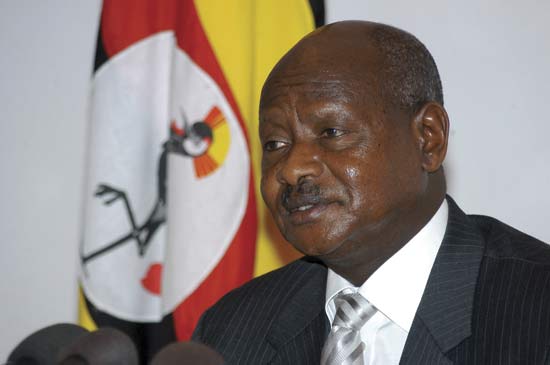
The President of Uganda has repented of past sins and dedicated his nation to Almighty God.
President Yoweri Museveni made history last month at the National Jubilee Prayers in Namboole, when he openly repented of his sins and the sins of Uganda, according to Moses Mulondo of New Vision.
Uganda has been targetted in recent years by wealthy Western homosexual activists, furious at that country’s opposition to pro-sodomy activism.
Both President Museveni and First Lady Janet Museveni have warned of the dangers posed to individuals and society by sodomy. But the subject did not warrant a mention in the President’s prayer, as he concentrated on repentance for sins and rededication of the nation to God.
President Museveni said:
Father God in heaven, today we stand here as Ugandans, to thank you for Uganda. We are proud that we are Ugandans and Africans. We thank you for all your goodness to us.
I stand here today to close the evil past and especially in the last 50 years of our national leadership history and at the threshold of a new dispensation in the life of this nation. I stand here on my own behalf and on behalf of my predecessors to repent. We ask for your forgiveness.
We confess these sins, which have greatly hampered our national cohesion and delayed our political, social and economic transformation.
We confess sins of idolatry and witchcraft which are rampant in our land. We confess sins of shedding innocent blood, sins of political hypocrisy, dishonesty, intrigue and betrayal.
Forgive us of sins of pride, tribalism and sectarianism; sins of laziness, indifference and irresponsibility; sins of corruption and bribery that have eroded our national resources; sins of sexual immorality, drunkenness and debauchery; sins of unforgiveness, bitterness, hatred and revenge; sins of injustice, oppression and exploitation; sins of rebellion, insubordination, strife and conflict.
These sins and many others have characterised our past leadership, especially the last 50 years of our history. Lord forgive us and give us a new beginning. Give us a heart to love you, to fear you and to seek you. Take away from us all the above sins.
We pray for national unity. Unite us as Ugandans and eliminate all forms of conflict, sectarianism and tribalism. Help us to see that we are all your children, children of the same Father. Help us to love and respect one another and to appreciate unity in diversity.
We pray for prosperity and transformation. Deliver us from ignorance, poverty and disease. As leaders, give us wisdom to help lead our people into political, social and economic transformation.
We want to dedicate this nation to you so that you will be our God and guide. We want Uganda to be known as a nation that fears God and as a nation whose foundations are firmly rooted in righteousness and justice to fulfil what the Bible says in Psalm 33:12: Blessed is the nation, whose God is the Lord. A people you have chosen as your own.
I renounce all the evil foundations and covenants that were laid in idolatry and witchcraft. I renounce all the satanic influence on this nation. And I hereby covenant Uganda to you, to walk in your ways and experience all your blessings forever.
I pray for all these in the name of the Father, Son and the Holy Spirit. Amen.
Christian Leaders React
The Church of Uganda Archbishop elect, Stanley Ntagali said the prayer was a step in the right direction. That it was appropriate for the head of state to repent of his sins and the sins of Ugandans.
The leader of Pentecostal churches, Apostle Alex Mitala, said the prayer was the beginning of the healing of a nation. “All the nations we read about in the Bible were healed when their leaders repented and acknowledged God’s supremacy,” he said. Mitala urged Ugandans to turn away from their wicked ways.
Pastor Dr. Martin Kalibbala of New Testament Covenant Church warned that the fruits of repentance are what matter. “If you repent of stealing, God expects you to immediately stop stealing. If the President’s repentance is genuine, it will be measured on God’s yardstick of bearing the fruits of repentance,” he said.
Pastor Dr. Martin Ssempa of Makerere Community Church said it was a good thing for the President to repent on his behalf and on behalf of the nation. He commended those who encouraged and helped the President prepare the prayer, adding that God will answer it.
“We hope the President’s repentance will result into greater obedience to God by the executive, which he heads.”
Stephen Green of Christian Voice in the United Kingdom said: “President Museveni has set a standard which other national leaders would do well to emulate. All the sins which the President has identified in Uganda are present in Britain and America under different names. All governments need to root out corruption, wickedness and injustice and return to God.”
Find out how to join Christian Voice and stand up for the King of kings (clicking on the link below does not commit you to join)
Please note that persons wishing to comment on this story must enter a valid email address. Comments from persons leaving fictitious email addresses will be trashed.
Education Secretary, Michael Grove, condemned the decision as “indefensible.”
A Yorkshire council today admitted it made a mistake in removing children from foster parents because the couple were members of the UK Independence Party. (Read the Times article about it here.)
The children, a baby girl, a boy and an older girl, were removed from the foster couple by the Rotherham Metropolitan Borough Council in South Yorkshire following allegations from social workers that the parents’ political affiliation was at odds with the children’s European backgrounds. (The Ukip party favours Britain’s complete withdrawal from the EU.)
The social worker in the case alleged that UKIP is a racist party and that the children’s “cultural and ethnic needs” might be compromised by the foster parents. However, the council admitted that the South Yorkshire couple, a qualified nursery nurse and a former Royal Navy reservist, were good foster parents and provided proper care to the children.
The children had been with the foster parents for about eight weeks. During this time they were encouraged to share their own folk songs and speak their native language, which the foster parents were attempting to learn.
The Council’s admission of error occurred after Education Secretary, Michael Gove, condemned the decision as “indefensible” last weekend, leading to an investigation of the Council’s behaviour.
In a statement earlier today, council leader Roger Stone commented that “Membership of UKIP should not bar someone from fostering. The council places the highest priority on safeguarding children, and our overriding concern in all decisions about the children in our care is for their best interests.”
Labour leader, Ed Miliband also criticized the Council’s totalitarian actions. He was joined by Michael Grove, who heads the Government department responsible for children’s services. Mr Grove promised to investigate what happened and to “deal with” the situation. He commented that
“Rotherham’s reasons for denying this family the chance to foster are indefensible. The ideology behind their decision is actively harmful to children. We should not allow considerations of ethnic or cultural background to prevent children being placed with loving and stable families…. Any council which decides that supporting a mainstream UK political party disbars an individual from looking after children in care is sending a dreadful signal that will only decrease the number of loving homes available to children in need.”
The couple have still not received the children back, nor have they been given a public apology. The wife told The Daily Telegraph: “We feel that we have personally been slandered and we would like a public apology from Rotherham. We would also like something in the form of a letter stating that they have got it wrong in this case and that it will not be on our records that we have had children removed from our care.We just want a clean slate.”
Unfortunately, this is not the first time that social workers and local councils have used their power as leverage over parents whose views are not politically correct. Last June we reported on the story of Toni McLeod, who has taken up residence in Ireland to try to escape the tentacles of Durham County Council. Durham council is attempting to gain custody of Mrs. McLeod’s baby because of her allegedly anti-Muslim views.
Find out how to join Christian Voice and stand up for the King of kings (clicking on the link below does not commit you to join)
What Obama’s Re-Election Tells us About America (Part 5)
Thankfully, the 2012 election did not have the Messianic mood of the 2008 election. Obama’s dreams of utopia never materialized and no one made the same mistake ofconfusing Obama with God. The American people seem to have realized that, whatever his pretensions, Obama is only a man.
But while the nation of America seems to have got over wanting Obama to be God, they have not given up the wish for the President to have God-like powers. Indeed, Obama’s re-election suggests that America wanted a stronger and more powerful president, one that is almost omnipotent.
Historically, the Executive Branch has only played a limited role, and the United States Constitution even prohibits the President from introducing legislation. This was intentional, since the legal structure of the United States was set up so that most power resided in the states and in their elected legislatures.
Throughout the twentieth-century, however, American Presidents have progressively assumed unprecedented powers. Yet nothing compares with the way Obama has reinvented the Executive office.
Even before taking power in 2008, it was clear that Obama believed the president would possess almost super-human powers. He made some extraordinary promises about what he would accomplish, even claiming that he would cut the federal deficit in half. Such promises could only have been made by someone with an insufficient grasp of how bad America’s economic recession really was, or someone with an over-inflated sense of how much power the President actually wields. Indeed, a foreigner listening to Obama’s extraordinary promises could be forgiven for thinking that the executive branch was the sole organ of government and capable of automatically implementing all the Presidents wishes.
While the United States President may not wield as much power as Obama might wish, he has done everything he can to increase that power. I have already given some examples in my earlier article ‘Totalitarian Creep’, but some more recent examples include
By expanding George Bush’s “war on terror” to mainland United States (not to mention expanding it abroad), President Obama has introduced war-time conditions into America. But the “war on terror” is ubiquitous and can never be won since it is against an abstract foe, which by definition can never satisfy the conditions for surrender. The intrusion of this abstract fight into America herself means that all citizens become potential enemies, and no longer can they depend on their historic rights for protection. This is to invest the Executive Branch with a power undreamed of by the architects of the American nation.
Obama’s proposed Cybersecurity executive order would re-route all Internet traffic through federal agencies, ostensibly to be on the look-out for terrorist groups. But let’s not forget that under Obama the Department of Homeland Security issued a report associating states’ rights activists and “those “dedicated to a single issue, such as opposition to abortion” with domestic terrorists. Is this really the type of administration we want spying on our internet activity?
On 16 march, 2012, President Obama signed into law Executive Order 13603, which makes provisions for establishing martial law in America during times of peace. Brandon Turbeville explains how this will allow “the President and his Secretaries have the authority to seize all transportation, energy, and infrastructure inside the United States as well as forcibly induct/draft American citizens into the military” and possible forced labor. (Click here to listen to a revealing radio show about the order, and visit William Anderson’s article ‘Executive Orders and the Decline of Law‘ for a good background about executive orders in general.)
What Obama’s Re-Election Tells us About America (Part 4)
Obama’s re-election has huge symbolic value, since he epitomizes changing attitudes towards liberty in America. He represents a growing constituency which believes that maximization of liberty means removing all barriers to sexual license.
It is common knowledge that no president has been as virulently pro-abortion and pro-homosexual as Obama. But the real significance of this is that as Obama attempts to overturn centuries of Christian morality, he does so in the name of liberty.
In the case of Obama’s support of abortion, the policies he embraces actually remove liberty from the weakest and most vulnerable members of society. Similarly, his recent support of same-sex ‘marriage’ could see unprecedented restrictions on freedom of speech and even thought. However, Obama pursues these policies in the name of greater freedom for the American people. This is significant since it shows that America is involved in a sea-change shift of what liberty actually means.
In the older tradition, the government’s role in preserving liberty was primarily negative, with the state acting as a hedge against outside threats to life, property and the pursuit of happiness. In this framework, liberty was as much a restriction of the state as it was anything else. Put another way, liberty was essentially negative.
Since roughly the time of Franklin Roosevelt, however, rights and liberties have increasingly come to be seen as something the state has a responsibility to proactively create. In his 1944 State of the Union Address, Franklin Roosevelt created the template for a new way of thinking about liberty when he called a “second Bill of Rights” on the grounds that “Necessitous men are not free men”. If a man is necessitous—that is, if there are things he needs but doesn’t have—then he is lacking true liberty. Of course, if this be granted, then the only way for the state to preserve liberty is to satisfy people’s needs. Roosevelt thus went on to suggest that the state should provide a “new basis of security and prosperity” which included “The right to adequate medical care and the opportunity to achieve and enjoy good health.”
Now there is nothing wrong in principle with the state providing medical care to its citizens, provided it can afford to do so. The problem is when we assert that anything less represents a deficit of liberty, and that I can only be truly free in a society where government meets my needs. To confuse freedom with provision in this way is to imply that for most of the United States’ history the citizens have never been truly free and that the ideals of liberty can only be realized under modern activist government.
This new concept of liberty is analogous to evolving notions of human rights. No longer are rights God-given conditions that the state simply protects; rather, rights become benefits that government is responsible to actually create.
It’s interesting to see how this played out in two of the most contentious issues during the election: contraception and Obamacare. Significantly, Obama has not simply argued that the state should provide free contraception and healthcare to all its citizens. On the contrary, again and again he has suggested that government must do this because Americans have a right to it. By converting a growing amount of needs and desires into inalienable rights, Obama has given the American government a burden it cannot afford (literally) to bare.
The shift in the concept of liberty and rights arises from confusion over where our rights actually originate. Do our most basic inalienable rights and liberties come from God, who then ordains the state to protect those rights and liberties? Or are our most basic inalienable rights the creation of the State?
According to America’s Declaration of Independence, our inalienable rights come from God. It reads, “We hold these truths to be self-evident, that all men are created equal, that they are endowed by their Creator with certain unalienable rights, that among these are life, liberty and the pursuit of happiness.” Because our most basic rights come from God, the role of the state in preserving liberty is primarily negative, acting as a hedge against people and forces who would take away those rights.
Obama has made it clear that he disputes the notion of negative liberties. In a 2001 interview on Chicago’s public radio station WBEZ FM, he referred to needing to “break free from the essential constraints that were placed by the Founding Fathers in the Constitution” and he criticized those who believed ” the Constitution is a charter of negative liberties.” Bruce Walker had this to say about the utter absurdity of these new “positive liberties” that Obama hoped to introduce:
The 2001 audio tape of Barack Obama describing the Constitution as a document of “negative liberties” reveals an utterly Orwellian Obama. How can liberty be anything other than negative? Liberty is the absence of external control. Only in our age of collective thinking and untidy language could such a thing as “positive liberty” be conceived. The state power to coerce is not liberty.
Notions like “positive liberty” are part of the web of thought control by language manipulation which Orwell described in 1984. If Obama cannot think of “positive liberty” as a contradiction in terms, then he simply cannot think. The conscious surrender of language to the needs of the party creates a self-made prison from which escape is, quite literally, inconceivable. These unguarded remarks by Obama display a mind trapped in a reality in which words are phantoms.
Obama could have spoken about the limited value of liberty. Government does some things which reduce our private rights and yet which increase the common good. Politics is all about where the boundary between broad notions of promoting the general welfare by state coercion and preserving liberty should be. Politicians on the Left have often argued that liberty should be reined in more tightly so that “the people” can live better. But implying that more state power somehow increases liberty is beyond mere Leftism. It is entry into that dead realm of Newspeak in which language is pureed into nonsense, and then nonsense is presented as argument.
Behind Obama’s Newspeak is a certain worldview that we must be attentive to. In Obama’s world, because liberties and rights do not have any objective a priori grounding, it is totally consistent to turn them into the plaything of an all-powerful state. Since rights and liberties do not come from God but from the state, government has the responsibility to invent and then dispense these positive liberties to the populace (and indeed, to the world).
But how do we know that Obama does not believe that rights and liberties originate with God? Listen to Obama when he tries to quote this passage (taken from a speech made at a fundraiser for the Democratic Senatorial Campaign Committee in Rockville, Md:
As wonderful as the land is here in the United States, as much as we have been blessed by the bounty of this magnificent continent that stretches from the Atlantic to the Pacific, what makes this place special is not something physical. It has to do with this idea that was started by 13 colonies that decided to throw off the yoke of an empire, and said, “We hold these truths to be self-evident, that all men are created equal, that each of us are endowed with certain inalienable rights, that among these are life, liberty and the pursuit of happiness.”
Do you notice something missing when Obama quotes the Declaration? He leaves out part which says that our certain inalienable rights are endowed to mankind “by their Creator.” Could this be a simple oversight on Obama’s part? Perhaps, if it was only this one speech. But in fact, Obama has misquoted the Declaration on at least two different occasions, making it difficult to dismiss as a simple mistake. This apparently deliberate omission is a powerful statement about Obama’s worldview, in which it is not God who gives us our most basic rights and liberties, but the State.
Ken Myers put his finger on the pulse of this attitude in his Mars Hill Audio Journal, when he commented that “Modern liberal societies are structured around the assumption that since there is no one definition of happiness that everyone can agree on, the state and state-approved social institutions will promote freedom and equality so that everyone will be able to pursue happiness on their own terms. However, in the absence of any substantive understanding of happiness—of the ends of human life—freedom and equality become variable, plastic, elusive terms, defined relative to the cultural status quo and not objectively.”
What Obama’s Re-Election Tells us About America (Part 3)
Obama’s re-election tells us that image matters more than reality.
In the days leading up to his re-election, Obama announced to America that the federal deficit had gone down under him. “We tried our ideas. They worked. The economy grew. We created jobs. Deficits went down.” Well, the federal deficit actually expanded under Obama, and not even his supporters have tried to argue otherwise.
However, what has mattered more than the facts was the impression Obama gave of himself as an experienced statesman who halted the rising deficit through his policies of fiscal prudence. Most of America bought the lie, or Obama wouldn’t now be preparing to serve a second term.
In addition to portraying himself as a thrifty leader who had brought America out of its recession, Obama successfully portrayed Romney as an intolerant, right-wing plutocratic. The barrage of the withering television ads that the Obama campaign let loose in the swing states solidified this caricature of Romney, though it was about as accurate as Obama’s claim to have decreased the federal deficit.
What this tells us about America is that impression matters more than substance. As I pointed out in an article I wrote last summer, political speeches “are increasingly filled with vacuous statements that do not invite rational disputation. Speeches are designed to maximize applause lines, stroke the emotions and appeal to our intuitions, while being lean on substantive content.”
Obama embodies this image-based paradigm. He was able to appeal to the intuitions and emotions of most Americans, especially those living in urban areas, while being lean on factual content.
What Obama’s Re-Election Tells us About America (Part 2)
Obama’s re-election shows us that the Christians living in the nation need a kick in the backside. Obama’s victory was made possible by the thousands of Christians who supported him, as well as by those who did not support him yet decided not to vote for Romney.
CNN reportedthat “One-in-four Obama voters were religiously unaffiliated, the second-largest “religious” demographic in the president’s coalition…. Minority Christians – consisting of black, Asian, Hispanic and mixed-race Americans – made up 31% of Obama’s coalition, the largest religious group.” American Christians elected Obama!
Obviously Obama did not have the support of very many conservative Christians, yet many of these refused to vote. Obama won by a slim enough margin in the swing states that some experts believe the results would have been different had enough evangelicals and conservative Christians voted for Romney.
Leading up to the election, most of the Christians I spoke with told me that they could not bring themselves to vote for Romney even if it meant Obama got another four years. One of the common justifications evangelical Christians gave for not voting for Romney is because they were concerned about his Mormonism. While it is certainly true that we should be concerned about any false religion, it is unclear why so many Christians felt they couldn’t engage in cobelligerents with a Mormon, especially one claiming to be pro-life and against same-sex ‘marriage.’
Certainly Romney was not the ideal candidate from a Christian perspective, especially since he was so quick to merely echo whatever he thought people wanted to hear. Yet precisely because Romney did have a conservative base to please, it is possible that the electorate could have kept him accountable to some of his campaign promises. Wishful thinking? Perhaps. However, with three Supreme Court nominations coming up in the next four years, it’s hard to imagine Romney doing any worse than Obama. Sometimes the most responsible thing to do is to choose the lesser of two evils.
Leading up to the election a number of Christians told me that they believed it would be wrong—if not sinful—to choose the lesser of two evils. When pressed, those who put forward this concern were never able to explain why choosing the lesser of two evils is wrong from a Biblical point of view. And when you stop to think about it, unless Jesus Himself were running for office, any vote is going to be a vote for the lesser of two evils, at least on some level.
The concern that Christians should not vote for the lesser of two evils fails to appreciate why we actually vote in the first place. From almost any ethical perspective—certainly from the Christian perspective—the decision who to vote for ought to be based on what benefits the common good, and not on there being a candidate we feel happy to get behind (which, if we’re honest, will rarely be the case). As my friend Brad Littlejohn explained it in a recent blog post,
a vote is [not] an endorsement of, or an identification with any particular candidate—it is simply an attempt to secure a relatively better realization of the common good, and to render less likely particularly serious evils. That being the case, one may vote for a candidate whom one expects to make a number of evil decisions, without being personally culpable for those decisions, if one believes that on the whole, justice will be better served by that candidate.
Unfortunately, the concept of needing to serve the common good plays far too small a role within the political discourse of the conservative Christian community of America. The Christian right in America is becoming increasingly individualistic, myopic and self-serving. In reaction to the incipient socialism of the political left, America’s conservative community is fast becoming characterized by individualistic opportunists who associate any appeal to the common good with utilitarianism or collectivism. I first started realizing this was a problem when a conservative businessman said to me (in another election), “I’m not concerned with which candidate is going to best serve our nation, I’m going to vote for the candidate whose policies will benefit me.”
PRAY: that the Christians in America would move from a posture of retreat and compromise to become a light to the nation. Ask that during the years of Obama’s second term, the Lord would raise Christians up to witness to the truth and bring America to her knees in repentance.
What Obama’s Re-Election Tells us About America (Part 1)
On the surface, Obama’s re-election was a puzzle. With unemployment in America at 7.9%, food prices skyrocketing and the price of living at it’s highest in three years, all the odds were stacked against the incumbent. By all accounts, Romney should have sailed to an easy victory.
The common narratives to explain Obama’s re-election doesn’t really get to the root of things. Republicans are blaming Obama’s re-election on the fact that Romney was insufficiently conservative and too changeable, that the Obama campaign was better organized, that Romney had managed to alienate the Hispanic vote during the primaries, or that Hurricane Sandy deflected media focus away from Romney’s campaign in the final crucial days.
While all of these factors played a part, they don’t really get at the deeper spiritual and social issues which explain why the American electorate was so eager to give Obama another four years. In series of five blog posts I will seek to uncover some of those deeper issues and to ask, “What does Obama’s re-election tells us about America?”
Changing Spiritual Environment
America’s choice to re-elect Obama has huge spiritual significance because of what Obama symbolically represents. Never before have Americans chosen a national figurehead who was as openly hostile to the Christian faith.
Earlier this year David Barton did us a great service of putting together in one place a list of Obama’s acts of hostility to the Christian faith. I want to quote Barton’s list in full. (Click on the footnotes to see references substantiating that Obama or his administration actually did these things.) The fact that the United States decided to re-elect a President with this kind of track record says much about the changing spiritual environment of contemporary America.
1. Acts of hostility toward people of Biblical faith:
April 2008 – Obama speaks disrespectfully of Christians, saying they “cling to guns or religion” and have an “antipathy to people who aren’t like them.” 1
February 2009 – Obama announces plans to revoke conscience protection for health workers who refuse to participate in medical activities that go against their beliefs, and fully implements the plan in February 2011. 2
April 2009 – When speaking at Georgetown University, Obama orders that a monogram symbolizing Jesus’ name be covered when he is making his speech. 3
May 2009 – Obama declines to host services for the National Prayer Day (a day established by federal law) at the White House. 4
April 2009 – In a deliberate act of disrespect, Obama nominated three pro-abortion ambassadors to the Vatican; of course, the pro-life Vatican rejected all three. 5
October 19, 2010 – Obama begins deliberately omitting the phrase about “the Creator” when quoting the Declaration of Independence – an omission he has made on no less than seven occasions. 6
November 2010 – Obama misquotes the National Motto, saying it is “E pluribus unum” rather than “In God We Trust” as established by federal law. 7
January 2011 – After a federal law was passed to transfer a WWI Memorial in the Mojave Desert to private ownership, the U. S. Supreme Court ruled that the cross in the memorial could continue to stand, but the Obama administration refused to allow the land to be transferred as required by law, and refused to allow the cross to be re-erected as ordered by the Court. 8
February 2011 – Although he filled posts in the State Department, for more than two years Obama did not fill the post of religious freedom ambassador, an official that works against religious persecution across the world; he filled it only after heavy pressure from the public and from Congress. 9
April 2011 – For the first time in American history, Obama urges passage of a non-discrimination law that does not contain hiring protections for religious groups, forcing religious organizations to hire according to federal mandates without regard to the dictates of their own faith, thus eliminating conscience protection in hiring. 10
August 2011 – The Obama administration releases its new health care rules that override religious conscience protections for medical workers in the areas of abortion and contraception. 11
November 2011 – Obama opposes inclusion of President Franklin Roosevelt’s famous D-Day Prayer in the WWII Memorial. 12
November 2011 – Unlike previous presidents, Obama studiously avoids any religious references in his Thanksgiving speech. 13
December 2011 – The Obama administration denigrates other countries’ religious beliefs as an obstacle to radical homosexual rights. 14
January 2012 – The Obama administration argues that the First Amendment provides no protection for churches and synagogues in hiring their pastors and rabbis. 15
February 2012 – The Obama administration forgives student loans in exchange for public service, but announces it will no longer forgive student loans if the public service is related to religion. 16
2. Acts of hostility from the Obama-led military toward people of Biblical faith:
June 2011 – The Department of Veterans Affairs forbids references to God and Jesus during burial ceremonies at Houston National Cemetery. 17
August 2011 – The Air Force stops teaching the Just War theory to officers in California because the course is taught by chaplains and is based on a philosophy introduced by St. Augustine in the third century AD – a theory long taught by civilized nations across the world (except America). 18
September 2011 – Air Force Chief of Staff prohibits commanders from notifying airmen of programs and services available to them from chaplains. 19
September 2011 – The Army issues guidelines for Walter Reed Medical Center stipulating that “No religious items (i.e. Bibles, reading materials and/or facts) are allowed to be given away or used during a visit.” 20
November 2011 – The Air Force Academy rescinds support for Operation Christmas Child, a program to send holiday gifts to impoverished children across the world, because the program is run by a Christian charity. 21
November 2011 – The Air Force Academy pays $80,000 to add a Stonehenge-like worship center for pagans, druids, witches and Wiccans. 22
February 2012 – The U. S. Military Academy at West Point disinvites three star Army general and decorated war hero Lieutenant General William G. (“Jerry”) Boykin (retired) from speaking at an event because he is an outspoken Christian. 23
February 2012 – The Air Force removes “God” from the patch of Rapid Capabilities Office (the word on the patch was in Latin: Dei). 24
February 2012 – The Army orders Catholic chaplains not to read a letter to parishioners that their archbishop asked them to read. 25
April 2012 – A checklist for Air Force Inns will no longer include ensuring that a Bible is available in rooms for those who want to use them.26
May 2012 – The Obama administration opposes legislation to protect the rights of conscience for military chaplains who do not wish to perform same-sex marriages in violation of their strongly-held religious beliefs.27
June 2012 – Bibles for the American military have been printed in every conflict since the American Revolution, but the Obama Administration revokes the long-standing U. S. policy of allowing military service emblems to be placed on those military Bibles.28
3. Acts of hostility toward Biblical values:
January 2009 – Obama lifts restrictions on U.S. government funding for groups that provide abortion services or counseling abroad, forcing taxpayers to fund pro-abortion groups that either promote or perform abortions in other nations. 29
January 2009 – President Obama’s nominee for deputy secretary of state asserts that American taxpayers are required to pay for abortions and that limits on abortion funding are unconstitutional. 30
March 2009 – The Obama administration shut out pro-life groups from attending a White House-sponsored health care summit. 31
March 2009 – Obama orders taxpayer funding of embryonic stem cell research. 32
March 2009 – Obama gave $50 million for the UNFPA, the UN population agency that promotes abortion and works closely with Chinese population control officials who use forced abortions and involuntary sterilizations. 33
May 2009 – The White House budget eliminates all funding for abstinence-only education and replaces it with “comprehensive” sexual education, repeatedly proven to increase teen pregnancies and abortions. 34 He continues the deletion in subsequent budgets. 35
May 2009 – Obama officials assemble a terrorism dictionary calling pro-life advocates violent and charging that they use racism in their “criminal” activities. 36
July 2009 – The Obama administration illegally extends federal benefits to same-sex partners of Foreign Service and Executive Branch employees, in direction violation of the federal Defense of Marriage Act. 37
September 16, 2009 – The Obama administration appoints as EEOC Commissioner Chai Feldblum, who asserts that society should “not tolerate” any “private beliefs,” including religious beliefs, if they may negatively affect homosexual “equality.” 38
July 2010 – The Obama administration uses federal funds in violation of federal law to get Kenya to change its constitution to include abortion. 39
August 2010 – The Obama administration Cuts funding for 176 abstinence education programs. 40
September 2010 – The Obama administration tells researchers to ignore a judge’s decision striking down federal funding for embryonic stem cell research. 41
February 2011 – Obama directs the Justice Department to stop defending the federal Defense of Marriage Act. 42
March 2011 – The Obama administration refuses to investigate videos showing Planned Parenthood helping alleged sex traffickers get abortions for victimized underage girls. 43
July 2011 – Obama allows homosexuals to serve openly in the military, reversing a policy originally instituted by George Washington in March 1778. 44
September 2011 – The Pentagon directs that military chaplains may perform same-sex marriages at military facilities in violation of the federal Defense of Marriage Act. 45
October 2011 – The Obama administration eliminates federal grants to the U.S. Conference of Catholic Bishops for their extensive programs that aid victims of human trafficking because the Catholic Church is anti-abortion. 46
4. Acts of preferentialism for Islam:
May 2009 – While Obama does not host any National Day of Prayer event at the White House, he does host White House Iftar dinners in honor of Ramadan. 47
April 2010 – Christian leader Franklin Graham is disinvited from the Pentagon’s National Day of Prayer Event because of complaints from the Muslim community. 48
April 2010 – The Obama administration requires rewriting of government documents and a change in administration vocabulary to remove terms that are deemed offensive to Muslims, including jihad, jihadists, terrorists, radical Islamic, etc. 49
August 2010 – Obama speaks with great praise of Islam and condescendingly of Christianity. 50
August 2010 – Obama went to great lengths to speak out on multiple occasions on behalf of building an Islamic mosque at Ground Zero, while at the same time he was silent about a Christian church being denied permission to rebuild at that location. 51
2010 – While every White House traditionally issues hundreds of official proclamations and statements on numerous occasions, this White House avoids traditional Biblical holidays and events but regularly recognizes major Muslim holidays, as evidenced by its 2010 statements on Ramadan, Eid-ul-Fitr, Hajj, and Eid-ul-Adha. 52
October 2011 – Obama’s Muslim advisers block Middle Eastern Christians’ access to the White House. 53
February 2012 – The Obama administration makes effulgent apologies for Korans being burned by the U. S. military, 54 but when Bibles were burned by the military, numerous reasons were offered why it was the right thing to do. 55
PRAY: that the Lord would have mercy on America and strengthen His church during this time of virulent opposition to the gospel.