
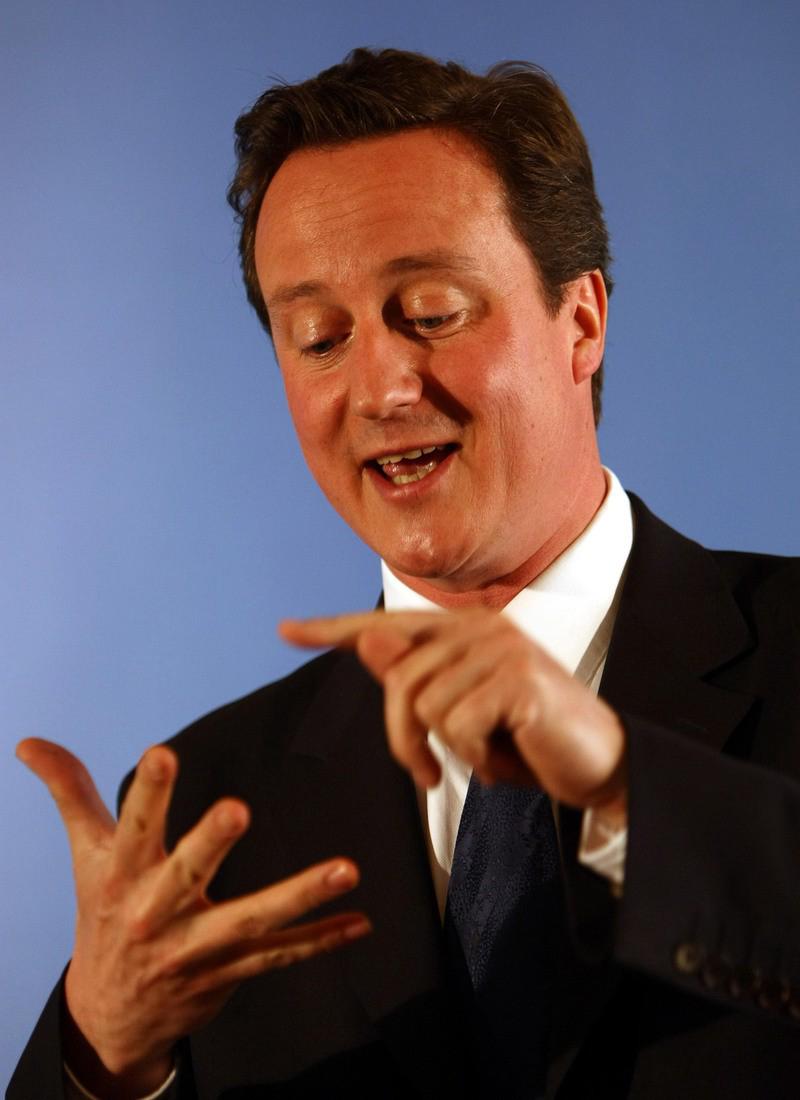
David Cameron’s assertion in the House of Commons on Thursday 26th November 2015 that there are ‘seventy thousand’ moderate Syrian opposition forces ready to back up UK air strikes is unravelling fast.
Dr Julian Lewis MP, chairman of the Defence Committee, said in the debate, ‘I have to say that the suggestion that there are 70,000 non-Islamist, moderate, credible ground forces is a revelation to me and, I suspect, to most other Members in this House.’
The Independent reported that Mr Lewis would be tabling a question in the House of Commons demanding Mr Cameron clarify the claim. The Prime Minister’s spokesman said the 70,000 figure was based on the “best intelligence and analysis we have”, adding: “The figure was provided to him by the Joint Intelligence Committee; they provided that intelligence and analysis independent of the Government.”
That will be the same Joint Intelligence Committee which apparently assured Tony Blair, after some arm-twisting, that Saddam Hussein could fire a long range missile with a chemical warhead at the UK in the famous figure of ’45 minutes’. It looks suspiciously as if ‘70,000’ will turn out to be Mr Cameron’s ’45 minutes’.
The Independent says Mr Lewis asked Sky News: ‘Where are these magical 70,000 people and if they are there fighting, how come they haven’t been able to roll back Isil/Daesh? Is it that they’re in the wrong place? Is it that they’re fighting each other? Or is it that in reality they’re not all that moderate and that there are a lot of jihadists among them?’ He urged the Prime Minister to start working with President Assad to defeat Islamic State. “Sometimes the best you can do is choose the lesser of two evils,” he said.
Writing in the Spectator, Charles Lister, a Visiting Fellow at the Brookings Doha Center and a Senior Consultant to The Shaikh Group, wrote to verify the figure. He came up with 65,000 fighters in ten separate groups with names like ‘Daybreak’ (Faylaq) and ‘Front’ (Jabhat) sporting memberships from 1,000 to 25,000. The biggest forces were the ‘Southern Front’ with 25,000 men in fifty-eight different factions and the ‘Northern Free Syrian Army’ with 20,000 in fourteen factions. Having coordinated meetings with up to a hundred other separate rebel militias, he counted a further 10,000 men in these groups.
Immediately, however, Mr Cameron’s claims start to unravel. He said the 70,000 were ‘principally of the Free Syrian Army’ whereas only 45,000 of them are. Then he said these are people ‘with whom we can co-ordinate attacks on ISIL’.
The first obvious problem is, these fighters are all in the extreme south-west and north-west of Syria. Now, according to a helpful map at the bottom of this article in the Guardian, Islamic State has a pocket of ground in the south-east, and another in the north-west. These are areas being patrolled by Russian aircraft from their base in Latakia, on Syria’s North-West coast.
The second obvious problem is that the ‘Free Syrian Army’ are just as interested in fighting the Syrian Army as Islamic State. Russian aircraft have been supporting Syrian army forces with air strikes against these very same forces. As Mr Lister said: ‘They remain focused on fighting the Assad regime, however, as it represents a more immediate priority for most, in terms of self-protection, the defence of civilian populations and of course, pursuing the revolution’s ultimate objective.’ Without British commanders on the ground prodding these men towards the Islamic State pockets, there is absolutely no guarantee they will follow up a British air strike against Islamic State on their manor, even if our air chiefs could gain an agreement with their Russian counterparts to avoid bumping into each other over this stretch of land. And British ‘boots on the ground’ have been rightly ruled out.
Working with groups such as the ‘Free Syrian Army’ has been a nightmare for the US. Equipment supplied to them by the US has ended up in the hands of the Al-Qaeda offshoot Jabhat Al-Nusra. The FSA either gave or sold the armaments to them. In addition, as Ewen MacAskill wrote in the Guardian article cited above, ‘the US spent $600m (about £400m) training rebels to go back over the border into Syria. In the end, only 58 went back. Asked in September at a Congressional committee how many of them were still fighting, General Lloyd Austin said: “We are talking four or five.”’
Islamic State also holds ground to the east of Damascus and in the north-east of the rest of Syria. None of the ‘70,000’ are anywhere near these areas. Around Raqqa, where French warplanes have been active, there is no moderate opposition at all.
Mr MacAskill reported that retired British brigadier Ben Barry, who he described as ‘a specialist in land warfare at the International Institute for Strategic Studies’, estimated ‘a joint US-UK-French coalition would require 20,000 troops to retake Raqqa. He described the prospect as “challenging”, given that IS had been preparing its defences for the last year.’ In the absence of those troops, it can only fall to the Syrian army to retake Raqqa. Mr Cameron would have to speak to Mr Assad.
The 70,000 are nowhere near Raqqa which is also far from the extreme north of Syria where the Kurds are based. And on that subject, the Kurdish forces are allied to the Kurdish Peoples’ Party, the PKK, which the UK has proscribed as a ‘terrorist organisation’ to appease Turkey. The PKK pose no threat to Britain and it is high time that proscription was removed.
This is a time when Her Majesty’s Loyal Opposition should be actively opposing and challenging the government. But according to Gary Gibbon in a revealing article on the Channel 4 website, the Leader of Her Majesty’s Opposition is not even opposing and challenging those in his own Shadow Cabinet who support Mr Cameron.
Labour MP Paul Flynn said on the BBC yesterday that Prime Ministers can get carried away with their importance. They can become possessed by a spirit of hubris while dreaming of their ‘place in history’. It happened to Tony Blair. Now it is happening to David Cameron. If this nation is not to waste millions on pointless air strikes, we need the Opposition to oppose him.
But more importantly than that, we need prayer. There was a massive outpouring of prayer before the Commons vote not to bomb President Assad’s forces in August 2013. The reasons for MPs to vote ‘No’ are different this time, but the need for prayer is still there.
Find out how to join Christian Voice and stand up for the King of kings (clicking on the link below does not commit you to join)

Please note that persons wishing to comment on this story must enter a valid email address. Comments from persons leaving fictitious email addresses will be trashed.




An interesting account of the complexity of all this, which very few can grasp even insofar as something like the actual reality is known. The reference to the map in the Guardian (which I don’t suppose many Christian Vocalists read) is very useful.
It’s very interesting to go to a public library and look at a map of this area in a good big atlas, such as the Times Atlas. If you look at it carefully, most of the territory between Syria proper and Iraq proper is desert, so in a sense it hardly exists and it doesn’t really matter exactly where the frontier is. One of the very few settlements of note in this no-man’s land is Raqqah, which of course is “Islamic State”, so it’s about as significant as Andorra, if it would only stop fighting its neighbours and us . One can’t help feeling that somebody ought to be able to stop it somehow.
I never believed in the 45 minutes, and I don’t believe for one moment that 70,000 bearded warriors are just waiting for Cameron of Arabia to come and lead them into battle in the direction that he wants them to go. Do they all know the difference between “Islamic” and “Islamist” ? I don’t. If you did a poll amongst the Muslims of Britain, France, and Belgium to determine who was Islamist and who was non-Islamist, it would cause nothing but confusion. Imagine trying to do it amongst terrified villagers in Syria !
The border could matter if minerals were found. But ‘Cameron of Arabia’! Very good.
Raqqah is situated on the Euphrates as are many of the main settlements in Syria and Iraq stretching all the way from Aleppo to Baghdad and constitutes part of the fertile crescent from the Persian gulf to the Nile valley. So rather than being an area that hardly exists it is of stategic importance as well as being some of the most fertile land in the region..have a look at Google earth.
Whether bombing the place makes sense or not is another matter.
Well yes, we aren’t in disagreement.
Between the main parts of Syria and Iraq:
“All the settlements are on the Euphrates”
is not incompatible with
“There are no settlements, except on the Euphrates”.
But there are only two notable ones , Al Raqqah (pop 220,000) and Deir ez Zor (212,000), also some smaller ones south-east of Deir ez Zor like Al Mayadin, but once you get to Deir ez Zor it’s beginning to look like arguably part of Iraq, although technically in “Syria”, whatever Syria is. My point really is that Syria most certainly isn’t a continuously populated country where a big chunk on the map is a big chunk of the country, like Germany or Italy. It’s more like Australia. As Stephen says, there could be minerals, but at the moment one is more interested in habitable places to conquer or destroy.
Actually, Raqqah alone is bigger than Andorra (which I mentioned before), but has half the population of Luxemburg. The idea of Luxemburg overpowering the combined forces of France and Germany and the rest of Europe, aided by the USA and Russia is ludicrous, isn’t it ?
It must be a question whether bombing Syria would not be a way of exacerbating the refugee problem and destabilizing Europe. Who would want to do that is another question, which needs an answer.
[…] « 70,000: the new 45 minutes […]