 Georgia’s ‘foreign agents’ bill has been signed into law.
Georgia’s Parliament insisted on passing a ‘Foreign Agents’ Law despite its president and all the foreign agencies objecting.
The new legislation will see that media outlets and non-governmental organisations who receive over 20% funding abroad are asked to declare such funds as support from ‘foreign agents’.
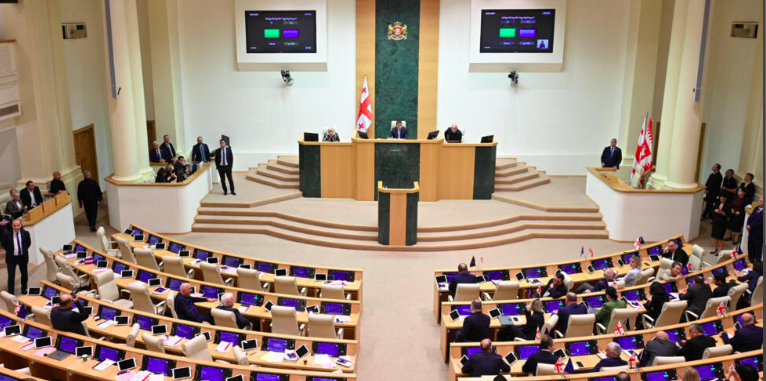
During a plenary session on Monday, the legislation passed with 84 votes in favour, primarily from the governing Georgian Dream party—and four votes against, while the opposition abstained.
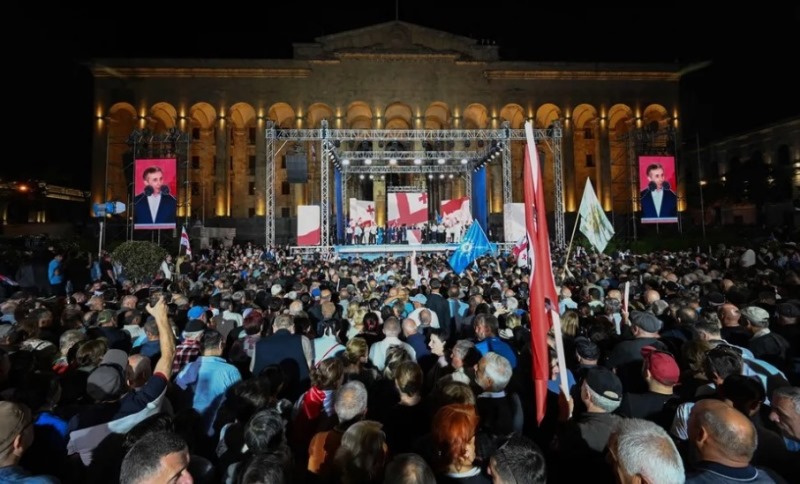
That evening, thousands of Georgians protested outside parliament, many waving Georgian and EU flags.
The law had already been passed on 14 May, but was then vetoed by pro-Western President Salome Zourabishvili.
The Georgia ‘foreign agents’ bill
The Georgia ‘foreign agents’ bill is a new law that requires media outlets and non-governmental organisations (NGOs) receiving more than 20% of their funding from foreign sources to register as ‘organisations acting in the interest of a foreign power.’ These organisations must also undergo detailed audits and face hefty fines if they do not comply.
The bill was passed by the Georgian parliament with strong support from the ruling Georgian Dream party, while the opposition largely abstained from voting.
The legislation has led to significant public protests, with many a expressing concerns that it will restrict freedom of speech and hinder the work of NGOs. Protesters have demonstrated outside the parliament, waving Georgian and European Union flags in opposition to the law.
Bill to limit free speech before parliamentary elections?
Georgia’s president Salome Zourabichvili, vetoed the bill. She accused the Governing party of putting the country’s future at risk and blocking its progress toward becoming a full member of the free and democratic world.
The government argues the law is necessary to stop harmful foreign influences from destabilising Georgia, a country with 3.7 million people. However, many Georgian journalists and activists claim that the real purpose of the bill is to label them negatively and limit free speech before the parliamentary elections in October.
Countries with ‘foreign agent’ law
 Various countries have implemented laws to monitor organisations and individuals receiving foreign funding.
In Russia, the foreign agent law, enacted in 2012, requires such entities to register as ‘foreign agents’ and disclose detailed financial reports.
Kyrgyzstan passed a similar law in 2019, but critics argue its impact on civil society. Additionally, the United States has the Foreign Agents Registration Act (FARA) since 1938.
Similarly, Hungary enacted a law in 2017 requiring NGOs receiving over 20% of funding from abroad to register, while Israel’s Foreign Funding Law targets NGOs receiving over 50% of funding from foreign governments, and India has the Foreign Contribution (Regulation) Act (FCRA) regulating foreign contributions by NGOs and entities.
Russia arrests foreign agents
Former world chess champion Garry Kasparov may be charged by Russian authorities for violating the Kremlin’s ‘foreign agent’ law,reports TASS news agency.
The former world champion is accused of ‘heading a terrorist society, funding terrorist activity and justifying it publicly’.
The city court in Syktyvkar, the largest city in Russia’s northwestern Komi region, has issued in absentia arrest warrants for world chess champion Garry Kasparov, former State Duma member Gennady Gudkov, Ivan Tyutrin (co-founder of the Free Russia Forum, which is designated as an undesirable organisation in Russia), and former environmental activist Yevgenia Chirikova.
All of them have been recognised as foreign agents in Russia.
Threats to civil society?
International human rights organisations, civil society groups, and election observers are urging European and national leaders to promptly address the Georgian ‘transparency law’. They have claimed it is an attempt to crackdown on civil society as the country approaches its General Elections in October.
Since April 15th Georgians have been rallying in protest against the ‘Transparency of Foreign Influence’ law, which bears striking resemblance to the Russian ‘Foreign Agent Law’. Opponents say this law threatens to equip the government with tools to suppress civil society and independent media, derailing Georgia from its democratic path towards EU integration.
Georgia and Kyrgyzstan are following Russia’s path by passing laws that target organisations getting foreign funding.
In Kyrgyzstan,critics also claim President Japarov is making things tough for civil soceity and media. Groups with foreign money are closely monitored.
Bad news for civil society?
Critics have claimed that these laws are a tool for vilification. ‘In many countries, civil society groups and independent media struggle to sustain themselves on domestic funding.
‘Resources tend to be particularly constrained where civic space is heavily restricted – as in Kyrgyzstan – and government bodies channel domestic support to organisations aligned with or uncritical of the state. That’s why civil society often turns to international sources, including donor agencies, philanthropic foundations and multilateral bodies. But receiving foreign funding isn’t the same as agreeing to represent donors’ interests.
‘Those pushing foreign agents laws often argue civil society must be regulated so it doesn’t misuse resources. But wherever such laws have been introduced, civil society groups and independent media have already been subject to legislation and regulations on matters such as registration, reporting and accounting, often to an excessive and intrusive extent.’
Africa and the transparency law
In light of recent foreign agent laws implemented by various countries, Christian Voice is calling on African nations to follow suit and enact similar transparency legislation. These laws would require organisations receiving foreign funding to disclose their sources and intentions, providing insight into which countries might be promoting the LGBTQ agenda within Africa.
Recent years have seen a wave of foreign agent laws globally, from Russia and Kyrgyzstan to Georgia and other countries.
Christian Voice believes that adopting similar laws in Africa is essential for safeguarding cultural and societal norms.
Further, transparency laws would not only identify foreign influence but also empower African nations to take control of their cultural and moral narratives. By knowing the origins of funding and the intentions behind it, governments and citizens alike can make informed decisions about the presence and impact of external ideologies.
Christian Voice emphasises that this call to action is not about stifling freedom of expression but about maintaining sovereignty and cultural integrity. The organisation urges African leaders to consider the benefits of such legislation in promoting transparency and protecting societal values.
In conclusion, as countries worldwide implement foreign agent laws, Christian Voice strongly encourages African nations to emulate these measures. Enacting transparency laws will help uncover and address foreign influences, ensuring that Africa’s cultural and moral landscape remains firmly in the hands of its people.
The Bible says,
2 Corinthians 4:2 But have renounced the hidden things of dishonesty, not walking in craftiness, nor handling the word of God deceitfully; but by manifestation of the truth commending ourselves to every man’s conscience in the sight of God.
Related Stories
Make Foreign Funding Transparent! →
US excludes Africans from trade programme →
Read and pray
READ: Gen 48:03; Josh 07:10-11; Psa 082:08; Prov 28:02a; Psa 127:1b; John 09:04; Matt 06:24; Rom 3:16; Gal 6:2
PRAY: For transparency in governance
Pray for our law makers
Pray for our leaders to repent and seek the Lord.
Let us know what YOU think in the comments below.
Support us!
We appreciate your support; it enables our research and helps us inform your prayers.
So click below to support Christian Voice and stand up for the King of kings