Many articles have been written in the last couple of weeks arguing that her late majesty moved with the times, ensuring the monarchy stayed ‘relevant’ to a changing world.
Plainly Queen Elizabeth did that. She re-branded the monarchy as the ‘Royal Family’, allowing the cameras of the BBC to film her household and their activities for the 1969 film of that very name.
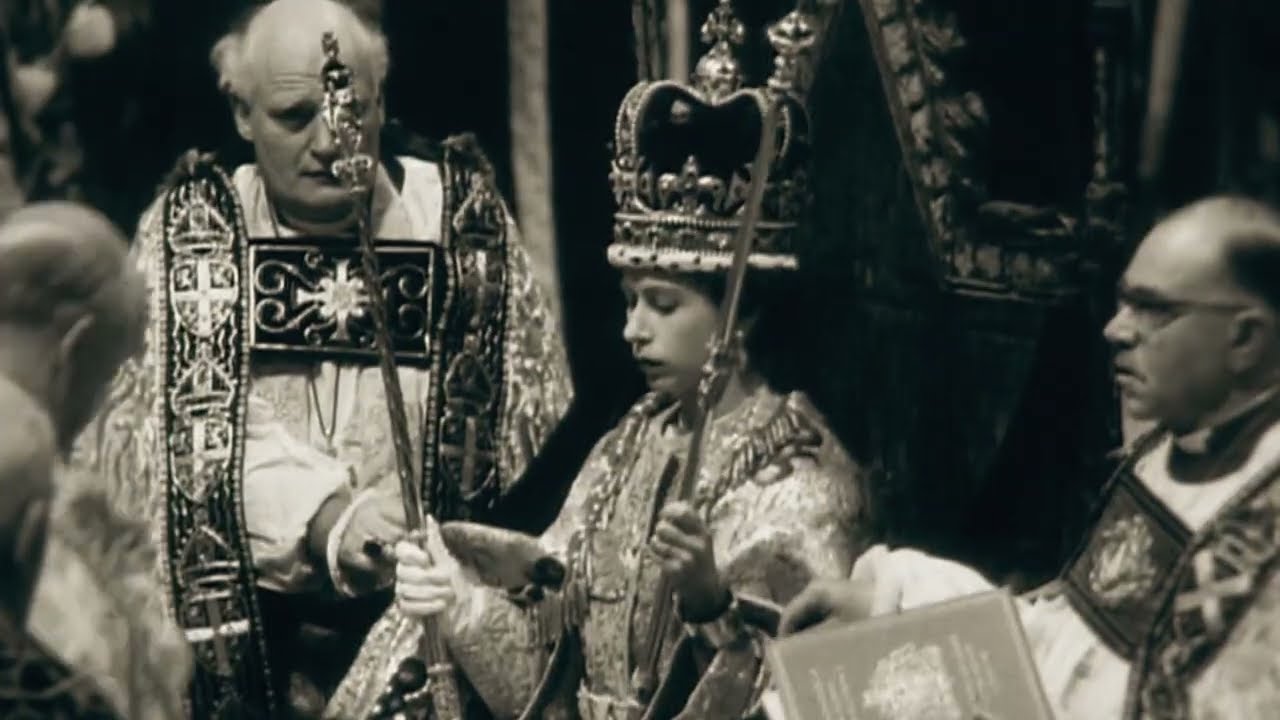
Earlier, she approved the televising of her coronation in June 1953, and during all her reign ensured cameras followed her as she met and talked with celebrities and ordinary people alike.
Preserving The Monarchy
She was not the first monarch to do such things. Her father, George VI, and especially her grandfather, George V, also innovated, using technology to bring the monarchy closer to the people. George V introduced walkabouts, meeting ordinary people as well as opening events and buildings. It was he who made the first royal Christmas broadcast. Incidentally, it was also George V who initiated the first ever royal lying-in-state, that of his late father Edward VII.
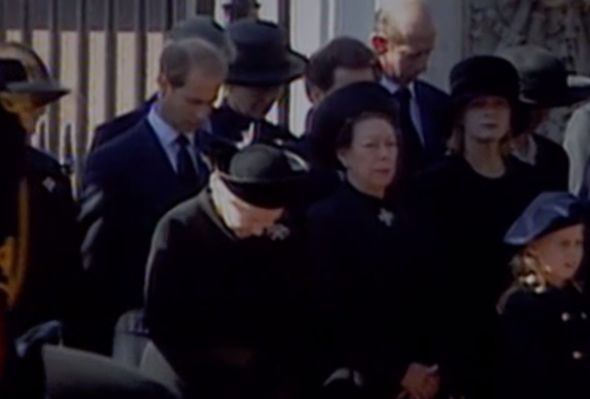
Commentators have recalled what they saw as her late majesty’s false step of comforting Princes William and Harry after the death of their mother, Diana, instead of immediately travelling to London to address the nation.
But gradually she seized the initiative and set the right tone, including the bow to Diana’s coffin at her funeral. So her late majesty saved the monarchy at a time when apparently, it could have fallen. Her decisions over the problems caused by the Duke of York and the Duke and Duchess of Sussex were also taken, clearly, with the institution of the monarchy at the forefront of her mind.
Cannot Be the Sole Purpose
Nevertheless, if the sole purpose of the monarchy becomes preserving the monarchy, then there is no purpose to it at all. The same applies to any institution. If a church sees its purpose as keeping its buildings intact and its services going, when coffee mornings and jumble sales become its most important activities, it has similarly lost the plot.
It is the same with the ministry of Christian Voice. We are not here just to go through the motions. We must be moving forward, seizing new opportunities, responding to the Lord’s calling. ‘Your achievements are not upholstery’, the playwright Alan Bennett told the young reporter, ‘You cannot sit down in them.’ Or as the prophet Zephaniah said, the Lord will punish those men who stop working, the complacent, the ones (Zeph 1:12) ‘settled on their lees’.
Continuity
Neither is it enough for the monarchy to be a tourist attraction, even though some of the hospitality sector depends on the ceremonial of such spectacles as Trooping the Colour and the State Opening of Parliament.
Even her Majesty’s lying in state brought people from all over the world just to stand in a queue for sixteen hours and file past her coffin draped in the royal standard. She was not just famous. Over her life, Her Majesty became the most famous person in the world.
The Bible does not endorse monarchy as such. From the Bible we see the most important thing, whatever system of government is in place, is that nations as well as individuals follow the laws of God and that God’s people pray for their leaders. Nevertheless, good arguments can be made in favour of a constitutional monarchy over a presidency. It costs less, it’s unifying, it relieves the head of the legislature of the burdens of ceremonial functions, it provides a certain stability and it benefits the economy.
Diplomacy
Meeting Queen Elizabeth was an event for foreign leaders. A state visit either way was the best thing any head of state could secure. Even without that, her Government were able to use her majesty to diplomatic effect.
Writing in the Daily Telegraph, the editor of the Spectator, Fraser Nelson, gave an example: ‘When David Cameron was trying everything to persuade Angela Merkel to back his attempt to renegotiate Britain’s EU membership, British diplomats in Berlin were asking what she wanted most. The answer came back: what she would like, above all else, was a cup of tea with the Queen.
‘An offer of an audience with her, or any member of the Royal family, held more allure for world leaders than all of the other potential inducements put together. So it’s not just Polish plumbers and American backpackers who are drawn to the Crown, going out of their way to be physically present to royalty. The world’s most powerful, most outspoken people were willing to do almost anything to meet this silent woman who held no power at all.’
Focus for National Identity
The royal.gov website says this: ‘As Head of State, The Monarch undertakes constitutional and representational duties which have developed over one thousand years of history. In addition to these State duties, The Monarch has a less formal role as ‘Head of Nation’. The Sovereign acts as a focus for national identity, unity and pride; gives a sense of stability and continuity; officially recognises success and excellence; and supports the ideal of voluntary service.’
The ‘stability and continuity’ has been most eloquently expressed over recent days in the exclamation, ‘The Queen is dead; long live the King!’ There is never a moment when our nation and the fourteen other Commonwealth Realms do not have a king or queen on their throne. Elected officers of state come and go, the offices themselves may arise or be discarded, but the institution of the monarchy under God has now a permanence in this islands for which we thank God. But is there more even than that?
Monarchy Embodies The People
We saw in the ceremony of burying the late queen and greeting a new king how an acknowledgement of Jesus Christ as King of kings is woven in to our constitution. We invoke the name of God in times of crisis and to make events in our ceremonial. The late queen did and the new king will place the monarch under God in the coronation.
Writing on the DailySceptic website, political scientist Dr James Alexander argued that the monarchy embodies the people. Speaking of the late queen, he wrote: ‘She stood for everyone. This is what ‘service’ means: … It meant standing for us, acting for us, in some manner being us: standing for us over the ministers, standing for us before God.’
But how much impact does the Christian faith have in our legislation? Did the late queen ever realise that standing for us before God and over her ministers meant she had a role to safeguard the people and this realm against an over-weening executive?
In a sense, our monarch embodies our corporate identity as a nation. That also means a responsibility is laid on his or her shoulders, not just to serve the people, but to answer for them. As our Lord said:
Mark 9:35 And he sat down, and called the twelve, and saith unto them, If any man desire to be first, the same shall be last of all, and servant of all.
Luke 12:48b For unto whomsoever much is given, of him shall be much required: and to whom men have committed much, of him they will ask the more.
Unrighteous Laws
We have previously catalogued the unrighteous laws passed during the reign of Her Majesty. She could ‘move with the times’ in making the monarchy more accessible, but the civil laws of God are as eternal and unchanging as the law of gravity. Daniel (7:25) says it is the antichrist who ‘shall wear out the saints of the most High, and think to change times and laws’.
In Britain in Sin we showed that by 1998 the UK had already legislated against every single one of the Ten Commandments. Every unrighteous law, from the Abortion Act 1967, the Sexual Offences Act 1967, through the Maastrict Treaty, the legalisation of gambling and same-sex ‘‘marriage’, all the way to the Coronavirus Act 2020, received royal assent.
The monarch’s prerogative powers are also exercised by ministers but done in her or his name. As head of the Armed Forces, the Queen invaded Iraq, supported the jihadists in Syria, sent her troops into Afghanistan and destabilised Libya.
We know our monarch only acts on the advice of her ministers. University College London say: ‘The Queen reigns, but she does not rule. Ruling is done by her government, and as head of state in the UK the Queen is constitutionally obliged to follow the government’s advice.’ So we recognise delivery of the coronation vow, to maintain the laws of God, depends on a group of ambitious, ruthless, self-serving men and women whom we call the queen’s, or now the king’s, ministers. It would possibly engender a constitutional crisis, perhaps leading to a general election, should the monarch refuse royal assent or military action.
Nevertheless, before it reaches that stage, did the late queen not have more power, at least more influence, than she chose to exercise? Was there not some advice or warning her majesty could have given her prime ministers that such things flew in the face of the laws of God? Did she know they were ungodly measures or activities?
Come to that, could we ourselves be at fault for not writing more often to her majesty to explain these matters in the past? If so, we shall not make that mistake again.
PRAY: Thank God for stability in our United Kingdom. We do not take it for granted. It is itself a gift of the grace of God. Pray for national repentance, for a turning back to God in every area of our national life. Pray he will inform us, embolden us and use us to speak truth to power in the days ahead.
We appreciate your support – without it we can’t do our research and help inform your prayers.
So click below to join Christian Voice and stand up for the King of kings

Click on the social media links below to share this post: