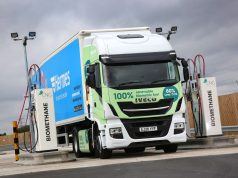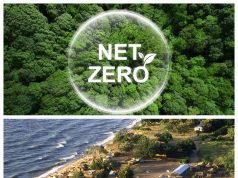


The UK faces a critical crossroads in its energy future, industry leaders and politicians have warned at the Offshore Europe conference in Aberdeen. But it is becoming clearer by the day, as target after target is missed, that the NetZero project cannot remain as one of the signposts at the crossroads.
Net Zero is impoverishing the people, sacrificing prosperity on the altar of an man-made idol of climate fanaticism. The Bible says our leaders have a choice:
1Chron 16:26 For all the gods of the people are idols: but the LORD made the heavens.
’Jet Zero’
When Boris Johnson promised Britain would lead the world into an age of “jet zero,” the former prime minister spoke of transatlantic flights powered by sustainable fuels, making air travel ‘guilt-free’.
Billions across the West were poured into research on hydrogen-electric engines, synthetic fuels, and new battery technologies. Airlines have been forced to meet quotas for green fuel, while passengers have faced rising aviation taxes in the name of ‘climate responsibility’.
Five years on, the vision is collapsing. Shell has pulled the plug on a major sustainable aviation fuel (SAF) project in the Netherlands, saying it is too costly and uncompetitive. Analysts now describe the SAF industry as running out of momentum, with even global giants unable to produce affordable fuels at scale.
Electric Aircraft? Dream on

In Britain, Dale Vince’s “Ecojet,” heralded as the flag-carrier of green aviation, has laid off most of its staff and is struggling to raise the £20 million needed to launch.
And speaking of ‘launch’, or rather ‘take-off’, it is now clear that the electric aeroplanes which formed a crucial part of ‘Ecojet’ will remain a pipe-dream for one crucial reason: Landing.
Putting an aircraft down onto the tarmac is far more challenging than coaxing it into the air on take-off in the first place. A modern jet airliner can weigh as much as one hundred tons less when landing than it did at takeoff, having expended its fuel on the way. That loss in weight enables the pilot to land safely. The safety issue explains why airline pilots forced into an early emergency landing must, if fuelled up for a long haul, first dump tons of kerosene into the air.
An electric aircraft weighs the same at landing as takeoff. Either the battery will be so small the aircraft will be restricted to a micro route or any pilot will take a risk landing the brute.
Flight levies and taxes scrapped
Governments are beginning to retreat from ‘Jet Zero’ as well. Sweden has scrapped its green flight levy after recognising the damage it inflicted on tourism and industry. India and Germany have also cut aviation taxes.

Britain, by contrast, has gone in the opposite direction. The Government have raised air passenger duty yet again, despite warnings it punishes families and businesses without delivering meaningful environmental benefit.
It is a form of taxation which bears heavily on ordinary people, now that travel and foreign holidays in the sun are regarded as something of a necessity in the public mind. For the UK Government, the tax is also part of unbiblical levels of taxation imposed to carry out unbiblical policies and activities:
Zechariah 7:9-10 Thus speaketh the LORD of hosts, saying, Execute true judgment, and shew mercy and compassions every man to his brother: And oppress not the widow, nor the fatherless, the stranger, nor the poor; and let none of you imagine evil against his brother in your heart.
OE2025: “UK energy future at crossroads”
Meanwhile, industry leaders and politicians at the Offshore Europe conference in Aberdeen warned that UK energy security must depend on domestic oil and gas.
OEUK chair David Whitehouse argued that future government decisions on oil and gas licenses, the Energy Profits Levy, which puts ‘windfall’ taxes on profits from oil and gas, and renewable energy will determine the future of the North Sea and the broader economy.
The OEUK chair advocates for a path of home-grown energy and reindustrialisation, emphasing that the energy sector is vital for national security, economic prosperity, and highly skilled jobs.
Mr Whitehouse said: ‘The sector is critical – the path to energy security, economic value, highly skilled jobs, tackling emissions. Reindustrialisation not deindustrialisation.’
Kemi ditches ‘transition’

Opposition Leader Kemi Badenoch MP criticised the government’s halt on new exploration licences and continued windfall tax, highlighting that the sector is currently shedding around 1,000 jobs per month.
She warned that without immediate investment, the UK could soon be importing 80% of its oil and gas requirement.
“Oil and gas still account for three-quarters of UK energy needs,” she said. Furthermore, Ms. Badenoch said Norway had made its biggest discovery in 10 years, “while we are leaving our resources untouched.”
Mrs Badenoch also took aim at the ‘North Sea Transition Authority’ quango. The virtue-signalling ‘Transition’ element of its name would go if she becomes prime minister. ‘We also will change the name of the NSTA to just North Sea Authority.’
We are sabotaging ourselves
‘We are sabotaging ourselves and had the lowest oil production in [nearly 50 years]. We’ve got to get that oil and gas out of the ground.’ With domestic output waning, imports now underpin 40% of energy demand, contributing to a £21 billion annual energy trade deficit.
Accordingly, the Tory leader proposed what she described as ‘one clear mission’ for the renamed North Sea Authority: ‘To maximise North Sea production.’
‘We will judge operators on one thing, how much they produce,’ continued Ms. Badenoch. ‘Without investment now, the UK will be importing 80% of its oil and gas, leaving us open to supply squeezes. The economy must come first. It’s about whether Britain grows or declines.’
Net Zero Aid Projects Cancelled

On a positive note, the Government have confirmed that millions of pounds will be stripped from overseas aid projects tied to net zero, according to the Telegraph.
Development minister Baroness Chapman outlined the cuts as part of a broader aid budget reduction, targeting schemes in Africa, Asia, and the Middle East.
Among the casualties are cash payments to Malawian villagers apparently designed to help families reinforce homes against extreme weather, as well as projects worth £95 million in Jordan and £120 million in Pakistan. How did they ever manage without neo-colonial largesse?
The cuts follow Sir Keir Starmer’s decision to shrink Britain’s aid budget to just 0.3 per cent of national income by 2027, well below the official 0.7 per cent commitment, in order to divert the 0.4% balance into the Ministry of Defence.
Lady Chapman has spun the reductions as a shift from being an ‘aid donor’ to becoming a ‘partner and investor,’ promising ‘greater scrutiny’ to ensure ‘every pound delivers for the UK taxpayer.’ It may be tempting to laugh, but the Bible says:
Psalm 118:9 It is better to trust in the LORD than to put confidence in princes.
Balancing energy future
Offshore Energies UK estimates that scrapping the Energy Profits Levy could enable the UK to produce 50% of its energy needs by 2050, tapping up to 7.5 billion barrels of recoverable oil versus the 4.3 billion under current tax policy.
However, speakers at the Offshore Europe Conference still could not shake off the climate catastrophe language. They called for an ‘integrated’ approach which they saw as supporting North Sea development while advancing renewables, avoiding what they saw as ‘the false dichotomy of growth versus decarbonisation’.
Mr Whitehouse himself argued to ‘take the polarisation out of the debate’. It was, he said, ‘A debate which too often is boiled down into binary choices. Oil versus renewables. Clean jobs versus dirty jobs. Growth v Net Zero. These are false choices.’
But of course they are not false choices. Economic growth really is incompatible with a net zero agenda. We have seen this clearly in South Wales, where the previous government sacrificed the jobs and prosperity of virgin stell-making at Port Talbot on the altar of net zero. The closure of the blast furnaces was even praised as a great green new dawn by the Business Secretary of the time, one Kemi Badenoch. Watch our video:
Economic burden imposed on families
Families are already feeling the pinch: rising energy bills, squeezed food budgets, and community disruption. We have already reported that a Reform MP has warned that families are being forced to pay £1,000 more each year to meet the costs of Net Zero, .
Ofgem’s upcoming price cap hike will push average annual energy bills to around £1,755, an increase of £35.
The Conservatives estimate that climate policies will add £389 per household per year by 2030, an annual national cost of around £22.8 billion.
Once more, it is unjust, unwarranted and unbiblical taxation. As always, the prophets of old have a word for our leaders of today:
Jeremiah 22:3 Thus saith the LORD; Execute ye judgment and righteousness, and deliver the spoiled out of the hand of the oppressor: and do no wrong, do no violence to the stranger, the fatherless, nor the widow, neither shed innocent blood in this place.
If Net Zero policies continue to penalise homegrown energy without accounting for real-world impacts, the burden falls upon ordinary people.
Prioritising households, securing jobs, and protecting energy sovereignty would be imperatives for any God-fearing leaders who had advancing the prosperity of the people they govern as their first priority. We need to pray for leaders who know this word of the Lord:
Matt 6:33 But seek ye first the kingdom of God, and his righteousness; and all these things shall be added unto you.
Energy Security has no place for ‘Net Zero’
The North Sea isn’t just an energy resource, it underpins jobs, local economies, and national security. At a time when domestic production is falling and imports are rising, energy strategy becomes a matter of moral stewardship. After the fall of Jerusalem, the Prophet Jeremiah was bemoaning a lack of resource and energy security:
Lam 5:4 We have drunken our water for money; our wood is sold unto us.
It follows from all we have seen that the name of the Department for Energy Security and Net Zero is a virtue-signalling fantasy, a chimera, an oxymoron. We can have one or the other, either Energy Security or Net Zero. But we cannot have both, and as one is a godly priority bringing prosperity and the other is an idol leading to penury, it’s clear which must go.
In the light of Jeremiah’s complaint, it may be argued that a Department for Energy Security will be useful if it prioritises the building of nuclear reactors and domestic oil and gas, even coal, to reduce energy costs and rebuild industry and jobs.
But the Net Zero element? That idol must be torn down as the nation’s leaders return to trust the Lord.
Stay informed by signing our contact form and book-marking the Christian Voice website.
Hosea 4:6 My people are destroyed for lack of knowledge.
Related Stories
Ditching unscriptural Net Zero could save each family £1,000 →
Hail destroys giant solar park →
Veganuary? Eat meat, avoid UPFs! →
King Charles preaches Net Zero at COP28 →
Net zero car ban pushed back →
Closing the Port Talbot Blast Furnaces →
UN exploiting children for political gain →
Cult of Climate Change hits the buffers
of Uxbridge and energy security →
Support us!
We appreciate your support; it enables our research and helps us inform your prayers.
So click below to support Christian Voice and stand up for the King of kings

Or fill in the form below to keep in touch:
Click on the social media links below to share this post: