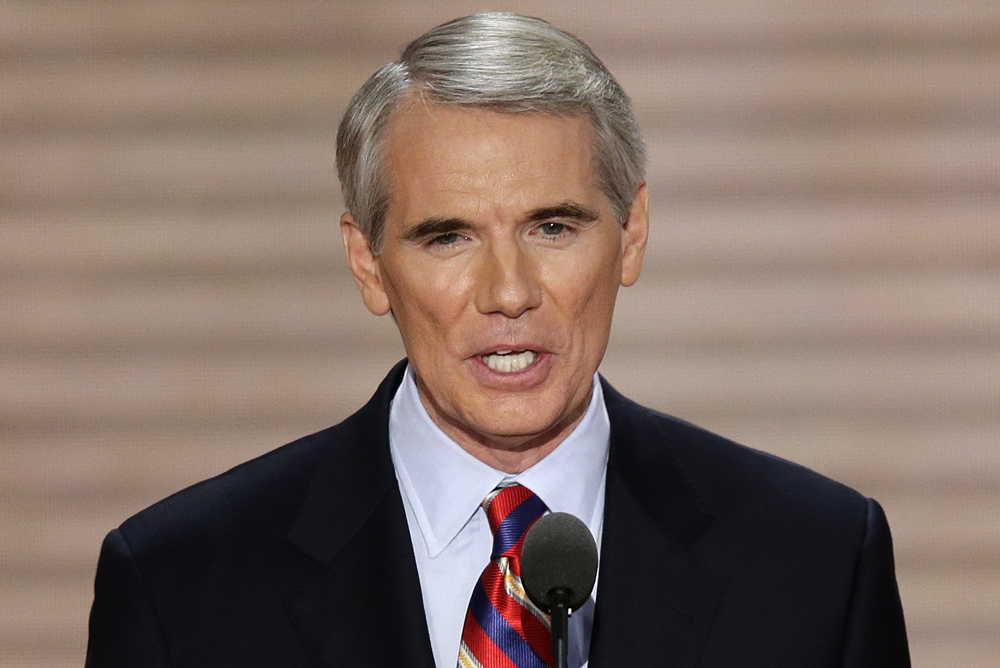
David Cameron is facing a groundswell of opposition that could culminate in him being ousted as leader of the Tory Party.
The Marriage (Same-Sex Couples) Bill cleared its final Commons hurdle today in a vote of 366 to 161, although the victory for Government comes at a costly political price.
More than half of the Tory party voted for one or more amendments that would have protected liberty of conscience, but these amendments were cut down by David Cameron.
The Prime Minister is now facing a rebellion of 130 Tory MPs in a groundswell of opposition that could culminate in him being ousted as the Conservative leader prior to the 2015 general election.
The bill, which seeks to redefine the meaning of marriage, will now move to the House of Lords, which is expected to hold its first debate in July.
‘SOVIET-STYLE PERSECUTION’
The cat was out of the bag that the marriage bill is not about freedom at all after Government rejected three amendments that would have protected liberty of conscience, including one that would have allowed registrars to opt out of conducting gay marriages where another registrar was available and willing.
Former Tory Minister Ann Widdecombe declared that “this Bill is not about liberty and equality but about oppression and state orthodoxy, about Soviet-style persecution in the work place for an opinion given in a private context, about compelling conformity even where conformity is not necessary.”
Many senior Tories are beginning to worry that David Cameron’s pro-Europe and pro-homosexual policies have come at the expense of being able to hold the party together. Secretary of State for Defence, Philip Hammond, echoed the concerns of many senior Tories when he stressed last week that voters are angry.
The infighting was punctuated by a YouGov poll that showed the Conservative Party is at their lowest rating since 2000.
Meanwhile, David Cameron not only faces opposition from his own ranks but also from hundreds of Islamic leaders. Church leaders as well have warned that the Bill could have the effect of isolating young Christians who believe in the traditional definition of marriage.
Find out how to join Christian Voice and stand up for the King of kings (clicking on the link below does not commit you to join)
Please note that persons wishing to comment on this story must enter a valid email address. Comments from persons leaving fictitious email addresses will be trashed.
Speaking on BBC’s Question Time, he said there was no great demand in the country for change and criticised the amount of parliamentary time devoted to the issue. “I have just never felt that this is what we should be focusing on,” he told the audience.
“This change does redefine marriage. For millions of people who are married, the meaning of marriage changes.
“There is a real sense of anger among many people who are married that any government thinks it can change the definition of an institution like marriage.
“There was no huge demand for this and we didn’t need to spend a lot of parliamentary time and upset vast numbers of people to do it,” he added.
The comments from such a senior Cabinet colleague will embarrass David Cameron, and encourage Parliamentary opposition to the measure.
Find out how to join Christian Voice and stand up for the King of kings (clicking on the link below does not commit you to join)
France’s president has signed into law a controversial bill making the country the ninth in Europe, and 14th globally, to legalise gay marriage, reports the BBC.
On Friday, the Constitutional Council rejected a challenge by the opposition, clearing the way for Francois Hollande to sign the bill.
The deeply unpopular Hollande said: “I have taken [the decision]; now it is time to respect the law of the Republic.”
The first ‘gay wedding’ could be held 10 days after the bill’s signing.
The Constitutional Council ruled that same-sex marriage “did not run contrary to any constitutional principles,” and that it did not infringe on “basic rights or liberties or national sovereignty”.
It said the interest of the child would be paramount in adoption cases, cautioning that legalising same-sex adoption would not automatically mean the “right to a child”.
50% of the French electorate oppose adoption of children by homosexuals and the opposition group Manif Pour Tous say that a majority of the electorate oppose Hollande’s flagship measure.
New Zealand legalised ‘gay marriage’ last month. France is now the 14th country to overturn God’s institution of marriage in which a man joins a woman in a one-flesh union. Commentators have pointed out that basic anatomy denies the ability to be ‘one flesh’ to two homosexuals, mandating a redefinition of marriage.
France is also the ninth country in Europe to allow same-sex marriage. The others are Norway, Sweden, Iceland, Denmark, Belgium, the Netherlands, Portugal and Spain.
South Africa, Canada, Uruguay and Argentina have also changed the definition of marriage.
In January, a protest in Paris against the bill by Manif Pour Tous attracted some 340,000 people according to police – one of the biggest public demonstrations in France in decades. Organisers put the figure at 800,000.
Last month, a youth organiser for Manif Pour Tous, Samuel Lafont, was attacked at Odeon métro station by a homosexual gang. He was stabbed in the back six times, as well as sustaining other injuries. Two persons accompanying him were also hurt.
The following morning there were tweets on Twitter that celebrated what happened. One stated that having no news from Lafont for hours, s/he hoped that Lafont was dead but “not from worry”. Find out how to join Christian Voice and stand up for the King of kings (clicking on the link below does not commit you to join)
The following morning there were tweets on Twitter that celebrated what happened and wished Lafont dead. He and his friends are now recovering.
Last January there was a fascinating debate on C-span in which one of the book’s authors, Sherif Girgis, debated Andrew Koppelman on ‘gay marriage’ before an audience at the Harvard Law School. The entire debate can be watched here. Both thinkers have a background in law and have clearly spend considerable time considering the question from their differing perspectives of legal theory. The debate isn’t easy-going and can get pretty technical, but it is still definitely worth watching if you have a free hour. This was the most civil and rational debate I have ever seen on this topic which is usually charged with emotion.
Find out how to join Christian Voice and stand up for the King of kings (clicking on the link below does not commit you to join)
Please note that persons wishing to comment on this story must enter a valid email address. Comments from persons leaving fictitious email addresses will be trashed.
Scottish historian Niall Ferguson put a public apology on his website yesterday after suggesting that the spend-your-way-out-of-recession approach of economist John Maynard Keynes was inspired by his homosexuality. (Read the BBC report, ‘Niall Ferguson apology over Keynes remarks.’)
The Harvard professor made the remarks at a conference in California on Thursday after being asked to comment on Mr Keynes’s famous observation that “in the long run we are all dead.” Dr Ferguson suggested that Keynes’ unconcern for future generations was related to being both gay and childless. Hereportedly said that “it’s only logical that Keynes would take this selfish worldview because he was an ‘effete’ member of society.”
Ferguson’s remarks raised controversy throughout the internet, and he was quickly condemned for being homophobic, ignorant and even mad.
In his retraction, Dr. Ferguson said, “It is simply false to suggest, as I did, that his approach to economic policy was inspired by any aspect of his personal life. As those who know me and my work are well aware, I detest all prejudice, sexual or otherwise.”
Despite his retraction, Christian Voice believes Dr. Ferguson was right the first time. We have reportedon the British economist John Maynard Keynes before, showing how his rejection of the Biblical “sowing and reaping principle” in favour of immediate gratification formed the basis both of his deviant sexual lifestyle and his economic theories. Recognizing the obvious connection between Keynes’ personal life and his economic theory is not a matter of sexual prejudice, but of history.
A paedophile who governed his life by the principle that “in the long run we are all dead”, Keynes was himself the first to suggest that his approach to economic policy was inspired by his immoral life. Keynes wrote, “When the accumulation of wealth is no longer of high social importance, there will be great changes in the code of morals. We shall be able to rid ourselves of many pseudo-moral principles which have hag-ridden us for two hundred years….”
As this quotation suggests, it is simply not possible to disengage Keynes’ economic theories from his worldview – a worldview deeply rooted in the deviance of his personal life. That is why we believe that Niall Ferguson was right the first time.
Find out how to join Christian Voice and stand up for the King of kings (clicking on the link below does not commit you to join)
Please note that persons wishing to comment on this story must enter a valid email address. Comments from persons leaving fictitious email addresses will be trashed.
Now who would force schoolgirls into lesbian role-play? Would it be some sadistic sex-maniac? The correct answer is the Principal of Linden Avenue Middle School in Red Hook, New York.
As part of an ‘anti-bullying presentation on gender identity and sexual orientation’ given to a class of 8th-graders (that’s 13-14 for us Brits), at least one of the girls was instructed to ask another girl for a kiss.
The story was reported by Todd Starnes of Fox News, who was immediately castigated by the liberal press. Alternet accused him and Fox news of having got the story about a ‘forced lesbian kiss’ wrong. But Starnes never said there was a forced kiss, only that the girls were forced to ask for one. Another blogger said, amid bad language, that Starnes was wrong to call it ‘lesbian role play’, but it is difficult to know what else to call it.
But the line Starnes took was defended in eloquent terms by another blogger, Mr Conservative whose post is worth a read. (In the US, we should point out, a ‘conservative’ is someone concerned to defend the status quo, including the Christian faith, the institution of the family and basic morality.)
According to the local paper, the PoughKeepsie Journal, parents were especially angry that no notice was given about the class, which included the now mandatory sex education propaganda about it being OK to have sex ‘when you are ready’.
‘”I am furious,” said Mandy Coon, whose daughter was in the class. “I am her parent. Where does anyone get the right to tell her that it’s okay for her to have sex?”’
Comments like that, of course, betray the 20th-century thinking that so many parents have. Times have moved on. The State is now your child’s parent, Mandy. You are just her birth mother. Or so it seems.
Mandy Coon told reporters that her daughter said, ‘Mom we all get teased and picked on enough. Now I’m going to be called a lesbian because I had to ask another girl if I could kiss her.’
The case illustrates that anti-bullying classes run by homosexuals, or designed to further the gay cause, are not about reducing bullying, they are about desensitising and indoctrinating with the ruling State philosophy that homosexuality is not just acceptable but good and to be promoted.
Tolerance towards homosexuals will hardly be increased by such lessons, but maybe just one child will start to think ‘maybe I’m gay’ and be recruited to the lifestyle.
This side of the pond, we have Sir Ian McKellen, Stonewall and organisations such as School’s Out driving the push to normalise homosexuality.
As the US National Organisation for Marriage points out, such lessons will become the norm in schools the moment ‘gay marriage’ is legalised, as it was in New York in July 2011.
The story has implications for the United Kingdom. We should never think things can’t get worse.
Homosexuality is against the law in the central American nation of Belize
Western nations are attempting to strong-arm the central American nation of Belize into accepting the LBTG agenda in a landmark court case that could have ramifications for the entire region.
The case will be heard by the Supreme Court of Judicature next Tuesday and centres on the constitutionality of Section 53 of the Belize Criminal Code, which outlaws “carnal intercourse against the order of nature with any person or animal.”
This law, which has been in place since 2003, imposes up to 10 years imprisonment on those who violate it. The nation’s Immigration Act also prohibits prostitutes and homosexuals from immigrating to the nation.
Belize is part of the Commonwealth realm and a member of the Commonwealth of Nations. It is a constitutionally Christian nation and the only country in Central America that prohibits homosexual activity. Belize also has the distinction of being the only nation in the region that did not sign the United Nations 2011 document on gay rights.
The government of Belize has come under increasing fire from the Obama administration in general and from former US Secretary of State Hillary Clinton in particular. In 2011, the White House issued a presidential memorandum condemning “discrimination, homophobia, and intolerance on the basis of LGBT status or conduct,” and said that US agencies in countries such as Belize should “vigorously advance” the promotion of gay rights. Belizean Prime Minister Dean Barrow reiterated that Belize would not change its anti-homosexuality stance, saying that if President Obama wishes to punish states by removing foreign aid for continuing such practice then “they will have to cut off their aid”.
As Belize has stood firm in the midst of foreign pressure, the LGBT lobby changed their tactic and turned to the courts. A case was filed before the country’s Supreme Court in September 2010 by the United Belize Advocacy Movement (UNIBAM). It is being supported by the International Commission of Jurists, the Commonwealth Lawyers’ Association, and the Human Dignity Trust. It is being opposed by Belize Council of Churches and Evangelical Association of Churches, along with the Belizean Government, on the grounds that overturning the law will be a slippery slope for introducing ‘gay marriage’ and other practices.
A spokesman for the churches, Pastor Scott Stirm, claimed
They are trying to push this issue as a human rights issue. And there is an international, global agenda that is pushing homosexuality and abortion.
UNIBAM receives support from the U.S. in the name of human rights. But we will not allow them to legalize this lifestyle so that they have free course to go into the schools and teach our kids their lifestyle.’
If UNIBAM is unsuccessful in the case which begins next week, they plan to take the fight all the way to the Caribbean Court of Justice.
When asked about the case, Robin Phillips, spokesman for Christian Voice, commented, “From our perspective in the West, Section 53 of the Belize Criminal Code seems unnecessary and even harsh, and I certainly do not advocate putting homosexuals in jail. However, the government of Belize believes that laws criminalizing unnatural acts function as effective “gatekeepers” by keeping at bay measures such as gay marriage, gay adoption, etc. Given the trajectory of how things have gone in Britain after the laws prohibiting sodomy were removed from the statute books, it’s hard not to have some sympathy with this position. The collateral effects of the gay rights agenda, in terms of the erosion of liberty and the public threats, were only possible once homosexuality became legalized in Britain. The rulers in Belize are not stupid and are aware of this dangerous trajectory.”
Find out how to join Christian Voice and stand up for the King of kings (clicking on the link below does not commit you to join)
Please note that persons wishing to comment on this story must enter a valid email address. Comments from persons leaving fictitious email addresses will be trashed.
“Fighting for gay marriage generally involves lying about what we are going to do with marriage when we get there — because we lie that the institution of marriage is not going to change.” Masha Gessen (Lesbian and gay rights activist)
The conjugal view of marriage asserts that marriage is not infinitely malleable or plastic
In our earlier article, ‘Why Gay Marriage is a Public Threat (part 1)‘, we saw that changing the definition of marriage will affect EVERY family, effecting making all of us wards of the state. We saw that when a state presumes to legalize same-sex ‘marriage’ they thereby imply that both marriage and family are little more than legal constructs. Because of this, I suggested that same-sex ‘marriage’ threatens every marriage in the land, reversing the gravitational field between the family and state.
This article will build on those considerations by showing additional specific ways that same-sex ‘marriage’ is a public threat.
Same-Sex ‘Marriage’ Will Make the Government MORE Involved in Family Life
In his article ‘Why Gay “Marriage” Will Affect Everyone Else’, Father John Whiteford describes some of the practical ramifications that every family could experience if same-sex ‘marriage’ is legalized. He is describing realities that touch us all that no amount of talk about church-state separation can alter:
It has become trendy for even many conservatives to argue that the government should either get out of the “marriage business” entirely, or else to argue that gay “marriage” won’t hurt us, and so we shouldn’t care about it. Such people do not understand what a fundamental revision of family law will be required to accommodate gay marriage. For example, in my secular job, I work for the state child support agency, and so deal with questions of paternity and marriage regularly. In our current legal system, the law presumes that any child born within a marriage is the child of the married couple — that presumption can be rebutted with evidence to the contrary, if the husband wish to make that case in court (usually in a divorce), but that is the presumption. When I was born, I did not have a DNA test to prove who my father was, and when my children were born, they did not have a DNA test. We also did not need to go to court to establish that I was the father, because by law, that was presumed to be the case. If you have two lesbians that are married, can we presume that the other woman is the father of the child if their “spouse” has a child? And if they later divorce, and the other spouse wanted to rebut the presumption that they were the parent with DNA (which obviously would not be hard to do), should they be let off the hook when it comes to child support? Does the actual biological father have no rights in such a case? Should such a child have two parents on their birth certificate, or three? These are the kinds of questions that will rewrite our family law if we throw this monkey wrench into the works.
Suppose the government did get out of the “marriage business”. Do you really think that in the case of a religiously married couple who live together and raise their children together, but who fail to execute a will, and then one of the spouses dies unexpectedly, the religious spouse should have no unique claim to the property of her husband without having to go through a probate court? Should she have no more claim than his fishing buddy to his car, retirement accounts, or other property? Well, if the government was out of the marriage business, the fishing buddy would have just as much a claim, and the government would be who decided the matter.
And should his children have to have a court order or DNA evidence in order to claim any life insurance or Social Security survivor benefits from a deceased parent? Should they have to have a court order order or DNA evidence to make any inheritance claims?
The fact is that if the government gets out of “the marriage business” it will result in the government becoming more involved in our personal lives rather than less, because the government will have to set up new laws and new mechanisms to deal with issues that we have always dealt with by basic principles of family law that automatically come into play when a man and a woman are married.
Same-Sex ‘Marriage’ Will Undermine Friendships
In their book What is Marriage?, Girgis, Anderson and George show that “it is not the conferral of benefits on same-sex relationships itself but redefining marriage in the public mind that bodes ill for the common good.” But why? Why does redefining marriage threaten the common good? One reason is because it undermines friendships. By redefining marriage to be simply an emotional union of persons, the difference between marriage and friendship becomes purely quantitative rather than qualitative. As Girgis, Anderson and George explain,
Misunderstandings about marriage will also speed our society’s drought of deep friendship, with special harm to the unmarried. The state will have defined marriage mainly by degree or intensity – as offering the most of what makes any relationship valuable: shared emotion and experience./ It will thus become less acceptable to seek (and harder to find) emotional and spiritual intimacy in nonmarital friendships. These will come to be seen not as different from marriage (and thus distinctively appealing), but simply as less. … A critical point here is that marriage and ordinary friendship do not simply offer different degrees of the same type of human good, like two checks written in different amounts. Nor are they simply varieties of the same good, like the enjoyment of a Matisse and the enjoyment of a Van Gogh. Each is its own kind of good, a way of thriving that is different in kind from the other. Hence, while spouses should be friends, what it takes to be a good friend is not just the same as what it takes to be a good spouse.
Same-Sex ‘Marriage’ Makes Marriage Meaningless
The revisionist view of marriage that forms the ideological basis of same-sex ‘marriage’ makes any remaining restrictions on what can count as marriage merely arbitrary. Significantly, dozens of people have now given assent to the public statement that “The struggle for same-sex marriage rights is only one part of a larger effort to strengthen the security and stability of diverse households and families.” How diverse? We get some idea of the answer to this question by attending to those nations that have already legalized same-sex ‘marriage’, as we showed in our earlier article ‘Gay Marriage and the Slippery Slope.’
These types of warnings are often objected to on the grounds that it is a fallacious ‘slippery slope argument.’ But as Girgis, Anderson and George remind us,
“there is nothing wrong with arguing against a policy based on reasonable predictions of unwanted consequences. Such predictions would seem quite reasonable in this case, given that prominent figures suchas feminist icon Gloria Steinem, political activist and author Barbara Ehrenreich, and New York University Law Professor Kenji Yoshino have already demanded legal recognition of multiple-partner sexual relationships. Now are such relationships unheard of: Newsweek reports that there are more than five hundred thousands in the United States alone. In Btazil, a public notary has recognized a trio as a civil union. Mexico City has considered expressly temporary marriage licenses, The Toronto District School Board has taken to promoting polyamorous relationships among its students. We could go on….
As we deprive marriage policy of definite shape, we deprive it of public purpose.
Rigorously pursued, the logic of rejecting the conjugal conception of marriage thus leads, by way of formlessness, toward pointlessness: it proposes a policy for which it can hardly explain the benefit.”
The formlessness of marriage is now being acknowledged by an increasing body of public figures and was reflected by Jillian Keenan in an article for Slate earlier this week titled, ‘Legalize Polygamy! No. I am not kidding.‘ Listen to what she writes:
“The definition of marriage is plastic. Just like heterosexual marriage is no better or worse than homosexual marriage, marriage between two consenting adults is not inherently more or less “correct” than marriage among three (or four, or six) consenting adults. Though polygamists are a minority—a tiny minority, in fact—freedom has no value unless it extends to even the smallest and most marginalized groups among us. So let’s fight for marriage equality until it extends to every same-sex couple in the United States—and then let’s keep fighting. We’re not done yet”
In their book What is Marriage?, Girgis, Anderson and George explain that legalizing same-sex ‘marriage’ will undermine freedom and liberty. They write that “Redefining civil marriage will further erode marital norms, thrusting the state even more deeply into leading roles for which it is poorly suited: parent and discipliner to the orphaned, provider to the neglected, and arbiter of disputes over custody, paternity, and visitations. As the family weakens, our welfare and correctional bureaucracies grow….” Moreover, if gay “marriage” is ever legalized, it is likely to result in unprecedented restrictions on freedom of speech and even thought. This was a point that S. T. Karnick drew attention to back in 2008. The Director of research for The Heartland Institute pointed out that,
The issue, it’s important to remember, is not whether society will allow homosexuals to ‘marry.’ They may already do so, in any church or other sanctioning body that is willing to perform the ceremony. There are, in fact, many organizations willing to do so: the Episcopal Church USA, the Alliance of Baptists, the Evangelical Lutheran Church in America, the Presbyterian Church USA, the Unity School of Christianity, the Unitarian Universalists, the Swedenborgian Church of North America, the Quakers, the Universal Fellowship of Metropolitan Community Churches, and the United Church of Christ, among others. Such institutions either explicitly allow the consecration or blessing of same-sex ‘marriages’ or look the other way when individual congregations perform such ceremonies.
No laws prevent these churches from conducting marriage ceremonies—and nearly all Americans would agree that it is right for the government to stay out of a church’s decision on the issue. Further, any couple of any kind may stand before a gathering of well-wishers and pledge their union to each other, and the law will do nothing to prevent them. Same-sex couples, or any other combination of people, animals, and inanimate objects, can and do ‘marry’ in this way. What the law in most states currently does not do, however, is force third parties—individuals, businesses, institutions, and so on—to recognize these ‘marriages’ and treat them as if they were exactly the same as traditional marriages. Nor does it forbid anyone to do so.
An insurance company, for example, is free to treat a same-sex couple (or an unmarried two-sex couple) the same way it treats married couples, or not. A church can choose to bless same-sex unions, or not. An employer can choose to recognize same-sex couples as “married,” or not. As Richard Thompson Ford noted in Slate, ‘In 1992 only one Fortune 500 company offered employee benefits to same-sex domestic partners; today hundreds do.’
In short, individuals, organizations, and institutions in most states are currently free to treat same-sex unions as marriages, or not. This, of course, is the truly liberal and tolerant position. It means letting the people concerned make up their own minds about how to treat these relationships. But this freedom is precisely what the advocates of same-sex ‘marriage’ want to destroy; they want to use the government’s power to force everyone to recognize same-sex unions as marriages whether they want to or not.
The effects of such coercion have already been felt in some places. Adoption agencies, for example, like any other organization, ought to be able to choose whether to give children to same-sex couples, or not. But in Massachusetts, where same-sex ‘marriage’ has been declared legal, these agencies have been forced to accept applications from same-sex couples or go out of business.
What’s at issue here is not whether people can declare themselves married and find other people to agree with them and treat them as such. No, what’s in contention is whether the government should force everyone to recognize such ‘marriages.’ Far from being a liberating thing, the forced recognition of same-sex ‘marriage’ is a governmental intrusion of monumental proportions.
Should the State Get Out of the Marriage Business?
Perhaps a solution to this problem is that the state should get out of the marriage business completely. Perhaps the state should not be involved at all in publicly recognizing certain types of relationships as being marriage. This is the position taken by radical libertarians and it is an attractive solution to the ‘gay marriage’ debate, even among Christians. According to this line of thinking, once the state begins pronouncing that certain types of relationships are marriage, this itself shows that government has overstepped its God-appointed mark.
If it were true that the state has no business recognizing certain types of relationships as being marriage, then how far do we extend that? Is it wrong for the government of a nation to recognize certain types of relationships as being marriage, but okay for the government of the state or shire or county to recognize certain types of relationships as being marriage? Suppose we are consistent with the libertarian position and say that it is wrong for government to recognize certain types of relationships as being marriage all the way down to the level of village government. That would mean if there was a small tribe of a thousand people in the jungle of South America, that it be wrong for them to have formal or informal mechanisms in place for recognizing who was married and for then using those mechanisms to generate the presumption of paternity or to settle disputes about inheritance or other matters. Few libertarians would want to go that far, and yet it is hard to see how that example is qualitatively different to the situation today, where the people of the community have certain formal mechanisms in place for identifying a legal marriage. Whenever you have a community that has formal or informal mechanisms in place for recognizing a marriage, then questions of what can count as marriage will arise and have to be settled by the community. Whether that community is represented by the gathering of local chiefs, or whether there is a de facto tradition of common law that is appealed to, or whether there is the apparatus of the modern state, the basic principle is the same: the civil community has mechanisms in place for recognizing what is and is not a marriage.
But let’s suppose this wasn’t the case and the radical libertarians have a point: we should abolish civil marriage completely. In their book What is Marriage?, Girgis, Anderson and George suggest some of the consequences that would arise if such a state of affairs were realized:
Abolishing civil marriage is practically impossible. Strike the word ‘marriage’ from the law, and the state will still license, and attach duties and benefits to, certain bonds [benefits such as the presumption of paternity]. Abolish these forward-looking forms of regulation, and they will only be replaced by messier, retroactive regulation – of disputes over property, custody, visitation, and child support. What the state once did by efficient legal presumptions, it will then do by burdensome case-by-case assignments of parental (especially paternal) responsibilities.
“The state will only discharge these tasks more or less efficiently–that is, less or more intrusively. It can’t escape them. Why not? Because the public functions of marriage–both to require and to empower parents (especially fathers) to care for their children and each other–require society-wide coordination. It is not enough if, say, a particular religion presumes a man’s paternity of his wife’s children, or recognizes his fights and duties toward their mother; or if the man and his wife contract to carry out certain tasks. For private institutions can bind only their own; private contracts bind only those who are party to them. A major function of marriage law is to bind all third parties (schools, adoption agencies, summer camps, hospitals; friends, relatives, and strangers) presumptively to treat a man as father of his wife’s children, husbands and wives as entitled to certain privileges and sexually off-limits, and so on. This only the state can do with any consistency.
But more than inevitable or necessary, it is fitting that the state should do this. Consider a comparison. Why don’t even the strictest libertarians decry traffic laws? First, the orderly traffic protects health and promotes efficiency, two great goods. Second, these goods are common in two senses; private efforts cannot adequately secure them, and yet failure to secure them has very public consequences. It is not as if we would have had the same (or even just slightly less) safety and efficiency of travel if people just did as they pleased, some stopping only at red lights and others only at green. Nor would damage from the resulting accidents (and slower shipments, etc) be limited to those responsible for causing it. To ensure safe and efficient travel at all, and to limit harm to third parties, we need legal coordination. Indeed, it is no stretch to say that the state owes its citizens to keep minimum security and order: to these we have a right. Finally, unlike private associations, the state can secure these goods, without intolerable side effects. Al this makes it appropriate for the state to set our traffic laws….
If something would serve an important good, if people have a right to it, if private groups cannot secure it well, everyone suffers if it is lost, and the state can secure it without undue cost, then the state may step in–and should.
Because marriage was prior to the state, civil government does not have the authority to redefine it.
Is opposition to gay ‘marriage’ about warding off a public threat, or policing private morality? Is it about imposing religiously-derived categories onto a secular public, or protecting our way of life?
These questions recently came to mind when I stumbled across an article written thirteen years ago by Frederica Mathewes-Green.
Mrs. Mathewes-Green is one of the most helpful and lucid thinkers of our era. Her writings and public speaking have been a source of much rich blessing for both my wife and me over the years. So I was naturally interested when I read some questions Frederica posed on her website about what she calls “anti-gay activism.”
I fall into the category of what would probably be considered an “anti-gay activist” since I have been very involved in both Britain and the United States campaigning against the promotion of homosexuality in the schools and, more recently, same-sex ‘marriage.’ But perhaps these efforts are misplaced. Does the gay agenda really threaten marriage? Is homosexuality really a political issue, or just a question of private morality? These were some of the questions that Frederica’s thought-provoking article raised. Since the time when she wrote that article, David Dunn has argued that gay marriage will definitely not affect traditional marriage in any way. I’d like to suggest that both Mathewes-Green and Dunn may be being too optimistic and that the evidence from Canada shows that legalizing same-sex ‘marriage’ can be considered a public threat.
To be fair, at the beginning of the 21st century when Mathewes-Green wrote the above article, it was still possible to assume that gay rights only affected the homosexual community, and that what happens in the secular realm need not affect what happens in the rest of the world. But things have rapidly changed since then, and it has become increasingly clear that the goals of the gay community, if realized, would affect everyone, not merely themselves. To put it simply, gay rights in general, and gay ‘marriage’ in particular, represents a significant public threat.
Before proceeding to demonstrate this, it is important to appreciate that activists like myself and the thousands of other Christians who are involved in the campaign to prevent same-sex marriage are not literally “anti-gay.” Or at least, if we are “anti-gay” then we have a problem and need to repent. What we oppose is not homosexual people, whom we love and long to share the gospel with; rather, we oppose the attempt among gay activists to change society for all of us, to change the meaning of marriage for everyone, including those in heterosexual marriages.
To make such statements sounds like nonsense to many people. How can the things homosexuals do in private, or the categories they use to define their relationships in public spaces, affect everyone else? This is one of the questions Mathewes-Green raised in her article. After being invited to a meeting on how to combat “the gay agenda”, she expresses some bemusement at what all the fuss is about:
“I tried to picture how a nice male couple living down the street, mowing their lawn and paying their taxes, could damage my marriage….
“The problem, I think, was that my friends assumed homosexuality is a political issue. We got used to thinking in political terms during the abortion debates, and with abortion that was justified; the minimum purpose of law is to prevent violence, particularly against children.
But homosexuality, it seems to me, is vastly different. Widespread promiscuity, straight or gay, is dangerous, but I don’t see a reason to rank private homosexuality high on the scale of public threats. I’m willing to be convinced, but I haven’t been yet.”
Perhaps the easiest way to see how the gay rights agenda is a public threat is to observe what happened in Canada after the gay rights movement got their way. As soon as the Canadian government made marriage simply the formalization of an intimate relationship between two consenting adults, they undermined the integrity of EVERY family living in Canada. By granting themselves the god-like power to declare which collections of individuals constitute a ‘family’, the Canadian government implied that both marriage and family are little more than legal constructs at best, and gifts from the state at worst. In the former case, marriage and family lose their objective fixity within society; in the latter case, we all become wards of the state. Precisely because of this, gay ‘marriage’ should be seen as a public threat.
But this needs to be fleshed out. In what follows I will attempt to demonstrate the truth of what I have just claimed in three successive points. Point number one is that same-sex ‘marriage’ hinges on certain non-sexual modalities. Point number two is that because of point number one it follows that the state that legalizes gay ‘marriage’ presumes to replace nature as the sole determiner for what constitutes a family. Point number three is that because of point number two, the state that introduces same-sex ‘marriage’ redefines its relationship with EVERY marriage and every family in the nation.
Premise 1: Gay ‘Marriage’ Hinges on a Non-Sexual View of Marriage
I begin with the point that same-sex ‘marriage’ hinges on a non-sexual view of marriage. In contrast to the traditional view of marriage, which we can call ‘the conjugal view’, same-sex ‘marriage’ depends for its coherence on another view of marriage, which we can call ‘the revisionist view.’ According to the revisionist view, the marital union is first and foremost a loving relationship, a bond of commitment and affection between two consenting adults. It is first about the communion of souls in a committed and affectionate relationship and only secondarily about the acts those people might or might not perform with their bodies. This view of marriage contrasts sharply with the traditional view which sees marriage as a sexual union publically recognized because of its potential fecundity. As Girgis, Anderson and George explain:
In short, the revisionist view sees your spouse as your ‘Number One person,’ in one advocate’s pithy phrase. Hence it cannot distinguish marriage from simple companionship. And we all know that companionship, while deeply enriching, is far more general than marriage….
Take Oscar and Alfred. They live together, support each other, share domestic responsibilities, and have no dependents. Because Oscar knows and trusts Alfred more than anyone else, he would like Alfred to be the one to visit him in the hospital if he is ill, give directives for his care if he is unconscious, and inherit his assets if he dies fist. Alfred feels the same about Oscar. Each offers the other security amid life’s hardships,. and company in its victories. They face the world together.
So far, you may be assuming that Oscar and Alfred have a sexual relationship. But does it matter? What if they are bachelor brothers? What if they are college best friends who never rooming together, or who reunited as widowers? In these cases, most agree, they would not be spouses. And yet they would be, by most revisionists’ arguments.
Assuming a general policy of recognizing committed dyads should the benefits that Oscar and Alfred receive depend on whether their relationship is or can be presumed to be sexual? Would it not be patently unjust if the state withheld benefits from them only because they were not having sex with each other? A Syracuse Law professor has argued that it would be: that the state should recognize social units made up of committed friends.
The revisionist cannot successfully answer by claiming that marriages are the most emotionally intense of relationships, and that sex generally fosters and expresses that intimacy. Emotional bonds are certainly important, especially in marriage. But if sex matters for marriage only for its emotional and expressive effects, as the revisionist must hold, then surely sex is perfectly replaceable, as no one really holds. Emotional intimacy is also fostered by deep conversation, cooperation under pressure or imminent tragedy, and a thousand other activities that two sisters or a father and son could choose without raising an eyebrow. There is nothing in this respect unique to sex.
In other words, why is sex more expressive of marriage than other pleasing activities that build attachment? We know that passion, pleasure, and delight in any genuine good, including marital union, are themselves also valuable; emotional union is an important part of marital union. But if spraying oxytocin at your partner increased her pleasure and attachment to you, that would not make it fungible with sex as an embodiment of your marriage. But why not, unless something about sex besides its emotional effects is also crucial?…
Can revisionists explain any systematic difference between marriage and deep friendship?… An account of marriage must explain what makes the marital relationship different from others.
It is interesting in this regard that in the literature of the gay and lesbian community, the specifically sexual dimensions of marriage are increasingly being downplayed, and that is why I have argued elsewhere that same-sex ‘marriage’ carries with it many Gnostic assumptions about the body.
The de-emphasis of the physical dimensions of marriage has resulted in the UK government announcing that the concept of consummation and non-consummation will be inapplicable to ‘marriages’ conducted by homosexuals. When the news surfaced that the government had decided that both consummation and adultery couldn’t be committed by two people of the same sex, many people puzzled at this, even though it was the logical outworking of the sex-less descriptions of “union” propagated amongst the agitators for gay marriage. You see, once our understanding of “union” in marriage is reduced to “a loving relationship between two committed adults”, then what two people do with their bodies becomes extrinsic rather than intrinsic to that union. But in that case, it is possible, in principle, for gay marriages to occur between two people who are celibate. By contrast, for a heterosexual marriage to be “consummated” (that is, to be a fully complete marriage), there is an act the husband and wife must perform with their bodies. Hang on to that thought, because it has profound ramifications for how we understand the family’s relationship to the state. However, one more piece of the puzzle must be put in place before I can discuss this implication, and that has to do with the concept of monogamy.
The de-emphasis on the physical dimensions of marriage surfaces again and again in the literature of the gay community and comes out most prominently in their attempts to reduce monogamy to purely spiritual categories. The notion that “Fidelity is not between your legs but between your ears” (quoted in When Gay People Get Married, p. 95) is a typical position within the homosexual community. Dermot O’Callaghan reminds us of the tendency for homosexual men to downplay the importance of monogamy:
A study called The Male Couple found that “all couples with a relationship lasting more than five years have incorporated some provision for outside sexual activity …”
Another study, Beyond Monogamy, indicates “a positive correlation between longevity and non-monogamy.” It says, “… non-monogamy isn’t by nature de-stabilizing. In fact, the results of this study would suggest the opposite – many study couples said non-monogamy enabled them to stay together”.
The agony of non-monogamy amongst gay men surfaces repeatedly in the literature. Other terms include:
Modified Monogamy
Monogamy of the heart
Negotiated non-monogamy etc.
The concept of “monogamy of the heart” is simply the logical step once the physical dimensions of marriage are no longer seen as being central. As Girgis, Anderson and George again explain, “If marriage is, as the revisionists must hold, essentially an emotional union, this norm [of monogamy] is hard to explain. After all, sex is just one of many pleasing activities that foster vulnerability and tenderness, and some partners might experience deeper and longer-lasting emotional union with each other if their relationship were sexually open.”
Even those within the gay community who do practice monogamy, still generally wish to define the marriage “union” in purely non-physical terms, as simply a committed and loving relationship between two adults. This is important because, as we shall see, it has widespread implications concerning the state’s relationship to the family.
Premise 2: The State that Legalizes Gay ‘Marriage’ Presumes to Replace Nature as the Determiner for What Constitutes a Family
My second point follows directly from the first and it is this: the state that legalizes gay ‘marriage’ presumes to replace nature as the sole determiner of the difference between marriage and non-marriage, and thus what constitutes a family.
To demonstrate this second premise, recall what we saw a minute ago about the difference between marriage as the gay community would have us understand it, vs. marriage as it has traditionally been understood. The gay community would like us to think that marriage is, and perhaps always has been, “a committed and loving relationship between two consenting adults.” This is over and against the conjugal view of marriage as “a union between one man and one woman”, or more specifically, a sexual union publically recognized because of its potential fecundity.
In the case of the conjugal view, there is an empirical reality we can point to when establishing whether a relationship is really a marriage, or at least a complete and consummated marriage. Have they had sexual intercourse? But we have seen that there is no corresponding empirical reality that can constitute what it means to be in a marriage regulated by the first definition. Indeed, a person might have a “committed and loving relationship” with any number of other persons without it being marriage.
Now precisely because of this, the only way that a committed and loving relationship can be upgraded into marriage is if the state steps in and declares that relationship to be a marriage, in much the same way as the state might declare something to be a corporation or some other legal entity. By contrast, conjugal marriages have and could exist without the state’s recognition because it is fundamentally a pre-political institution. Marriage is pre-political in the sense that it has intrinsic goods attached to it, not least of which is the assurance of patrimony and thus the integrity of inheritance. Such goods do not exist by the state’s fiat even though the state may recognize, regulate or protect them.
An imaginary example should make my meaning clear. If an unmarried man and a woman are shipwrecked on an island together with no one else around, and they decide to be husband and wife, it is meaningful to talk about them getting married and having a family even in the absence of a civil government. To be sure, a legitimate marriage almost always involves recognition by the wider community, but because the community is recognizing something that is existentially independent to itself, there can and have been situations in which the recognition of the community is posterior in time to the marriage itself. This is why the type of families created by traditional marriage have an a priori claim on the state. By contrast, one cannot say the same about two homosexual men or two homosexual women on an island who decide to get “married”. Without the mechanisms of the state to confer the status of marriage upon two members of the same sex, there are no acts that organically mark the relationship out as being marriage within a state of nature. Indeed, the philosophy behind same-sex marriage is one which makes both marriage and family entirely the construct, and therefore the province, of positive law.
Now let’s take my island scenario one step further and imagine a scenario involving three persons: a 35-year old man named George, an 18-year old girl named Mary, and a 40-year old man named Kevin. George and Mary have a sexual relationship with each other and perhaps they even have children, while George also enjoys a homosexual relationship with Kevin. Now, looking at this situation from the outside, there are a couple possibilities. One possibility is that George and Kevin are in a gay marriage, with Mary being their adoptive daughter whom George is pursuing an incestuous relationship with. But a second possibility would be that George and Mary are husband and wife, with George simply being unfaithful to Mary by having a relationship with another man (or even acting with Mary’s consent because she understands her husband’s bisexual urges). Now here’s the important point: without the state there to declare one of these relationships to be ‘marriage’, we simply can’t say which of these two options are correct. Looking at the situation from the outside, there is just no way to tell who is married to whom. Unlike heterosexual marriage, which has an existential fixity that can be recognized within a state of nature, gay marriage is meaningless without the mechanisms of government to legitimize it. The state has to replace nature as the sole determiner for what is and is not a marriage, and therefore a family.
Someone may object to my example by pointing out that similar confusion would abound if there was a heterosexual married couple on the island and one of the spouses engaged in illicit sex with a third party. For in that case, looking at it from the outside, we wouldn’t be able to tell who was married to whom. Very well then, let’s modify my second example so that George and Mary are still having a sexual relationship but George and Kevin are not. You might think that this would simplify things by removing the possibility that George and Kevin are in a gay marriage. However, since sex is not a necessary condition for gay marriage (for remember, gay marriage is usually described merely in terms of “a committed and loving relationship between two adults”) it is impossible to know that George and Kevin are not married merely because they are not having sex with each other. The only way we could know whether or not they were married would be for there to be civil government on the island to confer the status of marriage upon them.
My thought experiments have been complex, but my basic point is very simple: without the intervention of government, there is no a priori existential state of affairs that marks certain types of same-sex relationships out as being marriage within a state of nature. Unlike heterosexual marriage, which exists in nature and is then recognized by the state, homosexual marriage is an abstract legal entity with no natural or existential existence. Now to be sure, within the paradigm of traditional marriage there are sometimes hard cases and it is not always clear whether something can count as a marriage, but at the centre there is a recognizable reality that is pre-legal, and the hard cases arise by virtue of how far removed we are from the centre. But there is no comparative ‘centre’ for determining what a normal same-sex marriage would be within a state of nature. Just try to map over the concept of a “common law wife” to the relationship of two lesbians and you’ll see what I mean. What counts as “a committed and loving relationship” is incredibly vague and open to any number of interpretations or further applications. Indeed, once marriage is divorced from nature like this, then in principle there is no limit to the types of relationship that can have the status of ‘marriage’ or ‘family’ conferred on it by the state, as Jeremy Irons recently warned.
Premise 3: The State that Introduces Same-Sex ‘Marriage’ Necessarily Redefines its Relationship to EVERY Marriage and Family in the Nation
By rearranging the very nature of what it means to be married, gay marriage raises the question of whether family and marriage can be considered pre-political institutions on the basis of natural and biological realities and intrinsic goods. This is because such natural and biological realities are being expunged from the essence of what we are now told marriage.
Since consummation is unnecessary for a same-sex union to be called a complete marriage (even putting aside the question of what would count as consummation within a same-sex context), then what determines whether or not a heterosexual marriage is complete? Either we can have two separate non-equal definitions of marriage, or we can realize the logical consequence of same-sex marriage and say that the only thing left to determine what actually makes something a complete marriage or a legitimate family is the law itself. But have we really considered the implications of saying that traditional marriages and families are entirely the construct of the law?
There is no escaping from this problem. If homosexuals and heterosexuals are really “equal” before the law, then logically heterosexual marriage must collapse into being little more than a legal construct as well. Indeed, marriage and family become mere adjuncts of the state after the removal of the de facto conditions that make the traditional family a pre-political institution in the first place. No longer is family something that, in the words of Douglas Farrow, “precedes and exceeds the state.” No longer is the family a hedge against the totalitarian aspirations of the state because no longer is the family prior to the state.
Let’s make this practical. When a family sits down at the table to eat together, there is a huge practical difference if they think they are only a family because of bonds created by the state vs. if they think they are a family because of bonds that are natural and pre-political. When a son says, “that’s my Dad” or a man says “that’s my wife”, the network of implicit meaning is completely different if you think these relationships are purely legal constructs instead of natural, pre-political realities.
Most people are not aware of how gay marriage will undermine the traditional family because it does so in ways that are subtle and ubiquitous. However, once gay marriage is introduced into a nation, it undermines the integrity of every family and every marriage in the nation. It does this by rearranging the family’s relationship to the state, implying that there are no natural pre-political realities that make us a family. Indeed, the state has then granted to itself the god-like power to declare which collections of individuals constitute a ‘family.’ But by this assumption government declares that both marriage and family are little more than legal constructs at best, and gifts from the state at worst. In the former case, marriage and family lose their objective fixity; in the latter case, we become the wards of the state.
This is not mere hypothetical speculation about what ‘might’ happen if same-sex marriages are legalized. Canadian theologian Douglas Farrow has shown that after Canada legalized same-sex marriage, even traditional marriage began to be perceived as little more than a legal construct, with the result that everyone became the de facto wards of the state. In his book Nation of Bastards: essays on the end of marriage, Farrow criticized “the novel idea that the state has the power to re-invent marriage.” He warned: “By claiming such a power the Canadian state has drawn marriage and the family into a captive orbit. It has reversed the gravitational field between the family and the state… It has effectively made every man, woman, and child a chattel of the state, by turning their most fundamental human connections into mere legal constructs at the state’s disposal. It has transformed those connections from divine gifts into gifts from the state.” Echoing these concerns in his Touchstone article ‘Why Fight Same-Sex Marriage?’, Farrow observed that:
“Institutionally, then, [marriage becomes] nothing more than a legal construct. Its roots run no deeper than positive law. It therefore cannot present itself to the state as the bearer of independent rights and responsibilities, as older or more basic than the state itself. Indeed, it is a creature of the state, generated by the state’s assumption of the power of invention or re-definition. Which changes everything. Six years ago, when same-sex marriage became law in Canada, the new legislation quietly acknowledged this. In its consequential amendments section, Bill C-38 struck out the language of “natural parent,” “blood relationship,” etc., from all Canadian laws. Wherever they were found, these expressions were replaced with “legal parent,” “legal relationship,” and so forth. That was strictly necessary. “Marriage” was now a legal fiction, a tool of the state, not a natural and pre-political institution recognized and in certain respects (age, consanguinity, consent, exclusivity) regulated by the state. …. In doing so, it effectively makes every citizen a ward of the state, by turning his or her most fundamental human connections into legal constructs at the state’s gift and disposal.”
Why Separating the Civil from the Ecclesiastical is a False Solution
I have argued that gay ‘marriage’ is a threat to everyone because it redefines our relationship to the state. It positions a totalitarian government over us by implying that our most vital connections (such as what it means to be married or to be in a “family”) exist as gifts from state and can be defined and re-defined at the whim of our lawmakers. It thus makes family relations mere constructs of positive law rather than realities that exist within a state of nature that is prior and more basic than the state.
Some Christians will find this argument uncompelling. It is becoming trendy to assert a sharp distinction between civil marriage vs. ecclesiastical or sacramental marriage. This view is particularly attractive to those within traditions—such as the Eastern Orthodox church—that believe marriage is a sacrament. If marriage is one of the church’s sacraments, so the argument goes, then marriages outside the church are not sacraments and therefore not really marriages at all. But if so—the argument continues—then we shouldn’t really be concerned about governments debasing the meaning of marriage because civil marriages have nothing to do with religious marriage anyway.
I have addressed the problems with this line of reasoning in my post ‘Can Ecclesiastical Marriage be Separated from Civil Marriage?‘ and I do not want to retrace the ground I already covered other than to add one thing. Because the state interacts with families in a nation on the basis of civil law and not on the basis of ecclesiastical categories, Christians have a practical interest in civil law being based on justice and truth. Even if there is or ought to be a sharp distinction between civil and ecclesiastical marriage (both of which we deny), the fact that the state’s relationship to every marriage is governed by civil law is itself justification for taking an interest in how that civil law functions and is regulated. I have showed earlier in this article that introducing same-sex ‘marriage’ will drastically change the nature of civil marriage in a way that will touch every person, not simply those within same-sex ‘marriages,’ and this should be a concern even for those who think ecclesiastical marriage can be partitioned from civil marriage. As Girgis, Anderson and George point out, “once the state decides to recognize marriage to all, it is obligated to get marriage right, so as to avoid obscuring its distinctive structure and value.”
Find out how to join Christian Voice and stand up for the King of kings (clicking on the link below does not commit you to join)
Please note that persons wishing to comment on this story must enter a valid email address. Comments from persons leaving fictitious email addresses will be trashed.
Despite painstaking research, none of Tesco’s ‘Fresh and Easy’ stores in the USA made a profit, resulting in a £1.2bn write-down.
The Financial Times reports: ‘The charges cut Tesco’s statutory pre-tax profit from £4bn to £1.96bn in the year to February.
Even before the charges, Tesco’s underlying profit fell 14.5 per cent to £3.55bn – the first annual profit fall in 20 years – as it counted the cost of the problems in the UK, which prompted its first profit warning in decades in January 2012.’
Alone of the ‘big four’ it recorded a disastrous Christmas 2011, with its share price down 20% at one point, as decent people boycotted the store and its ‘Big Price Drop’ failed to woo shoppers.
They sacked their UK operations CEO, and then had to contend with an infestation of mice in their flagship Tesco Metro in Bedford Street in London’s Covent Garden.
A Tesco manageress in Gravesend thought it would be a good idea to report a solitary Christian protestor handing out leaflets outside her store to the police. Tesco were humiliated when Raj Bhachoo was completely exonerated by Dartford Magistrates in March 2012.
What else could go wrong for Tesco and its investors? Watching the company had already become for many of them like watching a slow-motion car crash. Talking of which, Tesco’s online second-hand car sales venture promptly ran out of petrol and closed in April 2012.
Tesco now has a whole section in its online book store headed Financial Crises and Disasters. At the last look-up it was headed by ‘A Colossal Failure of Common Sense’ by Larry S. McDonald and Patrick Robinson.
A colossal failure of common sense might be what drove Tesco bosses to give in to the demands of their in-store homosexual lobby group headed by Nick Lansley, Head of Research and Development at Tesco.com, a militant homosexual atheist activist who once videoed himself reading James Kirkup’s blasphemous poem ‘The Love That Dares to Speak its Name’.
But all the ill-fated decisions Tesco bosses have made over the last few years are now coming home to roost.
Find out how to join Christian Voice and stand up for the King of kings (clicking on the link below does not commit you to join)
Please note that persons wishing to comment on this story must enter a valid email address. Comments from persons leaving fictitious email addresses will be trashed.
Doug Mainwaring, a homosexual, published a fascinating article at The Witherspoon Institute earlier this month.
Titled ‘I’m Gay and I Oppose Same-Sex Marriage’, the article gives an inside look into the problems that arise when two homosexuals try to create a “family” for their children. After sharing his journey, Mainwaring states the conclusion he reached: “Over several years, intellectual honesty led me to some unexpected conclusions: (1) Creating a family with another man is not completely equal to creating a family with a woman, and (2) denying children parents of both genders at home is an objective evil. Kids need and yearn for both.”
Though Mainwaring is not a Christian and identifies himself as gay, he intentionally got back together with his x-wife for the sake of the children.
Mainwaring gave an antidote which shows, from the inside of family life, why gender matters:
“Over the last couple of years, I’ve found our decision to rebuild our family ratified time after time. One day as I turned to climb the stairs I saw my sixteen-year-old son walk past his mom as she sat reading in the living room. As he did, he paused and stooped down to kiss her and give her a hug, and then continued on. With two dads in the house, this little moment of warmth and tenderness would never have occurred. My varsity-track-and-football-playing son and I can give each other a bear hug or a pat on the back, but the kiss thing is never going to happen. To be fully formed, children need to be free to generously receive from and express affection to parents of both genders. Genderless marriages deny this fullness.
“There are perhaps a hundred different things, small and large, that are negotiated between parents and kids every week. Moms and dads interact differently with their children. To give kids two moms or two dads is to withhold from them someone whom they desperately need and deserve in order to be whole and happy. It is to permanently etch ‘deprivation’ on their hearts.”
Mainwaring’s article is not written from a Christian perspective, and thus he writes that “Same-sex relationships are certainly very legitimate, rewarding pursuits, leading to happiness for many…” At the same time, he has to acknowledge from his own experience that “Two men or two women together is, in truth, nothing like a man and a woman creating a life and a family together… they are wholly different in experience and nature.”
This goes against the pervasive idea amongst the homosexual community that gender is irrelevant to family life. Listen to what Dr. Jennifer Roback Morse said in an article reflecting on her debate with Judith Stacey:
I crossed swords with Judith Stacey…at a debate at Bowling Green State a few years ago. I asked her point blank if she believed men and women were completely interchangeable as parents. In front of that very friendly audience, she said absolutely: the gender of parents doesn’t matter….
Treating same sex unions like marriage amounts to saying that mothers and fathers are interchangeable. It is a cointoss from a child’s point of view, whether they have two moms, two dads, or one of each.
This idea that gender can be expunged from family without making any material difference may sound good in theory, but in the actual practice of family life, it is nonsense at best, and abusive to children at worse. This is something that Mainwaring has realized with startling clarity. Thus, his article concludes:
Gay and lesbian activists, and more importantly, the progressives urging them on, seek to redefine marriage in order to achieve an ideological agenda that ultimately seeks to undefine families as nothing more than one of an array of equally desirable “social units,” and thus open the door to the increase of government’s role in our lives…. Marriage is not an elastic term. It is immutable. It offers the very best for children and society. We should not adulterate nor mutilate its definition, thereby denying its riches to current and future generations.
Find out how to join Christian Voice and stand up for the King of kings (clicking on the link below does not commit you to join)
Please note that persons wishing to comment on this story must enter a valid email address. Comments from persons leaving fictitious email addresses will be trashed.
Dr. Dunn argues that in God’s eyes civil marriage isn’t really marriage at all
Usually, the people I come across who favour same-sex ‘marriage’ are non-Christians. However, on the radio and internet recently, I have begun to encounter a strange phenomenon: Bible-believing Christians who are in favor of gay marriage, or at least its legalization.
The argument they use hinges on introducing a sharp distinction between civil marriage vs. ecclesiastical or sacramental marriage. This view is particularly attractive to those within traditions—such as the Eastern Orthodox church—who believe marriage to be a sacrament. If marriage is one of the church’s sacraments, so the argument goes, then marriages outside the church are not sacraments and therefore not really marriages at all. But if so—the argument continues—then we shouldn’t really be concerned about governments debasing the meaning of marriage because civil marriages have nothing to do with religious marriage anyway.
This is an attractive argument because it promises to make the church immune to the artifices of secular government through suggesting the religious marriage and civil marriage occupy what we might call ‘Non-overlapping magisteria.’
The notion of separating the civil from the ecclesiastical is possible because of prior ideas that have dominated since the Enlightenment about the separation of church and state. The notion also draws on postmodern theories about the privatization of religion and the false assumption that the state can be religiously neutral.
The question of whether ecclesiastical marriage can be separate from civil marriage was a question that was recently discussed on Ancient Faith Radio. The downloadable program was called ‘Same-Sex Marriage: Separation of Church-State Issue, or a Moral Problem We Must Oppose?‘ Although the program was addressing the issue in an American context, and from the perspective of the theology of the Eastern Orthodox church, the basic principles touch on many of the issues we are facing here in Britain.
I highly recommend the discussion. Father John Whiteford did an excellent job representing the long standing teaching of the church that civil marriage is a sexual union of a man and a woman. He also gives some very helpful information (grounded in the latest research) about what actually happens when gay people get ‘married.’ Father John also drew attention to the important point that the gay rights community has shifted the goal posts. Once content to be treated well and have equal rights, now their goal is to have their behaviour publicly sanctioned. This relates to a point we have made hereand here, namelythat what is really at stake in this debate is not equal rights at all, but the type of normalization that can only be achieved by homosexuals appropriating to themselves the powerful symbolic significance of marriage.
Both Father John and Dr. Dunn are Eastern Orthodox theologians and claim to be approaching the issue from the perspective of their church. However, Dr. Dunn is more like a liberal Episcopalian that wandered into the wrong denomination. For example, he argues that marriage in God’s eyes is a purely spiritual reality rather than a civil contract, he implies that the conjugal view of marriage has no natural law basis, and (most shocking of all) he suggests that there is no evidence that it benefits children to have a mother and a father.
Unfortunately, most of the time during the radio program Dunn merely assumed his conclusion, presupposing that gay ‘marriage’ is a coherent concept. However, it would only be a coherent concept if we first assume the civil marriage is either a union of persons or a social construct that can be redefined by the state. If these options be denied, then talking about same-sex ‘marriage’ is akin to referring to square circles or one-wheeled bicycles. (For a further explanation of this, see my Salvo article ‘Apples, Oranges and Gay Marriage‘) That is why I always put the word marriage in quotes when referring to it in a same-sex context since what we are really talking about is an incoherent concept.
Despite the criticisms that can be made of Dunn’s position, his argument is the most compelling presentation I have heard of the new and trendy idea that we can separate ecclesiastical marriage from civil marriage. It is clear from listening to Dunn and reading his blog that he is a thoughtful and reflective thinker, and that is something that counts for a lot when most champions of same-sex ‘marriage’ are content to simply dogmatise and emote instead of constructing rational arguments. Dunn’s argument is intriguing and seems to break down to the following points:
Homosexuality is wrong.
The only real marriages are those which occur as a sacrament of the church.
Civil marriage isn’t a sacrament of the church and consequently it isn’t really a marriage in God’s eyes.
Therefore, it is okay for the state to redefine civil marriage because this isn’t really ‘marriage’ in the full sense anyway.
Because of premise 4 and because of the separation of religion and state, gay marriage ought to occur so that same-sex couples can have the same rights as everyone else.
I’ve tried to condense Dunn’s argument, and I hope he will let me know if I have misrepresented his position.
So, what’s wrong with this picture? First, it is important to remind ourselves that the point about equal rights in premise 5 is a complete red herring. As I recently pointed out in my ‘Q&A at Instant Analysis‘, both homosexuals and heterosexuals already have equal access to the institution of marriage, for no one is stopping homosexuals from getting married, since they are allowed to marry someone of the opposite sex. The fact that they do not want to do this is no more relevant to the question than whether the pope wants to marry. Just as it would be absurd to change the definition of marriage to include celibacy so that the Pope can have ‘equal access’ to the institution, so it is absurd to change the definition of marriage so that homosexuals can begin to want access to it.
But what about premises 2 and 3, which are the crux of Dunn’s argument? In his controversial Huffington Post article, ‘Civil Unions by Another Name: An Eastern Orthodox Defense of Gay Marriage’, Dunn fleshes this out, arguing that marriages outside the church are not marriages at all. “Strictly speaking,” he writes, “our theology does not recognize the legitimacy of such marriages. They are not sanctified by the Spirit in the church.” Elsewhere in the same article he says that the Eastern Orthodox church only “tacitly recognize these civil marriages.”
Don’t be fooled by the subtitle of Dr. Dunn’s article. He understands the implications of legalizing same-sex ‘marriage’ little more than he understands the teachings of his own church, and his errors have been addressed in Fr. John Whiteford article ‘An Orthodox Response to an Anti-Orthodox Defense of Gay Marriage’ in addition to the Ancient Faith Radio interview. In both platforms Whiteford points out that this notion that the civil aspects of marriage can be partitioned off from religious marriage is something that no Christian tradition–least of all the Eastern Orthodox church–has ever taught. Nevertheless, this a-historical myth is picking up traction, for earlier this month an Eastern Orthodox priest said to me on Facebook that even if a man and woman are in a legal marriage, “until they are married in the Church, the two of them are living together, and having sex, while not married.”
This line of reasoning sees religious marriage as a purely spiritual reality and not a civil contract. As Dunn put it in his article ‘Civil Unions by Another Name’, “Marriage, for us, is not a contract or a covenant” and he underscores this later by claiming (rather misleadingly), “We have no vows in our ceremonies.” Since what we as Christians mean by marriage exists on a completely different plane to what marriage means in secular civil society (according to this line of thought), the next step is to assert that it really isn’t any of our business if people in secular civil society want to debase marriage. After all, Dunn reasons, they haven’t got real marriage to begin with anyway.
There are many problems with this line of reasoning. First, as mentioned before, the idea that non-religious marriages are not marriages at all has never been taught, either by the Orthodox or any other Christian group in history. As Fr. John Whiteford pointed out in his refutation of Dunn, Canon 72 of the 6th Ecumenical Council states explicitly that one needs not be married in the church to have a real marriage. Moreover, throughout the Bible it is assumed that non-Christians participate in legitimate marriages.
If we were to be truly consistent with the spurious notion that religious marriages can be completely separated from civil marriages, then we would also have to say that no one was truly married in nations or times of history where there was no church. This is in fact a different species of the same nominalism apparent in those who argue that the state has the authority to define and redefine marriage, for it denies that marriage is a creation ordinance that exceeds and precedes the legal system. The church can take marriage up, sanctify it and turn it into a sacrament only because marriage has a prior existence in creation, just as the church can take up and sanctify bread and wine and turn it into a sacrament because bread and wine first have a prior existence in creation. To say that those outside the church can’t enjoy real marriage is like saying that those outside the church can’t experience real bread and wine. What they don’t experience is the sacramental dimension, but marriage is still marriage even when it is not sanctified by the church, just as bread and wine are still food even when they are not turned into a sacrament by the church.
Jesus taught that marriage is older than the church, being rooted in creation.
This illustration gets to an important truth. From a Christian perspective–whether Protestant, Catholic or Eastern Orthodox–marriage is a creation ordinance that precedes and exceeds the church even as it precedes and exceeds the state. Marriage is rooted in the creation of the world. As our Blessed Lord said in Matthew 19:4-5: “And he answered and said unto them, Have ye not read, that he which made them at the beginning made them male and female, and said, “For this cause shall a man leave father and mother, and shall cleave to his wife: and they twain shall be one flesh.”
Jesus is recognizing a reality that is older than both the church and the state because it goes back to the earliest days of creation. It is an institution rooted in nature, in the way the world simply is according to God’s design. This means that when civil society recognizes marriage, it is recognizing something that precedes and exceeds itself. This also means that when the church recognizes marriage and sanctifies it as a sacrament (a practice among Anglicans, Roman Catholics and Eastern Orthodox), it too is recognizing something that precedes and exceeds itself because it is rooted in a state of nature. Dr. Dunn de-emphasizes these natural dimensions of marriage by trying to make it something exclusively supernatural, calling it “a miracle.”
One need not be a Christian to recognize that the basis of marriage is a state of nature. As Girgis, Anderson and George point out in their book What is Marriage?, “There is simple and decisive evidence that the conjugal view [of marriage] is not peculiar to religion, or to any religious tradition. Ancient thinkers who had no contact with religions such as Judaism or Christianity–including Xenophanes, Socrates, Plato, Aristotle, Musonius Rufus, and Plutarch–reached remarkably similar views of marriage. To be sure, the world’s major religions have also historically seen marriage as a conjugal relationship, shaped by its social role in binding men to women and both to the children born of their union. But this suggests only that no one religion invented marriage. It is rather marriage–the demands of a natural institution–that has helped to shape our religious and philosophical traditions.” This is an important point in order to undermine the utterly simplistic argument that is often formulated along the following lines:
It would be inappropriate for the state to impose religion on a secular public;
The conjugal view of marriage is a function of religion
Therefore, if the state supported the conjugal view, it would essentially be imposing religion onto the public.
The problem with this argument is that it implicitly undermines the reality that conjugal marriage is rooted in nature and in the fixities of how the world objectively is. The problem with those who champion gay ‘marriage’ is that by granting the state the power to define and redefine the meaning of marriage, they are implying that marriage does not exist prior to government in a state of nature.
Once we recognize that the civil and ecclesiastical aspects of marriage are embedded in the way the world is, rooted in a state of nature that is older than either the state or the church, we see that it is a false dilemma to sharply distinguish between the civil and the ecclesiastical. Once this false dilemma is out of the way, it is no longer problematic to recognize that Christian marriage is a civil contract (though it is a lot more as well). Indeed, marriage ushers two persons into a web of civil rights, duties, and obligations in public civil society, and this is entirely appropriate. From a Christian point of view, it is appropriate that the family is and continues to be the foundation of civil society, a foundation that would be compromised if the most vital relationships in the family, such as those between a husband and a wife, are deemed to have only a spiritual rather than a civil legitimacy. Non Christians who favor the stability of the family and recognize the economic liability to family breakdown would do well to concur.
Now to be sure, the civil legitimacy of Christian marriage could conceivably be destroyed by a state that redefines marriage out of all recognition, leading to a point where religious marriage has little or no point of contact with civil marriage. Such a situation is possible, and there have been times in the past when this state of affairs has prevailed as Stuart Koehl has shown in a brief historical overview. Some Christians I know who hold ideas about the separation of church and state see this as an attractive solution, while radical libertarians would like to see civil marriage abolished completely so that the states “gets out of the marriage business altogether.” I would suggest that those who take this position have spent insufficient time reflecting on the implications. In their book What is Marriage?, Girgis, Anderson and George suggest some of the consequences that would arise if civil marriage is abolished:
Abolishing civil marriage is practically impossible. Strike the word ‘marriage’ from the law, and the state will still license, and attach duties and benefits to, certain bonds. Abolish these forward-looking forms of regulation, and they will only be replaced by messier, retroactive regulation – of disputes over property, custody, visitation, and child support. What the state once did by efficient legal presumptions, it will then do by burdensome case-by-case assignments of parental (especially paternal) responsibilities.
“The state will only discharge these tasks more or less efficiently–that is, less or more intrusively. It can’t escape them. Why not? Because the public functions of marriage–both to require and to empower parents (especially fathers) to care for their children and each other–require society-wide coordination. It is not enough if, say, a particular religion presumes a man’s paternity of his wife’s children, or recognizes his fights and duties toward their mother; or if the man and his wife contract to carry out certain tasks. For private institutions can bind only their own; private contracts bind only those who are party to them. A major function of marriage law is to bind all third parties (schools, adoption agencies, summer camps, hospitals; friends, relatives, and strangers) presumptively to treat a man as father of his wife’s children, husbands and wives as entitled to certain privileges and sexually off-limits, and so on. This only the state can do with any consistency.
But more than inevitable or necessary, it is fitting that the state should do this. Consider a comparison. Why don’t even the strictest libertarians decry traffic laws? First, the orderly traffic protects health and promotes efficiency, two great goods. Second, these goods are common in two senses; private efforts cannot adequately secure them, and yet failure to secure them has very public consequences. It is not as if we would have had the same (or even just slightly less) safety and efficiency of travel if people just did as they pleased, some stopping only at red lights and others only at green. Nor would damage from the resulting accidents (and slower shipments, etc) be limited to those responsible for causing it. To ensure safe and efficient travel at all, and to limit harm to third parties, we need legal coordination. Indeed, it is no stretch to say that the state owes its citizens to keep minimum security and order: to these we have a right. Finally, unlike private associations, the state can secure these goods, without intolerable side effects. Al this makes it appropriate for the state to set our traffic laws….
If something would serve an important good, if people ha a right to it, if private groups cannot secure it well, everyone suffers if it is lost, and the state can secure it without undue cost, then the state may step in–and should.
Find out how to join Christian Voice and stand up for the King of kings (clicking on the link below does not commit you to join)
Please note that persons wishing to comment on this story must enter a valid email address. Comments from persons leaving fictitious email addresses will be trashed.
In an intriguing interview last week, actor Jeremy Irons warned that laws to introduce same-sex marriage ‘could “debase” marital law and lead to a legal nightmare.
Irons told an interviewer with the Huffington Post that he feared men would begin marrying their sons for tax purposes, since the laws prohibiting incest would be hard to defend in relationships that do not (and cannot) involve breeding.
He said: “Could a father not marry his son?”
When reminded about laws which prohibit sexual relationships between family members, he responded: “It’s not incest between men”, adding: “Incest is there to protect us from inbreeding, but men don’t breed.”
The comments prompted outrage from homosexual activists.
Irons concerns are well-founded. After all, if the institution of marriage is not at least about breeding (whatever else it may be about), then why should a man be prohibited from marrying his son or his sister? Or why should a man be excluded from ‘marrying’ his brother (if he is a homosexual), or his son’s daughter (if he is heterosexual), or his husband’s daughter’s daughter (if he is bisexual)?
Incest produces genetically unhealthy children, but Tauriq Moosa at the University of Cape Town, South Africa, has already pointed out that because of contraception this shouldn’t concern us anymore. He writes:
“people claim that incest creates ‘deformed’ children…..this assumes sex acts are solely for having children, whereas this is nonsense, since we have effective contraceptives and other measures to prevent pregnancy. …why should the sexual activities of two consenting adults concern us? This is the same question we can ask those who are ‘against’ homosexuality (which is like being against having blue eyes). It is none of our business what two consenting adults wish to do (as long as no one else is harmed/involved without consent).”
Then there’s the equality angle to the whole thing. Certain adjustments to the rules about consanguinity and affinity will probably seem reasonable within a same-sex context since members of the same sex can’t produce children together. So even if you could justify a prohibition on a woman marrying her brother, this wouldn’t apply if the same woman wanted to “marry” her sister. However, once those adjustments are introduced, you would either need a two-tier system, which shows that same-sex ‘marriage’ really is qualitatively different, or else those same adjustments would have to be mapped over onto the laws regulating real marriages. After all, are we going to say that a homosexual man can marry his brother’s son but deny a heterosexual man the privilege of marrying his brother’s daughter? Are we going to allow a lesbian to ‘marry’ her ‘wife’s’ sister’s daughter but deny a heterosexual woman the right to marry her husband’s sister’s son? These are the difficult questions that few people are addressing, and we applaud Jeremy Irons for his courage to bring some of these complications to the public debate.
Find out how to join Christian Voice and stand up for the King of kings (clicking on the link below does not commit you to join)
Please note that persons wishing to comment on this story must enter a valid email address. Comments from persons leaving fictitious email addresses will be trashed.
Now that the United States Supreme Court has been tasked with making a decision on same-sex ‘marriage’, America has erupted with public debate on this important issue. Below is a video of Ryan Anderson, author of What is Marriage? on CNN’s ‘Piers Morgan Live.’ Talk show host Piers Morgan tends to be a bit of a bully and his show is heavily biased, so I applaud Anderson’s courage participating in this biased debate. The principles discussed are equally applicable to the issues facing Britain.
Find out how to join Christian Voice and stand up for the King of kings (clicking on the link below does not commit you to join)
Please note that persons wishing to comment on this story must enter a valid email address. Comments from persons leaving fictitious email addresses will be trashed.
A Scottish pastor has criticised the Scottish Government’s decision to give £1.6 million to a homosexual organization’s school campaign.
Rev David Robertson, minister of St Peter’s Free Church in Dundee and director of the Solas Centre for Public Christianity, warned that the decision to give so much taxpayers’ money to Equality Network will further undermine Christianity and do little to stop bullying.
He commented: “The Equality Network have a definition of homophobia which means that anyone who disagrees with their position is homophobic.
“For example, I am not homophobic but am opposed to the redefinition of marriage.
“The Equality Network has now been given money, not to combat homophobic bullying, but to promote their own views and to suppress any other view.
“Ironically this is more likely to increase bullying than to decrease it.”
“The Scottish Government is not giving money to combat other kinds of bullying.
“I am sure there are as many Muslims and Christians who have experienced Islamophobic or Christophobic bullying as there are homosexuals.
“But the power of the homosexual lobby is such that any application for funding is going to be accepted by the government because not to do so would mean that the government themselves would be accused of homophobia.
“We do not accept the narrative that you are either a homophobe or support the self-styled Equality Network’s position.
“Indeed the current climate is such that we fear people are being bullied into accepting a position they do not hold, because they are afraid of being labelled homophobic.
“Questioning, rational discussion and decisions based on evidence rather than emotion, seem to have been thrown out of the window.”
“The totalitarian bullying in this country is not coming from Christians who are seeking to uphold the Christian values of tolerance, love and free speech, but from the new fundamentalist secularist moralists who will not allow any deviation from their point of view and are prepared to use the power and money of the State to get their ways.
“The obvious wrong of the bullying of homosexuals is being used as a tool to further undermine the Christian morality and tradition of Scotland.
“It is to the Scottish Government’s shame that it cannot either see this, or is not prepared to stand up to it.”
Find out how to join Christian Voice and stand up for the King of kings (clicking on the link below does not commit you to join)
Please note that persons wishing to comment on this story must enter a valid email address. Comments from persons leaving fictitious email addresses will be trashed.
In a post yesterday titled ‘Normalizing Perversion‘, I suggested that the behind all the ostensible aims of those championing same-sex ‘marriage’ is the more basic goal of normalizing homosexual activity. In this post I want to explore the psychological dynamics that need to be in place in order for something unprecedented like same-sex ‘marriage’ to achieve widespread acceptance.
In earlier articles I have used neuroscience to explain how errors and perversions become accepted through the plasticity of our brain structures. (For example, see my articles ‘Sex and the Kiddies’ and ‘The Neuro Transformers’.) But it is also possible to understand the process of normalization through parallels with the way technologies reach us.
Manufacturing Normalcy
In his fascinating article ‘Welcome to the Future Nauseous,’ Venkatesh Rao describes a phenomenon he termed “manufactured normalcy field.” A normalcy field is essentially the mechanism by which a novelty is incorporated into the larger conceptual metaphors built out of familiar experiences, so that when the novelty finally arrives it seems normal, and sometimes even boring.
Rao uses the example of the the internet, which was incorporated into our normalcy field by tapping into the document metaphor. By thinking of web pages in terms of documents, the cognitive effort required to assimilate the internet into existing human experience was minimized. The internet might have evolved through other metaphors being stretched to cover it, such as architecture. Imagine, for example, that instead of opening web pages (document metaphor) you went into people’s web houses (architectural metaphor). The actual metaphors we adopted to appreciate what is happening with the internet were governed by that technology’s historical path of descent, and also by the path of least cognitive resistance.
The historical descent of the i-phone determined that it would be situated within the phone metaphor even though voice is one of its least interesting features. Indeed, it would be just as accurate to think of the i-phone as a calculator with enhanced features. Judging from the way i-phones are used, it would also be just as accurate to think of the i-phone as the adult equivalent of a baby’s pacifier. However, our ability to assimilate the i-phone into our normalcy field—and for it consequently to not seem novel and fantastic—is the result of it reaching us through the phone metaphor.
This helps us to understand why the future, when it arrives, is comparatively boring, and it never feels like we have entered into a sci-fi world, even though in a sense we have. Our cell phones work better than Captain Kirk’s communicator, and we have many other technologies that the Star Trek team didn’t even encounter when they landed on the most technologically advanced planets. Yet the reason it doesn’t feel like we are in the type of future a Star Trek viewer might have imagined back in the 1970s is because our time travel at a velocity of one second per is accompanied by a continuous state of manufactured normalcy. Changes only occur as quickly as the normalcy field can accommodate it.
Our time travel at a velocity of one second per is accompanied by a continuous state of manufactured normalcy.
In the 90’s Steven Roberts built a bicycle-type device (knows as Behemoth) that possessed many features of the i-phone, but pairing it with the bicycle meant that it was always too much of a novelty for culture to accommodate. Even though the technology of the Behemoth is now outdated, it still seems like a novelty, while the i-phone (the pinnacle of our technological advance and capable of performing feats that at one time would have been considered magic) seems normal. It seems normal because we think and talk about the i-phone as if it were just a fancy phone. The i-phone can actually perform functions that at one time would have required dozens of entire office complexes: it is a supercomputer that you can hold in your hand. When someone holds an i-phone in their hand and see in real time what someone on the other side of the planet is doing, or instantaneously access an almost unlimited amount of data about any conceivable subject, they don’t feel like they are in a Star Trek movie because the i-phone has come to us through the extension of existing media. Similarly, when phones were first introduced in the late 19th and early 20th century, they felt normal because we thought of them as extensions of speaking tubes.
If anything might seem novel and exciting, air travel should. Yet the full novelty of air travel has still never reached us thanks to a manufactured sense of normalcy. You are whizzing through the air at almost unimaginable speeds and yet it doesn’t feel like a roller-coaster ride: it feels like you’re just sitting in a stationary cabin while the world around you moves. In other words, air travel feels more normal and less novel than what our ancestors would have experienced on a fast chariot. Now the sense of normalcy we feel in an airplane doesn’t just happen; rather, it is manufactured through a network of conditions from climb rates to bank angles to acceleration profiles. Put all these things together and after take-off flying doesn’t feel like flying. In fact, skying at 5 mph feels more like flying at 500 mph in a 747.
Normalizing Homosexuality
The above observations are a summary of some points in Venkatesh Rao in his fascinating article ‘Welcome to the Future Nauseous.’ What is really interesting is that many of these same psychological principles apply to moral innovation as much as to technological innovation. Rao doesn’t make these connections, but they seem pretty evident.
When it comes to novel moral and sexual practices, normalcy happens in much the same way that technological normalcy is mediated to us. Changes that would at one time have seemed novel become widely accepted only in so far as they become incorporated into the larger conceptual metaphors, categories and paradigms embedded in familiar group experiences.
Homosexuality is a prime example. For many years homosexuals have sought public legitimization of their activities, yet they are now realizing that the way to manufacture the sense of normalcy is to piggy-back onto categories that the public already have the conceptual apparatus for appreciating, such as liberty, marriage or equal rights.
Just as the i-phone might have come to us through the calculator metaphor (imagine someone saying “I can speak to someone through my calculator”), so same-sex marriage might have come to us through different ideological channels. For example, it could have arisen out of mid twentieth-century feminism’s fixation with heterosexual marriage being oppressive because it allegedly institutionalizes prostitution. Imagine that a bunch of feminists like Gloria Steinem, Andrea Dworkin and Catharine MacKinnon had got together and started saying things like, “Marriage allows men to control women, so we need to undermine the hegemony of the traditional family by stretching the boundaries for what can count as family. What better way to do this than same-sex marriage.” Had same-sex marriage come to us via that path of descent, it probably would have fallen on deaf ears and only been appreciated by a few radicals, in much the same way as it didn’t work to build a prototype of the i-phone on the model of a bicycle. For despite massive family breakdowns throughout the last half of the twentieth-century, the core values of traditional marriage are still too pervasive for same-sex marriage to have come to us via a direct attack on the traditional family. Instead, same-sex marriage is coming to us through a clever appropriation of family values. Indeed, it is being presented as a tribute to marriage, as if all that is needed is simply a quantitative enlargement of the pool of people eligible to marry and not a quantitative shift in the very idea of what marriage actually is.
We saw a similar dynamic in the abortion debate last century. Abortion could have come to us via the eugenics movement, and many of the original abortionists were in fact propelled by eugenics theory. Or abortion could have come to us via the population control movement, as a way to thin out the number of people. These paths of descent have worked in bringing abortion to other parts of the world (for example, in both Nazi Germany and the Soviet Union the government defended abortion as a tool for eugenics, while the China uses it as a tool for population control). However, it wasn’t until abortion became a metaphor for liberty and freedom of choice that it became widely accepted in nominally Christian nations like Britain and America. By tying abortion rights to market metaphors like consumer choice, and political values such as liberty, abortion activists were able to stretch existing normalcy fields. As a result, it is opposition to abortion that now strikes many people as strange.
Given the slippery slope that is already occurring in nations that have legalized same-sex ‘marriage’, it seems clear that after same-sex ‘marriage’ is legalized, people will begin seeking legal legitimization for further perversions such as polyandry and pedophilia, perhaps even under the category of ‘marriage.’ Had we gone straight from real marriage to polyandry, it would have been like going directly from speaking tubes to the i-phone, which is something that few people in the public would have had the been able to smoothly assimilate. However, if perversions such as polyandry ever achieve legal sanction, it will be because such perversions feel normal, and the reason they will feel normal is because they were preceded by homosexual ‘marriages’, just as the novelty we feel about the i-phone is diminished by thinking of it as simply a fancy phone. It is not hard to see how polyandry could be packaged as simply an extension to the logic of same-sex ‘marriage’: after all, if “love has no gender”, then is it really rational to think that love has a number? If same-sex ‘marriage’ is a necessary consequence of the maxim that “government must stay out of the bedroom”, then polyandry may be simply one more application of this same principle. However, as Alastair Roberts points out in his article ‘Why Arguments Against Gay Marriage Are Usually Bad‘, when this state of affairs is realized, it won’t feel like sliding down the slippery slope at all: same-sex ‘marriage’ will already have shifted the normalcy field sufficiently so that these new perversions will feel just as normal and natural as same-sex ‘marriage’ feels now for many people.
Union of Persons
Just as the cell phone tapped into the metaphor of the telephone instead of the calculator, and thus participated in a line of descent going back to speaking tubes, so the idea of same-sex ‘marriage’ has tapped into a line of descent going back to traditional marriage, but mediated through the intermediary notion that marriage is little more than a committed relationship between two adults. It was that idea—that marriage is a union of persons—that created the co-ordinates whereby the changes we are now seeing can be integrated into the existing normalcy field. Elsewhere I have argued that this “marriage is a union of persons” idea has two primary historical antecedents. First, industrialization helped to contextualize marriage less in terms of the emotional fulfillment the relationship promised to provide (see here), while feminism has undermined the necessity of gender in this relational matrix (see here). But regardless of the origins, the fact remains that we tend to see marriage as little more than a romantic relationship of persons, while the intrinsic goods attached to marriage (the legitimacy of children, the integrity of inheritance, etc) are seen as secondary. The ease with which people accept the completely fallacious fertility objection (“procreation can’t be intrinsic to marriage because otherwise infertile couples couldn’t marry”) is a testament to this fact. The fact that we view marriage in this way allows the normalcy field to be sufficiently stretched so that now same-sex ‘marriage’ doesn’t strike many people as anything strange.
Another way to make the same point would be to say that same-sex ‘marriage’ doesn’t seem novel to us because it hides a complex moral evolution underneath concepts that have become familiar to us, in much the same way as Rao describes advertising and technology “[hiding] a complex construction process underneath an apparently familiar label.”
I showed in yesterday’s post that some gay activists are open about the fact that what is really at stake is the normalization of homosexuality. Things like tax breaks and fiscal advantages are by and large a smoke screen. Their true goals is for us to move past toleration to approval, and they know this can only happen by changing the normalcy fields so what might once have seemed perverted and strange strikes us as simply one more lifestyle choice.
Find out how to join Christian Voice and stand up for the King of kings (clicking on the link below does not commit you to join)
Please note that persons wishing to comment on this story must enter a valid email address. Comments from persons leaving fictitious email addresses will be trashed.
From virtually all angles, the modern-day equivalent of uprooted blacks reduced to chattel and severed from their own flesh and blood is not anyone in a same-sex couple, but rather, any child forced to be raised by such a couple
Over at The Witherspoon Institute, Robert Oscar Lopez has made some long overdue points about the neglected role of children in the debate over same-sex ‘marriage.’ He begins his excellent article by looking at the role of symbols in California’s raging debate.
“Since California has domestic partnerships with all the same legal benefits as marriage for same-sex couples,” he writes, “the material difference to be gained by overturning Proposition 8 is nowhere near as lucrative as the symbolism of doing so… Symbols are definitely meaningful, which is why I do not discount the LGBT lobby’s desire for the word ‘marriage.’ Though they could settle for a ‘civil union’ or ‘domestic partnership,’ prestige and validation attend the word ‘marriage.’ Even if unquantifiable, the fact that marriage is culturally understood as something prestigious and validating makes it worth fighting for.”
Lopez goes on to point out that in this fight to appropriate to themselves the resavior of symbolic meaning attached the notion of marriage, children end up being denied the very ‘equality’ sought by their same-sex ‘parents.’
Conferring marriage on same-sex couples means some children will never be able to invoke the words “father” and “mother” in order to describe the household that their parents are now allowed to describe as a “marriage.” In order to grant validation and prestige to mom and mom or dad and dad, the kids lose access to the value of celebrating a maternal and paternal line of ancestry. Come Mother’s Day and Father’s Day, they will not be equal to their peers, due directly to the fact that their same-sex guardians fought so hard to be equal to their peers’ parents. …Children of gay couples do not have a choice about being denied a maternal and paternal line of descent. ….for an adult to decide what matters to a child on behalf of the child—knowing the child will bear the consequences of such a choice long after the adult is dead and this whole debate is long forgotten—seems like an abuse of power. Compare the weightiness of the child’s stakes to the levity of what gay activists are fighting for. …
Faced with the prospect that nothing a same-sex couple does will ever approximate the uncomplicated triangular bond among child, mother, and father, the activists deflect attention away from the child’s rights toward the rights of gay adults again and again.
As long as the focus is on gays, a wealth of metaphors, especially the notion that gay is the new black, can shield the gay activist from inevitable scrutiny about the effects of his demands on children.
By contrast, when speaking of the child’s interests, metaphorical reasoning is highly dangerous. To what can we compare a child who has been partly engineered—either through surrogacy or insemination, always for some kind of fee—and then placed under the power of same-sex parents who deemed their quest for validation more considerable than the possibility that the child might be less than happy missing a father or mother?
To what can we compare a child trafficked from a third world orphanage to America by a couple that knew that the child’s birth culture frowns upon gay relationships? To what can we compare a child who’s been told either that “mother” is double and “father” is nil, or that “father” is double and “mother” is nil? To what do we compare a child who must know, forever, that his mother was treated like a leased oven or that his father was a stranger in a sperm clinic who masturbated into a glass jar for $750?
Is the child like someone in a cafeteria given two spoons and no fork, then told to eat lunch? Is the child’s situation a metonym for progress, social change, luck?
Or is the child comparable to things less flattering to the same-sex couple: a trophy, a tool, a piece of property, a doll, a cosmetic enhancement, an Erlenmeyer flask for someone’s sophomoric chemistry experiment, an opiate to help them forget that they had to contrive such a home instead of conceiving it the way heterosexuals do? Is the child
powerless chattel to be bought and sold?
Such metaphorical reasoning is threatening to the proponent of same-sex marriage, since it strikes at precisely what is so incorrigibly wrong with the case for marriage “equality”: for same-sex couples to be equal to straight ones, their children must be objectified.
With this framework in place, Lopez shows that parellels with race take on a new and sinister direction:
Given that the entire basis for overturning Proposition 8 depends on invoking a constitutional amendment designed to protect freed black slaves, racial parallels can only help the cause of people who oppose redefining marriage. From virtually all angles, the modern-day equivalent of uprooted blacks reduced to chattel and severed from their own flesh and blood is not anyone in a same-sex couple, but rather, any child forced to be raised by such a couple!
Find out how to join Christian Voice and stand up for the King of kings (clicking on the link below does not commit you to join)
Please note that persons wishing to comment on this story must enter a valid email address. Comments from persons leaving fictitious email addresses will be trashed.
The two days of arguments so far have seen all the usual simplistic and superficial arguments. We’ve been told that gay marriage is necessary to bring equality, that the possibility of procreation is irrelevant to marriage because some heterosexual couples are infertile, and that without gay marriage homosexuals are being denied equal protection under the law.
As I’ve been following the debate, it struck me that behind all these questions is another more subtle issue that far too few people have recognized, namely the normalization of homosexuality and the normalization of the concept that marriage is simply the union of two persons in a committed relationship.
Lawyer Ted Olson, representing those in favour of same sex marriage, let the cat out of the bag when he told the Supreme Court yesterday that “marriage…is a matter of status and recognition.” Yes, same-sex couples want to get access to the same tax breaks and financial benefits of those in a real marriage, but this tends to be secondary to their more basic goal of changing how we think about homosexual activity. Indeed, by being able to call a same-sex relationship a ‘marriage’ we will be granting it unprecedented status and recognition in society. Another way to make the same point would be to say that we would be normalizing homosexual activity. This is also a point that Andrew Sullivan made in his book Virtually Normal: An Argument About Homosexuality. He concludes the book by arguing that changing the definition of marriage to include same-sex couples would have a humanising and traditionalising effect on homosexuality.
Whatever else these cases may be about, therefore, they are about changing our concepts of what is normal by further reinforcing shifts that have already taken place in our collective normalcy fields. In a follow-up post I will explain what a normalcy field is and how this sheds insight into what is going on in the same-sex ‘marriage’ debate.
Find out how to join Christian Voice and stand up for the King of kings (clicking on the link below does not commit you to join)
Please note that persons wishing to comment on this story must enter a valid email address. Comments from persons leaving fictitious email addresses will be trashed.
Rob Portman sent shock waves through America’s Republican Party last week by announcing that he was publicly changing his position on same-sex marriage.
The high-profile GOP senator from Ohio was previously an opponent of the gay rights movement and one of the co-sponsors of the Defense of Marriage Act (DOMA), a law supporting traditional marriage which Portman now believes to be unconstitutional.
In an interview with CNN, Portman explained that his U-turn came as a result of his 21-year old son, Will, revealing to his parents two years ago that he had embraced homosexuality. “I’ve had a change of heart based on a personal experience” Portman told CNN.
Portman, a Christian, appealed to the Bible when trying to justify his change: “Ultimately, it came down to the Bible’s overarching themes of love and compassion and my belief that we are all children of God.”
Senator Portman’s announcement comes just ahead of the Supreme Court having to decide on the constitutionality of DOMA, which was signed into law by President Clinton in the 1990s to protect the rights of states to recognize marriage as a union between one man and one woman. Portman said he chose to reveal his new position now in anticipation of having to talk to the media about DOMA later this month.
Portman never explained what new information he now possesses to justify changing his beliefs about what the Constitution says. Instead, he has appealed almost exclusively to personal and emotional factors.
The Republican Party has traditionally stood firm on family values, but analysts anticipate this will be changing in the days ahead as the Party’s demographic shifts to younger voters who support same-sex marriage. As a leading voice in the Republican Party for the past four decades, Portman’s U-turn represents this growing shift to the left.
Former presidential candidate Jon Huntsman, Florida Rep, Ileana Ros-Lehtinen, and party donor Foster Friess, are only some of the influential Republican voices in favour of changing the definition of marriage.
Constitutional Implications
The question of gay marriage has raised a host of deeper issues concerning the interpretation of the Constitution. Specifically, the Supreme Court must now decide whether it is unconstitutional for the federal government to protect states wishing to restrict marriage to a union between one man and one woman. If the Supreme Court “discovers” something in the Constitution that contradicts DOMA, then they will overturn it.
DOMA was originally written to prevent any single state being forced to recognize same-sex marriages, on the assumption that a marriage conducted in one state must be recognized by all the other states. However, nine states have simply ignored DOMA, so that we have the absurd situation that a couple can be “married” while in the state of Washington and “not married” as soon as they cross over the border into Idaho.
As the Supreme Court prepares to consider the constitutionality of DOMA, the underlying problem parallels an issue that arose last year in the debates surrounding the constitutionality of Obamacare. The four liberal Supreme Court justices claimed that the individual mandate in the Affordable Care Act should be upheld as part of Congress’ power to regulate interstate commerce delegated to it in the Constitution. Critics pointed out that if the federal government could force people to buy health insurance as part of commerce regulation, then in principle it might also be able to force people to buy vegetables or certain cars as part of this same authority. In a similar way, it needs to now be pointed out that if the constitution allows the federal government the authority to force states to recognize same-sex unions in the legal definition of marriage, then in principle the constitution also allows the federal government authority to force states to accept such things as polygamy, polyandry or incest in the definition of marriage.
Gay Marriage Myths
One hopes Rob Portman is considering the above implications, although it seems that his opposition of DOMA is more personal than rational. One can certainly be sympathetic to Portman’s evolving views, since he made clear that his U-turn arose out of a wish to show love and support to his son. However, if one looks closely at the types of statements Portman is now making, it emerges that a lot more is going on than simply a father’s unconditional love for his son. What is going on is that Portman has fallen prey to some of the myths that have been circulating about same-sex marriage which I hope to address in a future Christian Voice newsletter. In particular, he seems to have fallen for
the myth that marriage is fundamentally a voluntary union of persons in a committed relationship;
the myth that gay ‘marriage’ legislation will ‘remove the ban’ on same-sex couples getting marriage;
the myth that gay ‘marriage’ is the most tolerant option;
the myth that gay ‘marriage’ will bring greater equality;
the myth that gay ‘marriage’ will not undermine the traditional family
.
.
Find out how to join Christian Voice and stand up for the King of kings (clicking on the link below does not commit you to join)
Please note that persons wishing to comment on this story must enter a valid email address. Comments from persons leaving fictitious email addresses will be trashed.