Only the Muslims are doing what their bodies were designed to do and having lots of children
A Lords committee has warned that the UK is “woefully underprepared” for the social and economic challenges of an ageing society, according to a BBC news report last week.
Drawing on figures from the Office for National Statistics, the committee predicted “a series of crises” in public service provisions.
If current trends continue, then between 2010 and 2030 there will be a 50% rise in the number of over-65s while the number of over-85s will double. Since this is not being balanced by a rise in Britain’s younger population, officials are concerned that we could be accelerating into a situation where we are unable to offer proper care to the elderly.
“As a country we are not ready for the rapid ageing of our population,” said Lord Filkin, the Labour peer who chaired the committee. “Our population is older now and will get more so over the next decade. The public are entitled to an honest conversation about the implications,” he said.
Baroness Greengross, chief executive of the International Longevity Centre UK and a crossbench member of the House of Lords, expressed similar concerns: “Our society is in denial of the inevitability of ageing. We have put off the difficult decisions for far too long.”
Underlying Issues
There are a number of reasons for this demographic shift, including the fact that improved medicine allows people to live longer. That is not a problem and should be treated as a blessing. The real problem, which is not being addressed in any of this discussion, is that we are not having enough children.
Business and feminism have worked together in a pincer movement to drive women into the work place.
Over the years Christian Voice has drawn attention to some of the underlying causes of the declining birth rate. This includes economic policies that have made it increasingly difficult for parents to support children. Despite benefits available to struggling parents, the cumulative effect of the debt-spending required to sustain our welfare state has resulted in a decrease in the purchasing power of the pound. The devaluing of the currency has made it increasingly difficult for parents to support more than a couple children, if even that. Even middle class families are finding it increasingly difficult to bring up their children because of crippling taxation.
Christian Voice has also frequently drawn attention to the many social programs that implicitly discourage marriage. (See our article from last year ‘The Cost of a Permissive Society.’)
Another key factor has been the way business and feminism have worked together in a pincer movement to drive women into the work place. As a result, many women are waiting until later in life to have children, only to find that their biological clock has stopped ticking.
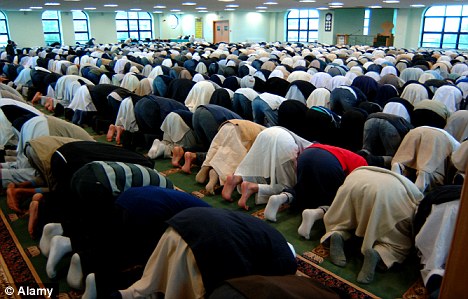
Only the Muslims are doing what their bodies were designed to do and having lots of children. However, this is creating its own demographic problem, as we warned in our report ‘Islam Growing at Astronomical Rate in the UK.’
Find out how to join Christian Voice and stand up for the King of kings (clicking on the link below does not commit you to join)
Please note that persons wishing to comment on this story must enter a valid email address. Comments from persons leaving fictitious email addresses will be trashed.
Over past 10 days, a major controversy has erupted in the U.S. involving the Boy Scouts of America (BSA). A few members of their board are attempting to change the scout’s century old policy that excludes openly homosexual men and boys from participating as leaders and members in the scout program. The proposed policy would have allowed each local BSA Council to determine its own policy with regard to homosexuals.
Since BSA is the largest member of the World Organization of Scouting, any major policy change like the one being considered would likely reverberate throughout the scouting world.
Understandably this proposed policy change, initiated under pressure by the LGBT lobby, set off a firestorm of opposition from scout supporters across the U.S. As a result, the board has decided to postpone a final decision until their meeting in May.
We applaud the BSA board for taking this action. In our letter to the board, we urged them to delay the vote so they could have the time needed to thoroughly evaluate the health impacts the proposed policy could have on scouts.
Factions on both sides of the issue have a lot at stake. For the LGBT lobby, overturning the current BSA policy would mean they had conquered one of America’s major protectors of moral values—the Boy Scouts. For religious groups, many were calling for a mass exodus from the Boy Scouts if the new policy was implemented, saying they could not support an organization that has changed its core moral value of helping boys to be “morally straight.”
When an effort is made to base decisions on the facts, it is often easy to identify the best policy.
As we stated in our letter to the BSA board, “The most important fact that should be driving this debate is the science and clinical experience showing that homosexuality is not innate and immutable.” Homosexual individuals are not ‘born that way.’ Rather, we know that homosexuality is the result of a complex interaction of some likely genetic predisposition (often referred to as the “nature” component) and a variety of environmental and experiential factors (often categorized as the “nurture” component). Solid research shows that environmental factors play a major role in the development of same-sex attraction. “
In evaluating this proposed policy change we also urged the board to keep in mind that it is normal for adolescents to question their sexual orientation as a part of the maturation process. For those who may be troubled by developing but unwanted same-sex attraction, or are otherwise vulnerable to developing homosexuality, the “nurture” aspect of scouting can be a significant factor in whether they do in fact become homosexual.
Scouting has been successful for over a century precisely because the nurturing environment it provides has proven effective in molding boys into responsible and successful men. So permitting BSA Councils to allow openly homosexual scout leaders and fellow scouts into the program could be a very significant factor in the personal development of young men who are vulnerable to developing same gender orientation. Such an influence easily could become one of the significant “nurture” factors that contribute to sexually confused youth actually becoming homosexual.
The final key fact is that there are well documented and significant mental and physical health risks associated with the homosexual lifestyle. We cited several studies in our letter: “For example, after reviewing more than 125 years of scientific research and clinical experience, the National Association for Research and Therapy of Homosexuality (NARTH) concluded that as a group homosexuals suffer about three times more physical and mental health problems than the heterosexual population.”
Based on these basic facts, it becomes quite obvious that continuing the current policy is in the best interest of all the young men in the scouting program and particularly those who are vulnerable to developing same-gender sexual orientations.
In recent months we have seen other examples where ideology and political correctness seem to be driving major social policy decisions even in the face of facts and experience that strongly suggest that adopting these policies would be harmful.
In France, for example, the new Socialist government is trying to ram through legalizing same-sex marriage and allowing same-sex individuals to adopt children. It is doing this in the face of clear recommendations against doing that made just eight years ago by a commission created by the French National Assembly. This commission based its recommendations on extensive hearings and a review of all the available scientific research.
A similar situation is also occurring in Britain, where on Tuesday the House of Commons voted overwhelmingly to legalize same-sex marriage. Again, the government appears to be pushing this almost exclusively for ideological reasons. There has been virtually no serious consideration of the available science and legal scholarship on this issue. But anyone familiar with relevant data can predict with considerable certainty that if same-sex marriage ultimately becomes law, Britain will find it far more difficult to deal with the burgeoning social problems that country already is facing.
Sharon Slater (right) at the World Congress of Families
We will be continuing our efforts to ensure that these kinds of policy debates are fact based. We will also continue to alert you to the opportunities where you can help achieve this goal and give you the tools to be more effective in your efforts.
Sincerely,
Sharon Slater
President
Family Watch International
An EU report due to be voted through the EU Parliament later this year, they say, would see all marriages and civil contracts conducted in any EU country become legally binding in all other member states. Under the Berlinguer Report, a couple who are not permitted to marry in their home country could travel to another member state in order to wed, knowing that on their return home they would have to be regarded as married.
Paragraph 40 of the Report would mean that any member state would have to grant ‘all social benefits and other legal effects’ such as legal recognition, tax breaks and benefit entitlements to a married couple, even if such a marriage did not exist in their own legal system.
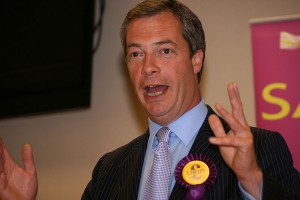
Mr Nigel Farage, leader of UKIP, said: “Now we know why David Cameron has launched this highly contentious and disruptive legislation, apparently out of the blue.
“If a couple were to marry in Belgium, Spain, Portugal or Sweden where same-sex marriage is possible, the EU will say that they have to be given the same legal rights in whichever member state they then chose to live – even if that state itself opposes the introduction of same-sex marriage. In essence the Berlinguer Report seeks to establish an EU-wide right to same-sex marriage.
“It’s no surprise that the Prime Minister has kept quiet about this, even at the expense of cohesion in his own party. He has a hard enough time trying to force his own backbenchers to swallow both his dedication to keeping Britain in the EU and his wish for the state to interfere in the definition of marriage. To suggest that the two issues are in fact interconnected would have caused complete uproar.”
However, according to one website, the Berlinguer Report has already been voted on by the European Parliament, in November 2010, and has no legislative status. It is still part of the continuing libertarian process, of course. However, another document, a two-and-a-half-page ‘roadmap,’ will be adopted in November 2013. In dry language it speaks of ‘the importance of facilitating mutual recognition of civil status’ across the EU. It is this document, itself building on the Berlinguer Report, which will lead to a legislative initiative from the EU Commission, the seat of power. If David Cameron has already redefined marriage by that time, he will no doubt be all for other states recognising Britain’s sham ‘gay marriages’.
Christian Voice views the European Union as a godless, corrupt, pretentious, expensive, bureaucratic, oligarchic expression of Antichrist. But it has tried to end the misery of bent cucumber phobia, a dibillatating disorder which affects dozens of people every year…
Find out how to join Christian Voice and stand up for the King of kings (clicking on the link below does not commit you to join)
Please note that persons wishing to comment on this story must enter a valid email address. Comments from persons leaving fictitious email addresses will be trashed.
Participants in the Tesco-funded 2012 London ‘Gay Pride’ parade.
Vote in the United Kingdom House of Commons on the Marriage (Same Sex Couples) Bill Second Reading 5th February 2013
Key to voting:
Aye=In Favour, No=Against, Abs=Absent or Abstained, A/N=Active abstention, Spe=Speaker (does not vote)
(Note that David Cameron, the Prime Minister, who has so actively promoted this measure, did not turn up to listen to the debate even though he voted for the Bill. Note also that more Conservative MPs voted against the Bill than voted for it.)
Find out how to join Christian Voice and stand up for the King of kings (clicking on the link below does not commit you to join)
Please note that persons wishing to comment on this story must enter a valid email address. Comments from persons leaving fictitious email addresses will be trashed.
Allowing homosexuals to claim to be ‘married’ will devalue the currency of marriage.
MPs have shown contempt for God, the scriptures, our Christian heritage and six thousand years of human understanding by voting for ‘gay marriage’ in England and Wales.
The Commons voted in favour of the The Marriage (Same Sex Couples) Bill, by 400 to 175, a majority of 225, at the end of a day’s debate on the bill. More on the Bill here.
About 140 Conservative MPs are thought to have voted against the plans.
Former children’s minister and Conservative MP Tim Loughton told the BBC “Apparently there’s 132 Conservative MPs that voted in favour, so I think what we’re going to see is that more Conservative MPs voted against this legislation than for it.” The Bill will now move to its Committee Stage.
Sir Tony Baldry (Con): Although the failure to consummate a marriage will still be a ground on which a heterosexual marriage can be voidable, the Bill provides that consummation is not to be a ground on which a marriage of a same-sex couple will be voidable. It also provides that adultery is to have its existing definition—namely, sexual intercourse with a person of the opposite sex. It therefore follows that divorce law for heterosexual couples will be fundamentally different from divorce law for same-sex couples, because for heterosexual couples the matrimonial offence of adultery will persist while there will be no similar matrimonial offence in relation to same-sex marriage. The fact that officials have been unable to apply these long-standing concepts to same-sex marriage is a further demonstration of just how problematic is the concept of same-sex marriage.
Such a move will alter the intrinsic nature of marriage as the union of a man and a woman as enshrined in human institutions throughout history. Moreover, changing the nature of marriage for everyone will deliver no obvious legal gains given the rights already conferred by civil partnerships.
Robert Flello (Stoke-on-Trent South) (Lab):
The irony of the Bill is that it takes the current situation of equality of marriage and civil partnership and creates inequality. Under the terms of the Bill, there will be marriage in two forms—traditional marriage and same-sex marriage, which are neither the same nor equal. The Bill creates further inequality, with traditional marriages being allowed within some Churches and same-sex marriages not allowed. Same-sex couples will have the choice of civil partnership or marriage, whereas opposite-sex couples can have only traditional marriages—yet more inequality. The Bill is trying to engineer a cultural equivalence to tackle a perceived lack of equality in wider society. That does not sound to me like the basis of marriage.
The Government say that the Bill protects religious organisations, but there are conflicting legal opinions that robustly challenge that view. Moreover, there is absolutely nothing to stop a future Government legislating to allow, or indeed require, Churches to celebrate same-sex marriages. In fact, some commentators have said that they cannot wait until the Church of England and other faiths have to conduct same-sex marriages. Given that the Bill creates inequality, a legal challenge would surely be successful.
I am amazed that the Government should bring forward this Bill at a time when there are other pressing issues. Despite having gay friends and relatives, the issue of same-sex marriage has never once been brought to my attention; I have never had a constituent write to me asking me to raise it. I recall that many MPs were quick to praise the civil partnerships legislation as being everything that the gay community wanted—that it created the equality for which they had fought for so long. As we have heard, my hon. Friend the Member for Rhondda (Chris Bryant)—I hope he is still my hon. Friend—has previously said that in his view the idea that the gay community would want marriage is nonsense.
Marriage is the union of a man and a woman that is open to the creation and care of children—not in all cases, but fundamentally that is its intrinsic value. This Bill will fundamentally change that. Despite all the issues that have been raised and the insults hurled by those on both sides of the argument, I will oppose the Bill. I believe that it creates inequality and that it does not tackle an existing inequality on the basis that the current legislation has been tested in the European Court and it has been shown that there is no inequality. I will oppose the Bill, and I urge any right hon. and hon. Members who are thinking of abstaining to vote against it.
Nadine Dorries (Mid Bedfordshire) (Con):
It is a pleasure to follow such a wise speech by the hon. Member for Stoke-on-Trent South (Robert Flello), and I will follow on from his main point.
This Bill does not create equality. It highlights the inequalities that will always exist, because the definition of marriage is based on the definition of sex. It is absolutely impossible to shoehorn same-sex marriage into the Matrimonial Causes Act 1973 to provide equality. The gay lobby have said themselves in their campaigning that they have been looking for a Bill that will give them the same rights as heterosexual couples and enable them to enjoy faithful and committed relationships. This Bill in no way makes a requirement of faithfulness from same-sex couples; in fact, it does the opposite. In a heterosexual marriage, a couple can divorce on the grounds of adultery, and the legal requirement for adultery to have taken place is that someone has had sex with a member of the opposite sex.
In a heterosexual marriage, a couple vow to forsake all others. They are basically saying, in accordance with liturgy and the 1973 Act, “I will forsake all others because to you I will be faithful in honour of our vows and my faithfulness to us and our marriage.” A gay couple have no obligation to make that vow. They do not have to forsake all others because they cannot divorce on the grounds of adultery; there is no requirement of faithfulness. If there is no requirement of faithfulness, what is a marriage?
The Minister says that there is no requirement for consummation in a marriage. No, there is not, but a marriage is voidable without consummation. There is no requirement for consummation in the Bill because the definition of marriage and the definition of sex is for ordinary and complete sex to have taken place. Same-sex couples cannot meet this requirement.
Jim Dobbin (Heywood and Middleton) (Lab/Co-op):
I will give my personal view, which I know differs from the views of the vast majority of members of my party. I respect that difference.
For the first time in history, a Government have proposed a Bill that will change the very nature of marriage in law. Until now, society and the Church have had a shared view of the essential purpose of marriage. It is primarily an institution that supports the bearing and raising of children in a committed and constant relationship. The traditional understanding of marriage has three basic elements: it is between a man and a woman, it is for life, and it is to the exclusion of all others.
Article 16 of the universal declaration of human rights describes the family as
“the natural and fundamental group unit of society”
and defines marriage as the union between a man and a woman. It states that the family is
“entitled to protection by society and the State.”
Those elements are designed not to exclude people or create inequality, but to promote the unique benefit of marriage in our society: it secures family environments and provides the essential qualities of safety and reliability for children.
Worryingly, the Bill rarely mentions children or parenthood. It emphasises the decision to take part in a ceremony more than the commitment to a lifelong relationship or having children. It is as if those elements are of no consequence.
Sir Roger Gale (North Thanet) (Con):
I had the privilege of chairing Committee proceedings on the Civil Partnership Bill. As has been said, very clear undertakings were given by the then Government and Opposition that that Bill was not the thin end of the wedge nor a paving Bill for same-sex marriage, but an end in itself to right considerable wrongs in the law. That it did, as the European Court of Human Rights has determined. In those respects, civil partnerships are indistinguishable from what we know as marriage.
When I put that point to my right hon. Friend the Minister for Women and Equalities, she said that no Government could bind another. Of course, she is correct. That kicks the bottom out of every undertaking that she has given. It is abundantly plain to most Conservative Members that the product of this Bill will end up before the courts and before the European Court of Human Rights, and that people of faith will find that faith trampled upon. That, to us, is intolerable.
I understand—I will give way to my right hon. Friend if she wishes to correct me—that the Cabinet paper on this matter was entitled “Redefining Marriage”. It is not possible to redefine marriage. Marriage is the union between a man and a woman. It has been that historically and it remains so. It is Alice in Wonderland territory—Orwellian almost—for any Government of any political persuasion to try to rewrite the lexicon. It will not do.
John Glen (Salisbury) (Con):
I am very disappointed to have to rise to oppose the Bill. I never imagined that I would be put in a position where I have, by virtue of standing up for marriage, been characterised variously as a “homophobic bigot”, a “religious nutter”, a product of the dark ages, or, as I see in this weekend’s press, on the brink of making “a tragic mistake” that I will have many years to regret. This was not in our main manifesto. To cite that it was on page 14 of the equalities contract, a sub-manifesto that had little or no public scrutiny, is disingenuous at best.
The assumption of the Bill is that marriage is just about love and commitment. Of course marriage is about love and commitment, but it is also about the complementarity, both biologically and as a mother and father, of a man and a woman who have an inherent probability of procreation and of raising children within that institution.
Dr William McCrea (South Antrim) (DUP):
Most people, even to this day, regard the United Kingdom as a Christian country. To some that is an embarrassment, while others thank God that our nation still has some gospel light and enjoys freedom of thought and speech. Each day, hon. Members gather in this Chamber to hear the Scriptures read and prayer offered to God, humbly asking for God’s blessing upon our Queen, her Government and our deliberations. We as leaders among our people still acknowledge God’s sovereign throne, the authority of His revered word and our need for wisdom far greater than our own. Sadly, after doing so today, we are turning from the teachings of that same book, and placing our wisdom and knowledge above divine wisdom.
Find out how to join Christian Voice and stand up for the King of kings (clicking on the link below does not commit you to join)
Please note that persons wishing to comment on this story must enter a valid email address. Comments from persons leaving fictitious email addresses will be trashed.
Christians are calling for prayer this Sunday, 3rd February, to strengthen the resolve of the Bill’s opponents and for a sizeable rebellion against the Bill from MP’s of all parties in the 2nd Reading Division.
There is no doubt that in a free vote in our House of Commons the Bill will pass, but a healthy rebellion will encourage the House of Lords to oppose this ill-thought-out measure which was not in any party manifesto.
But Mr Hammond is right. Homosexual activity is exactly on a par with incest. Homosexuals even talk about their ‘gay brothers’ and ‘gay sisters’.
Jesus Christ said this:
Mark 10:6 But from the beginning of the creation God made them male and female. 7 For this cause shall a man leave his father and mother, and cleave to his wife; 8 And they twain shall be one flesh: so then they are no more twain, but one flesh.
And of course two men or two women lack between them the full set of complementary equipment to be ‘one flesh’ in the physical expression of marriage. You can’t build a car with just bolts or just nuts.
Christian Voice asked the Government repeatedly how two homosexuals will consummate their ‘marriage’.
Initially, in their consultation they said it would be up to the courts to decide. We said that was not good enough. The Bill had to spell it out. But now, on the face of the Bill, the Government say those in a ‘gay marriage’ will not have to consummate it at all. Section 12 of the Matrimonial Causes Act 1973 (grounds on which a marriage is voidable) will ‘not apply to the marriage of a same sex couple.’
We also asked what will constitute adultery as a ground for divorce of a ‘gay marriage’. Again, in their consultation the Government said it would be up to the courts to define ‘adultery’ in a homosexual context. Now they say, in the Bill: ‘Only conduct between the respondent and a person of the opposite sex may constitute adultery for the purposes of ‘ the Matrimonial Causes Act 1973 (divorce on breakdown of marriage)’.
The Government have failed to deliver, because they never could. The homosexual lobby wanted equality in marriage. What they have been delivered is second-class marriage, a two-tier system, a Joke Marriage Bill. That will not stop them claiming to be ‘married’ and in the words of the Bill being ‘husband and husband’ or ‘wife and wife’ or usurping the time-honoured expressions ‘widow’ and ‘widower’.
And how long will it be before the concepts of consummation and adultery vanish from our statue book because of the inability of homosexuals to become ‘one flesh’ in the complete emotional and sexual sense? The currency of marriage itself – of every marriage in the land – will be degraded by these counterfeit marriages.
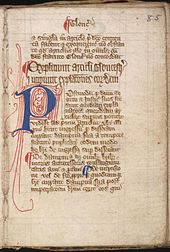
Clause 1 of the 1297 Magna Carta is still in force. It says this:
1. FIRST, We have granted to God, and by this our present Charter have confirmed, for Us and our Heirs for ever, that the Church of England shall be free, and shall have all her whole Rights and Liberties inviolable. …
The front page of Magna Carta – The ‘Great Charter’ – of which Clause 1 is still in force.
Legal advice is that despite David Cameron’s ‘Quadruple Lock’ the Bill will open the door to a legal challenge on the freedom of the Church of England not to conduct false marriages. But if the C of E needs a ‘Quadruple Lock’ what is the legal position of every other church without it? They are being thrown to the homosexual equality wolves.
At the very best, a church or denomination will be bogged down in court cases and lawyers’ fees for years defending itself against a gay activist law suit, brought with the financial muscle of the Government-funded Stonewall group and the rest of the homosexual industry.
Christian Voice members and friends may feel free to print out this article and take it to church for prayer tomorrow.
Find out how to join Christian Voice and stand up for the King of kings (clicking on the link below does not commit you to join)
Please note that persons wishing to comment on this story must enter a valid email address. Comments from persons leaving fictitious email addresses will be trashed.
Normally these stages would be some weeks apart, but the pregnancy of the Duchess of Cambridge has thrown the Government into a panic.
The Prince of Wales and a key House of Lords Committee have expressed misgivings over the Bill and highlighted the possibility of ‘unintended consequences’.
‘In determining the succession to the Crown, the gender of a person born after 28 October 2011 does not give that person, or that person’s descendants, precedence over any other person (whenever born).’
That might seem as if anyone can succeed to the throne, which would be rather good news to those of us born outside the royal family.
The only legislation needing consequential amendment is said to be the Treason Act 1351, which is surprising.
The Bill also abolishes the disqualification to succession to one in line to the throne who marries a Roman Catholic, and removes the need for members of the Royal Family – other than the immediate 6 in line- to seek the monarch’s permission to marry.
John Hemming MP has put down an amendment to the Bill to downgrade all wives of a future reigning king to ‘kings’ consort’. This equality measure would prevent the Duchess of Cambridge ever becoming queen.
And just as we predicted in our briefing paper Defending theCrown, an MP, Paul Flynn, is to put down an amendment to allow children from a same-sex royal ‘couple’ to succeed to the throne, even though the public would have no clue as to who was the real father (or mother, if two lesbians) and who out of all the semen or egg donors in the world was the other true parent.
At least, if John Hemming’s amendment goes through, the gay couple wouldn’t be king and king – or a pair of queens.
“The Government appear to want to legislate on royal succession as quickly as possible. This risks shortcutting proper parliamentary scrutiny. The Succession to the Crown Bill is clearly of constitutional significance and as such should not be treated as fast-track legislation.
“Recent commentators have raised possible unintended consequences of the Bill. The Committee is of the opinion that those matters are the kind of issues that Parliament must have suitable time to discuss; that will not be the case if the legislation is fast-tracked.”
Christian Voice continues to oppose the Succession to the Crown Bill and asks for prayer for Members of Parliament as they consider this unnecessary and destablising measure tomorrow.
Our Booklet Defending the Crown available in booklet form for £2.75 incl P&P HERE or online HERE.
Find out how to join Christian Voice and stand up for the King of kings (clicking on the link below does not commit you to join. If you do join, you will get ‘Defending the Crown’ free – specify it in the comments box.)
Please note that persons wishing to comment on this story must enter a valid email address. Comments from persons leaving fictitious email addresses will be trashed.
It’s not just Britain. Elsewhere in the world, libertarian politicians are trampling over popular opinion to legislate ‘gay marriage’.
last Sunday week, half-a-million people marched through Paris in support of real marriage. demanding that President Francois Hollande withdraw the enabling bill and hold a national debate before any change in the definition of marriage.
Government spokeswoman Najat Vallaud-Belkacem, who is also women’s affairs minister, said nothing had changed. The plan to submit the reform bill in parliament late this month and pass it by June would go ahead undisturbed, she told Europe 1 radio.
“The government is totally determined to achieve this reform, this historic progress that is not the victory of one camp over another but progress for the whole society,” she said.
Christiane Taubira – changing civilisation
“We take note of the demonstration (but) this will be discussed in parliament and not in the street.”
Interior Minister Manuel Valls told the daily Le Monde: “We always thought the turnout would be strong and it was … All the more reason to stay focused on the goal of passing the law.”
Daniel Liechti of the Conseil National des Évangéliques de France said the protest showed a new role for religion in public life in France, a constitutionally secular country.
In New Zealeand, a select committee of MPs is currently assessing submissions from the public on Labour MP Louisa Wall’s Marriage Amendment Bill, but only after MP’s voted by 80 votes to 40 in favour of it last August (2012). Submissions closed in October with proponents and opponents said to be equally numbered.
The select committee is due to report back to the House by 28 February 2013 recommending whether the bill should be passed, and it may suggest amendments to the bill. No-one expects the select committee to object to the bill.
It will be interesting to see how the French and NZ Governments address the issues of consummation and adultery. If these are changed due to the inability of a homosexual couple to achieve them, they are changed for all marriages.
Find out how to join Christian Voice and stand up for the King of kings (clicking on the link below does not commit you to join)
Please note that persons wishing to comment on this story must enter a valid email address. Comments from persons leaving fictitious email addresses will be trashed.
If there is anything defenders of gay ‘marriage’ hate, it is ‘slippery slope’ arguments. The notion that gay ‘marriage’ is objectionable because of where it could lead is an argument automatically presumed to be invalid and unworthy of serious consideration.
Not too long ago a friend and I were having a friendly debate about gay ‘marriage’ and I pointed out that as soon as gay ‘marriage’ is legalized, countless other perversions will follow in its wake. My friend looked over at me, and said with a smile, “You do know, don’t you, that it’s a fallacy to make slippery slope arguments?”
Well, I guess I never got the memo.
It is true that when defenders of traditional marriage used to warn about the dire consequences that would follow same-sex ‘marriages’, their arguments were rather speculative, sometimes wildly so. That is why I have never found it very useful to warn that same-sex ‘marriage’ will lead to people wanting to marry their bicycles or dogs.
Over the last few years, however, it has become unnecessary to make speculative slippery-slope arguments because we have already started down the slippery slope.
Gay ‘Marriage’ is Just the Beginning
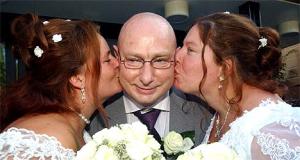
After legalizing same-sex ‘marriage’, the Netherlands began giving legal recognition to ‘threesomes.’ The women Bianca (31) and Mirjam (35) are both bisexual and have a sexual relationship with each other in addition to having a sexual relationship with their joint ‘husband’, the heterosexual Victor de Bruijn (46).
By surveying what has been happening in those nations that have already legalized gay ‘marriage’, we begin to get a picture of the slippery-slope the world has already started descending down. Consider only a few examples which might be easily multiplied:
As more nations jump on the gay ‘marriage’ bandwagon, we should expect to see many other perversions introduced. Gay ‘marriage’ is just the beginning of a slippery slope towards sexual anarchy. (This does not even include the slippery slope towards totalitarianism, as gay ‘marriage’ leads to more and more freedoms being eroded. That is a different topic and one which I have addressed in my article ‘Will the Real Enemies of Liberty Please Stand up’ and ‘Gay Marriage Threatens Civil Liberties.’)
But why is this? Why does same-sex ‘marriage’ lead to these other perversions almost as night follows day? In order to properly answer this question, we must consider the logic behind same-sex ‘marriage.’
The Logic of Same-Sex ‘Marriage’
The campaign to change the definition of marriage revolves around certain principles which, once accepted, have wide ramifications in a host of other areas.
This became evident last year when the Coalition Government released its consultation paper on same-sex ‘marriage.’ They continually presented the issue in terms of ‘equal access.’ In their simplistic and philosophically unsophisticated way, the issue was a straightforward question of fairness.
However, if we accept that the principle of equality means that same-sex couples should be entitled to the same rights as married couples (including the right to call their union a ‘marriage’), then in order to be logically consistent we would also have to say that a definition of marriage which includes both heterosexual and same-sex unions, yet excludes unions with animals or multiple partners, is also failing to provide equal protection under the law to someone or other. Indeed, if someone is bisexual, then in order for their sexuality to be fully expressed, their ‘marriage’ must include a minimum of at least one person from each sex. Thus, the argument that we should not discriminate based on sexual orientation, if carried to its logical conclusion, necessitates ‘threesomes’ at least.
The point is that any new definition of marriage Government may wish to impose on the public necessarily opens the door to an endless series of redefinitions in years to come. Unless the term ‘marriage’ is allowed to collapse into complete vacuity, it must include certain types of unions and exclude others. This is a point that most people accept, for most advocates of gay ‘marriage’ are still opposed to broadening the definition of marriage to include perversions such as polygamous unions, threesomes, bestiality or incestuous relationships. Nevertheless, it will become increasingly hard to argue against such exclusions once the logic behind calls for gay ‘marriage’ is accepted.
Remember, the main argument being used by the homosexual lobby is that of equal access. They are asserting that it is wrong in principle to exclude any two people from the institution of marriage if the two people love each other and desire to be married. As Maria Miller MP said in her forward to the Government response to their consultation on same-sex ‘marriage’:
“Marriage is also an institution which has a history of continuous evolution…. So marriage in the 21st century is an inclusive, not exclusive, institution. It is available to all those over 16 who are prepared to make vows of life-long fidelity and commitment. Except, that is, if you happen to love someone of the same sex. This simply cannot be right.”
If Miss Miller’s logic isn’t an invitation to start down the slippery slope, then it’s hard to know what is. If marriage is to be a truly “inclusive” institution, then why choose 16 as an arbitrary age? Or again, if marriage is to be truly inclusive rather than exclusive, then is it really fair to limit marriage to a minimum of two people? If “love has no gender”, then why should it have a number? Or again, if the goal is to make marriage inclusive rather than exclusive, why are we not being consistent and calling for a removal of the ‘ban’ on brothers and sisters getting married?
Such questions, once dismissed as conservative scare-mongering, will soon be as much a part of the public debate as gay ‘marriage’ is now, for once you start down the slippery slope, it is hard to stop.
Doing the Family Thing
Another principle which is fundamental to advocates of same-sex ‘marriage’ is that love creates the sufficient conditions for a marriage and a family, irrespective of gender. Essentially, it is the ethic of the Sesame Street song ‘Doing the Family Thing’:
Any group of people
Living together
And loving each other
Are doing the family thing…
It doesn’t really matter
Just who you’re living with
If there’s love you’re a family too…
A family can be
What it wants to be
‘Cause there’s all different leaves
On the family tree
And there’s all different types
Of families
Who are living together
And loving each other
Are doing the family thing
Doing the family thing
Doing the family
Doing the family thing
But why stop at two? In 2007, a state superior court panel in Harrisburg, Pennsylvania, ruled that a child can have three legal parents. The case involved two lesbians, both legal parents of two children who were conceived using a friend’s sperm. The panel determined that all three were liable for child support. All three were the child’s legal parents. There have been similar rulings in Canada, and this year the California legislature approved a bill allowing judges to declare more than two parents for some children there. While Governor Jerry Brown vetoed the bill, asking for time to consider all of its implications, activists have already promised to try again.
Speaking of more than two, the question of polygamy also looms. As the push for same-sex marriage continues, some legal analysts and other experts see polygamy as the next marriage battlefront. In a 2006 Newsweek article called Polygamists Unite!, one activist called polygamy “the next civil rights battle. . . . If Heather can have two mommies, she should also be able to have two mommies and a daddy.”
From a legal point of view, it may be difficult to defend current laws against polygamy, given the success of the gay marriage movement….
Dr. Michelle Cretella, vice president of the American College of Pediatricians…describes yet another variation in the brave new world of family and parenting: the “bothies” movement. Similar to co-parenting, this configuration specifically involves a lesbian mom and a gay dad having a child together. The case of Bevan Dufty, a well-known gay rights activist, and lesbian Rebecca Goldfader made big news in San Francisco a few years ago when they decided to have a child together and share parental responsibilities. According to a story in the Bay Area Reporter, “both envision[ed] that their long-term partners would have parental roles and rights as well.” The piece went on to say that, according to the executive director of Children of Lesbians and Gays Everywhere (COLAGE), the group “has several member kids known as ‘bothies,’ meaning they have two gay dads and two gay moms. Some of those families began as four-way agreements.”
Find out how to join Christian Voice and stand up for the King of kings (clicking on the link below does not commit you to join)
Please note that persons wishing to comment on this story must enter a valid email address. Comments from persons leaving fictitious email addresses will be trashed.
The Oxford Union is to invite an American pro-family activist to address it after a mix-up on dates.
Scott Lively was due to speak last night in the annual ‘gay rights’ debate, but an error saw him given the date of the Israel debate on 31st January instead. As Mr Lively had already arranged his travel around that date, the President-Elect of the Union has courteously offered to schedule an additional event for him to speak on Friday 1st February.
Proposing the motion were PinkNews.co.uk and Out4Marriage founder Benjamin Cohen, gay rights activist Richard Fairbass of the band Right Said Fred, and Phyll Opoku-Gyimah of Black Pride UK. Opposing the motion was Peter D Williams of Catholic Voices, anti-abortion activist Anthony McCarthy, journalist Lynette Burrows and Rev George Hargreaves, leader of the Christian Party.
Stephen Green, National Director of Christian Voice, has taken part in similar debates at both the Oxford and Cambridge Unions in the past. He said today:
‘Any pretence at an objective, fair-minded debate where minds could be changed by great oratory and consideration of factual evidence has vanished over the years. It has been replaced by emotionalism, fashion and barracking of opponents of the new intolerant status quo.
‘I can only admire the bravery of the young people who go through the ‘No’ lobby at these debates.’
Scott Lively, who has a personal testimony of the healing power of the Lord Jesus and is a strong advocate of Christian healing therapy for those suffering from same-sex attraction, has become a hate-figure of gay rights activists since his address on that subject to parliamentarians in Uganda was followed by the introduction of a Bill to make the promotion of sodomy in the East African nation illegal.
Things are seen differently in Africa from the universities of Britain.
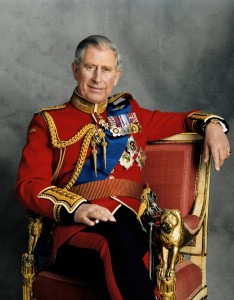
The Prince of Wales if right to raise concerns about the way the Succession to the Crown Bill is being rushed through Parliament without adequate attention being given to the possible ramifications, Christian Voice announced today.
While it may seem like a nice gesture to remove the prohibition on the monarch marrying a Roman Catholic, Prince Charles is right that doing so could set off a chain of unintended consequences that would ultimately destabilize the institution of the monarchy.
But first, what is the Act of Settlement and how did it arise?
Background to the Act of Settlement
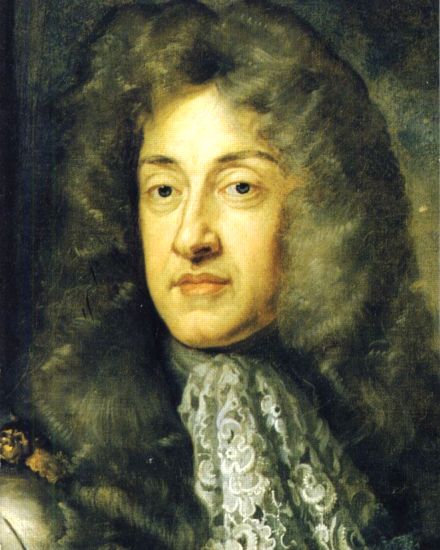
James II of England and VII of Scotland
During the reign of James II of England and VII of Scotland (r. 1633 –1701), James managed to alienate himself from his fellow Englishman through his Roman Catholic, pro-French and absolutist policies. When his wife, Queen Mary, produced a Roman Catholic heir in 1688, it was too much for English Protestants to endure. Hoping to divert a Catholic dynasty, seven English nobleman (known later as the ‘Immortal Seven’) invited James’ eldest Protestant daughter, Mary, to come to Britain and rule. She agreed on the condition that she would rule the country jointly with her Dutch husband, William the Prince of Orange.
William came over with an army prepared to fight for the throne against his father-in-law. However, knowing it would be impossible to win a war without popular support, James II retreated to France. This bloodless revolution, known as ‘the Glorious Revolution,’ established the Hanoverian line of British monarchs – a line preserved through the present House of Windsor.
In order to give legal legitimization to Hanoverian rule, Parliament passed the Bill of Rights in December 1689. This was designed to protect Parliament from arbitrary rule of another Sovereign such as the deposed James II, to ensure the continuation of the Protestant faith, and to preserve common law freedoms.
Princess Sophia of Hanover (1630-1714)
Towards the close of the reign of King William III (r. 1650 –1702), it began to look as if the king would die without a legal heir. Since the Bill of Rights had not specified the line of succession far enough into the future to cover such an eventuality, Parliament began to worry that the deposed James II or his offspring might try to capitalize on the situation and claim the throne. In order to simultaneously solve this problem and fix the line of succession ad infinitum, a law known as the Act of Settlement was introduced. It specified that the heirs to the throne would always be descendants of Princess Sophia of Hanover (1630-1714), who was also appointed heir presumptive by the same Act. Sophia was the granddaughter of James I of England.
The Act of Settlement also specified that the monarch must always be Protestant, and it states that if the monarch is ‘reconciled to the See of Rome’ or ‘marries a Papist’ ‘…in all and every such Case or Cases the People of these Realms shall be and are thereby absolved of their allegiance’.
The Act of Settlement, which was extended to Scotland in 1707, also lays down other rules of constitutional import, including male preference primogeniture. The Act of Settlement came to apply to all of the Commonwealth realms in 1931 through the Statute of Westminster. The Statute of Westminster 1931 actively forbids any alteration to the rules of succession without the agreement of all 16 nations that share the throne. That is why current attempts to ‘modernize’ the laws of succession must first be approved by all 16 legislatures, from the little island of Tuvalu with a population of 11,000 to the United Kingdom. If even one nation disagrees, the proposed changes cannot be enacted. (See Zoe Kirk-Robinson’s article ‘Why Kate’s First-born May Not Be Crowned.’)
So each of the nations in the Commonwealth who share the Queen as monarch (the ‘realms’) must ask themselves whether the Act of Settlement is still relevant in the modern world. Is there any reason to think that this relic from the early 18th century should still be preserved?
As each of the Commonwealth realms considers this question, they must take into account the fact that constitutional experts believe that changing the laws could precipitate a constitutional crisis. As soon as the monarch is allowed to marry a Roman Catholic, the possibility exists that the future heir to the throne could be raised Catholic. Indeed, Roman Catholic common law mandates that if even one of the parents is Catholic, the children must be raised catholic. If that were to happen, then there would either have to be an abdication crisis, or the law would need to be changed to allow Roman Catholics to succeed to the throne, reversing Henry VIII’s historic break with Rome. If the latter course prevailed, then it could lead to the bizarre situation of having a Roman Catholic as the supreme head of the Church of England.
In his 2003 Spectator article ‘The Price of Liberty’, Adrian Hilton presented a strong case for preserving the prohibition on the monarch marrying a Roman Catholic:
Since [Roman Catholic] canon law requires that all children of Roman Catholics be brought up in that faith, such a proposed amendment would eventually create an exclusively Catholic royal dynasty, whose primary allegiance would be to the higher spiritual and temporal authority — the Papacy….
The Papacy is, by its own admission, a political institution, and still claims universal legislative authority or jurisdiction. It would be intolerable to have, as the sovereign of a Protestant and free country, one who owes any allegiance to the head of any other state.…
It is not possible to discuss the removal of the bars on Catholics and the monarchy without at the same time discussing the constitutional position of the Church of England; and therein lies the principal division among Catholics. There are many who regard the establishment of the Church of England as a great advantage for the faith because it perpetuates Christianity as the ‘official’ religion through its presence in Parliament. For those who hold this view, a minor historical relic of anti-Catholic discrimination is a lesser evil to be tolerated than the alternative. For when the protective barrier of Anglican establishment is torn away, Christianity would lose a political voice and Britain its cultural governmental foundation as a Christian nation.
The Act therefore demands that the sovereign must ‘join in communion with the Church of England as by law established’. While earlier monarchs have come from Calvinist and Lutheran traditions and have not been prevented by their own Church discipline from receiving the Eucharist, the position of Rome is quite different. These difficulties do not emanate from the Church of England but from the Roman Catholic Church, which prohibits its adherents from receiving Holy Communion at Anglican services. To forbid an Anglican Eucharist to a Roman Catholic monarch who remains Supreme Governor of the Church of England is not only absurd but plainly regressive.
Further, since Rome does not recognise the Church of England as a Christian Church in the full and proper sense of that term, it does not recognise the Holy Orders of Anglican clergy, which Pope Leo XIII condemned as ‘absolutely null and utterly void’. The present Pope has reiterated this view. A Roman Catholic monarch who followed the teaching of the Mother Church would therefore have to regard the archbishops, bishops and clergy of the Church of England (and, incidentally, of the Church of Scotland) as lay people, lacking the ordained authority to preach and celebrate the sacraments. And further still, a Roman Catholic monarch would be unable to be crowned by the Archbishop of Canterbury. As long as the coronation service involves a priestly anointing, no ‘utterly void’ Anglican could administer it. Presumably a future Roman Catholic monarch would receive the crown from the Pope, and the wheel would have come full circle.”
More recently Telegraph journalist Charles Moore has tried to raise awareness of these and other potential problems. Writing in the Telegraph in December 2011, Moore drew attention to the chain of unintended consequences that could be set in motion by lifting the prohibition on a monarch marrying a Roman Catholic:
Suppose the heir to the throne does marry a Catholic, which, under the new rules, he/she will be permitted to do. Suppose that they have a child. Suppose the child, as the Catholic Church requires, is brought up a Catholic. Under the law, even as reformed, that child cannot become Monarch. “Are you asking me,” the doubting MP might inquire, “to vote for a reform which could precipitate a constitutional-cum-religious crisis?”
If, on the other hand, the law were changed to permit a Catholic to come to the throne, there would be a lot more questions. What would happen to the monarch’s headship of the Church of England? How would he/she be crowned? “Are you proposing, Prime Minister,” the awkward MP could ask, “to disestablish the Church? If so, please lay before us your legislation for doing so.” Untune that string, as Shakespeare famously put it, and hark what discord follows. There may be a way around these problems, but at the least Government should be inviting a rigorous public debate about these implications, instead of conducting the changes in a semi-secret environment
Implications for Hereditary Titles
Halsbury Laws of England
What about Prince Charles’ other concern, regarding hereditary titles? Here again, the Prince has identified a problem that has received almost no attention in the public discourse.
Changing the succession laws for the crown will almost certainly result in gender equality being extended to the inheritance of peerages. Although succession of hereditary peerages forms no part of any proposed change, it would be hard to preserve the older system of inheritance once male primogeniture had been abandoned with respect to the crown. This is especially true given that the heir to the throne succeeds to a number of peerages. If male primogeniture is changed, then will succession in the dukedoms, earldoms and baronetcies attached to the throne devolve to the eldest child, or will there be a two-tier system whereby the titles to which the throne is attached will still devolve to the eldest male?
Hereditary peerages are created by writ, by Act of Parliament, by charter, or by letters patent. The rules governing the order of succession of future heirs are specified in the original grant for the peerage in question. The preferred method by which peerages are created is by letters patent. With few exceptions, the patents transmit titles only to male offspring, a system known as “tail male.” As Halsbury’s Laws of England states:
“Letters patent creating a peerage must specify the patentee, the name of the dignity and its limitation to future heirs of the patentee. The limitation must be one known to the law. The rule in England is a limitation to heirs male of the body with an occasional addition of special remainders to bring in the daughters and their issue, brothers, nephews and collaterals, but ultimately the descent is always fixed in an heir male line.”
This “limitation to heirs male of the body” for the succession of peerages is even stricter than the rules regulating the succession of the crown (which allows a female to inherit when she is without brothers) and can result in peerages becoming extinct. As Regency Researcher Nancy Mayer has explained,
The descent of most hereditary English peerages is determined by the patent by which the peerage was created. Except in very rare cases, the patents say that the peerage should descend to heirs male of the body of the one for whom it was created. That means that ordinarily the peerage becomes extinct if the first earl, for instance, doesn’t have a son. Once in a while patent will let a brother or a nephew inherit if the man does not have a son. When Admiral Lord Nelson died without a son, his patent allowed his brother to inherit. On the other hand, and much more typical, was what happened to Admiral Lord Collingswood’s peerage. It became extinct on his death because he had only daughters.
In the event that a statute were to change the presumption of male descent with respect to the Crown, it would only be a matter of time before the eldest daughter of a peer will challenge original letters patent on the grounds that these too are unfair and out of step with the rules governing the thrown. Such a challenge would be hard to resist once male primogeniture has been abandoned with respect of the monarchy.
There is good reason to be cautious about equal absolute primogeniture with respect to peerages. It is true that under the current system a peerage may become extinct in the absence of male heirs or it may move to another branch of the family. While this may seem undesirable, the alternative is that this inheritance passes out of the family completely. Indeed, if current letters patent were to be altered by law to remove the distinction between the sexes, the title and its associated property could only then be traced in future through a complicated maze of ancestors, one generation passing perhaps through the mother, the next through the father. Without the tribal system and the periodic restructuring of the ancient Hebrew Jubilee laws, it would be difficult to ensure that property remained in the original family if daughters could succeed to a title.
As this suggests, a change in the order of succession does not just affect the Monarchy, but could have ripple effects in every dukedom, earldom, baronetcy in the land. Prince Charles is right to raise the concerns that he has.
Find out how to join Christian Voice and stand up for the King of kings (clicking on the link below does not commit you to join)
Please note that persons wishing to comment on this story must enter a valid email address. Comments from persons leaving fictitious email addresses will be trashed.
The Prince of Wales has raised concerns with senior Whitehall officials about the Succession to the Crown Bill, which he believes could let off a chain of “unintended consequences.”
In a private meeting last month with Richard Heaton, permanent secretary at the Cabinet Office, Prince Charles confided his fear that attempts to overturn the ancient laws governing the crown’s succession are being fast-tracked without adequate attention to the possible ramifications.
Details of the meeting were communicated to the Daily Mail last week by “a well-placed source,” who said the Prince was very worried what would happen if his future grandchild were to marry a Roman Catholic.
Currently the 1701 Act of Settlement prohibits the heir to the throne from marrying a Roman Catholic, but this is set to be scrapped in the reforms being introduced by the Coalition Government.
The anxiety voiced by the Prince of Wales echoes concerns raised by constitutional experts, who have pointed out that if the law were changed to allow a future monarch to marry a Roman Catholic, then the possibility exists that the future heir to the throne could be raised Catholic. If that were to happen, then there would either have to be an abdication crisis, or the law would need to be changed to allow Roman Catholics to succeed to the throne, reversing Henry VIII’s historic break with Rome. If the latter course prevailed, then it could lead to the bizarre situation of having a Roman Catholic as the supreme head of the Church of England.
Prince Charles was told that all such issues could be resolved through negotiations with the Vatican, a solution he reportedly found “unsatisfactory and unconvincing.”
Deputy Prime Minister Nick Clegg dismissed the legitimacy of Prince’s concerns by declaring in the Commons: “I can give him complete reassurance that these proposals will not in any way alter the status of the established Church or the status of the monarch as head as head of the church. There is absolutely nothing in these proposals to alter the status of the church.”
The Prince of Wales also raised questions about the lack of detailed consultation over the Bill, which threatens to throw the entire aristocracy into turmoil. The prince said that while he accepts the abolition of male primogeniture in principle, he is very worried what could happen if the changes spilled over into other hereditary titles currently regulated by peerage law.
Meanwhile, the legislative framework for the succession changes are being hammered out in private, under the coordination of New Zealand Secretary of the Cabinet and Clerk of the Executive Council, Rebecca Kitteridge. The details of the process are being kept secret, as is the legal advice the Government is receiving.
Deputy Prime Minister Nick Clegg is in charge of getting the changes moved through the UK Parliament and he has seen fit to do so with procedures normally reserved for anti-terror laws. The process has been so fast that the Queen was not informed of the decision to legislate until very soon before the Bill was published, while Prince Charles was not consulted at all.
But are the concerns raised by Prince Charles legitimate? We think they are, and in a future post we will explain why.
Find out how to join Christian Voice and stand up for the King of kings (clicking on the link below does not commit you to join)
Please note that persons wishing to comment on this story must enter a valid email address. Comments from persons leaving fictitious email addresses will be trashed.
An MP is proposing legislation that would prevent Princess Kate from ever becoming Queen.
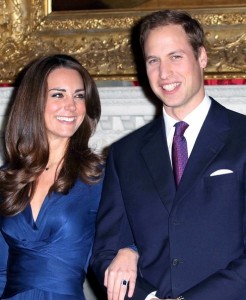
The move to bring equality to the laws of succession has taken a strange twist as an MP has proposed legislation that would prevent the Duchess of Cambridge from ever becoming Queen.
John Hemming, MP, is attempting to add a clause to the Succession to the Crown Bill that would mean HRH would be called “Princess consort” rather than Queen when Prince William ascends to the throne.
The proposed amendment is based on allegations that the current system is ‘sexist’ since it allows the wife of a King to be called Queen but it does not allow the husband of a queen to be called King. Mr Hemming said: “It’s not right that a Queen Regnant is treated as less important than a King Regnant.”
Later this month Mr Hemming will be officially tabling his proposed amendment. If the House of Commons agrees to add it to the Succession Bill, then the royal family could become the first victims of the equality measures they have tacitly supported.
A spokesman from Clarence House said, “It’s a matter for the Government”, suggesting that the royal couple is prepared to acquiesce with whatever Parliament decides.
Any changes will not affect Camilla because Prince Charles has already said she will be Princess Consort because of the complications of their past divorces.
John Hemming
Meanwhile, the media continues to promote the idea that the rules governing the laws of succession have already been changed to allow first-born daughters to inherit the crown ahead of younger brothers. (See section below for more information on what these changes involve and why we are against them.) The Royal Central website has announced that “Until 2011, men had priority over any women in the line of succession, this was changed after a commonwealth heads of government meeting in 2011, meaning whatever gender the Royal baby is, it will definitely reign as King or Queen.”
The truth is that The Succession of the Crown Billhas only had its first reading, which took place on 13 December 2012. (Watch the progress of the bill on Parliament’s website here.) Beyond that, all that has happened is that the heads of state for the various Commonwealth realms have all individually agreed to ask their respective governments to pass legislation in favour of these changes. Between now and when those laws finish passing through the parliamentary process is the time for critical debate. The British government is trying to short-circuit all debate by telling everyone that the changes have already been made and that the final legislative process is merely “a few parliamentary turns of the wheel.”
PRAY: Ever since it emerged that Government was planning to tamper with the succession changes, Christian Voice has been warning that this is a slippery slope. Even a year ago it would have been unthinkable for the Duchess of Cambridge to face the prospect of never becoming Prince William’s Queen. But once the Pandora’s box of gender equality has been opened, we have entered a fairy tale world in which almost anything could come about. Pray that the Lord will protect the monarchy from those who would seek to use the rhetoric of equality to disband the monarchy completely.
Also pray that the Duchess has conceived a boy so that all the hype the hassle about having to quickly change the succession laws would die down.
WRITE to your MP asking him/her to vote against Hemming’s proposed amendment. Ask for your concerns to be forwarded to the appropriate minister. Also write to Her Majesty the Queen and ask her to voice opposition to these proposals. Her Majesty The Queen, to Buckingham Palace, London SW1A 1AA.
The Order of Succession and the Current Debate
The “order of succession” is the procedure regulated by Parliamentary statute for determining who the new monarch will be at the time the old one dies. The current laws regulating the order of succession follow a system known as ‘male primogeniture’, which is short for “male preference cognatic primogeniture.” Halsbury’s Laws of England explain this system as follows:
“In the absence of statutory limitations, therefore, the Crown would descend lineally to the issue of the reigning monarch, males being preferred to females, and subject to the right of primogeniture amongst both males and females of equal degree, whilst children would represent their deceased ancestors ‘per stirpes in infinitum.’ Upon failure of lineal descendants, the Crown would pass under the rule to the nearest collateral relation descended from the blood royal.”
Put simply, this means that younger sons take precedence over their older sisters in line for the throne. A woman will only inherit the throne of Britain if she has no eligible male siblings. A younger brother – no matter how young – will always take precedent over older sisters in the order of succession. Given the system of male primogeniture, our present queen became monarch only because she did not have any brothers. Similarly, Queen Victoria (1819 –1901) was only able to inherit the throne because she had been the only child of Edward, Duke of Kent and Victoria Maria Louisa of Saxe-Coburg. Under the present system, if Prince William and Catherine’s first-born child happens to be a daughter, she would only become a direct heir to the throne if she is not later followed by the birth of a male brother.
An example of a younger brother inheriting the throne ahead of a younger sister occurred when Queen Victoria’s son Edward VII inherited the throne in 1901 over his older sister Princess Victoria. Had Princess Victoria become the next queen, she would have been Queen Victoria II while her son, Kaiser Wilhelm II, would likely have been king over a huge British-German Empire.
Those who oppose the present system have pointed to the changes introduced in the succession laws of other European monarchies which have transitioned over to the system of absolute primogeniture. For example, Sweden changed over to absolute primogeniture in 1980, the Netherlands in 1983, Norway in 1990, Belgium in 1991, Denmark in 2009 and Luxembourg in 2011.
While the previous Labour Government supported a change from male primogeniture to absolute primogeniture, this had not been considered an issue of any urgency. This is because a change in the law would affect neither Prince Charles (the current heir to the throne), nor Prince William (the second in line for the throne) since neither of them have older sisters. It was not until the lead-up to the wedding of Prince William and Kate Middleton that the issue was again thrust into the national limelight. Policy makers began to speculate what would happen if the royal couple’s first-born child happened to be a female. Wouldn’t it be unfair if such a child was not able to enjoy an equal right to the throne? Shouldn’t Britain change its laws to reflect “modern” values such as “equality” and “fairness”?
The debate culminated at the Commonwealth of Nations summit in Australia on 28 October 2011 when David Cameron sought agreement from the heads of the Commonwealth realms to change the rules. He had prepared the ground by writing a letter earlier in the month to all the countries urging them to support a change and suggesting that present rules “enshrine male superiority.”
The reason it was necessary for the UK Government to consult with the sixteen Commonwealth realms is because the law prevents the British Parliament from making unilateral changes to the rules of succession without first getting approval of the other nations that share the crown.
Despite the fact that the individual governments have not yet had a chance to vote on the proposed changes, both the media and the British Government have been talking about the matter as if the changes have already been introduced. For example, on 29 October 2011, the Daily Mailran an article with the dramatic title: ‘If Wills and Kate have a girl first, she’ll be queen! Commonwealth agrees historic change to give sex equality in Royal succession.’
It has been a shrewd tactical move on the part of the media and the British Government to keep telling everyone that the succession laws have already been changed. Now that it is approaching the time for a vote, the Government is telling members of Parliament that they must merely ratify what has already been agreed. What should in fact be an occasion of robust debate will be presented as a mere formality. This is a point that Telegraph journalist Charles Moore picked up upon in an article in December 2011, when he drew attention to the ‘widespread delusion’ that the laws had already been changed and predicted the events that are nor transpiring.
“There is a widespread delusion, I find, that the succession to the throne has been changed. If William and Kate have a first-born daughter, people think, that girl will be Queen.… It’s all been sorted out, apparently. There will be what is called – without any apparent sense of absurdity – a Royal Equality Act, and then Bob’s your uncle (though your poor uncle Bob, if currently in line to the throne, will now have to give place to your first-born aunt).
It is not surprising that people think this, because that is what they have been told to think.
It is being put together semi-secretly, and our Government will not disclose the legal advice it is receiving. It is also, in spirit, imperialist: the British Government decides, and then tries to push all the ‘lesser’ countries into agreeing.
When the reforms do eventually reach the 16 parliaments, the government line will be that this has all been agreed and so legislators should just nod it through. The Queen may be embarrassed, but since, constitutionally, she can act only on the advice of her ministers, she will be powerless. At this point, any self-respecting Member of Parliament would be entitled to say: ‘Wait a minute! You are trying to change the rules by which our head of state is chosen and controlled. Is this good for her and her heirs? Is it good for our country? I am going to ask some difficult questions.’”
So why are we against changing the laws of succession? There are a number of reasons, but the main reason is that we find all the arguments for changing the law woefully lacking. Though the rhetoric against male primogeniture takes a variety of forms, it usually always reduces to one of four arguments. Although each of these four arguments has a prima facie appeal, as we unpack each one it will become apparent that they are based either on factual misunderstanding or faulty reasoning. Even more crucially, three out of these four arguments threaten to undermine the very existence of the monarchy itself.
Faulty Argument # 1: The current succession laws are out of keeping with modern society
Advocates of absolute primogeniture typically avoid appealing to any objective ethical criteria but instead argue on the grounds that the current system is “old fashioned” or “out of keeping with modern society.” For example, deputy Prime Minister Nick Clegg has commented:
“Prince William and Catherine Middleton might have a baby daughter for instance as their first child, I think most people in this day and age would think it’s worth considering whether we change the rules so that that baby girl then could become the future monarch.
“I think that would be in keeping with the changes that happen in society as a whole. My own personal view is that in this day and age the idea that only a man should ascend to the throne I think would strike most people as a little old-fashioned. I think it is worth thinking about, I think it is worth talking about. It is worth looking at what other countries that would be affected also feel on the subject.”
Notice that Clegg’s personal view is based, not on reasoned argument, but on an appeal to being up to date and modern. He appeals twice to “this day and age” and suggests that the current system may be “a little old-fashioned.” Mr Clegg is not alone. Keith Vaz, MP, echoed the opinion of many when he referred to the laws as “out-dated”and stated in Parliament that
“Whereas [male-preference primogeniture] might have been acceptable in another age, I believe that at this time in our history Britain is a modern…society and that this ought to be reflected in our succession rules…. We have a 21st century monarch and we need 21st century succession rules to match.”
Finally, when David Cameron announced the changes at the Commonwealth of Nations conference, he also appealed to the need to be modern as if this alone furnished the only justification required for changing the laws:
“Attitudes have changed fundamentally over the centuries and some outdated rules, like some of the rules on succession, just don’t make sense to us anymore.”
“The idea that a younger son should become monarch instead of an elder daughter simply because he is a man… – this way of thinking is at odds with the modern countries that we have become.”
In reality, it is completely false that male primogeniture is out of keeping with the twenty-first century, since the royal houses in Spain, Monaco, Thailand, Portugal and Swaziland all follow the same system of male primogeniture as Britain. But even if this were not the case, the appeal to modernity is plagued with a host of problems. Chief among these problems is that it presupposes a chronological criterion of truth by which ideas and policies are being evaluated, not by the standard of right or wrong, truth or falsehood, but according to whether they are antiquated or modern. Such an approach can often be effective in creating prejudice against an idea through false assumptions, thus siphoning the debate away from more objective criteria. Herbert Schlossberg described the psychology that occurs in this process of creating prejudice through hidden assumptions:
“No serious thought can be constructed without assumptions, but recognizing them – in our own thinking as well as in others is vital if we are to avoid falling into serious error. Assumptions are beliefs; if they were proven they would not be assumptions. And they are beliefs so taken for granted that it is not deemed necessary to prove them. That makes them doubly seductive: first, because the careless or untrained are misled into accepting conclusions without recognizing their shaky foundation of unstated beliefs; and second, the very fact that the most dubious beliefs are so taken for granted by experts lends an aura of verisimilitude that beguiles the overly respectful into accepting them without question.” Herbert Schlossberg, Idols for Destruction: The Conflict of Christian Faith and American Culture (Crossway, 1993), 8.
The chronological criterion of truth is just such a hidden assumption. C.S. Lewis called this type of reasoning “chronological snobbery” and described it as “the uncritical acceptance of the intellectual climate common to our own age and the assumption that whatever has gone out of date is on that account discredited.” Lewis went on to point out that
You must find why it went out of date. Was it ever refuted (and if so by whom, where, and how
conclusively) or did it merely die away as fashions do? If the latter, this tells us nothing about its truth or falsehood. From seeing this, one passes to the realization that our own age is also “a period,” and certainly has, like all periods, its own characteristic illusions. They are likeliest to lurk in those widespread assumptions which are so ingrained in the age that no one dares to attack or feels it necessary to defend them. [C.S. Lewis, Surprised by Joy: The Shape of My Early Life (Houghton Mifflin Harcourt, 1995), 201.]
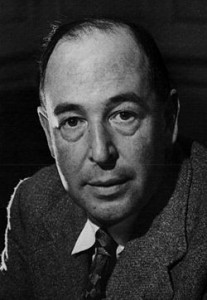
C.S. Lewis
If Lewis’s words are applied to the question of our succession laws, it follows that it is insufficient for our leaders to merely assert that some of the rules on succession are old fashion and just don’t make sense in our modern world. We must find out why these rules no longer make sense, and whether the reason for them no longer making sense is rational or not.
More seriously, the hidden set of assumptions which animate Faulty Argument #1 could threaten the very existence of the monarchy itself. Those who have sought to spread the poison of republicanism throughout the Commonwealth have often done so with similar appeals to “this day and age”, suggesting that the monarchy itself is out of date and a relic from the past. If the chronological criterion of truth is allowed to flourish when it comes to changing the order of succession, it may be only a matter of time before the same principle begins buttressing those who wish to challenge the very institution of the monarchy.
Few people have bothered to ask why the appeal to “modernity” settles the issue and removes the need for critical reflection. One of the only people, outside those of us at Christian Voice, who has been asking these difficult questions is journalist Charles Moore. In an article for the Telegraph on 7 December, Moore wrote:
When I spoke to ministers this week to ask why it was good to change the succession to the British throne, I was told that it was “modern”, as if that settled the argument.
Most people will probably be too polite to contest the Government’s proposal that the firstborn child of the monarch, or of his/her heirs, will henceforth succeed to the throne regardless of sex. But what is “modern” about a system which prefers the firstborn over any other child? Why is that not being changed? When I asked this question, no one could give me an answer. What is “modern”, indeed, about the idea that the British head of state should be appointed because of blood at all? In what sense is the principle of monarchy modern? Did the Queen get where she is today, the most popular and respected person in the country, by being modern?
Similarly, it is “modern”, say ministers, that the proposed Bill will abolish the rule that no one in line to the throne may marry a Roman Catholic. Yet it would not be modern, apparently, to get rid of the law which says that the Sovereign must be in communion with the Church of England. That law will stay. According to “modern” logic, why?
When they made their bids for leadership, Tony Blair and David Cameron put a great deal of weight on the m-word. It separated them in people’s minds from the long-standing defects of their own parties, and gave them a non-ideological excuse for cleaning the slate….
Faulty Argument # 2: Most people want the succession laws to be changed
In addition to suggesting that male primogeniture is “old-fashioned,” Mr Clegg has also appealed to what “most people” supposedly want. This was implicit in his comment that the current system may strike “most people as a little old-fashioned.” Others have argued against male primogeniture on similar grounds, as if the legitimacy of the practice is automatically thrown into question as soon as a majority are against it. For example, when Mr Vaz was arguing for a change of law in Parliament, he commented, “The reality is that the public want more women to take high office”and pointed out that the majority of citizens allegedly support absolute primogeniture.
Creating policy by majority opinion is a dangerous way to conduct the business of Government. If this impulse were followed to its logical extension, the UK would ultimately collapse into the type of direct democracy attempted by the ancient Athenians.
Once majority opinion is taken to be even implicitly authoritative, then does the legitimacy of the monarchy itself become dependent on 51% of the vote? This was the view reflected by journalist Peregrine Worsthorne when he said, “If a majority of the nation wanted to put an end to monarchy, then, of course, it ought to go.”
Reports indicate that in some Commonwealth countries a majority of the population may already be sceptical of the monarchy. If this is the case, then giving in to the populist impulse with regard to primogeniture may set off a chain reaction that could have unintended consequences. As Daniel Martin has observed, “there are fears that the change [in succession laws] could fuel the republican movement in Australia, where campaigners could use the opportunity to amend legislation to oust the Queen.”In Jamaica the situation is even more unpredictable. Even Britain itself has a virulent anti-monarchy lobby that will use any opportunity – including a public discussion of the succession laws – to challenge the legitimacy of the crown.
Faulty Argument #3: The Current Succession laws are ‘sexist’ and discriminate against women.
Perhaps the most common argument for changing the succession laws is that of equality. Stated crudely, it just isn’t fair that males should take precedent over females in the succession to the throne. In a society committed to equal rights, isn’t it hypocritical for the law to give males a greater chance of inheriting the throne than females? Surely it would be more fair for both sexes to have an equal chance at the crown. Keith Vaz MP gave voice to these sentiments in January 2011:
“At the centre of this debate is a great principle: gender equality…. Our country leads the way in equality issues, and that should be reflected in our succession rules…. Sex discrimination has been illegal in the United Kingdom since 1975. Some 35 years after the passage of the Sex Discrimination Act 1975, Britain’s employers must ensure equality between the sexes. Those who break the law are rightly punished. The Bill attempts to bring such gender equality into our succession rules.”
Mr. Vaz words were echoed in David Cameron’s letter to the Commonwealth countries, in which he wrote that “We espouse gender equality in all other aspects of life and it is an anomaly that in the rules relating to the highest public office we continue to enshrine male superiority.”
It is hard not to have some sympathy for this line of reasoning, which is certainly more compelling than Faulty Arguments #1 and #2. Analysts have identified the sense of fairness as being one of the core ethical values embedded within the human intuition. Women especially may feel that the current succession rules are a case of institutionalized discrimination against their sex.
Before exploring the problems with the equality argument, we should note that those who make this objection often over-exaggerate the extent to which the current system excludes women from the throne. Telegraph writer Gerald Warner rightly pointed out in 2009 that
…the present succession rules do not originate in the Act of Settlement, but in our ancient history and tradition. Nor do they effectively discriminate against women. In the period since the Act was passed, we have been ruled by men for 174 years and by women for 134 years.
But while male-preference primogeniture does not prevent a woman from ruling, it always ensures that it will be statistically more probable that a man will inherit the throne. So the question arises: is this a form of institutionalized inequality and gender discrimination? The short answer is yes. However, if we consider the nature of equality we soon find that it is far from obvious that gender discrimination is always a bad thing.
In his book The Retreat of Reason: Political Correctness and the Corruption of Public Debate in Modern Britain, Anthony Browne showed that gender discrimination is not only accepted in many instances, but many times is necessary, laudable and defensible. Browne wrote:
“Young men pay higher rates for car insurance than young women and older men, because young men are, on average, more dangerous drivers than young women and older men. A young man who is a safe driver is thus discriminated against because of the characteristics of other people in his age and sex group….Anti-discrimination campaigners may publicly declare that all discrimination on the grounds of sex should be outlawed, but they are unlikely to agree that all men should have the right to use women’s toilets, that men should be allowed to go to women’s gyms, or to demand overturning the right of women’s clothes shops to refuse to employ men….Men pay smaller pension contributions than women for a given level of private pension, for the simple reason that, on average, they have shorter lives and so on average claim less….The various forms of rational discrimination that are widely accepted are not often called discrimination – although that is clearly what they are – because accepting that some discrimination is actually essential to the working of a society would undermine the public acceptance of a ‘zero tolerance of all forms of discrimination’. The war on discrimination would become meaningless if there were general public awareness that actually some forms of discrimination are needed.”
Given that many forms of gender discrimination are publically practiced and acceptable in modern Britain, we are in a position to identify the basic flaw in the equality argument against male-preference primogeniture. This will be easier to do if we reduce the argument to a simple syllogism:
All gender discrimination is wrong.
Male primogeniture is a case of gender discrimination.
Therefore, male primogeniture is wrong.
The argument follows a classic form and is structurally valid. That is, the conclusion necessarily follows from the first two premises. However, in order for an argument to be sound, it must not only be logically valid, but the premises must also be factually accurate. In the case of the above syllogism, premise 1 is actually false. While some forms of gender discrimination are wrong, Mr Browne is correct when he notes that many forms of gender discrimination are also necessary and justifiable. In fact, our public policy assumes that there are many legitimate forms of discrimination. Thus, David Cameron’s statement that “We espouse gender equality in all other aspects of life” is simply not true.
Gender discrimination simply means treating a person differently than you would if that person were a different sex. For example, when a man dates a woman he is, in a sense, ‘discriminating’ since he would not offer the same treatment to members of his own gender category, assuming he is a heterosexual. In short, there are many cases where men and women are unequal, and these are diversities to be celebrated rather than inequalities to be lamented. (For more about the differences between men and women see Salvo Magazine’s articles ‘Unmaking a Difference‘ and ‘Gender Benders‘.) The real question, therefore, is not whether something is a case of sex discrimination, but whether it is a case of justifiable sex discrimination.
It follows that what we need to be asking is more specific than simply, “Is discrimination wrong?” We need to be asking specifically whether or not sex discrimination with respect to male primogeniture is rationally justified or not. We cannot know that male primogeniture is wrong merely from the fact that it discriminates against women.
We would argue further that the burden rests on those who wish to overturn centuries of precedent to first establish that male primogeniture is a case of unjustifiable discrimination. However, instead of making this case, opponents of male primogeniture tend to simply assume that the discrimination in the succession laws is equivalent to illegal and unjust discrimination. For example, Keith Vaz MP told Parliament: “Sex discrimination has been illegal in the U.K. since 1975 and those who break the law are rightly punished. This rule attempts to bring gender equality into our succession rules.” This is manifestly untrue: only certain types of sex discrimination, namely those deemed to be wrong, have been illegal. In order to show that the discrimination inherent in the succession laws must join the category of illegal discrimination, it is necessary to first establish that such discrimination is wrong. But that is something that none of the critics of male primogeniture have yet been able to do.
Few realize that if the false principles on which the anti-discrimination argument is based were extended to their logical conclusion, it would throw into question the very legitimacy of the monarchy itself. If, under the mantra of ‘equal rights’, we altered the succession rules so as not to discriminate against firstborn females, then it would be hard to know how to answer those who said that such a system is unjust for discriminating against second-born children, or even children from another family. An hereditary monarchy occupied by only one person is inherently antithetical to the idea of ‘equal rights.’ This is one of the reasons that Telegraph commentator Charles Moore was correct to point out that “If you cast doubt on the succession, you cast doubt on the whole thing.”
The power of this logic has not been lost on the virulent anti-monarchy lobby that is at work to destroy the crown. In researching for this paper I wrote to the anti-monarchy group Republic and asked if they saw the debate about succession as an opportunity to make the case for abandoning the monarchy completely. A representative from the group wrote back and said, revealingly, that
“once we concede the principle that the throne should be open to women, the debate will raise a lot more questions: why not a second born daughter? Why not someone else’s daughter? So, we are looking forward to this debate to enable us to highlight the unfairness of the hereditary principle in and of itself.”
These words were echoed by Graham Smith, campaign manager for Republic, when asked about the proposed changes in October 2011. “In practice,” he said, “it simply means that the eldest child of one family is preferred over all others. Inequality is therefore further entrenched in the system.”
Often Faulty Argument #3 is combined with Faulty Argument #1, when it is urged that Britain’s present system is a sexist hangover from its archaic past in which unjust discrimination against women was allegedly institutionalized. For example, Julia Gillard, prime minister of Australia, combined Faulty Argument #1 with Faulty Argument #3 when she noted, “To our modern minds these seem like simple and very rational changes, that there would no longer be a discrimination against women in the way in which the line of succession works…” The problem with combining Faulty Argument #1 and 3 together is the same problem that exists if you put one leaky bucket inside another leaky bucket: you still have a bucket that doesn’t hold any water.
Faulty Argument #4: Britain has had very good Queens in the past and will therefore benefit from a change in the succession laws.
While it is true that Britain has had some very good Queens in the past, this does not in itself prove that the succession laws should be changed to allow for more female monarchs. If it did, then we might equally argue that the succession laws should be changed to allow for even more kings since Britain has had some excellent male monarchs in the past. But that is absurd. It is also worth noting that one of the worst times in British history occurred under the reign of a Queen, namely Mary Tudor, or Bloody Mary (1496–1533).
Find out how to join Christian Voice and stand up for the King of kings (clicking on the link below does not commit you to join)
Please note that persons wishing to comment on this story must enter a valid email address. Comments from persons leaving fictitious email addresses will be trashed.
Plans to introduce same-sex ‘marriage’ will erode civil liberties and invite unprecedented government meddling in public life.
The Coalition for Marriage has warned of the following threats to civil liberty that are likely to arise in the wake of introducing same-sex ‘marriage.’
Teachers in state schools will be forced to endorse the new definition of marriage. Those that refuse could be disciplined or even dismissed. Such action would be legal.
Parents will ultimately have no legal right to withdraw their children from lessons which endorse the new definition of marriage across the curriculum.
NHS/University/Armed forces chaplains could be lawfully fired by their employers if they express, even outside work time, the belief that marriage is between one man and one woman.
Foster carers could be legally rejected by local authorities on the basis that they fail to embrace the new definition of marriage.
Public sector workers could be demoted or dismissed for expressing support for marriage between one man and one woman.
Registrars who have a conscientious objection to the new definition of marriage will be dismissed unless they are prepared to act against their beliefs.
Churches/mosques/synagogues could ultimately be forced to perform same-sex weddings if a Government ban on such weddings in religious premises is overturned by the European courts.
The Church of England may have to disestablish or face the prospect of court action because, as the established church, it must provide a wedding to any person who is legally eligible to get married.
Faith-based charities could be banned from hiring public facilities if they refuse to endorse the new definition of marriage.
Clergy who disagree with same-sex marriage, but who are in a denomination which has no such objection, could be taken to court if the Government allows religious same sex weddings.
WRITE: to your MP and ask for your concerns to be forwarded to the appropriate minister. This is one issue where Government is allowing MPs to have a free vote, so writing to them has the potential to make a huge difference.
David Cameron could be facing a rebellion from within his own party over plans to legalize gay ‘marriage.’
Parliamentary opposition to same-sex ‘marriage’ is mounting in response to Government’s plans to fast-track a vote on same-sex ‘marriage’ in early 2013.
The actual number of Tory MPs opposed to the change may be as high as 130, while only 60% of Labour voters and 77% of Liberal Democrats say they favour the changes.
The rebellion currently brewing in the Conservative Party is of sufficient magnitude that some insiders believe it may destroy the party, and certainly cost the Tory party the next election.
Among David Cameron’s most vocal critics is Monmouth MP David Davies, who warned, “We’re going to lose a large number of very loyal activists who’ve gone out and campaigned for us over the years and who don’t like this idea, so politically it’s barking mad.”
The Parliamentary backlash has culminated in a letter to the Government that was printed in the Telegraph on 17 December, in which 58 MPs from all parties declared their support of “freedom from the state being able to redefine the meaning of marriage.” They wrote,
SIR – As parliamentarians from different political parties and none, we are united in supporting the institution of marriage defined in law as a union between a man and a woman. We recognise the value of a loving and committed relationship and we respect civil partnership, but affirm the distinctive value of marriage reflecting the complementarity of a man and woman often evidenced in parenthood.
At the last election, none of the three main parties stood on a platform to redefine marriage. It was not contained in any of their manifestos, nor did it feature in the Coalition’s Programme for Government. These facts alone should have led to extreme caution on the part of those calling for this change to be made.
Instead the Government is ignoring the overwhelming public response against the plans. The consultation has ignored the views of 500,000 British residents in favour of anonymous submissions from anyone anywhere in the world. We believe that the Government does not have a mandate to redefine marriage.
We recognise these are issues of conscience which will be given free votes in Parliament. We will be seeking legal guarantees of the same freedom of conscience for our constituents and religious organisations to teach, preach and express a traditional view of marriage.
We are sceptical that the proposed protections will prevent the erosion of liberties of religion and conscience. The proposed redefinition of marriage is unnecessary, given the legal rights established through civil partnerships. We understand some parliamentarians support freedom for same sex couples to marry, but we support a freedom from the state being able to redefine the meaning of marriage.
In addition to the dissent in his own party, David Cameron has received fierce opposition from church spokesmen. The Roman Catholic Bishop of Shrewsbury said in a Christmas sermon that plans to legalize gay ‘marriage’ were comparable to the way the Nazis and Communists tried to undermine religion. The Right Reverend Mark Davies accused David Cameron of trying to redefine the institution of marriage for ‘generations to come.’ He pointed out that both Hitler and Stalin challenged Christianity under the banner of ‘progress’.
The Bishop’s words were echoed by John Smeaton, head of the UK’s leading pro-life and pro-family group, the Society for the Protection of Unborn Children, who commented: “The government’s proposals will only be defeated through the dogged, united efforts of politicians, church leaders, pro-family and pro-life activists, who are prepared to defend, with maximum determination, the birthright of every citizen – the existence of the institution of marriage, the permanent, exclusive union of one man and one woman, the basis of the family and the fundamental group unit of society.”
PRAY: that God would grow the strength of the opposition within the Tory party so that these abominable measures will be defeated.
WRITE: if your MP was among those who signed the letter to the Telegraph, write to congratulate and encourage them. Following are the list of MP’s who participated in the letter.
David Burrowes MP (Conservative)
Joe Benton MP (Labour)
David Davis MP (Conservative)
Mary Glindon MP (Labour)
Lord Hylton (Crossbench)
Nigel Dodds MP (Democratic Unionist Party)
Lord Anderson of Swansea (Labour)
Fiona Bruce MP (Conservative)
Jim Dobbin MP (Labour)
Lord Carey of Clifton (Crossbench)
Rehman Chishti MP (Conservative)
Lord Griffiths of Fforestfach (Conservative)
Sir Gerald Howarth MP (Conservative)
Tim Loughton MP (Conservative)
Peter Bone MP (Conservative)
Jeffrey Donaldson (Democratic Unionist Party)
Andrew Selous MP (Conservative)
John Glen MP (Conservative)
Sir Jim Paice MP (Conservative)
Stewart Jackson MP (Conservative)
Lord Edmiston (Conservative)
Jim Shannon MP (Democratic Unionist Party)
Lord Palmer (Crossbench)
Andrew Bingham MP (Conservative)
Lord Shrewsbury and Waterford (Conservative)
Julian Brazier MP (Conservative)
David Simpson MP (Democratic Unionist Party)
Pauline Latham MP (Conservative)
Nick de Bois MP (Conservative)
Richard Drax MP (Conservative)
Lord Tombs (Crossbench)
Jonathan Evans MP (Conservative)
Sir Roger Gale MP (Conservative)
Ian Paisley (Democratic Unionist Party)
Gordon Henderson MP (Conservative)
Philip Hollobone MP (Conservative)
Lord Stoddart of Swindon (Independent Labour)
Marcus Jones MP (Conservative)
Lord Swinfen (Conservative)
Baroness Fookes (Conservative)
Jeremy LeFroy MP (Conservative)
Lord Vinson (Conservative)
Karl McCartney MP (Conservative)
Dr William McCrea MP (Democratic Unionist Party)
Anne McIntosh MP (Conservative)
Stephen Metcalfe MP (Conservative)
Anne-Marie Morris MP (Conservative)
David Nuttall MP (Conservative)
Matthew Offord MP (Conservative)
David Davies MP (Conservative)
Mark Pawsey MP (Conservative)
David Ruffley MP (Conservative)
Lord Marlesford (Conservative)
Henry Smith MP (Conservative)
Baroness O’Cathain (Conservative)
Bob Stewart MP (Conservative)
Ben Wallace MP (Conservative)
Craig Whittaker MP (Conservative)
Find out how to join Christian Voice and stand up for the King of kings (clicking on the link below does not commit you to join)
Please note that persons wishing to comment on this story must enter a valid email address. Comments from persons leaving fictitious email addresses will be trashed.
Reg Travis was cleared of rape and is now campaigning for equality before the law for rape defendants with accusers.
The not guilty verdict in the rape case brought against the late singer Amy Winehouse’s ex-boyfriend illustrates the potential for false accusations in rape cases.
It isn’t the first time that CCTV has come to the aid of a man facing a false rape charge,
In a case which did not make it to court, a female complainant alleged that, while on a night out with friends in a local nightclub, she was grabbed by an unknown male, dragged into nearby toilets and raped.
CID went to the nightclub and checked the CCTV. The police said afterwards: ‘CCTV shows her and this man climb over this rope together, go upstairs, and disappear off into one of the toilets. About twenty minutes later, they come out. You can see her straightening her clothing—I think she gives him a peck on the cheek—and then they exchange telephone numbers before going away.’
What makes matters worse is that accusers of rape are protected with anonymity by the law, but defendants are not.
Reg Traviss is now making the very fair point that the criminal justice system, by siding with his accuser in granting her but not him anonymity, has forgotten the basic biblical principle, that all are equal before the law.
It does not seem fair but it would be an even bigger travesty of justice if those accused of rape were allowed to remain anonymous because it would suggest that rape victims were generally not to be trusted.
While there will always be women who “cry” rape, most of those who do pluck up the courage to go to the police are genuine victims and should be treated as such.
Such is the social stigma around rape that women not only feel too embarrassed or ashamed to report the crime, they are also frightened that they will not be believed.
That situation would get worse if those accused of rape were afforded the special privilege of remaining anonymous.
… the police … do women no favours whatsoever by attracting publicity for the very rare cases when rape victims are making it up.
Is Camilla Tominey right? Are these ‘very rare cases’? Are most complainants ‘genuine victims’? Not according to the figures. Only about 10% of rape complaints make it to court, and of those, just over half, 58%, result in a conviction. Since the law was changed in 1994 to allow cases to be brought with no corroborating evidence, rape cases are often now ‘his word against hers’. The more plausible of the two is likely to be believed, wherever the truth lies, resulting in miscarriage of justice.
Daniel Abeyomi, 19, told the court that he noticed the woman arguing with a man then crying alone, while he was walking home along Heavitree Road. He said she walked with him, they chatted and she kissed him, asked to go back to his home, which he refused, then she initiated sex.
Defence counsel Ian Strongman, summing up his case, said the woman was not making “malicious allegations” but she had “gaps in her memory” from that night, and her friends had then wrongly assumed that she had been raped and had “persuaded her” that this was the case.
In some cases, evidence, often from CCTV, shows the alleged victim was making it all up.
Hilliard, 20, dragged Grant into a Basildon railway station toilet for sex, but later told police that he had forced himself on her. Just a week after the alleged attack, she applied for criminal injuries compensation, which could have netted her £7,500.
Her plan came unstuck when CCTV footage and mobile phone records proved Grant’s innocence. But her twisted story drove Grant to the brink of suicide after he was hounded out of his home and spat at in the street.
What his sister called ‘six months of hell’ started when a woman alleged that he had raped her in a park in 2011.
The court heard that the woman, who said she had drunk more than eight pints of lager and drank spirits during the evening, gave different accounts to police of what had happened. She also texted a friend to tell her she was pregnant, before telling her she had been raped.
CCTV images showed the pair leaving a pub in Holton Road together.
‘False complaints may arise for a variety of reasons. Examples commonly mentioned by respondents during research interviews included: a complainant’s attempts to conceal or deny discovered infidelity; minors concealing consensual under-age sexual activity; consensual sexual activity that is subsequently regretted; and historic complaints following the breakdown of a relationship.’
Rape is a serious crime; a capital crime in the eyes of God. It is a devastating thing to happen, and equally devastating to be accused of wrongly. In far too many cases, too much drink impairs the capacity to make a rational decision, and regrets in the morning turn to a rape accusation.
On other occasions, false accusations can be made to deny a father access to his children in divorce cases, or just to be spiteful after a marriage has come to an end, or perhaps when the husband remarries.
To contradict Camilla Tominey, a ‘special privilege’ – that of remaining anonymous – is already given to rape accusers. In fact, on her own Sunday Express page, she contradicts herself. Having said that women ‘very rarely’ make rape accusations up, she describes 80% of women as liars in a footnote:
‘More than half of British women admit to flirting with men to get their own way, with a fifth saying they do so at work. Just 20%? What a load of fibbers! It might not be what feminists want to hear but a woman who does not use her wiles to get what she wants does not have a pulse.’
That is not to say those acquitted of rape have always behaved impeccably. Our society has slid into a swamp of sexual license where promiscuity abounds and sexual intercourse has become, less the holy expression of love in marriage, more a recreational activity. If we respected biblical morality, young women would be chaste and modest and young men chivalrous and protective. But those whose cases are cited above were innocent of the crime they were accused of.
And just as there are rapists walking free who would be behind bars if it were not for their eloquence in a court-room, there are innocent men in prison just because an untruthful woman was more plausible on the day.
That cannot be right.
Amos 5:24 But let judgment run down as waters, and righteousness as a mighty stream.
Find out how to join Christian Voice and stand up for the King of kings (clicking on the link below does not commit you to join). Anyone joining before 1st January gets a free one-year Bible Reading Plan. If you want a Bible Reading Plan but do not want to join, click HERE.
Please note that while we welcome comments, persons wishing to comment on this story must enter a valid email address. Comments from persons leaving fictitious email addresses will be trashed.
Government has proposed a ‘quadruple lock’ to protect churches from equality activists who might use the new ‘gay marriage’ laws to force churches to perform same-sex wedding services.
The quadruple lock moves beyond Government’s original position of restricting same-sex ‘marriages’ to civil services and allows churches a voluntary opt-in should they wish to host gay weddings.
In tacit acknowledgement that their religious liberty provisions will be insufficient, Government has taken special care to protect the Church of England by denying them the opt-in available to other denominations.
Culture Secretary, Maria Miller
Culture Secretary Maria Miller explained on her blog that, “we have to provide a specific legal protection for the Church of England, to ensure that its ‘duty to marry’ applies only to opposite-sex couples. If we didn’t do this the Church could have been vulnerable to legal challenge, something I have been clear I will not accept.”
If this proves anything, it is that the Quadruple Lock is worthless. If the Church of England needs all this extra protection, why are other churches (Baptists, Assemblies of God, Roman Catholic, Elim Baptists, Presbyterians, Eastern Orthodox, Methodists, etc.) excluded from it? As Telegraph journalist Charles Moore has pointed out,
“It is obvious, too, that the safeguards for churches, hastily and without consultation offered by the Government, will be breached. Indeed, religious freedom is breached by the Government’s weird proposal to ban the Church of England from implementing the new law Mr Cameron has just thought up. The fact that Mrs Miller has proposed a ‘quadruple lock’ for the churches is an acknowledgement of how difficult it all is – why else would you need four keys instead of one?”
The Government’s decision to make the Church of England exempt from its proposals was an attempt to divert a potential church-state crisis since Anglican Canon Law states that marriage is “…a union permanent and lifelong for better for worse, till death.” (Canon B30) The Coalition Government has made clear that if any of its plans should conflict with Canon Law, then Parliament is prepared to strong-arm the church. As Government stated in the consultation response: “We do not dispute the Church’s authority here; however it is equally true that Parliament is sovereign and can enact to take account of potential conflicts with the Canon law.”
The four points of the ‘Quadruple Lock’ are:
1 Ensuring the legislation states explicitly that no religious organisation, or individual minister, can be compelled to marry same-sex couples or to permit this to happen on their premises;
2 Providing an ‘opt-in’ system for religious organisations who wish to conduct marriages for same-sex couples;
3 Amending the Equality Act 2010 to reflect that no discrimination claims can be brought against religious organisations or individual ministers for refusing to marry a same-sex couple or allowing their premises to be used for this purpose; and
4 Ensuring that the legislation will not affect the Canon law of the Churches of England or the Church in Wales who will thereby not be allowed to ‘opt in’ under point 2.
Even if the fourth point of the Quadruple Lock were extended to other denominations (which we are campaigning for), it is almost certain that this will be insufficient to withstand a challenge from the European Court of Human Rights, who are able to rule against domestic law. In the case Gas and Dubois v. France, European judges already stated that if a government chooses to extend the definition of marriage to same-sex couples, then it would be a violation of human rights for homosexual couples seeking ‘marriage’ to be denied rights and privileges offered heterosexual couples.
The European Court is simply not going to sit by and allow one of their countries to sustain a two-tier system in which same-sex couples are denied access to a service (i.e., religious weddings in the Church of England) available to heterosexual couples.
WRITE: to your MP and insist that the fourth point of the quadruple lock will be extended to all the other churches in England and Wales. Ask why the Church of England is being given special protections not available to other denominations. Is this because Government anticipates that the first three measures of its “quadruple lock” will not be strong enough to withstand a challenge from equality activists, and because of this it wishes to have extra safe-guards in place for the Church of England?
Also point out that the European Court of Human Rights is almost certainly going to find the proposed two-tier system in breach of equality legislation. Point out that Government’s response to the consultation shows that they have not understood the import of Gas and Dubois v. France.
Ask for your concerns to be forwarded to the appropriate minister.
Find out how to join Christian Voice and stand up for the King of kings (clicking on the link below does not commit you to join)
Please note that persons wishing to comment on this story must enter a valid email address. Comments from persons leaving fictitious email addresses will be trashed.
A senior politician threatened journalists investigating her expenses, according to the newspaper concerned.
An aide to Maria Miller told reporters at the Daily Telegraph to ‘think about’ the implications of exposing Maria Miller’s possible misuse of parliamentary expenses to house her parents.
The amount of taxpayers’ money involved is said to be an astonishing £90,000.
The Culture Secretary is currently promoting the abomination of ‘gay marriage’ in the House of Commons.
‘When a reporter approached Mrs Miller’s office last Thursday, her special adviser, Joanna Hindley, pointed out that the Editor of The Telegraph was involved in meetings with the Prime Minister and the Culture Secretary over implementing the recommendations made by Lord Justice Leveson.
‘“Maria has obviously been having quite a lot of editors’ meetings around Leveson at the moment. So I am just going to kind of flag up that connection for you to think about,” said Miss Hindley.
‘Miss Hindley also said the reporter should discuss the issue with “people a little higher up your organisation”.’
The paper went ahead with the story after checking the facts again, and Mrs Miller has now been reported to the Parliamentary Commissioner for Standards by John Mann MP.
Mr Mann said that the arrangement was “identical” to that of the former Labour minister Tony McNulty, who in 2009 was required to pay back more than £13,000 in expenses claimed on a second home occupied by his parents.
Mrs Miller claimed more than £90,000 on a house in Wimbledon, south-west London, between 2005 and 2009, where her parents lived with her family.
A spokesman for Mrs Miller said the parents lived with the family “as dependants.” The parliamentary commissioner John Lyon stated in his report on Mr McNulty that this was unacceptable.
Aides for Mrs Miller also insisted that her arrangements were approved by the parliamentary fees office and audited twice. Mr McNulty’s expenses were also approved by the fees office, while Sir Thomas Legg, who carried out an audit of MPs’ expenses, emphasised that his review was limited in scope and pointed out that the fees office was “vulnerable” to MPs’ interests.
When the Daily Telegraph first exposed duck ponds and moats being claimed on parliamentary expenses politicians claimed at that time they were doing everything ‘within the rules’.
The story shows how those in favour of overturning God’s righteous commandments in one area can have difficulty applying basic standards of morality in other areas as well.
It also gives a glimpse into why poiliticians are always so keen to muzzle the press.
Find out how to join Christian Voice and stand up for the King of kings (clicking on the link below does not commit you to join, so why not have a look?)
Please note that persons wishing to comment on this story must enter a valid email address. Comments from persons leaving fictitious email addresses will be trashed.
Government has acknowledged that the concept of consummation will not apply to members of the same-sex
The campaign to introduce same-sex ‘marriage’ has descended into a farce as Government is acknowledging that the concept of consummation and non-consummation will be inapplicable to ‘marriages’ conducted by homosexuals.
In it’s response to the consultation on same-sex ‘marriage’, published earlier today, Government has conceded that two homosexuals can never be one flesh.
Just as same-sex ‘marriages’ will be incapable of consummation, so Government has also decided that it will be impossible for anyone to commit adultery with a member of the same sex. The only way a homosexual will be able to commit adultery will be to first become heterosexual or bisexual.
In footnotes, the Government say:
10 Consummation is defined in English common law. Consummation requires ‘ordinary and complete’ sexual intercourse. Penetration for a short period without emission inside or outside the wife has been held to be incomplete intercourse and, therefore, not consummation of a marriage (see W (otherwise K) –v- W [1967] 3 All ER 178n).
12 Adultery is currently defined as follows: there must be at least partial penetration of the female by the male for the act of adultery to be proved. The attempt to commit adultery must not be confused with the act itself, and if there is no such penetration, some lesser act of sexual gratification does not amount to adultery (c.f. Dennis v Dennis [1955] 2 ALL ER 51 2WLR 817).
The latter is an open admission that whatever homosexual couples get up to in their bedrooms – or bathrooms – these are ‘lesser acts of sexual gratification’. In reality, the Government are admitting that ‘gay marriages’ are not marriages at all. They are a joke.
To make it even more ludicrous, the Government say, ‘The vows which are spoken as part of the marriage ceremony are able to remain the same, with couples being referred to as ‘husband’ and ‘husband’, or ‘wife’ and ‘wife’ for legal purposes.’ One would need a heart of stone not to laugh.
If Parliament passes the gay marriage bill, then same-sex couples will be able to legally ‘marry’ in England and Wales, but it will not affect Scotland or Northern Ireland. The law would also allow a person to legally change his or her gender while remaining married.
Meanwhile, Scotland has introduced its own plans to introduce same-sex ‘marriage’ and have already published proposed legislation in order to gather feedback from the public. Their current consultation will run until 20 March, 2013.
A Two-Tier System
The implication of Government’s response to the consultation is a two-tier system, in which same-sex ‘marriages’ will be governed by a separate infrastructure to that of traditional marriages. The four main areas where this difference would be evident are:
Consummation. The document says that Government is “proposing to create an exception for same-sex couples in a marriage, meaning that they would not be able cite non-consummation as a basis for annulling their marriage.”
Adultery. Government continues to define adultery as involving “at least partial penetration of the female by the male” and this act continues to be grounds for divorce. Thus, same-sex couple will not be able to cite adultery as grounds for divorce unless one partner has become involved with someone of the opposite gender.
Civil Partnerships. Civil partnerships will continue to only be available to members of the same-sex, who will be free to convert the civil partnership into ‘marriages’ should they desire. This provision will continue to be unavailable to heterosexual couples. This may well be a temporary state of affairs if the take-up of civil partnerships dwindles in comparison to that for ‘gay marriages’.
Church Services. By law the Church of England will still only be allowed to offer marriages to heterosexual couples. Other denominations will be free (at least ostensibly) to make up their own minds.
Because same-sex couples will be falling under a separate legal infrastructure to that of heterosexual couples, it will be only a matter of time before some mischievous heterosexual cries, “Not fair! We must have access to the same type of marriage that same-sex couples can enjoy.” Or visa versa.
Find out how to join Christian Voice and stand up for the King of kings (clicking on the link below does not commit you to join)
Please note that persons wishing to comment on this story must enter a valid email address. Comments from persons leaving fictitious email addresses will be trashed.
Homosexual activists are urging multinational companies to usurp democracy in Uganda.
Patrick Strudwick, an agent provocateur who posed as a Christian seeking healing for same-sex attraction in order to attack Christian counsellor Lesley Pilkington, is leading the charge.
In an email, Strudwick writes:
‘In a matter of days — possibly even hours — Uganda’s parliament is set to pass the so-called “Kill the Gays” bill, which could enshrine in law the death penalty for LGBT people. Their Speaker described the bill as a “Christmas gift” for the Ugandan people.
‘Activists in Uganda say that one way to stop this is by putting pressure on powerful international banks in the country to condemn the bill.
‘Barclays and Citibank both have millions of pounds invested in Uganda and wield a huge influence on the government. A public statement from Barclays speaking out against the “Kill the Gays” bill might be the best chance to stop it and save gay people from being executed.
‘Both banks have supported human rights for LGBT people in the Europe and the US. Barclays is one of the UK’s top employers for LGBT people and prides itself on its work championing gay equality in Britain, which is why I’ve been a customer of theirs for years.
‘If these banks speak out against the bill the Ugandan government will see the huge risk posed to business and their economy if they forge ahead with it.
‘That’s why I’ve started a petition’ … he drones on.
There are two main things wrong with this outpouring from a character described as ‘Smugtwit’ and one of ‘Britain’s two most boring gay men’ by a homosexual blogger.
The second is that the Bill of which he complains is not remotely a ‘kill the gays’ measure anyway.
Now, in its first draft it did provide for the death penalty for those who use the act of sodomy to infect others with HIV/Aids, and those who sodomise children. What penalty would Strudwick want to see for such paragons of ‘gay virtue’? Nothing? An award of ‘Infectious Personality of the Year’ in next year’s Stonewall awards?
It also addressed an anomaly in which those found guilty of rape face the death penalty but those convicted of forced sodomy do not. Again, what penalty does Strudwick think is appropriate for homosexuals who violate others like that? ‘Sports Award of the Year’, perhaps, sponsored as it was this year, by Barclays?
The true reason behind the Bill, introduced three years ago by Ugandan ruling party members David Bahati, is to protect Uganda’s children from being recruited into the homosexual lifestyle by wealthy Western pederasts.
A secondary problem addressed by the Bill is the promotion of sodomy by Western NGO’s such as Jon Stryker’s Arcus Foundation, the Ford Foundation, the Dutch humanist group Hivos and George Soros’s ‘Open Society’. On top of all that is the ‘strings-attached’ foreign aid from the US, the EU and Britain. The East Aftican homosexual propaganda industry is entirely funded by rich homosexuals and their friends in the West.
Simon Lokodo, the Minister for ‘Ethics and Integrity’ plans to ban 38 different organisations that are currently promoting homosexuality if the Bill becomes law. It is the Bill’s clamp-down on their proselytisation which most annoys Western homosexuals, and the loss of an exotic playground where adolescent boys can be enticed with a couple of dollars.
The Speaker of the Ugandan Parliament, Rebecca Kadaga, told The Associated Press on Monday 12th November that the bill will become law this year.
The Hon Rebecca Kadaga, Speaker of the Ugandan Parliament.
Ugandans “are demanding it,” she said, reiterating a promise she made before a meeting on Friday of anti-gay activists who spoke of “the serious threat” posed by homosexuals to Uganda’s children. Some Christian clerics at the meeting in the Ugandan capital, Kampala, asked the speaker to pass the law as “a Christmas gift.”
“Speaker, we cannot sit back while such (a) destructive phenomenon is taking place in our nation,” the activists said in a petition. “We therefore, as responsible citizens, feel duty-bound to bring this matter to your attention as the leader of Parliament … so that lawmakers can do something to quickly address the deteriorating situation in our nation.”
The anti-gay activists paraded in front of Mrs Kadaga, with parents and schoolchildren holding up signs saying homosexuality is “an abomination.” The speaker then promised to consider the bill within two weeks, declaring that “the power is in our hands.”
“Who are we not to do what they have told us? These people should not be begging us,” Mrs Kadaga said of activists who want the bill to become law.
3 Find out how to join Christian Voice and stand up for the King of kings (clicking on the join/donate button below does not commit you to join)
Please note that persons wishing to comment on this story must enter a valid email address. Comments from persons leaving fictitious email addresses will not be accepted.