



Homosexuals not born that way


A review of scientific data concludes homosexuals are not ‘born that way’. Additionally, many other commonly held ideas about gender and sexuality lack scientific support.
The report, by Dr Lawrence S. Mayer and Dr. Paul R. McHugh, is published in the fall (autumn) 2016 edition of The New Atlantis.
It is titled Sexuality and Gender: Findings from the Biological, Psychological, and Social Sciences.
It presents biological, psychological, and social science evidence to conclude:
(1) homosexuals are not ‘born that way’,
(2) they experience adverse health outcomes which can not entirely be attributed to social stigma, and
(3) people can not have a innate gender different from their biological one.
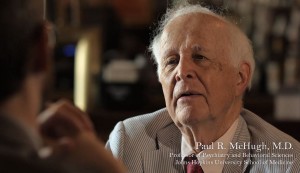
The authors are highly qualified and hugely experienced. Dr Mayer is the scholar in residence in the Department of Psychiatry at the Johns Hopkins University School of Medicine and a statistics and biostatistics professor at Arizona State University.
Dr McHugh was the psychiatrist-in-chief at the Johns Hopkins Hospital for 25 years. He is a professor of psychiatry and behavioral sciences at the Johns Hopkins University School of Medicine.
The authors considered more than 200 peer-reviewed studies related to human sexuality. They found that understandings of sexual orientation and gender identity as “innate” rather than fluid are “not supported by scientific evidence.”
Acts 17:11 (The Bereans) were more noble than those in Thessalonica, in that they received the word with all readiness of mind, and searched the scriptures daily, whether those things were so.
’Sexual Orientation’ ‘not innate’
In part one, on ‘Sexual Orientation’, the authors say:
‘The understanding of sexual orientation as an innate, biologically fixed property of human beings — the idea that people are “born that way” — is not supported by scientific evidence.
‘While there is evidence that biological factors such as genes and hormones are associated with sexual behaviors and attractions, there are no compelling causal biological explanations for human sexual orientation. …
‘Longitudinal studies of adolescents suggest that sexual orientation may be quite fluid over the life course for some people, with one study estimating that as many as 80% of male adolescents who report same-sex attractions no longer do so as adults … .
‘Compared to heterosexuals, non-heterosexuals are about two to three times as likely to have experienced childhood sexual abuse.
’Adverse health and mental health’
In part two, ‘Sexuality, Mental Health Outcomes, and Social Stress’, they conclude:
‘Compared to the general population, non-heterosexual subpopulations are at an elevated risk for a variety of adverse health and mental health outcomes.
‘Members of the non-heterosexual population are estimated to have about 1.5 times higher risk of experiencing anxiety disorders than members of the heterosexual population, as well as roughly double the risk of depression, 1.5 times the risk of substance abuse, and nearly 2.5 times the risk of suicide.
‘Members of the transgender population are also at higher risk of a variety of mental health problems compared to members of the non-transgender population. Especially alarmingly, the rate of lifetime suicide attempts across all ages of transgender individuals is estimated at 41%, compared to under 5% in the overall U.S. population.
‘There is evidence, albeit limited, that social stressors such as discrimination and stigma contribute to the elevated risk of poor mental health outcomes for non-heterosexual and transgender populations.’
Not ‘born that way’
In part three, Gender Identity, they come down firmly against the ‘born that way’ mantra:
‘The hypothesis that gender identity is an innate, fixed property of human beings that is independent of biological sex — that a person might be “a man trapped in a woman’s body” or “a woman trapped in a man’s body” — is not supported by scientific evidence.
‘According to a recent estimate, about 0.6% of U.S. adults identify as a gender that does not correspond to their biological sex.
‘Compared to the general population, adults who have undergone sex-reassignment surgery continue to have a higher risk of experiencing poor mental health outcomes. One study found that, compared to controls, sex-reassigned individuals were about 5 times more likely to attempt suicide and about 19 times more likely to die by suicide.’
’Little scientific evidence’
The authors express particular concern for the current fashion for putting children on gender reassignment pathways:
‘Children are a special case when addressing transgender issues. Only a minority of children who experience cross-gender identification will continue to do so into adolescence or adulthood.
‘There is little scientific evidence for the therapeutic value of interventions that delay puberty or modify the secondary sex characteristics of adolescents, although some children may have improved psychological well-being if they are encouraged and supported in their cross-gender identification. There is no evidence that all children who express gender-atypical thoughts or behavior should be encouraged to become transgender.’
’Fix minds, not genitalia’
Writing on the report, Dr Michael Brown said the authors of the report would be castigated rather than its findings challenged:
‘When it comes to Dr. McHugh, he committed the cardinal sin of opposing sex-change surgery during his tenure at Johns Hopkins Hospital, which is why that surgical procedure was dropped under his leadership. But he did this based on years of interaction with those who identified as transgender, interviewing them before and after surgery, ultimately concluding that, “We psychiatrists … would do better to concentrate on trying to fix their minds and not their genitalia”.’
Luke 5:31 And Jesus answering said unto them, They that are whole need not a physician; but they that are sick.
The report is already being attacked by homosexual activists and is unlikely to make it into the mainstream media.
Its common-sense conclusions that there’s no scientific support for thinking homosexual feelings and attractions are innate, that the negative mental health outcomes of homosexuals cannot be blamed on ‘homophobia’, that homosexuals are not born that way and that “sex reassignment surgery” is not the best treatment for gender confusion would inform policy-makers, if the latter were in any sense concerned about public health rather than how their policies play with homosexual lobbyists.
Prov 14:12 (cf 16:25) There is a way that seemeth right unto a man, but the end thereof are the ways of death.
Support us!
We appreciate your support; it enables our research and helps us inform your prayers.
So click below to support Christian Voice and stand up for the King of kings

Click on the social media links below to share this post: