




Judge: ‘Not Guilty’ doesn’t mean ‘Innocent’
Update 22/09/2016:
Click here for Council look anew at care case.
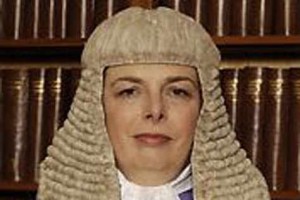
A senior family court judge told a court last Friday (9th September 2016) that a ‘Not Guilty’ verdict in the criminal court did not mean the defendants were innocent.
Judge Rosalind Bush said a ‘Not Guilty’ verdict merely meant the jury had not been sure ‘beyond reasonable doubt’ the defendants actually did it.
The BBC were ‘at fault’ for perpetuating the misunderstanding that people found not guilty were innocent, she continued.
Her Honour cited the case of O J Simpson in support. He was, she said, found not guilty in the criminal court but culpable in the civil court.
THE O J SIMPSON CASE
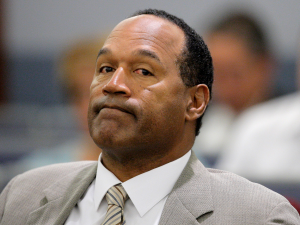
In 1994 O.J. Simpson was apprehended after a famous ‘low-speed’ car chase and charged with the deaths of his ex-wife, Nicole Brown-Simpson, and her friend Ron Goldman. He was found not guilty in 1995 after his expensive high-profile defence team suggested DNA samples had been mishandled. But he was subsequently found ‘responsible’ for the deaths when the Brown and Goldman families sued in the civil court. They were awarded $35million in damages.
Simpson already had a criminal record. Prior to the murders, he had pleaded no contest to spousal abuse in 1989. Subsequently, in 2007, he was convicted of using a deadly weapon to commit kidnapping, burglary and armed robbery, and sentenced to 33 years in prison, where he remains.
This ministry has not been able to contact the defendants in the case to which Her Honour was referring, young men of good character who have never been in trouble with the police, to ask their reaction to being compared to O.J. Simpson.
CHILDREN TAKEN INTO CARE
Judge Bush has presided in the past over criminal cases. She made her comments however in the family court, in a case in which a family’s youngest children were taken into care last year on a social worker’s description of the evidence of a seven-year-old girl that no fewer than four of the family’s siblings had separately and systematically sexually abused her over a period of two years. The local authority, Walsall Council, have applied to have the children adopted.
The girl’s evidence also led to criminal charges against the family’s two oldest sons. Their trial ended in acquittals a month ago when a jury returned not guilty verdicts on no fewer than seven charges, one charge was struck out by the trial judge, His Honour Judge John Wait, and three other charges were abandoned by the prosecution. The young men walked free from court. But, said Judge Bush, that proved nothing in the family court.
Nobody from Walsall Council found time to attend the trial. The Council’s legal department is only now trying to gain access to the police evidence.
EVIDENCE SELF-CONTRADICTORY
Even before the jury heard any evidence, charges of rape, which had been hanging over the defendants for months, were withdrawn from the charge sheet on the opening day. Judge Wait told Paul Spratt, prosecuting, that the evidence simply did not support those charges.
A reasonable man might have thought the Crown Prosecution Service would have spotted that already, but they had not and Mr Spratt was left with no option but to withdraw the charges.
Even then, evidence from prosecution witnesses revealed confusion in the case. Her mother told the court her daughter said she had been raped. Later she told the police she hadn’t. Her daughter, who admitted to watching pornography with an older girl, ‘L’, even changed her story during police interviews.
On one occasion, she described a depraved act which she said was carried out on her. Later, being asked to confirm it, she denied it and said she saw it on a video at L’s house.
CRIMINAL TRIAL ACQUITTAL WILL NOT AFFECT FAMILY PROCEEDINGS
The parents of the accused boys say they were bullied in the family court, even by their own advocates, into admitting that sexual abuse ‘could have happened’ in their home. They say a psychologist, one Dr Helen Rodwell of Jigsaw Psychology, commissioned by Walsall to report on them, told them she could only help them if they admitted at the very least that the allegations could be true.
But called to the stand as defence witnesses in their sons’ criminal trial, both described to the court how the alleged abuse not only did not happen but could not have happened.
On Friday, the mother and father dramatically repeated this robust stance, this time in the family court, contradicting the earlier statements they say they were pressurised into. No abuse happened, they said. Although Judge Bush said she could have held them to their previous position, she allowed the retraction. That meant the case now goes back to square one, with a new ‘fact-finding’ exercise set in motion.
But Judge Bush repeated that allegations made in relation to behaviour were not disposed of in the family court by an acquittal in the crown court. The outcome of the criminal trial would not affect the current family proceedings – even though both involve the same parties and the same evidence.
DOUBLE JEOPARDY
The comments of Judge Bush seem to indicate a system of ‘double jeopardy’ is in place in our law. A person acquitted in the Crown Court, walking free in the immortal words ‘without a stain on your character’, can be hauled before the family court and told on ‘the balance of probabilities’ that they only got away with it in the criminal court and they really did it after all.
Judge Rosalind Bush is highly experienced and respected. Nevertheless, if another family court judge, sitting alone without colleagues, let alone a jury, decides that abuse has occurred on the lower ‘civil court’ standard of evidence, children could be unjustly torn from their family and could be adopted against theirs and their parents’ will. Parents, older brothers, even children, will be tarred with the label of ‘child sex abuser’ on evidence which would never stand up in a criminal trial. Children could be unjustly subjected to the emotional harm of the care system, with all its negative outcomes.
Whether such a system, starkly revealed by Her Honour’s comments, accords with basic principles of justice is something the British public and those who legislate on their behalf might address.
They may take the view that the ‘balance of probabilities’ is a very good standard for deciding whether a fence has been built this side or that side of a property boundary. The standard has indeed been upheld in the family court after a number of cases in the Supreme Court (and previously the House of Lords). But the debate will no doubt continue over whether it Is still appropriate where criminal conduct is alleged and the most draconian penalties of family separation may be imposed on parents and children.
BIBLICAL POSTSCRIPT
Christian theology strongly reminds us we are all guilty before the throne of grace:
Romans 3:23 For all have sinned, and come short of the glory of God;
Equally, in a court of law, and in respect of a particular matter, a person can actually be innocent!
Exodus 23:7 Keep thee far from a false matter; and the innocent and righteous slay thou not: for I will not justify the wicked.
Society at large and judges in particular have an immense responsibility to dispense justice according to the precepts of God so that the guilty are punished and the innocent acquitted. In addition, people in power must not oppress those below them:
Jeremiah 22:3 Thus saith the LORD; Execute ye judgment and righteousness, and deliver the spoiled out of the hand of the oppressor: and do no wrong, do no violence to the stranger, the fatherless, nor the widow, neither shed innocent blood in this place.
So please pray for all judges and remember in particular to lift up Judge Rosalind Bush. Pray also for the advocates in the case to remember they are to serve the cause of justice. Pray for the social workers to be people of truth. Pray for the family to stay strong in their Christian faith, believing that justice will be done.
Find out how to join Christian Voice and stand up for the King of kings (clicking on the link below does not commit you to join)

Please note that persons wishing to comment on this story must enter a valid email address. Comments from persons leaving fictitious email addresses will be trashed.