

The head of Britain’s Security Service has said that the ‘situation in Syria’ affects the threat of terrorism in the UK.
Speaking on BBC Radio 4’s Today programme on 17th September 2015, MI5 Director General Andrew Parker said terrorism is ‘a threat which is continuing to grow largely because of the situation in Syria and how that affects our security.’
Last week, the House of Commons Foreign Affairs Select Committee heard compelling evidence that without President Assad, Syria would become a ‘failed state’ like Iraq and Libya.
It follows that President Assad is essential not just to defeat Islamic State, but his presence and a victory for the Syrian armed forces is necessary to minimise the threat to domestic UK security.
DRIVEN FROM CONFLICT ZONES
‘The shape of the threat we face today has changed in some ways because it is driven from conflict zones and the way people react to that,’ continued Mr Parker.
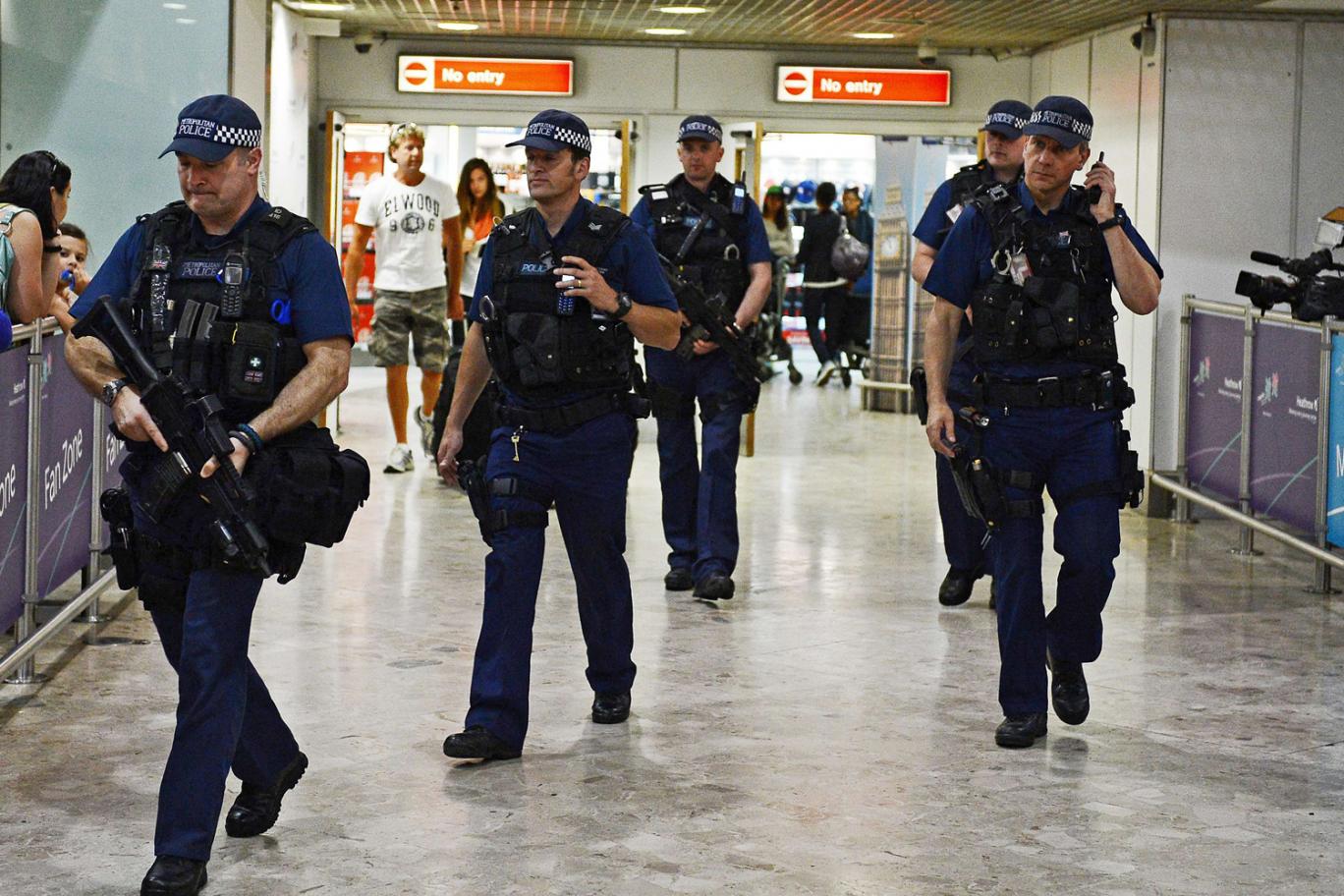
‘Because of the internet and the way terrorists use social media, including from Syria and the way we all live our lives using the smart phones in our pockets – the terrorists do the same.’
In answer to a question about the likelihood of extremists among ‘the migrants and refugees who are coming into Europe at the moment’, Mr Parker said guardedly he was ‘aware’ of that threat, but said he was concentrating at the moment on returning UK-based Islamic State fighters, who are probably already on MI5’s radar:
‘Of course it’s MI5’s job with others to monitor where the terrorists may be and how they are operating and how they are moving … we take an interest in those who have been to Syria and are coming back. So as far as the flow of migrants and refugees go of course it’s something we are aware of, it isn’t as we speak today the main focus of where the threat is coming from’.
ASSAD OR THE DELUGE
Either way, the unrest in Syria, which was encouraged by the United Kingdom, specifically by then-Foreign Secretary, the recently-ennobled William Hague, is putting at risk the safety of the people of the United Kingdom.
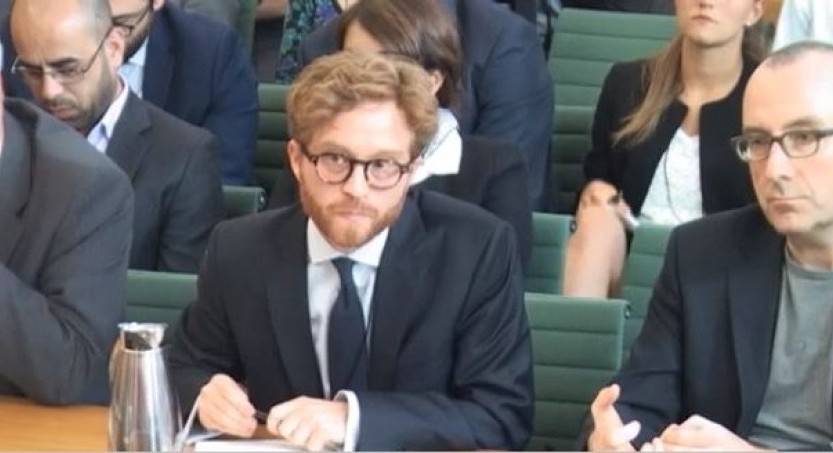
Foreign Affairs Select Committee member Mark Hendrick MP asked witnesses about what he described as ‘the so-called Arab Spring, that seems to have gone totally out of direction in a way that nobody would have predicted.’ Professor Eugene Rogan, Director of the Middle East Centre in Oxford, gave this response:
Professor Rogan: ‘I say this with a shared distaste for Bashar al-Assad and his methods of government, but I do believe he is an essential man. The policies based around the idea that Bashar al-Assad must go are ill-advised. They are unrealistic because those who advocate them do not have a champion they would put forward in his place and because recent history has shown us that when the state collapses you get a failed state.
‘State-building in the context of a failed state has given us Afghanistan and Somalia, and great difficulties in Iraq—and Libya and Yemen right now. Seeing Syria go the route of another failed state seems to me to be the greatest threat to our interests, as an American, and to yours as Britons, because when the state is gone in Syria the Islamic State will take its place, and it will then be a reality as an Islamic state—we will not quibble over Daesh, and so on. It will be the caliphate that they declare it to be. I think that it is now Bashar al-Assad or the deluge.’
Julien Barnes-Dacey, Senior Policy Fellow, Middle East and North Africa programme, European Council on Foreign Relations, agreed: ‘He is a guarantor. I think that is analytically correct. With Assad going, there are no guarantees of what comes next. … If (the question) remains pivoted on the person of Assad, it will continue to fail.’
OPPOSITION IN SYRIA ‘DOMINATED BY IS AND AL-QAEDA
The Foreign Affairs Select Committee also heard from Patrick Cockburn, Middle East correspondent of The Independent, and freelance reporter James Harkin.
The transcript is here and is very well worth reading to understand the realities in Syria.
In an exchange which contradicted all the UK Government would have us believe, Mr Cockburn told a stunned Michael Gapes MP that there are no longer ‘numerous fighting groups’ in Syria, as Mr Gapes believed:
‘The armed opposition in Syria is dominated by Islamic State, which now holds more than half the country, and al-Qaeda type movements such as the official representative of al-Qaeda, Jabhat al-Nusra, or Ahrar al-Sham and the others are now dominant in the armed opposition, and there are not too many others. The Free Syrian Army and others that people used to talk about are very weak these days,’ said Mr Cockburn.
Al Jazeera reports that the United State’s plan to train thousands of ‘moderate’ Syrians to fight Islamic State is in shambles, with only sixty having been trained and only four or five of them left.
Nadhim Zahawi MP asked James Harkin: ‘Very briefly, what secular or moderate groups have any major role now in the fighting or in the political arena (in Syria)?’
This was Mr Harkin’s response: ‘As I see it, the secular or moderate groups that we support are still ensconced in hotels in Istanbul, having nice lunches three or four years later. These people are largely meaningless to any political settlement, and that really should not be the question we are asking. We should be asking what Syrian people want, rather than who can be our friends’.
CONSEQUENCES OF SYRIAN REGIME COLLAPSE
The Committee chairman, Crispin Blunt MP, asked, ‘if the regime did collapse, what would be the consequences?’
Patrick Cockburn responded: ‘Well, we’ve got 4 million refugees already. I think you would probably have about the same number coming out, or trying to get out if they could. Most of the minorities would cut and run. So too would people associated with the army or with the Government, and a lot of the Sunni. You would have mass panic. Can you imagine what it would be like if Daesh entered Damascus or started taking other cities? I think you would have mass population movements. I think it would be very bad.’
James Harkin added: ‘As Patrick says, whether you are an Alawite or a Christian or a Shi’a, the people I speak to there do not particularly hold great store by analytic detail about hundreds and hundreds of different factions, they just see that these people are out to kill them, because they are heretics.’
UK GOVERNMENT AT ODDS
Astonishingly, even as the committee was hearing this evidence, David Cameron was preparing to tell the House of Commons at Prime Minister’s questions that ‘Assad must go’. Does the UK government have no access to anyone who knows anything about Syria?

Even back in April, the UK’s former ambassador to Syria Peter Ford denounced Mr Cameron’s attitude as ‘arrogant’ and ‘reckless’ in the Guardian saying that, ‘If David Cameron had had his way, we could have been embroiled by now, more than we already are, in yet another Middle East war. As it is, his Syria policy has still backfired, contributing to the rise of jihadism in our own back yard. If (he) had had his way, the jihadis could be in control of Damascus by now. Where is the accountability?’
The fact is, the more the UK and the US have undermined President Assad, the worse the situation in Syria has become, and the more refugees have been generated, not just from the Christian, Shi’a, Alawite, Druze and Kurdish minorities that the President has protected from the Syrian Sunni Muslim majority down the years, but also from newly radicalised but now displaced Syrian Sunnis, who threaten UK security.
More encouraging than Mr Cameron’s bluster was the contradictory evidence his new Foreign Secretary gave to the Select Committee as Mr Cameron was speaking. Rt Hon Philip Hammond signalled that the UK had actually retreated from its position of demanding that President Assad should relinquish power as a pre-requisite for UK assistance, according to this report in the Times of Israel.
The Foreign Secretary told the Committee that the solution of the crisis in Syria should be political rather than military, adding that London had sent a message to Russia and Iran, two countries backing the Assad regime, that it would be willing to consider a plan that sees Assad stay in power temporarily.
UK MUST WORK WITH SYRIA
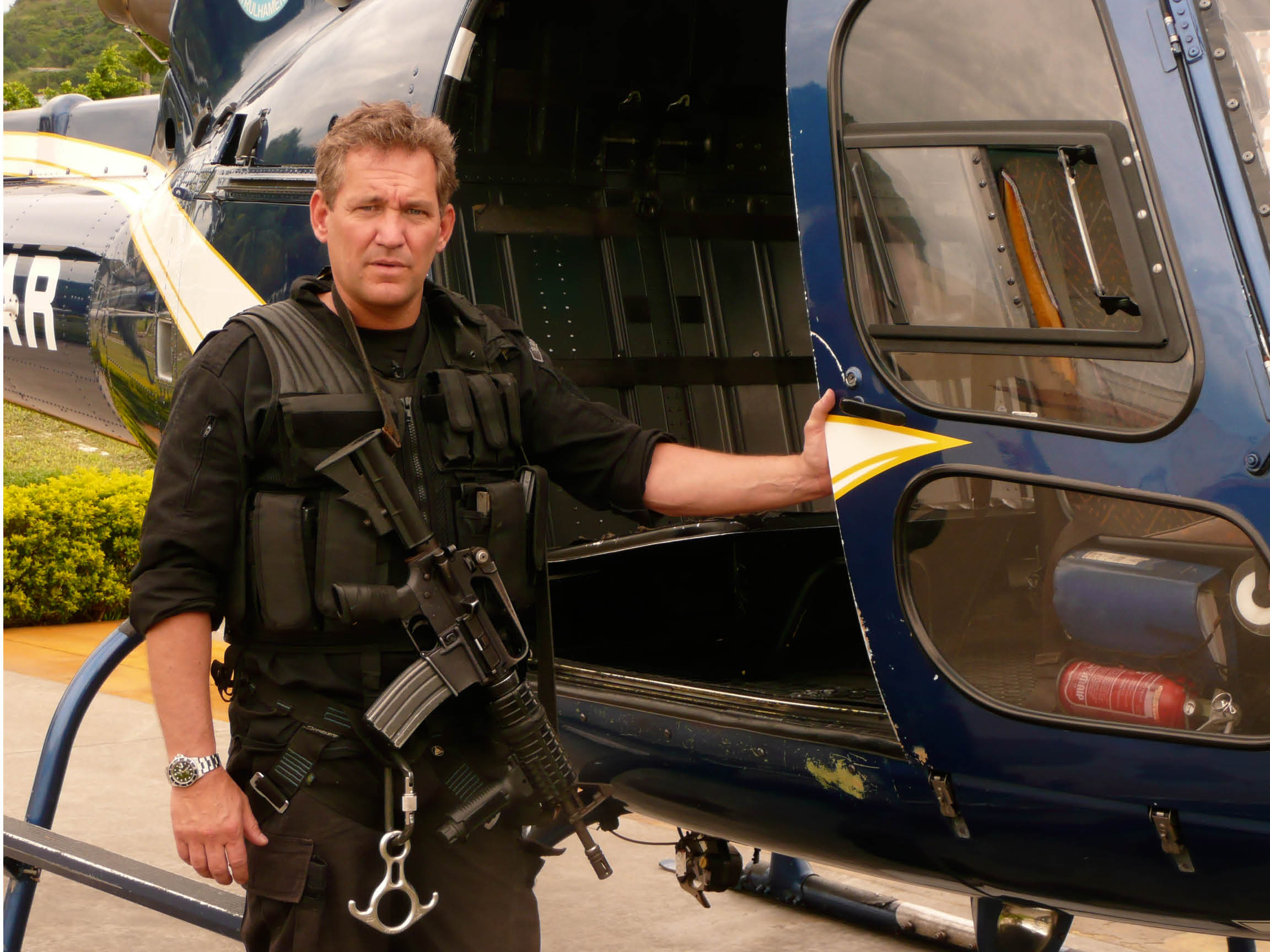
The policy shift came as Ex-SAS and writer Chris Ryan has said that the UK must work with Syria, Russia and Iran if there is to be any hope of defeating Islamic State.
The novelist, who fought in the first Gulf War, said in the Daily Express:
“The best idea would be to hit them both sides with Europe and the United States one side and Russia on the other. The longer we wait, the stronger ISIS will get.”
Russia and Iran are President Assad’s strongest Allies. The Russians and Chinese have repeatedly blocked UN resolutions critical of the Syrian regime and have consistently opposed ‘regime change’.
It may be difficult to see how matters could be worse in Syria, and yet, as the Professor Rogan said, it President Assad were to be toppled, Syria would descend into the mayhem of Libya and the situation, especially for the Christians who remain there would be even worse and the refugee crisis unimaginable. Patrick Cockburn said ‘You would have mass panic … it would be very bad.’
We must give thanks to Almighty God for the stance taken by Russia and China and for the support Syria has received from Iran. Not least, we must thank God for the vote in the House of Commons in August 2013 in which MPs refused to allow the UK Government to bomb President Assad’s forces.
BRICKS NOT BOMBS
As to whether the UK should now enter into a bombing campaign against Islamic State in Syria, there was agreement among the witnesses that bombing alone would do little against Islamic State.
Mr Cockburn observed: ‘Where the Americans are supporting the Syrian Kurds and their militia, who are well disciplined and well organised, with air strikes, that is where Daesh (Islamic State) have suffered defeats. At Kobane, they lost about 2,000 men in a four-and-a-half-month siege. At another place, called Hasaka, also in the north-east, they also suffered a defeat, but there was a combination of efficient ground troops and American air strikes.’
He went on: ‘a lot of air missions by the Americans do not find a target. But above all, what you need is people on the ground who are calling in air strikes and who can see ISIS. If you don’t have that, it doesn’t really work very effectively. For the air strikes to work, you need people on the ground, giving the co-ordinates of exactly where Daesh is, and then they can hit those targets immediately.’
But Professor Rogan had a different and important take, telling Yasmin Qureshi MP:
‘Ms Qureshi, if I could put one plea forward, it would be to prioritise the sending of bricks rather than bombs to Syria, because I do not see how further air strikes or military action is going to do anything except further destroy the urban fabric of Syria. I tried to find some figures before coming to this meeting, and the most recent I could find suggest that 1.4 million Syrian homes have been destroyed. It is not West London prices—say it is £50,000 a unit—but that is £60 billion to rebuild the houses Syrians need to go home.
‘You were asking previously what Syrians want. They don’t want to be in Europe. They don’t want to be in England, Germany or Hungary. They want to be home. The sooner we adopt policies that prioritise the needs of Syrians and provide not a safe haven but a safe habitat for them, with schools, hospitals and homes, the better, but that takes bricks, not bombs.’
NO NEGOTIATION
There will have to be a rebuilding effort when this conflict is over, but while Professor Raymond Hinnebusch, Professor of International Relations and Middle East Politics and Director of the Centre for Syrian Studies at the University of St Andrews agreed with Professor Rogan’s plea for a political settlement, it is difficult to see how that might happen.
Patrick Cockburn said: ‘… unfortunately the armed opposition is controlled at this stage by people who do not really want to talk, but want to win’.
There can be little prospect of negotiation with Al-Nusra and none at all with Islamic State, so even though bombing their positions might run the risk of radicalising even more Sunnis against those they will see as infidel invaders, there is no choice but to embark on smart bombing backed up by ground forces if Islamic State is to be defeated. Then, and only then, can those genuinely sympathetic to Syria and its people begin to discuss a long-term settlement in that country.
Find out how to join Christian Voice and stand up for the King of kings (clicking on the link below does not commit you to join)

Please note that persons wishing to comment on this story must enter a valid email address. Comments from persons leaving fictitious email addresses will be trashed.


Extremely interesting now I have got round to reading it. Seems copper-bottomed.
But what needs to happen for a state to be “failed” ? I would have thought Syria was pretty much failed already, with so many inhabitants missing and much of the rest in chaos.
I am not so sure that there are not Syrians who DO want to be in Europe !
It gets like Libya.
It’s worse than Libya already, much worse.
I suggest you look at the link to the Foreign Affairs Select Committee. I have nothing to add to what they said. It’s ‘Assad or the deluge’ said one. Take it up with them.
I suggest you look at today’s Times (8th October). According to a survey of Syrian refugees in Germany, the vast majority of them are fleeing Assad, NOT ISIS ! That surprises me just as much as it does you, and I’m afraid they give no figure or further details.
I was only asking about how disorganised things have to be for a state to be “failed”, actually. The same article in the Times suggests Russia’s efforts will produce another three million refugees, and that alone is going to mean a lot more failing of the economy and everything else you can think of. If the leader of a country is not controlling much of it, that is also “failed”.
Then those are Sunni Muslims.
Well, according to a familiar source on such things, the population of Syria was reckoned to be (presumably before they started leaving) 75% Sunni Muslims, and only 13% Shias (including Alawites and similar). So that’s no great surprise, and no extra disaster for Europe, because Sunnis are what we are mainly used to.
You are quite mad. Islamic State and Al-Qaeda both draw from the Sunni constituency. These days they are more likely to be terrorists than any other religious group.
1) According to Wikipedia, Syria is (or was) 75% Sunni Muslims.
2) The opposition in Syria, including ISIS, are most likely to be Sunnis, since not only are they the majority, but also the Establishment tends to come from a minority.
3) All kinds of people dislike war, particularly having their homes destroyed and the risk of death. Refugees are very likely to be in the majority from the majority group, and more so if the minority group is in relative safety around the capital. The survey did indeed find that they were mainly fleeing from Assad, and not actually from ISIS as politicians and newspapers would have us believe. (I don’t doubt that people don’t like being at risk from ISIS either when that happens, however).
4) Most of the Muslims we have already are Sunnis and we are used to them (at least in the UK, where traditionally they come from Pakistan and Bangla Desh. There are not many Iranians, for example).
From all this you deduce that I am “quite mad”. Please explain how you come to this unexpected conclusion.
You are quite mad to think that Sunni Muslims are just great to encourage into a nation. Shi’a are not that much better but only 5% of our population are Shi’ite and the main terrorist driving forces today are Sunni. Hezbollah not included. Their focus is (or was, before they were diverted into Syria to fight the Sunnis) Israel. The only peaceful Muslims appear to be the Ahmadiyya, but most proper Muslims reckon they are heretics anyway.
I didn’t say that they are “just great to encourage into a nation”. I said “we are used to them”.
We are used to wasps, and so we know just how to deal with them, unlike poisonous spiders. That doesn’t mean I would want anyone to release great swarms of wasps in the country, doubling the numbers we have already. The same is true with vipers, but I am much happier with vipers (in fact, I have never seen one) than I would be with cobras.
Really, though, wasps and vipers don’t go a great deal of harm, even if we would prefer to have bees and newts. A lot more wasps would definitely be a nuisance.
Your diagnosis of “quite mad” is based on a serious misreading of the symptoms.
For one thing, Shias make poor Londoners, because they won’t eat jellied eels. They believe that eels are descended from human beings. But for Sunnis, eels are halal.
Mind you, eels are not kosher either, yet Jews seemed to fit into the East End very well. It’s a strange old world.
[…] (7) The Foreign Affairs Select Committee also heard evidence in September that the only guarantor of stability in Syria is President Assad. ‘It’s Assad or the Deluge’, said one. […]