
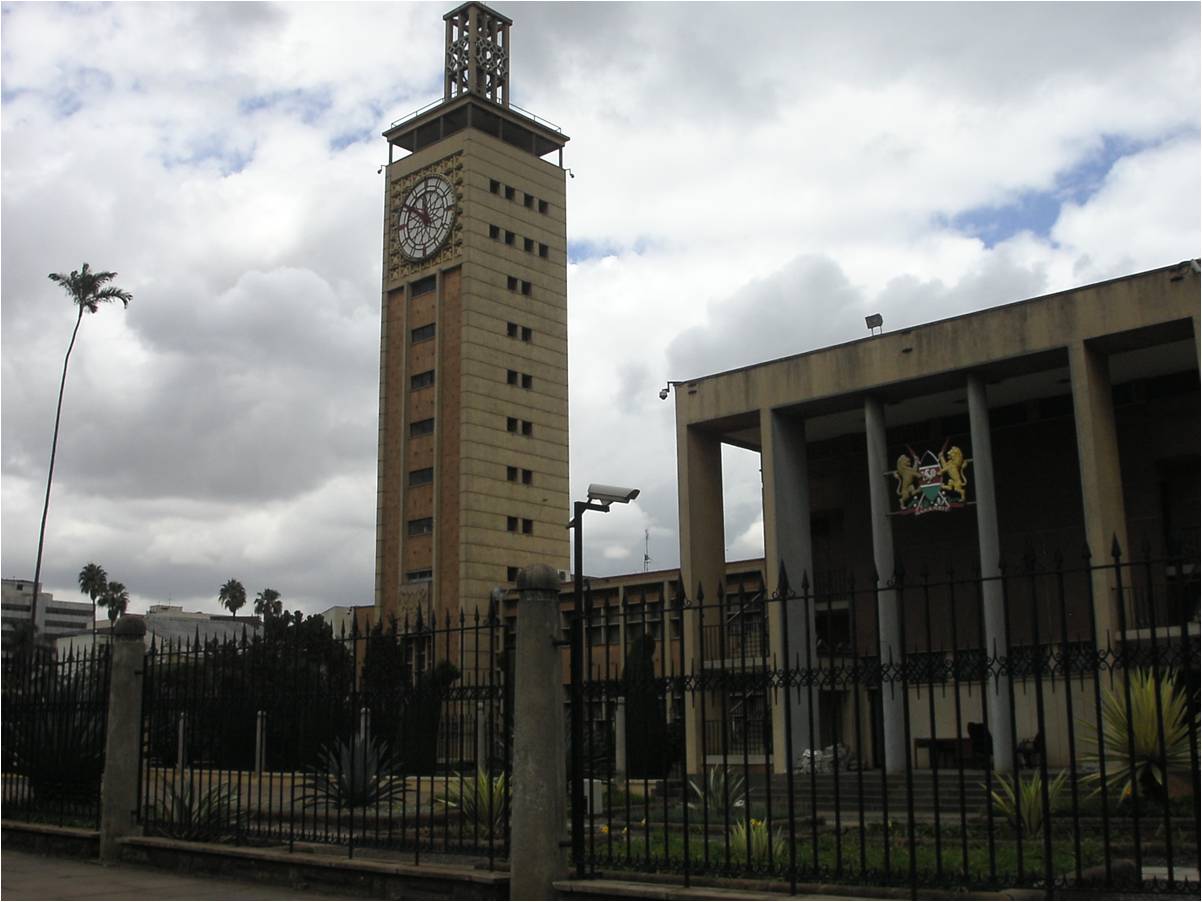
On Tuesday 8th August, the people of Kenya go to the polls. Voters will elect the President and Deputy, Members of Parliament (Senate and National Assembly) and devolved government members. That’s county governors and ward representatives.
Kenya shaken by violence in 2007
Ten years ago (2007), an outbreak of tribal violence followed the presidential elections. The violence flared up after Mwai Kibaki narrowly beat Raila Odinga. Mr Kibaki is from the Kikuyu people, Kenya’s largest ethnic group. Mr Odinga is a Luo, who form the fourth-largest ethnic group. Raila was supported by many from the Luhya and Kalenjin communities, the second and third-largest tribes. When the result was announced, ethnic Kikuyus were targeted by elements of Luo and Kalenjin. The attacks led to retaliation. In all, thirteen hundred people lost their lives. On top of that, the criminal low-life came out, taking advantage of the disorder. From the violence, thousands were also internally displaced and many people were injured.
Kenyans were dismayed by the tragedy. Around eighty per cent of Kenyans practice Christianity. (There are also 10% Muslim, concentrated near the coast. 10% of Kenyans are Animist, found mainly in the rural areas). Pastors led prayers for peace.
Tribal jokes and a move for peace
Kenyans like to play down their ethnic divisions, especially to outsiders. However, amongst themselves, tribal characteristics are a rich source of humour. The Kikuyu have a reputation for running everything and never passing up an opportunity to make money.
The Luo inhabit the areas around Lake Victoria. They are renowned for their diet of fish and for taking themselves seriously. The Luhya are also characterised for their diet, which centres on chicken and the drinking of copious volumes of tea. The Kalenjin are Kenya’s distance runners and traditional keepers of cattle.
But election time is not a time for ethnic jokes. Even Kenyan comedians are emphasising togetherness. And they have taken their lead from the candidates themselves.
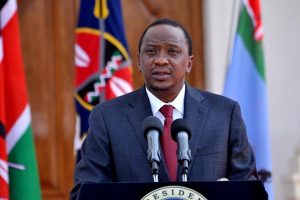
In 2012 Uhuru Kenyatta, son of Jomo, faced Raila Odinga in the Presidential race. But that is not the whole story. In order to avoid further ethnic tensions, and let it be said with an eye to winning, Mr Kenyatta, a Kikuyu, teamed up with William Ruto as his running mate. Mr Ruto is a leading Kalenjin. After the 2007 elections, allegations surrounded both Uhuru Kenyatta and William Ruto. Both were accused of inciting the violence. But for many Kenyans, the two men coming together on a single ticket was a clear call for peace and stability. Similarly, Raila ran for president with a member of another tribe. Again the church prayed. Accordingly, there was no violence following the 2012 elections, which the Kenyatta / Ruto ticket won.
Journalists stirring up trouble
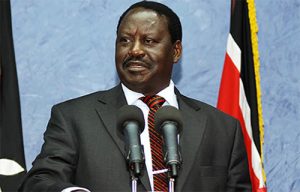
This time, 2017, Uhuru Kenyatta and William Ruto are running for re-election. Once more they are up against Raila Amolo Odinga. RAO has again appointed Kalonzo Musyoka as his running mate for the post of deputy president. Mr Musyoka is from the Kamba, the fifth-largest tribe.
We should pray that everything passes off peacefully. And indeed we can feel we are pushing at an open door in that prayer.
But more than that, let us pray for an end to tribalism so that commentators stop feeling a need to talk about post-election violence every time there is an election in Kenya.
Above all, journalists should certainly not talk violence up. The Independent have a shabby story based on suggestions by Western-funded human rights activists that violence is about to break out again. It isn’t. The article, by Tom Odula of Associated Press in Nairobi, even claims some sad, inevitable and periodic clashes between nomadic herdsmen and farmers in the Rift Valley is ‘pre-election violence’. It isn’t. Those tragic shootings have nothing to do with the election. The Indy should have known better.
Elsewhere, the BBC is running a piece saying Kenyan ‘mixed-tribe’ couples fear animosity. It really is barely a story and it stokes trouble up. Wikipedia’s entry on the Kenyan 2017 elections has a ridiculous section on ‘pre-election violence’. They don’t stoop to Mr Odula’s level, but they still manage two entries. Firstly, an election official called Christopher Msando died a week ago in suspicious circumstances. Secondly, days ago a lunatic with a machete tried to gain entry to William Ruto’s home when the DP was away. A policeman was injured. That’s the sum total of your ‘pre-election violence’ in Kenya.
Giving God the glory
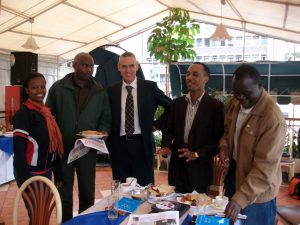
Christian Voice is not taking a position on the candidates. Kenya has distinct problems. The Nairobi Star newspaper reports for example on high levels of youth unemployment.
The country is politically stable but corruption puts a brake on enterprise and opportunities. Kenya also faces challenges with immigration from unstable South Sudan to its north-west and Somalia to the North-East.
There is constant political interference from the US, EU and UK. China is trying to secure access to raw materials by building infrastructure that is not always as good as it should be. Moreover, in Kenya, as elsewhere in the developing world, Western governments and NGO’s funded by anti-Christian American and European foundations are constantly trying to impose immorality on the country, and undermine its stability.
Yet in all this a vibrant church is praying and political leaders are not afraid to ‘do God’. William Ruto, for example, is one devout Christian who completely gave God all the glory after his election in 2012.
A call to prayer
The Bible records the Lord saying to Israel:
Leviticus 26:3 If ye walk in my statutes, and keep my commandments, and do them; 4 Then I will give you rain in due season, and the land shall yield her increase, and the trees of the field shall yield their fruit. …
Lev 26:6 And I will give peace in the land, and ye shall lie down, and none shall make you afraid: and I will rid evil beasts out of the land, neither shall the sword go through your land. …
Lev 26:12 And I will walk among you, and will be your God, and ye shall be my people.
Every nation is called to keep the Lord’s statutes. The Bible says clearly:
Proverbs 16:12 It is an abomination to kings to commit wickedness: for the throne is established by righteousness.
The Apostle’s wish was for always for peace amongst the Lord’s people:
2Thess 3:16 Now the Lord of peace himself give you peace always by all means. The Lord be with you all.
So please pray for a peaceful election. Pray for great faith for the Christians of Kenya. Please also pray that whoever is elected to office in Kenya on Tuesday 8th August 2017 will walk in the Lord’s ways of obedience, honesty, justice, peace and prosperity.
Click on the buttons below to share this article:



It sounds somewhat similar to Northern Ireland.
But whatever happened to the Masai ?
The herdsmen to which that Tom referred would most likely be Masai or Samburu. Both try to preserve their nomadic way of life in a world which increasingly likes to divide up the land and own and fence off bits of it. I’m not dissing the ownership of property, just pointing out the clash of cultures.
Christians in African countries like Kenya, Ghana and Zambia, show a great deal more Biblical sense than in the UK. I will give 3 examples:
a) these countries have strict laws against unnatural perversions.
b), many believers there have a huge respect for the King James Version, and refuse to countenance modern versions.
c) they tend to be more forthright in standing against wickedness, than in the liberal, politically correct, UK, which is rapidly going downhill, and heading for the same fate as the Roman Empire.
Indeed, I would suggest the time has come when missionaries from Africa should be coming to the UK!
I wonder how well they understand the King James Version ?
Ayaan Hirsi Ali was brought up in Africa, and she describes the enormous respect which her grandmother accorded to her copy of the Koran, although she didn’t understand it at all because :
i) She couldn’t read.
ii) She didn’t understand Arabic.
Nice binding, though.
See “Heretic: Why Islam needs a Reformation Now”.
https://www.amazon.co.uk/Heretic-Why-Islam-Needs-Reformation-ebook/dp/B00FVW8MH0/ref=sr_1_1?s=books&ie=UTF8&qid=1502106255&sr=1-1&keywords=Heretic+Islam+Reformation
Well, the King James Version is widely accepted in the African churches and is easier to understand than many other versions. For example:
John 1:1 In the beginning was the Word, and the Word was with God, and the Word was God.
John 1:14 And the Word was made flesh, and dwelt among us, (and we beheld his glory, the glory as of the only begotten of the Father,) full of grace and truth.
That’s not that hard to grasp, is it?
I have never understood that bit myself ! What is this Word ? Why is it called a “word”” ?
This is a lot less concrete than the beginning of Matthew or Luke, whereas in Mark “Jesus came into Galilee” suffices.
The nearest I have come to understanding it is a theology graduate explaining that the author of John was influenced by the Greek philosophical concept of Logos. But that isn’t really inherent in the text.
Thus you have chosen passages which no translation makes easy to understand. For example:
“In the beginning the Word already was, the Word was in God’s presence, and what God was the Word was.”
“So the Word became flesh; he made his home among us, and we saw his glory, such glory as befits the Father’s only Son, full of grace and truth.” (Both from The Revised English Bible).
It’s one of these things which people happily read or sing without entirely understanding it, like :
” Offspring of a virgin’s womb.
Veiled in flesh the Godhead see;
Hail th’incarnate Deity, ”
You may understand that, but I bet most people don’t.
At school, I assumed that the flesh of a virgin was hiding God’s head inside her (until the head eventually emerged). What are seven-year-olds expected to make of it ?
Coming back to the language of the King James Version, however, your quote includes:
“dwelt” , “beheld” and “begotten”. These are all archaic.
Also, “full of grace” suggests “graceful”, which is probably not what it means.
The ‘word’. Christian theology has moved on from when Luke, Mark and even Matthew were written. Now, in John’s Gospel and Paul’s letter to the Colossians, the Apostles are seeing Jesus as the Person of the Holy Trinity through whom all things were made and indeed exist. And they know from Genesis that God gave the word and by his word things were created. So now, John can see Jesus Christ as the Word through whom all things were created. You may be none the wiser after that, but I hope you are now better informed.
Well, a little bit wiser, and it is obvious that John was written post disputationem rerum.
The fact is (according to Wikipedia) that the Greek λόγος as imagined by the Stoics was the divine animating principle pervading the Universe. So what you describe would indeed be much the same thing before it was incarnate and veiled in flesh.
But what is your average African on the roof of the Nairobi bus going to make of this ? Will he even master crucial archaic phrases like “Thou shalt not covet” ? Why should he be expected to ? There is nothing specially holy about the English of King James’ time (or somewhat before that).
No, we don’t ride on the roofs of transport in Kenya. People are well educated, thank you, and can read and understand English. And Kiswahili. And a mother tongue.
They have been already, e.g. see “Great Britain has Fallen” by Wale Babatunde (New Wine Press 2002).
Bob: then at least those three things illustrate the good that came out of colonialism, through which the missionaries brought the message of salvation to Africans. Even John Sentamu had positive things to say about the Empire.