
 There is no right to ‘gay marriage’, the European Court of Human Rights has ruled.
The highest human rights court in Europe assuaged fears that it would judicially impose same-sex marriage when it told a male to female transsexual and his wife that a civil union should be good enough for them.
European human rights law does not require countries to “grant access to marriage to same-sex couples,” according to the judgment last month.
The judgment has a devastating effect on gay rights in Europe, dashing the hopes of homosexual activists that same-sex “marriage” can become a reality across the continent.
The United Kingdom is one of only fifteen countries in the world to have changed its definition of marriage. Five are outside Europe. The list of shame is: Netherlands, Spain, Portugal, Belgium, Norway, Sweden, Denmark, Iceland, France, UK, Canada, New Zealand, South Africa, Argentina and Uruguay.
The European Court ruling will help supporters of real marriage in the United States, where the Supreme Court ruled last year that individual states may decide whether or not to allow individuals of the same sex to marry each other. Nineteen States and the District of Columbia have legalised ‘gay marriage’, and there are law suits current in the other thirty-one.
Italy, Finland and Australia are among the nations whose parliaments have rejected the redefinition.
The European Court not only said that European human rights law does not contemplate same-sex marriage, it said that civil unions are good enough for same-sex couples.
The court confirmed that the protection of the traditional institution of marriage is a valid state interest, supporting the view that relations between persons of the same sex are not identical to marriage between a man and a woman, and may be treated differently in law.
The judgment says that European human rights law recognizes the “fundamental right of a man and woman to marry and to found a family” and “enshrines the traditional concept of marriage as being between a man and a woman.” It explains how no European consensus on same-sex marriages exists, as only 10 of the 47 countries bound by the treaty allow such designations.
Find out how to join Christian Voice and stand up for the King of kings (clicking on the link below does not commit you to join)

Please note that persons wishing to comment on this story must enter a valid email address. Comments from persons leaving fictitious email addresses will be trashed.








I see that a “Christian” singer has declared she is “gay”. It seems she is receiving support from other “Christians”. These misguided people can’t seem to accept that the concept of a “Gay Christian” is a contradiction. You might as well be a “Christian atheist” or a “Christian Muslim”.
Truly the devil has blinded these poor people.
Good I say!. Thousands of inocent men ,women and children are being slaughtered and millions have been displaced by the whole middle east debacle and here we have an infinitessimly small group of people trying to “marry” as part of their so called “human right”. Europe and the world must focus on real human rights issues and not the dubious ones where people are not in the least suffering!
Christian atheism is a theological position in which the belief in the God of Christianity is rejected or absent but the moral teachings of Jesus are followed.
Christian atheism is related to Jesuism, the Christian theological-philosophical movement named for its understanding of Jesus as a simple teacher of morals, in direct contrast to traditional Christianity, which claims that Jesus is divine.
http://en.wikipedia.org/wiki/Christian_atheism
“Christian Atheist” is the title of a recent book by Brian Mountford, Vicar of the University Church of St Mary the Virgin, Oxford. He entirely recognises this position as a valid one. Available from Amazon .
Am I right in thinking that all the constitutional monarchies in Europe are in favour of gay marriage ? Why should this be ?
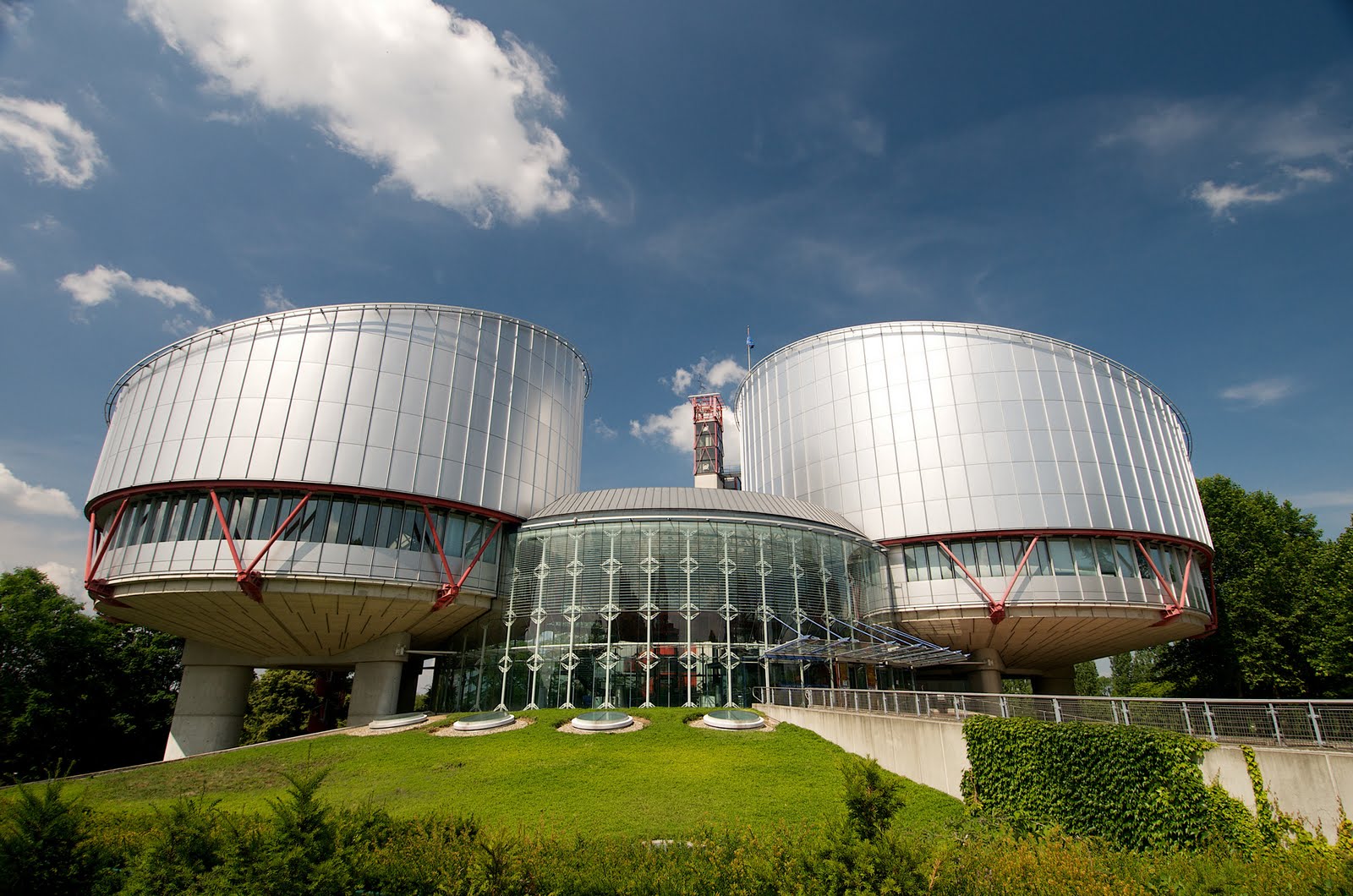
The European Court of Human Rights in Straßburg looks like a recycling plant, but I suppose that’s what it does, take in old moral ideas and recycle them as new ones .
A bit like rejected old scraps of meat become juicy beefburgers.
Stephen, that’s a carefully picked over version, from C-Fam, which you have made clear. I’ve read over most of the judgement, as has The Guardian, and there article includes some important information that yours has left out . In the interests of fairness, I have no doubt that you will take the time and humility to include: “article 12 enshrined the traditional concept of marriage as being between a man and a woman. The court acknowledged that a number of contracting states had extended marriage to same-sex partners, but went on to say that this reflected their own vision of the role of marriage in their societies and did not flow from an interpretation of the fundamental right as laid down by the contracting states in the Convention in 1950.”
As to the literal text of article 12, the court held that, looked at in isolation, the text “be interpreted so as not to exclude the marriage between two men or two women” (para. 55). But it then continued to add that
“However, in contrast, all other substantive articles of the Convention grant rights and freedoms to ‘everyone’ or state that ‘no one’ is to be subjected to certain types of prohibited treatment. The choice of wording in article 12 must thus be regarded as deliberate. Moreover, regard must be had to the historical context in which the convention was adopted. In the 1950s marriage was clearly understood in the traditional sense of being a union between partners of different sex.”
Advertisement
The applicants asked the court to interpret the text of article 12 ECHR in the light of present-day conditions, an interpretation method which the court has often used in the past to give a new or extended meaning to convention provisions. This depends to a great extent on an evolving or developing consensus within Europe on a certain matter. In this case, however, the court noted that there is no European consensus on same-sex marriage. To be precise, it stated that currently only six out of a total of 47 convention states allow such marriages.
Interestingly, the court also looked at the Charter of Fundamental Rights of the European Union (27 members) which includes in its article 9, a right to marry without a reference to men or women, but with a reference to national law in accordance with which that right should be guaranteed. Thus, article 9 of the charter, leaves the decision to the states whether or not to recognise same-sex marriages (without obliging them to do so). On the basis of this, the European court of human rights concluded on article 12 that it
“would no longer consider that the right to marry enshrined in article 12 must in all circumstances be limited to marriage between two persons of the opposite sex. Consequently, it cannot be said that article 12 is inapplicable to the applicants’ complaint. However, as matters stand, the question whether or not to allow same-sex marriage is left to regulation by the national law of the contracting state.” (para. 61)
Advertisement
The door is thus left open a little bit, which basically affirms that those countries who do recognise and allow for same-sex marriages do so within the limits of human rights. This did not help the applicants of course. The court went on to re-affirm that marriage has deep roots in societies and differs from one place to another. Considering this, it found it should not “rush to substitute its own judgment in the place of that of national authorities.” To summarise, article ECHR 12 does not oblige states to allow same-sex couples to marry.
The applicants may have foreseen this outcome and therefore also argued a violation under articles 8 and 14 taken together. But that backdoor was also closed by the court, since it held that the convention’s articles have to be interpreted in harmony with each other. The court thus did not want to grant under these articles what it did not grant under article 12. However, and here lies the importance of the present judgment, the court did make a significant step by recognising that stable relationships of cohabiting same-sex couples fall within the notion of family life. This may seem self-evident to many, but for the court it is a first. I cite the relevant paragraphs in full here:
93. The court notes that since 2001, when the decision in Mata Estevez was given, a rapid evolution of social attitudes towards same-sex couples has taken place in many member states. Since then a considerable number of member states have afforded legal recognition to same-sex couples (see above, paragraphs 27-30). Certain provisions of EU law also reflect a growing tendency to include same-sex couples in the notion of “family” (see paragraph 26 above).
94. In view of this evolution the court considers it artificial to maintain the view that, in contrast to a different-sex couple, a same-sex couple cannot enjoy “family life” for the purposes of article 8. Consequently the relationship of the applicants, a cohabiting same-sex couple living in a stable de facto partnership, falls within the notion of “family life”, just as the relationship of a different-sex couple in the same situation would.
The court then went on to look at the case from a non-discrimination angle in which it reiterated that differences made by the state based on sexual orientation required a serious justification. It also held, innovatively in its jurisprudence, that
“same-sex couples are just as capable as different-sex couples of entering into stable committed relationships. Consequently, they are in a relevantly similar situation to a different-sex couple as regards their need for legal recognition and protection of their relationship.” (para. 99).
Nevertheless, it went on to hold that since Austria had introduced a same-sex partnership it would not look at whether a total lack of legal recognition of same-sex couples would violate the convention, but only whether Austria had been obliged to offer any alternative way of legal recognition previous to the new partnership law.
The court held that Austria was not obliged to do so, with an explicit reference to the fact that there is “an emerging consensus towards legal recognition of same-sex couples” (para. 105) and that this was a rapidly developing tendency in the past ten years, but that currently no consensus existed yet (which it described as: there is no majority of states doing this yet).
Consequently, states should enjoy a wide margin of appreciation. This margin also extended to the precise way in which alternatives (to marriage) of legal recognation fell within that margin. Thus the court concluded that also on this count the convention was not violated.
It must be noted, that on the issue of articles 14 and 8, the court came to its conclusion with a very small margin (four votes to three). This means that it might be wise for the applicants to ask the court to have its grand chamber take a new look at the case on this very principled point. Indeed, as the three dissenters point out, there is a legal tension between saying that particular serious justifications are needed for such difference of treatment and then paradoxically not assessing whether such reasons where present, but rather going into the margin of appreciation question. Arguably, it is one or the other: the first approach suggests a rather small margin, the second implies that the justifications advanced by the state can be manyfold.
Thus this judgment seems to be a kind of Echternach procession: two steps forward, one step back (or even one step forward and two steps back, depending on ones perspective). It makes some important advances by recognising the at least factual and symbolic equality of same-sex and other couples, but it does not attach any far-reaching and clear legal consequences to that.
Either a grand chamber judgment, or a judgment in a different case which focuses on a situation in which any form of legal recognition in the country concerned was absent should offer more clarity. The judgment seems to take a slightly too prudent approach for reasons of judcial politics (this outcome is the most acceptable to all states probably), but leaves us with a reasoning that is not entirely convincing nor an outcome which is very promising for same-sex couples.