
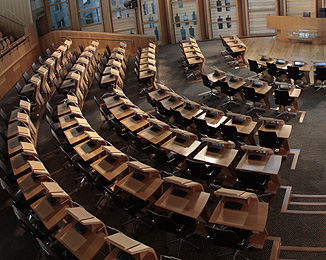
Religious privileges in Scotland are under audit as part of a new research study at the University of Glasgow.
This 10-month project, funded by the Humanist Society Scotland (HSS), will audit Scots law to find out how much special provision is given to religion and religious organizations.
The HSS wants to use this project to encourage talks with Scottish Government to change laws that “reduce religious privilege and make the country more equal.”
If some laws are deemed to be too favorable to Christians they will be modified or disposed of, which could potentially inhibit Christians from practicing their faith in Scotland.
No such project has been launched in over 100 years. Some of the cases might go all the way back to the 16th and 17th centuries, although many of these cases are more recent.
This project’s development is located at the Humanist Studies Hub at the University of Glasgow and is led by Professors Callum Brown (History, School of Humanities) and Jane Mair (School of Law). Dr Thomas Green is research assistant.
Researchers working on this project will do so in an attempt to see how religion influences the different aspects of Scottish law, such as in the areas of marriage, education, and equality laws that grant religious exemptions. These findings will provide a firm foundation for the place of religious freedoms when making new laws.
Included in the project will be a “detailed study of contemporary and historical legal sources.” A report of these findings will be published in the summer of 2015.
Mr Brown told the Scotland Herald that “research could range from prohibition on a Sunday through to any restrictions in employment law.
“We’re interested in religious privilege, which is by and large now being eroded by human rights legislation from the EU, Westminster and Holyrood. Recent legislation has specifically sought to create an equality between those who have a religious belief and those who do not.”
Dr Green will carry out research in cases where the law was influenced by religion. One example would be Church of Scotland clerics having positions on education boards. According to Dr Brown, Prof Green’s report will be rooted in his findings on different aspects of the law, such as education, human rights, and marriage.
Professor Mair, talking about this project, said that contemporary legal systems historically were viewed as secular institutions. She says it is only recently that “driven by a combination of different and quite separate forces religion has re-emerged in law as a complex and highly contested concept.”
She believes some of this rise in interest might be attributed to “the protection of religious thought and belief through human rights and equality legislation; by the strong sound of religious voices in public debate and political consultation and by the visible presence of migrant communities who wish to live according to their own religion.”
Mair, an expert on discrimination in employment and family law, said that these issues are becoming increasingly tested in courts. She adds that “judges are being faced with very difficult decisions: what is religion, how should it be defined and how…should it be distinguished from other forms of belief; to what extent should religious employees be permitted to wear the symbols of their belief at work; should civil courts take account of religious arbitration in resolving family disputes and how should religious beliefs be measured against the belief in equality?”
Douglas Mclellan, HSS Chief Executive, said that:
“I am delighted that this opportunity has arisen. The HSS is investing £40,000 in this project to provide an exceptional level of research into the privileges enjoyed by religion in Scots law. The HSS believes that for Scotland to progress as a fair and equal nation, it needs to be a nation with no special laws, practises or exemptions for religions or religious organisations. We are supporting this project to demonstrate where religion currently has privileges which will then allow us to work with the Scottish Government and MSPs in the Scottish Parliament to take opportunities to amend legislation and reduce religious privilege.”
Prof Brown said: “This is a most important research undertaking. No complete guide to religion in Scots law has been compiled since the Victorian period, and there have been so many changes in church, religion and the law since then that there is a need to provide a one-stop resource for lawyers, Humanists, church people, journalists and academics. We are delighted with the funding HSS is providing, and hope this will expand into a wider relationship between the University and Humanist organisations.”
Reverend David Robertson, the soon-to-be Moderator of the Free Church of Scotland, called this project “anti-Christian propaganda, dressed up as research.”
Commenting further, Rev Robertson said that “the Humanist Society, whose membership could fit into a phone box, has paid £40,000 to a humanist to investigate religion.
“I could have saved them the money because I can tell you now this particular investigation will say religion is privileged. Frankly it’s laughable.
“Personally I’d like to see a study of the privileged status of humanists and why they think their principles should be the only ones allowed in Scotland.”
However, the Church of Scotland also responded, saying it “works for and welcomes moves to make Scotland a more equal society.”
Church and Society Convener at the Kirk, Reverend Sally Foster-Fulton, had a slightly different take on the issue:
“One of the greatest strengths is our diversity and Scotland is not a blank-slate, but is composed of a number of institutions and groups, from within politics, business and civil society that make up its DNA.
“As one of these groups, religious organisations play an important role within society through our civic engagement, our work and advocacy for the poor and marginalised, and our contribution to the cultural heritage of Scotland, all of which should be reflected within Scottish law.
“Playing our part is not about privilege, but about service. Moreover, if we truly wish to make Scotland a more equal society then money and time might be better spent tackling issues such as child poverty, financial inequality and ending the need for food banks.”
Responding to these comments, Douglas McLellan said: “We find the (Free Church) comments insulting to the academics involved. This is high-quality research.”
A spokesperson for the University of Glasgow, responding to Robertson’s comments, said they welcomed this legitimate area of research.
National Secular Society’s spokesperson for Scotland, Alastair McBay, said: “The study of privilege is well-respected and covered in countless university courses across Scotland. To object to such an academic study simply because the form of privilege under investigation is religious reflects a desperate desire to keep such privileges beyond question.”
Additionally, the professors want to research laws that are still effective today. Dr Green said this approach is “a commentary on where we think law is heading. These kinds of surveys used to be produced by ecclesiastical lawyers. We’re producing one for the 21st century.”
Find out how to join Christian Voice and stand up for the King of kings (clicking on the link below does not commit you to join)

Please note that persons wishing to comment on this story must enter a valid email address. Comments from persons leaving fictitious email addresses will be trashed.





Revelation 20:15 “And anyone not found written in the Book of Life was cast into the lake of fire.” Dear humanists/secularists this is your future, turn away from it or continue to be the sad joke in the greater scheme of things.
Little boy to atheist father: “Dad do you think God will be cross with us because we dont believe in Him?”
By the time you are confronted with the living God it will be too late. So carry on, supress Christianity but you might find Islam a harder nut to crack and totally unforgiving.
The monstrous regiment of secularists…with apologies to John Knox.
Thank you for this thorough and reasonable account. It seems that the smaller of the Scottish churches quoted doesn’t have a leg to stand on .
” If some laws are deemed to be too favorable to Christians they will be modified or disposed of, which could potentially inhibit Christians from practicing their faith in Scotland. ”
They won’t practise their Christianity unless they can get special favours ? What kind of Christians are these ? A striking contrast to that lady in the Sudan.
In a modern society it is hard to argue that Christianity or Christians should be given privileges that are unavailable to others. I think that the study may come up with findings that might be worth considering.
Sometimes, as Bobbie Burns said, it is a gift to see ourselves as others see us. We might not like the point of view but that does not mean that the viewpoint is totally without value.
There will be time to respond when the findings of the study is released. Many studies are made and many reports are tabled but few of them result in substantial legal changes.
What is harder to research is what benefits British and Scottish society has gained from institutional Christianity over the centuries.
Our ruling liberal elite seems Hell bent on finding out what a post-Christian Britain will be like by trying the experiment.
Meanwhile remember our Lord’s words ‘Do not be afraid…..I am with you always.’
If there is an atheist ruling élite in Scotland (and I don’t know that there is), it might reduce the “privileges” or “favours” traditionally given to the Scottish churches, but they will still constitute “institutional Christianity” and still be part of Scottish society.
I don’t think the Scottish Nationalist Party or any other party is “hell-bent” on abolishing the churches. If they were, they would lose a lot of votes (and not only from Christians — a lot of non-Christian “liberals” wouldn’t like it either, and the Muslims would be afraid that they would be the next to go).
In short, “they” can’t try this experiment. But if lots of people in Scotland don’t actually want to go to church, surely you must agree that it would be wrong to force them ? Altogether, I don’t quite see what Elwin Daniels is getting at.
Even looking at his first sentence, Scotland and England have benefitted already from institutional Christianity in the past in ways which would not disappear in a post-Christian Britain (for example, the building-up of the educational system), so a post-Christian experimental Britain would never show what life would be like without these gains. So no valid experiment is possible for several reasons.