Home Blog Page 57

Guides drop God for New Age pledge

Brownies making the guiding promise

The Girl Guides are to drop references to ‘God’ and ‘country’ from their traditional pledge but are to retain a public expression of allegiance to the Queen, reports the Daily Telegraph.

In the new Promise, which will take effect from 1st September, the words ‘to love my God’, which already had an individualistic feel, is to be replaced with ‘to be true to myself and develop my beliefs’, sounding like something out of a New Age self-help manual.

The Guides have retained their pledge to the Queen, who just happens to be Patron of the UK Girl Guides, but  the words ‘to serve the Queen and my community’, begging the question ‘who or what is “my community”?’ will replace ‘to serve the Queen and my country’.  A vow to “help other people” and to “do my best” will remain part of the new promise.

The Guides have no evidence that the old pledge was putting girls off joining, so the whole exercise seems driven by the secularist spirit of the age embodied in the group’s new chief executive, Julie Bentley, who has been in post for just over six months.  Ms Bentley stepped across from the militantly anti-Christian ‘fpa’, otherwise known as the Family Planning Association, and describes the Guides as “the ultimate feminist organisation”.

Stephen Evans, campaigns manager of the National Secular Society, applauded the Guides by getting out his secularist politically-correct phrase-book: “By omitting any explicit mention of God or religion the Guide Association has grasped the opportunity to make itself truly inclusive and relevant to the reality of 21st century Britain.

“The new secular promise can now be meaningful and relevant to all guides and potential leaders, whatever their beliefs – and sends a clear signal that Girlguiding is equally welcoming to all girls.”

The Guides website claims that the new promise will lead to them ‘welcoming more members’, but David Landrum, advocacy director at the Evangelical Alliance said: “No doubt, the Girls Brigade will be the main beneficiaries from this erroneous decision, because as the growing popularity of faith schools attests, parents will always seek to provide religious rather than secular humanist values for their children.”

In 2007 the Girl Guides started a programme called ‘Get Wise’ to teach about ‘sexual health’. The programme sank into embarrassed obscurity, but the organisation’s website had a page called ‘fit for life’ which promoted new age treatments such as aromatherapy, colour therapy (whatever that might be) and yoga.  The guiding website forum urges girls to ‘indulge your inner gossip queen‘.

We understand there is still a weblink to the fpa in the GirlGuiding members area but another, to a Government url astonishingly called ‘www.playingsafely.co.uk’, as if sex is just an adolescent recreational activity, appears to have been dropped. The link was redirected straight to a suggestive NHS website called condomessentialwear.co.uk.

The Girl Guides were founded in 1909 by Agnes Baden-Powell, sister of Robert Baden-Powell, the architect of the Scouting movement.


Middle East state arms Syrian Islamists

The highly-portable Russian-made Konkurs anti-tank missile is being supplied, ironically, to the Syrian Sunni Islamist rebels.

An unnamed Middle Eastern state has supplied Syrian rebels with 250 sophisticated Soviet-made anti-tank missiles, most of which were given to radical Islamist militias fighting President Bashar Assad, according to a report published in London-based Arabic daily A-Sharq Al-Awsat on Tuesday.

According to the report, the unidentified state made its first delivery of 9M113 Konkurs missiles to the rebels a week ago via Turkey. The Konkurs antitank missile, ironicaly supplied by Russia, has a maximum range of four kilometers and a hit probability of 90 percent. Egypt, Iran and Turkey are the only known operators of the missile system in the Middle East.

The information has come from The Times of Israel.  The weapons would not have come from President Assad’s Shia Muslim ally, Iran.

Meanwhile, Israel National News has reported that France and Belgium have joined Saudi Arabia in supplying the Free Syrian Army with weapons.

The news comes as world leaders have been gathering on the shores of Loch Erne in Northern Ireland as the G8 summit.  President Putin is determined that President Assad should remain in power in any settlement, but the Western powers, including William Hague, the UK Foreign Secretary, and President Obama are supporting the rebels, who include militant Al-Qaeda elements and other hard-line Sunni activists dedicated to exterminating both the Shia Muslims and Syria’s 10% Christian minority, who have enjoyed freedom under the Assad regime.

President Obama has said he will arm the rebels, thus prolonging the Syrian civil war.  The US has taken particular umbrage at the alleged small-scale use of chemical weapons by President Assad’s side, as if it is somehow preferable or more gentlemanly to blow opponents to pieces with mortars than suffocate them by Sarin.

However, Leaked emails from a UK weapons company appear to show that Washington was involved in a plan to supply the rebels with chemical weapons whose use could then be blamed on Assad.  In addition to that,  reports of atrocities on both sides have put paid to the idea that the rebels are benign and restrained.

The Mayor of London, Boris Johnson, has argued that Britain will have no means of preventing UK weapons ending up in the hands of “al Qaida-affliated thugs” if it supplies arms to the Syrian rebels, Boris Johnson warned.

Writing for the Daily Telegraph the London mayor put himself at the head of the growing opposition at Westminster to any move by David Cameron to arm the rebels, saying Britain could not end the conflict by “pressing weapons into the hands of maniacs”.  The Archbishop of York has agreed.

However, the Foreign Secretary William Hague hit back saying there are “more than two sides” in the conflict.

However the scale of the opposition among MPs of all parties means Mr Cameron – who has promised a Commons vote on any move by Britain to arm the rebels – will almost certainly find his path blocked if he tries to follow suit.

The London Mayor described an incident in Aleppo where a 15-year-old boy was taken away and beaten and then summarily executed by Islamist rebels for making a joking reference to the Prophet Mohammed.

“Odious, twisted, hate-filled thugs; arrogant and inadequate creeps, intoxicated by the pathetic illusion of power that comes with guns; poisoned by a perversion of religion into a contempt for all norms of civilised behaviour,” he wrote.

“They are fighting not for freedom but for a terrifying Islamic state in which they would have the whip hand – and yet there is no dodging or fudging the matter: these are among the Syrian rebels who are hoping now to benefit from the flow of Western arms .

“How is it supposed to work? How are we meant to furnish machine guns and anti-tank weapons to one set of opposition forces, without them ending up in the hands of men like the al Qaida-affiliated thugs who executed a child for telling a joke?

“This is not the moment to send more arms. This is the moment for a total ceasefire, an end to the madness.

“We can’t use Syria as an arena for geopolitical point-scoring or muscle-flexing, and we won’t get a ceasefire by pressing weapons into the hands of maniacs,” he argued.


Find out how to join Christian Voice and stand up for the King of kings (clicking on the link below does not commit you to join)


Being a Gentleman ‘Sexist’, say Feminists

By Robin Phillips

Being a gentlemanNo Longer Politically Correct to be a Gentleman

Chivalry is demeaning towards women and a sign of ‘sexism’ in men, feminist psychologists now claim.

The controversial claims follow a report for the Psychology of Women Quarterly which asserts that there is a cluster of behaviours called ‘benevolent sexism’ which manifests itself in everything from opening doors for girls to men offering to help women choose the right computer. (See Andy Bloxham’s Telegraph article, Chivalry is actually ‘benevolent sexism’, feminists conclude.”)

Playing the part of a gentleman is a particularly insidious form of ‘benevolent sexism’, rooted in warm feelings towards women, the researchers claim. While gentlemanly behaviour might at first appear to be positive towards women, it is actually a form of gender colonialism.

“The warm, fuzzy feelings surrounding benevolent sexism come at a cost,” warned Melanie Tannenbaum in the Scientific American last April, “and that cost is often actual, objective gender equality.”

Social scientists have even claimed that equality is threatened when a man tells a woman that he cannot live without her or when he ‘cherishes’ her.

The radical claims were published in the Psychology of Women Quarterly, the official publication of the Society for the Psychology of Women. The authors of the study, Julia Becker and Janet Swim, warned that “Women endorse sexist beliefs, at least in part, because they do not attend to subtle, aggregate forms of sexism in their personal lives. …women…are the victims of ‘benevolent sexism’.” They warned that sexist attitudes include an “odd…conjunction of what at first seemed inherently incompatible: subjective affection as a form of prejudice…”

Although most women welcome benevolent sexism, social scientists are alerting them to the danger. As the Science Daily reported,

“Benevolent sexism motivates chivalrous acts that many women may welcome, such as a man’s offer to lift heavy boxes or install the new computer. While the path to benevolent sexism may be paved with good intentions, it reinforces the assumption that men possess greater competence than women, whom benevolent sexists view as wonderful, but weak and fragile.”

The report for the Psychology of Women Quarterly drew on the work of social psychologists Dr. Peter Glick and Dr. Susan Fiske who wrote a paper in 1996 which postulated the existence of ambivalent sexism. Ambivalent sexism is a category thought to include both ‘hostile sexism’ (things like rape, wife-beating, etc.) and ‘benevolent sexism’ (things like offering to carry a woman’s luggage, opening doors, etc.). The authors claimed that their research proved that both hostile and benevolent sexism are composed of three subcomponents: paternalism, gender differentiation, and heterosexuality. Both forms of sexism also have origin in men’s desire to dominate women: “[Benevolent sexism is] a subjectively positive orientation of protection, idealization, and affection directed toward women that, like hostile sexism, serves to justify women’s subordinate status to men.”

Glick and Fiske believe that the gender differentiation and heterosexuality that are integral to benevolent sexism emerge in ‘protective paternalism’, intimacy-seeking, male self-disclosure (how sexist to assume a woman will be a sympathetic ear!) and romantic love. As Glick and Fiske write, “the attitudes we define as characterizing benevolent sexism” include “protective attitudes towards women, a reverence for the role of women as wives and mothers, and an idealization of women as romantic love objects.”

Other tell-tale signs of ‘benevolent sexism’ include the belief that “women should be cherished and protected by men”, the belief that “men should sacrifice to provide for women”, or when a man offers to do the driving on a long distance journey (‘protective paternalism’ again). Even saving a woman’s life is offensive, for according to Swim the statement that “in a disaster, women should be saved before men” is sexist.

Being Positive is Being Negative

It is not only males who are being accused of perpetuating ‘benevolent sexism’. If a woman think too highly of her sex, then that is a sign that she too has fallen victim of certain sexist myths. As the Scientific American reported, “women who were exposed to benevolent sexism were more likely to think that there are many advantages to being a woman.” One of the questions used to determine ‘benevolent sexism’ is whether a woman agrees with the statement, ‘there are some things that a woman understands better than a man.’

On the surface, it is strange that any feminist would have a problem with a woman complimenting her own sex. However, given their fixation with ‘gender equality’, the only thing feminists hate more than someone suggested women are inferior to men is for someone to suggest that women are superior to men. The compliment is offensive precisely because the suggestion that women are superior implies that men and women are not the same.

We have seen that the theory of ‘benevolent sexism’ argues that there is a strange juxtaposition between praising women and hating them, that acting positive towards a woman is actually negative; being nice to women is actually not so nice. At first this seems completely bizarre. How can positive feelings towards women be negative? How can it be not quite nice to treat a woman nicely?

The answer to these questions can be found in the pervasive suspicion that if men sacrifice for women or look after them, then this implies women are weak or even (God-forbid) that women are not entirely self-sufficient without men, and visa versa. But classical feminism denies that women need men. By classifying ‘benevolent sexism’ in the same class as ‘hostile sexism’ (rape, wife-beating, etc.), feminist theorists are targeting any kind of mutual dependence and complementarity among the sexes – what Glick and Fiske refer to pejoratively as “complementary gender differentiation.”

These ideas are not limited to fringe feminist academics. If you don’t believe me, try this little experiment. Go into a big city and spend the day looking for acts of chivalry you can do towards women. It could be anything from opening doors for women to helping them on with their coats. You may find that you will have an experience similar to the 55-year-old businessman named Tony whose experience Wendy Shalit chronicled in her book A Return to Modesty.

I was out with my wife and one other woman and when I got the other woman’s coat for her and reached to help her with it, she practically ripped the coat out of my hands, said “Nobody has ever done that for me!” and stomped off and waited, fuming, by the door.”

Such is the topsy-turvy world in which we live, where being nice to women is considered demeaning.

Social Consequences

The irony is that without the concept of gender differentiation, and without a high premium placed on men acting as gentlemen, women are actually vulnerable to the very types of exploitation and abuses to which feminism claims to be the solution.

Glick and Fiske have shown that ‘benevolent sexism’ lurks whenever women are made the objects of men’s adoration, protection, and provision. But don’t we see the results of women not being the recipients of male protection and provision all around us? We do, and it isn’t reassuring. All around us we see the result of a world in which men no longer think they need to protect women. Every day in the news we are reminded what a society looks like where it is no longer cool for a man to be a gentleman.

Not only do we live in a world where a man can claim the moral high ground by repudiating the role of gentleman, but feminists have given us a world in which it is praiseworthy for women not to act as ladies. For let’s not forget that the concept of ‘benevolent sexism’ not only targets men who act as gentlemen, but also women who have a kind of feminine pride, who think of themselves as special, who gravitate towards men who will protect and adore them, and who try to act as ‘ladies.’

When we turn away from the academic theorizing of feminist social scientists to the real world and look at what goes on in the street, it is doubtful that the erosion of female dignity is actually good for women. It isn’t a complicated point that an attractive woman who believes there is a special dignity about being female is more likely to have the inner resources to resist the lucrative pull of the porn industry. A woman who believes that she has a right to male provision and protection merely because she is a woman will be less likely to let herself be victimized by unscrupulous men. A woman who thinks of herself with dignity and who appreciates the advantages of being a woman is going to be more likely to seek out men who will protect and cherish her.

So perhaps ‘benevolent sexism’ isn’t so bad after all. In fact, I’ll go further. Without an appropriate sense of ‘benevolent sexism’, it becomes difficult to rightly assess the tragedy of sexual abuse against women. Let me explain.

Remember that one of the components of ‘benevolent sexism’ is gender differentiation. But without a strong sense of gender differences—what we might call the womanliness of women and the manliness of men—we might legitimately ask whether the violation of female sexuality is really that bad. For some thinkers the answer seems to be no.

For example, the original text of Eve Ensler’s award-winning play, ‘The Vagina Monologues’ venerates rape performed on a 13-year-old girl, who declares, “If it was rape, it was a good rape.” In her book Sex, Art, and American Culture: Essays, Camille Paglia write that if rape “is a totally devastating psychological experience for a woman, then she doesn’t have a proper attitude about sex.” Significantly, Paglia bases this idea on a non-benevolent view of women, saying, if we have the “kind of attitude” that women “are basically nurturing, benevolent people…then of course rape is going to be a total violation of your entire life…” In her own approach, however, a woman being raped is just like a man getting beaten up.

Although these comments should fill us with horror, they are not without a certain feminist logic. If there is no gender differentiation, rape cannot be said to be a crime against one’s womanhood and female dignity, but only a crime against the body. This is because these theories assert that womanhood and female dignity, as something differentiated and complementary to manhood, either do not exist in an ultimate objective sense, or exists as merely the residue of our patriarchal culture. Indeed, when all aspects of our humanity are reduced to gender-neutral categories, then what is left to be called a “woman” has hardly any right to complain that rape is qualitatively different to being beat up, or that prostitution is different than any other type of profession (hence the debates among feminists on whether prostitution should be legalized).

Once gender differentiation is seen to be a species of sexism, then not only is the gentleman seen to be an icon of our sexist past, but the virtuous woman is seen to be an icon of female subordination. This frightening logic has been realized in various movements in which feminists have intentionally appropriated to themselves the language of female hatred. One thinks of Elizabeth Wurtzel book Bitch, or the ‘Slutwalk’ phenomenon which attempted to reclaim the word “slut,” or New York State University’s taxpayer-funded ‘Revolting Behavior’ conference which attempted to reclaim the word “Shameless Hussy”, or the International GoTopless Day which attempts to bring to men sights that at one time would have been restricted to a brothel, or movements like ‘V-Day’ which attempt to reclaim certain slang and offensive terms for the female genitalia. The irony of all these movements are that they sponsored by feminists who, in the name of equality, have embraced themes that used to be the province of misogynist men, while those males who remain gentleman are demonized.

In Defense of Chivalry

Chivalry is unpopular today precisely because it is an emblem of masculinity among the men who practice it and an emblem of femininity in the women who receive it, even as feminine modesty reminds us that there is a difference in how responsible men and women dress. Chivalrous behavior thus presupposes certain things about our humanity. It assumes, for example, that women ought to be treated in a special way because they are women, just as feminine modesty proclaims that women ought to dress in a certain way because they are women. When a man embraces his calling to look after and protect women, or when a woman embraces her obligation to dress modestly, both are proclaiming that there is a fundamental difference between the sexes.

However, in a world where women have been “liberated” to be the same as men, where we are taught that all gender-specific roles (including men showing special honor to women) are oppressive, it is inevitable that strong attack will be leveled against men behaving as gentlemen and women acting as ladies. However, the irony is that by turning female honor and dignity into something dirty, feminism opens women up to new forms of exploitation.

By contrast, being ladies and gentlemen—embracing ‘benevolent sexism’ as something good—acts as a hedge against the sexual reductionism of our society. Good sexual manners—whether it be man offering to carry a women’s heavy suit case or a lady making sure her clothes are not transparent—constantly reaffirms that the raw matter of our world has a certain shape and poetry beyond the brute facts of existence. It also affirms what Glick and Fiske argue is a central tenant of ‘benevolent sexism’ but which might not actually be that bad to recover: the notion that “women are to be loved, cherished, and protected.”


Find out how to join Christian Voice and stand up for the King of kings (clicking on the link below does not commit you to join)

Please note that persons wishing to comment on this story must enter a valid email address. Comments from persons leaving fictitious email addresses will be trashed.


UK’s visa rules ‘anti-marriage’

1
UK Immigration rules are denying spouse visas to legitimate wives of UK nationals
New UK Immigration rules are denying spouse visas to legitimate wives of UK nationals.

Immigration rules for people from outside the European Union are “tearing British families apart”, a group of MPs and peers have claimed in a report, says the BBC.

In July 2012, minimum earnings requirements were introduced.  Any British citizen who wants to sponsor their non-European spouse’s visa must be able to show they earn at least £18,600 a year, rising to £22,400 to sponsor a child, and a further £2,400 for each further child.

The inquiry by the All-Party Parliamentary Group on Migration, which is calling for an independent review of the minimum income requirement, looked at more than 175 cases from families affected by the new rules.

Forty-five claimed their inability to meet the income threshold had led to the separation of children, including British children, from a non-EU parent.

In one case, a woman from outside Europe was separated from her British husband and two sons, including a five-month-old baby she had been breastfeeding.

The committee also heard from a number of UK sponsors in full-time employment at or above the national minimum wage who reported that they were unable to meet the income requirement.

Wider evidence suggested that 47% of the UK working population last year would fail to meet the income level to sponsor a non-European Economic Area partner, the committee said.

By the government’s own estimate, almost 18,000 British people will be prevented from being reunited with their spouse or partner in the UK every year as a result of the new rules, it added.

Baroness Hamwee, chairwoman of the inquiry and Liberal Democrat home affairs lead in the House of Lords, said the committee was “struck by the evidence showing just how many British people have been kept apart from partners, children and elderly relatives”.

“These rules are causing anguish for families and, counter to their original objectives, may actually be costing the public purse,” she said.

Liberal Democrat APPG member Sarah Teather MP said that “whatever the objective of the policy, children shouldn’t suffer as a result”.

A Home Office spokesperson said the rules had been designed to make sure those coming to the UK to join their spouse or partner would not become a burden on the taxpayer and will be well enough supported to integrate effectively.

“High-value migrants would not be refused because their British spouse or partner was not employed,” he said.

“They can meet the income threshold by having cash savings of £62,500 or through their own private income, for example from investments. We have also introduced greater flexibility for those holding investments to liquidate them into cash in order to meet the rules.”

Stephen Green, National Director of Christian Voice, said today: “It is a fundamental principle that the state should honour the family and marriage.  If almost half the population would be excluded by the rules, then the rules are wrong and anti-marriage.  It is not just that children shouldn’t suffer, as Sarah Teather says, but that genuine marriages should not be put under strain.

“All that is needed is a requirement that incoming spouses will not be a burden on the tax-payer and will be prohibited from claiming social security benefits.  If that were introduced, the Home Office might well find that the bogus cases disappeared. ”


Find out how to join Christian Voice and stand up for the King of kings (clicking on the link below does not commit you to join)


DOJ Employees told to Affirm Homosexuality

Department of Justice

Workers at the United States Department of Justice were sent an email telling them that silence about LGBT issues was no longer enough, and that employees must go out of their way to make homosexuals feel comfortable.

The email, which originated from a group within the Department that calls itself ‘DOJ Pride’, has prompted widespread fears of religious intolerance and viewpoint discrimination at the highest levels of American government.

The anonymous whistle-blower from the Department told the Liberty Counsel law-firm that DOJ employees were emailed the brochure, “LGBT Inclusion at Work: The 7 Habits of Highly Effective Managers.” The brochure was created by DOJ Pride and urges employees to stop using “gender-specific terms like ‘husband’ and ‘wife’”

The brochure also tells DOJ employees to attend LGBT events sponsored by DOJ Pride or by the Department itself, and encourages them to post DOJ Pride stickers in their office.

The most controversial part of the brochure states that “Silence seems like disapproval. There’s still an atmosphere of LGBT issues not being appropriate for the workplace (particularly for transgender people), or that people who bring it up are trying to rock the boat.”

Mat Staver, founder of Liberty Counsel, commented, “Christians are frightened and terrified of losing their jobs. You just can’t keep you head down and do your job. Now you have to become an advocate for the LGBT agenda – and if you don’t – the DOJ will consider that to be intolerant. Under this directive, one cannot be a Christian and a manager at the Department of Justice. How does one who believes in the teachings of Jesus Christ and the Bible display ‘gay pride’ stickers?”

Robin Phillips, spokesman for Christian Voice and author of Saints and Scoundrels, commented that the DOP Proud brochure illustrated the general trajectory of the LGBT movement’s changing goals. “Once the LGBT lobby was content to use the spurious notion of ‘tolerance’ to merely neutralize opposition,” he said. “But recently they have launched a much more ambitious goal, which is the forced affirmation of certain viewpoints and lifestyle choices.”

Further Reading

Find out how to join Christian Voice and stand up for the King of kings (clicking on the link below does not commit you to join)

Please note that persons wishing to comment on this story must enter a valid email address. Comments from persons leaving fictitious email addresses will be trashed.

Humanists want the church out of schools

Ted Cantle, who wants an end to government funding for both faith schools and church-run soup kitches, speaking at a conference organised by the anti-Christian National Secular Society.
Ted Cantle, who wants an end to government funding for both faith schools and church-run soup kitchens, speaking at a conference organised by the National Secular Society.

A group of humanists are demanding that faith schools should be open to all children, regardless of their parents’ religion.

The Fair Admissions Campaign wants all state-funded schools in England and Wales to be open equally to all children, without regard to religion or belief.

The Church of England’s website says: ‘

Latest available statistics indicate one in four primary schools and one in 16 secondary schools in England are Church of England schools. Approaching one million pupils are educated in more than 4,700 Church of England schools.’

The Fair Admissions Campaign claims that it is ‘widely supported’, by those at its meetings perhaps.  In the real world, according the Church of England:

‘Seven in ten (72%) of the population agree that Church of England schools help young people to grow into responsible members of society and 8 in 10 (80%) agree that they promote good behaviour and positive attitudes.’

Reporting on the story for the Huffington Post, Simon Goulden said:

‘I think that it is quite clear that faith schools tend to have a strong ethos emphasising respect for authority, the virtues of hard work, discipline and a sense of duty rather than just rights, a commitment to high ideals, a willingness to learn and a sense of social responsibility. Their ethos also gives a preference for earned self-respect rather than unearned self-esteem and the idea of an objective moral order transcending subjective personal preferences.’

The Campaign is being supported by most of the usual secularist suspects including the Accord Coalition, the Association of Teachers and Lecturers, the British Humanist AssociationBritish Muslims for Secular Democracy, Professor Ted Cantle CBE and the iCoCo Foundation, the Centre for Studies on Inclusive Education, the anti-Christian think tank Ekklesia, the Hindu Academy, the Liberal Democrat Education AssociationLiberal YouthRichmond Inclusive Schools Campaign, the Runnymede Trust, the Socialist Educational Association (affiliated to the Labour Party), and the General Assembly of Unitarian and Free Christian Churches.

In a glimpse into the arcane and incestuous nature of secularism, the Accord Coaltion is itself an amalgamation of the Association of Teachers and Lecturers, the British Humanist Association, British Muslims for Secular Democracy, the Campaign for State Education, Ekklesia, the General Assembly of Unitarian and Free Christian Churches, the Hindu Academy, the Lesbian and Gay Christian Movement, Liberal Youth, the National Union of Teachers, the Socialist Education Association, the Runnymede Trust and Women Against Fundamentalism

Professor Ted Cantle, named as a leading figure behind the campaign, is anti-multicultural to the extent that he would ban the Government from giving any funding to church-run soup kitchens, on the grounds that ‘they fuel separation in communities’.

There is no evidence whatsoever that faith-based schools, by which we mean mainly Church of England schools, are divisive or that they are turning out suicide bombers or young men eager to knife soldiers on the streets of Greenwich.  There is no evidence that church-run soup kitchens, homeless shelters, drop-ins and other Christian contributions to the ‘big society’ fuel separation in any way at all.

But that will not stop the relentless assault on our Christian Heritage from those who hate the Lord Jesus Christ.


Find out how to join Christian Voice and stand up for the King of kings (clicking on the link below does not commit you to join)


Please note that persons wishing to comment on this story must enter a valid email address. Comments from persons leaving fictitious email addresses will be trashed.

Kings of the Earth meet in Watford

'London's Country Estate' is how the 5-Star Grove Hotel describes itself
‘London’s Country Estate’ is how the 5-Star Grove Hotel describes itself

The world’s top politicians, industrialists and bankers will decide this weekend how the world will be run.

The ‘Bilderberg’ group is meeting at the Grove Hotel in Watford from 6th to 9th June 2013 under the chairmanship of Henri de Castries, Chairman and CEO of AXA, to plan and plot world events. Whatever these wealthy people decide, and their plans do not always work out, it will be designed to benefit them first and the rest of us a long way behind.

There is an especially large contingent from the UK this year:

Marcus Agius, Former Chairman, Barclays plc
Helen Alexander, Chairman, UBM plc
Ed Balls MP, Shadow Chancellor of the Exchequer
John Bell, Regius Professor of Medicine, University of Oxford
Peter, Lord Carrington, Former Honorary Chairman, Bilderberg Meetings
Kenneth Clarke MP, top Bilderberg insider
Sherard Cowper-Coles,Business Development Director, International, BAE Systems plc
Ian Davis, Senior Partner Emeritus, McKinsey & Company
Robert Dudley, Group Chief Executive, BP plc
Douglas J. Flint, Group Chairman, HSBC Holdings plc
Stuart Gulliver, Group Chief Executive, HSBC Holdings plc
Simon Henry, CFO, Royal Dutch Shell plc
John, Lord Kerr of Kinlochard, Former Diplomat
Peter, Lord Mandelson, Chairman, Global Counsel; Chairman, Lazard International
John Micklethwait, Editor-in-Chief, The Economist
David Omand, Visiting Professor, King’s College London
George Osborne, Chancellor of the Exchequer
Simon Robertson, Partner, Robertson Robey Associates LLP; Deputy Chairman, HSBC Holdings
Martin Taylor, Former Chairman, Syngenta AG
Peter R. Voser, CEO, Royal Dutch Shell plc
Shirley, Baroness Williams of Crosby
Martin H. Wolf, Chief Economics Commentator, The Financial Times
Wright, DavidVice Chairman, Barclays plc

There is apparently a new spirit of openess in Bilderberg, after years of utmost (and widely breached) secrecy, but do not expect to see too much of what is decided and how in the press, despite the presence of journalists among the delegates. Everything is under ‘Chatham House Rules’ and no comment is attibuted to anyone. Bilderberg say: ‘There is no detailed agenda, no resolutions are proposed, no votes are taken, and no policy statements are issued.’

The Bilderberg Group has had a website for a couple of years now. How open they are may be judged from the fact that they put up this year’s delegates list then took it down in a panic. That was not before it was picked up and circulated all around the world. You can see the full list here. They say: ‘About two thirds of the participants come from Europe and the rest from North America; one third from politics and government and the rest from other fields.’  (More delegates, and historical lists.)

Apparently, ‘the privacy of the meetings, … has no purpose other than to allow participants to speak their minds openly and freely’. ‘Bilderberg is a small, flexible, informal and off-the-record international forum in which different viewpoints can be expressed and mutual understanding enhanced’.

According to Bilderberg, despite having no agenda, they will be discussing (my comments in brackets):

• Can the US and Europe grow faster and create jobs? (and make money for the bankers)
• Jobs, entitlement and debt (and making money for the bankers)
• How big data is changing almost everything (you just can’t keep Bilderberg secret anymore)
• Nationalism and populism (they don’t like those two for sure!)
• US foreign policy (what new wars should we expect?)
• Africa’s challenges (how best to exploit the continent and promote abortion and sodomy)
• Cyber warfare and the proliferation of asymmetric threats (protecting themselves)
• Major trends in medical research (don’t expect too much Christian morality to intrude)
• Online education: promise and impacts (not sure how they will exploit that)
• Politics of the European Union (Help! The Euro dream is falling apart)
• Developments in the Middle East (they love ‘democracy’ and wars make money)
• Current affairs (preparing the way for the Antichrist? Just a guess!)

Pray that all plans for globalism and world domination are thwarted. Pray this Psalm:

Psalm 2:1 Why do the heathen rage, and the people imagine a vain thing?
2 The kings of the earth set themselves, and the rulers take counsel together, against the LORD, and against his anointed, saying,
3 Let us break their bands asunder, and cast away their cords from us.
4 He that sitteth in the heavens shall laugh: the Lord shall have them in derision.
5 Then shall he speak unto them in his wrath, and vex them in his sore displeasure.
6 Yet have I set my king upon my holy hill of Zion.
7 I will declare the decree: the LORD hath said unto me, Thou art my Son; this day have I begotten thee.
8 Ask of me, and I shall give thee the heathen for thine inheritance, and the uttermost parts of the earth for thy possession.
9 Thou shalt break them with a rod of iron; thou shalt dash them in pieces like a potter’s vessel.
10 Be wise now therefore, O ye kings: be instructed, ye judges of the earth.
11 Serve the LORD with fear, and rejoice with trembling.
12 Kiss the Son, lest he be angry, and ye perish from the way, when his wrath is kindled but a little. Blessed are all they that put their trust in him.
Find out how to join Christian Voice and stand up for the King of kings (clicking on the link below does not commit you to join)


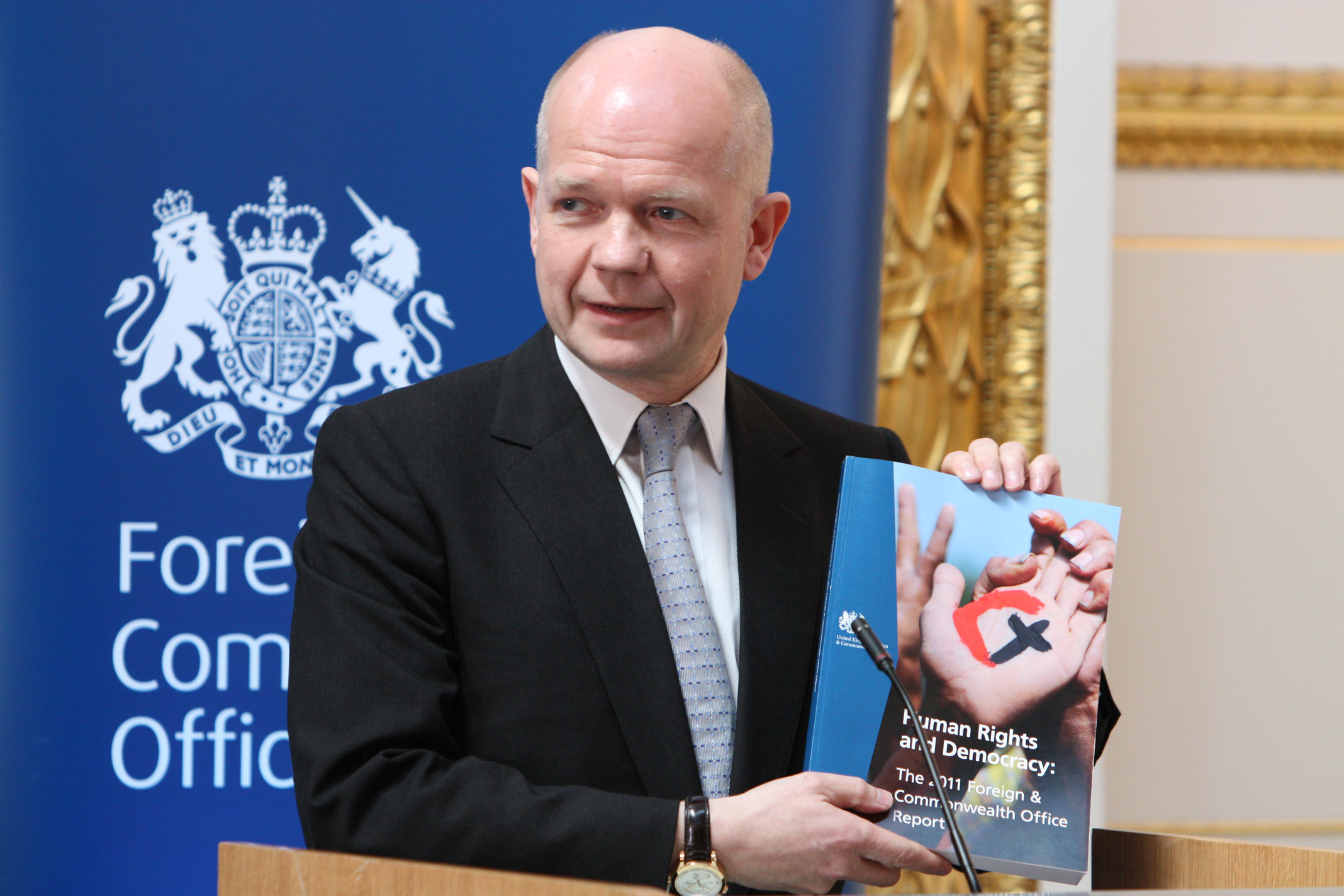
Does William Hague hate Christians?

7
Christians in Syria can forget about their human rights if William Hague arms the rebels

The UK and its allies would be able to send arms to Syrian opposition groups straightaway if they felt such a move was justified, William Hague has said.

An existing EU embargo was lifted on Monday.  MPs from all parties have warned about weapons falling into extremists’ hands.

William Hague lobbied European leaders to lift the embargo.

Sending arms to be sent to the Syrian rebels will mean systematic persecution of Syria’s 10% Christian minority, who had relative safety under President Assad’s Alawite regime..

It will also mean weapons falling into the hands of Muslim extremists attached to Al-Qaeda.

Finally, it will mean equipping enemies of Israel who make President Assad look like a Zionist in comparison.

Mr Hague knows all this, so why is he so intent on arming the rebels?

Christians are already under attack.  The Fars News Agency from Iran reports (27th May 2013):

The armed rebels affiliated to the Free Syrian Army (FSA) raided the Christian-populated al-Duvair village in Reef (outskirts of) Homs near the border with Lebanon today and massacred all its civilian residents, including women and children.

The Syrian army, however, intervened and killed tens of terrorists during heavy clashes which are still going on in al-Duvair village.

The armed rebels’ attack and crimes in al-Duvair village came after they sustained heavy defeats in al-Qusseir city which has almost been set free by the Syrian army except for a few districts.

Truth is often hard to come by in that part of the world (it isn’t that easy here) but we have reported before on attacks by Syrian rebels on Christians.

Even the BBC’s website is admitting that the Syrian opposition is riven with internal disputes and extremism.  See:

Syria crisis: Rebels condemn opposition coalition

Guide to the Syrian opposition

All across the Middle East, in countries affected by the ‘Arab Spring’, Christians are coming under persecution.  Our Government’s intervention in Iraq resulted in a hard-line Islamic takeover  and the eviction or extermination of Christians, yet the Foreign Secretary is intent on ploughing the same furrow in Syria.  The question must be asked: Does William Hague hate Christians?


Previous stories:

10th August 2012: £32.5m for the anti-Christian Syrian rebels

27th July 2012:      Syria – Thank God for the Russians


Find out how to join Christian Voice and stand up for the King of kings (clicking on the link below does not commit you to join)


Please note that persons wishing to comment on this story must enter a valid email address. Comments from persons leaving fictitious email addresses will be trashed.
Coronation Prayer as High Court rules against West Ham mosque

6
The Abbey Mills site of Tablighi Jamaat's proposed 'megamosque'
The Abbey Mills site of Tablighi Jamaat’s proposed ‘megamosque’

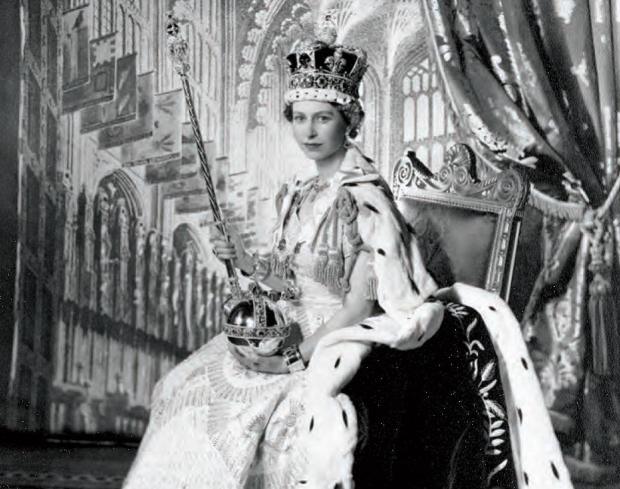
The High Court has ordered a Muslim sect to stop using a redundant chemical works in West Ham as a mosque. Meanwhile, Christians prepare to celebrate the 60th anniversary of the Queen’s Coronation with a prayer meeting on a path overlooking the site.

Newham Council were granted an injunction last Friday (24th May 2013) ordering the Anjuman-E-Islahul-Mislimeen Trust, which uses old industrial buildings on the Riverine Centre or Abbey Mills site, to clear the land of temporary buildings and cease religious activities there.

The action was brought after the mosque trustees, from the purist Tablighi Jamaat sect, breached an undertaking given to Newham to submit a planning application in line with Council policy.

In another twist, the Trustees have until Wednesday 8th June 2013 to appeal against the Council’s refusal of the planning application they did eventually submit.

The Mosque was to have been the size of Battersea Power Station, dominating the Abbey Mills area, according to the architect submitting the proposal.  It would have accomodated 12,000 devotees, becoming by a factor of four the largest place of worship in Britain, as well as the headquarters of Tablighi Jamaat.

Local Councillors refused the application last December, reported the London Evening Standard.

The hardline Islamic group announced their intention to appeal to the Planning Inspectorate at Bristol, according to the Standard’s later report, but having sacked their third and latest firm of architects shortly after the refusal, it is far from certain they will be able to offer a coherent appeal, if they manage one at all.

Christian Voice members have been meeting for prayer at the site of the proposed development on the first Saturday morning of every month since January 2007.  The next meeting is Saturday 1st June 2013, the day before the 60th anniversary of the Coronation of Her Majesty the Queen.

The Queen holds the Orb and Rod from the Crown Jewels after her coronation sixty years ago this Sunday.

Stephen Green, National Director of Christian Voice, said today:

‘We give thanks to God that Newham Council are determined to see the back of a group described by American security officials as a “recruiting ground for Al Qaeda” and by French intelligence as an “antechamber of fundamentalism.”

‘We give thanks also for her Majesty’s Coronation, for the Christian symbolism within it and for our rich Christian heritage.

‘The battle of the ‘megamosque’ is not over yet and the focus of our prayer must now shift to Bristol and the appeals process.

‘As to the state of our nation, we shall be praying for their Lordships to show wisdom from on high as they debate and vote on the Government’s ‘gay marriage’ proposals on Monday 3rd June.

‘With so much going on, it will be a privilege to gather together and seek the Lord on Saturday.’


COME ALONG to the next prayer meeting at West Ham: Saturday 1st June 2013 (and every first Saturday in the month thereafter) from 103.0am to 12.30 pm.  Meet at the site where the Greenway pedestrian path crosses Canning Road.  Aim for Channel Sea House at E15 3ND (Streetmap.co.uk).

If coming by rail, take the DLR from Stratford or West Ham to Abbey Road.  Turn right out of the station, and left up Canning Road.  We meet at the top on the left on the Greenway.  This weekend, the Hammersmith and City Line has engineering works, and there is no Circle Line or Metropolitan Line either between Kings Cross and Moorgate.  Use the District Line, Jubilee Line or Mainline from Fenchurch Street.

Check at Transport for London for ‘planned engineering works’ to the Tube.

If coming by car, turn into Mitre Road which becomes Abbey Road, turn left into Canning Road, park at Channel Sea House at the end and just walk 50 yards back to the Greenway.  You can also approach from the other direction: From the A118 High Street turn into Abbey Road.  SatNav: E15 3ND.

PLEASE COME and stand up for Christ whatever the weather and be challenged and blessed!  (Phil 1:27-29).  The meeting is always a wonderful and peaceful time of fellowship, worship and seeking the Lord in prayer and in His word.

PRAY: That there is a good turn-out with powerful prayer for our nation.  Pray that God will bless our nation with repentance and that His enemies, whether Secularist or Islamic, will be converted to the cause of Christ, or that their plans will come to nothing before our holy and awesome God.  Who is on the Lord’s side?  Come along and stand with us!

Postscript: Muslims view Jesus Christ as a mere prophet, superceded by Mohammed.  Christians believe that Jesus was and is the Son of God. Allah denies having begotten a son, so clearly Allah and the Almighty are not the same being.

See our previous stories:

‘Megamosque’ refused planning permission

Objections invited to ‘Megamosque’

Mosques mean criminality

Prayer at West Ham ‘megamosque’ site

Council Moves Against Proposed Megamosque

Block the Olympic Mosque (ignore ‘Secret Meetings’ – it’s no longer relevant)


Find out how to join Christian Voice and stand up for the King of kings (clicking on the link below does not commit you to join)


Comments are welcome, but please note that persons wishing to comment on this story must enter a valid email address.  Comments from persons leaving fictitious email addresses will be trashed.
Abortion and the Problem of Personhood

By Robin Phillips

Natural Rights and the Right to chooseOur earlier post, ‘Live-birth Abortions and the Politics of Choice‘ ended by asking why there has been such reluctance among abortion defenders to acknowledge that a child who survives an abortion is a human person of value.

Hadley Arkes’ book Natural Rights and the Right to Choose offers some possible answers to this question. Mr Arkes suggests that part of the problem has been a move away from natural rights towards an exclusive reliance on positive law. The concept of natural rights recognized that those laws which are posited must be based on more fundamental first principles of ethics. There are certain moral absolutes that are prior to, and the basis of, the laws which are posited.

Beginning around 1965 natural rights began to be questioned in American benches and law schools and was gradually replaced by what is known as ‘legal positivism.’ Arkes traces this process and shows how Positivism “usually goes hand in hand with the expression of a deep scepticism about the sources of law. The Positivist is more likely to register a profound doubt that there are moral truths, holding steady from one place to another. In our own time, there has been more of an inclination to say that there are merely ‘opinions’ or right and wrong, which will always be ‘relative’ to the feelings of the person who holds them, or to the opinions that are dominant in any place.”

The rejection of natural rights entailed by legal positivism feeds on a type of ‘soft’ relativism that eschews the casting of moral judgements, especially judgements which might affect policy. However, all policy is essentially moral, whether we recognize it or not, and it is inescapable that the public will absorb the moral principles implicit in the laws. As Arkes writes,

“As the public absorbs the understandings of rights and wrongs contained in the laws, the character of the public becomes shaped, for better or worse…. Law there must needs be, and the men and women who shape the laws must be, perforce, teachers of morality, even when they profess to teach that there is no morality. In fact, we have discovered in our own time that judges and political men are never more rigid and moralistic in their teaching as when they are ridiculing moral judgment and professing to free people from the tyranny of moral truths.”

Arkes shows that this move away from natural rights toward relativistic notions of positive law has followed the trajectory of thinking on abortion rights. Before the “right to an abortion” can have any plausibility, it is necessary to first deny that a baby in a womb is a human person in any meaningful sense, let alone that it possesses a human ‘nature.’ Thus it has become routine for defenders of abortion to maintain, in all seriousness, that they really do not know what it is a pregnant woman is carrying in her womb.

For example, in issuing a verdict for Planned Parenthood v. Doyle in 1998, Judge Richard Posner announced that partial-birth abortion is simply a removal of tissue comparative to cosmetic surgery.

Or again, in striking down the laws against partial-birth abortion in Planned Parenthood v. Casey in 1992, Judge Barry explained that the law forbidding this barbaric procedure had been addressing a mirage since, in reality, there was no child to be born, and no ‘delivery’ of a baby since “a woman seeking an abortion is plainly not seeking to give birth.” Thus, the difference between delivering a human and not delivering a human depends on the intention of the woman. This introduces an element of radical subjectivity into our understanding of human life. Since the answer to question “What is a human being?” depends on a value judgement, each one of us must be left to determine the answer to this question for ourselves. The difference between an actual human life and a potential human life becomes a matter of personal opinion. Thus we have the bizarre situation of American judges pronouncing that “at the heart of liberty is the right to define one’s own concept of existence, of meaning, of the universe, and of the mystery of human life.” (Planned Parenthood v. Casey)

But this logic, once accepted, spills outside the immediate confines of the debate about abortion, and has entailed a more general denial that there is such a thing as a shared human ‘nature’ that we can know and agree upon. To truly experience liberty, the ruling of Planned Parenthood v. Casey seemed to suggest, each person must be free to decide for him or herself what constitutes a human life. In this way, the ‘right’ to an abortion can only be sustained by denying the foundation of natural rights and positing a new concept of rights evacuated of moral substance.

A result of relativizing the definition of human life is that there is great difficulty when it comes to speaking meaningfully about man. As Arkes explains:

“The judges in our own day, profess to be far less certain about the meaning of ‘nature’ and ‘man.’ …they are more disposed to leave to the ‘political process’ the power to resolve that question of what constitutes a person or a human life… Since there is no ‘objective’ standard of what constitutes a human being, the decision will be left in the hand then of people with political power. And when they flex their power, in reach a judgment, that judgment will be tested by no standard of right or wrong apart from power itself.
“As the judges advance in their work, at the end of the century and the beginning of a new millennium, they have removed from our law any fixed notion of what constitutes a ‘man’ or a human being.

The problem, of course, is that if there is no nature common to man, then there can be no ‘human’ rights springing from that nature. If there is no objective ‘nature’ that human beings can be said to share in common, then there can be no settled moral truths that arise from that nature. In this way, we have accepted premises that, step by step, have talked ourselves out of the grounds of our own rights:

“If we can arbitrarily alter the definition of a ‘man’ as it suits our convenience, if nature provides no definition of a human being that we are obliged to respect, then – as we shall see – we remove the distinct ground of our claim to ‘natural rights.’ But if we do that, if we remove ‘natural rights,’ we would convert all rights into rights of ‘positive law.’ With that subtle shift, we would have removed, in effect, the very logic and substance of rights. For what we call ‘rights’ then are simply the things declared to be right by the opinion that is dominant in any place. In that event, the ‘rights’ enacted into law are merely the rights that a majority is willing to confer. But what the majority may confer, the majority may also remove when it no longer strikes the majority as right or convenient.”

Enter Gosnell. In one sense he is the prime example of someone defining reality for himself in the way urged by the judgement of Planned Parenthood v. Casey (“at the heart of liberty is the right to define one’s own concept of existence, of meaning, of the universe, and of the mystery of human life.”) Even though the murder of newborns was routine in the clinic, Gosnell never thought of himself as a murderer. In an article for the Washington Post, Melinda Henneberger said that “Gosnell himself seemed confused, when he was charged with so many counts of murder, as to how that could be. Because even at that point, he didn’t appear to see the children he’s accused of beheading as people.”

Gosnell is being treated as an anomaly, but if Arkes is to be believed, he is only the tip of the iceberg.

“People had to talk themselves into the notion that these beings, conceived by homo sapiens, carried in the wombs of women, were not really human beings—or at least not quite yet. This shift in labelling was not exactly easy to do if one had even a rudimentary knowledge of biology. And it was especially improbably in the light of what modern embryology was able to teach about the human embryo. But the powers of rationalization have been such that even people holding degrees from expensive colleges have been willing to affect, in public, that they have no firm knowledge of what is in a woman’s womb. …for the sake of making us all more suggestible to a new right to abortion, the judges had to begin teaching a novel doctrine: that the taking of human life was not as portentous a thing as we used to think, because we are no longer as sure as we were in the past in our sense of what a human being is.”

Find out how to join Christian Voice and stand up for the King of kings (clicking on the link below does not commit you to join)

Please note that persons wishing to comment on this story must enter a valid email address. Comments from persons leaving fictitious email addresses will be trashed.

Live-Birth Abortions and the Politics of Choice

By Robin Phillips

Mass Murderer Kermit Gosnell

Earlier this month, long-time abortion provider, Kermit Gosnell, was sentenced to life imprisonment on multiple counts of first degree murder and a string of lesser charges. The verdict was issued after it emerged that his Philadelphia based ‘Woman’s Medical Society’ had snipped the spinal cords of hundreds of babies born alive.

Gosnell’s preferred method for performing late-term abortions was to induce delivery and then kill the baby after birth by cutting the spinal cord at the back of the neck. Testimony given to the jury showed that this process of snipping occurred hundreds of times to bring about the demise of a breathing and moving baby. The babies would be thrown away, while their feet would be stored in jars.

The jury heard that sometimes a baby would be left for a while before being killed, and would only stop crying once Gosnell performed his barbaric procedure. One baby was born in a toilet and made what appeared to be frantic efforts to swim moving before an employee grabbed it and cut its neck with surgical scissors. Some of the babies who were snipped would not die immediately and testimony includes accounts of babies screeching in agony.

The pro-abortion machine was as quick as the pro-life lobby to condemn Gosnell’s atrocities, not wanting their abortion-rights movement to be tainted by association with this mass murderer. At the same time, however, we shouldn’t let this obscure the fact that the abortion-rights industry has had a record of ambivalence when it comes to the question of infanticide.

Natural Rights and the Right to choose

At least, that is what Hadley Arkes suggests in his fascinating book Natural Rights and the Right to Choose. Arkes shows that the idea of protecting babies born alive has been highly controversial within the ranks of abortion-rights activists.

One of the things that made me interested in reading Natural Rights and the Right to Choose is that Arkes was one of the architects of an important piece of American legislation protecting babies who survive an abortion, known as the Born-Alive Infants Protection Act of 2002. This bill was put together after revelations surfaced that hospitals in America were routinely performing what was known as “live birth abortion.”

There are numerous harrowing accounts of “live birth abortions” practiced at conventional hospitals. In some of these procedures the baby is killed with surgical scissors, while in other hospitals the baby is literally thrown in the trash or a cot to die of dehydration in a process that has sometimes lingered on for an entire day. Jill Stanek, a former nurse at a major Chicago hospital, has described witnessing babies being born alive after failed abortions and being brought to a “soiled utility room” and left to die. “My experience was that they [the babies] survive as short as a few minutes, to once, almost as long as an eight hour shift.”

Mary Ellen Douglas, National Organizer for Campaign Life Coalition, has reported that “Babies were found struggling for life in a basin and nurses were told to leave them alone because they were aborted.”
Official statistics from Canada show that between 2000 and 2009 at least 491 babies died after surviving abortions following a live birth.

Arkes explains that the Born-Alive Infants Protection Bill was not merely a response to the proliferation of live-birth abortions. Arkes was also concerned that much of the reasoning that judges were adopting to defend “partial-birth abortions” entailed accepting premises that also logically entailed infanticide. Indeed, it was coming to be accepted by judges and legal scholars that the right to an abortion means the right to an effective abortion, even if the baby survives the first attempt and is accidentally born. If the right to abortion entailed the right to a dead child, then it is only a triviality which side of the birth canal that child happened to be on. This was exactly the issue that emerged in the landmark cace of Floyd v. Anders in 1977. Arkes explains the significance of this case:

A male child had survived an abortion, and a surgery, for 20 days after an abortion, and the question was posed as to whether there had been an obligation to preserve the life of that child. The answer, tendered by Judge Clement Haynsworth, was no: As Haynsworth “explained,” the mother had decided on abortion, and therefore, “the fetus in this case was not a person whose life state law could protect.” Ordinarily, a child born alive is protected under the laws of a state, but now we had a new constitutional right, a right to abortion, and that new right worked its effects simply by shifting the labels: That child born alive was not a child, or a person, protected by the laws of homicide. That new being was merely a ‘fetus,’ marked for termination. In effect, the right to abortion was interpreted as the right to an “effective abortion” or a dead child.

Hadley Arkes
Hadley Arkes

It was to address atrocities such as these that Arkes pioneered the Born-Alive bill. But in his book Arkes is candid that he also had a more subversive aim. He hoped that the Born-Alive Infants Protection Bill would plant premises in people’s minds that could serve as the most modest of first steps towards questioning the very principles on which abortion rights were based. If the law could recognize that the value and humanity of a baby who survived an abortion does not depend on the feelings of the mother, then it might be reasonable to ask why the value and humanity of the same child, only minutes earlier, can be thrown into question with such ease.

During Arkes’ decade long battle to get the Born-Alive Infants Protection Bill introduced and finally passed, it met with vigorous opposition from House Democrats and the abortion-rights machine. “The most ‘modest first step’ of all was the proposal simply to preserve the life of the child who survived the abortion” Arkes reflected. “As simple as it was, the proposal had a political bite, because the proponents of abortion could not admit even the smallest step that acknowledged the human standing of the child.”

On 20 July, 2000, The National Abortion Rights Action League came out with a forceful press release opposing the bill, claiming it represented “yet another anti-choice assault” that “would inappropriately inject prosecutors and lawmakers into the medical decision-making process.” It further accused the bill of “seeking to ascribe rights to foetuses ‘at any stage of development,’ therefore directly contradicting one of Roe’s basic tenants.”

Since the “stage of development” referred to in the bill was the stage after birth, NARAL’s opposition suggested that there was a principled connection between the logic of abortion-rights and infanticide. As Hadley Arkes wrote, commenting on NARAL’s incredible admission, “The fact that the child had emerged from the womb apparently made no difference for its standing: It was still a fetus. And it would be a fetus presumably, as long as it was marked for abortion. It would never attain the name of ‘child’ or person. All of that quite fit the premises and the lens with which NARAL looked out on the world.”

As an Illinois Senator, Barack Obama crushed a bill that would protect babies who survive an abortion.

The National Abortion Rights Action League had many supporters in Congress, and one of them was state senator, Barack Obama, who used his position as a committee chairman to kill the same bill in Illinois.
Despite widespread opposition, the Born-Alive Infants Protection Act finally passed in August 2002 thanks to two developments. The first development was that Congressman Jerry Nadler (D, N.Y.) realized that the Democrats would embarrass themselves if they insisted too hard on extending “choice” to the killing of children already born. (Interestingly, Obama continued to oppose the bill even after NARAL and most of the Democrats withdrew their opposition.) The second development was the addition of a “neutrality clause” explicitly stating that the bill expressed no judgment, in either direction, about the legal status of a human prior to live birth.

The enactment of the Born-Alive Infants Protection Act over a decade ago has not silenced the debate about the personhood of children who survive abortions in America. Indeed, one of the things that emerged during the trial of Hermit Gosnell was just how ambivalent mainstream abortion rights activists have been towards the issue of infanticide.

Now in one sense this should come as no surprise. From the very beginning of the abortion rights movement, judges justified their decision in Roe v. Wade on the grounds that the court was not in a position to resolve the difficult question of when human life begins. But once we concede that we are not in a position to know when human life begins, then the mandatory protection of infants who are already born begins to look merely arbitrary.

This logic has not been lost on the pro-choice lobby. In March of this year a Planned Parenthood lobbyist was asked by a member of the Florida House Civil Justice Subcommittee whether an abortionist should be required to try to save the life of a baby who survived an abortion. The abortion-rights lobbyist, Alisa Lapolt Snow, replied, “We believe that any decision that’s made should be left up to the woman, her family, and the physician.” Think about that for a moment: the concept of ‘choice’, once only applicable to whether or not to kill the child in the womb, is now being extended to a baby struggling for life on a doctor’s table!

This problem is not limited to America. In the UK, 66 abortions a year are botched and the baby is born alive, according to an official report by the Confidential Enquiry into Maternal and Child Health, commissioned by the Government. Once born no medical help is offered.

In April this year, an undercover investigator attended a teaching session where a 10-year Planned Parenthood adviser explained what to do if a woman were to deliver her baby at home between the stages in a two-day abortion. She should just “flush it” and said that any surviving baby would die once it was submerged in a toxic solution inside a jar. (See also, ‘Abortion Doctor: I Would Leave Babies to Die Born Alive After Abortion.’)

Last year a paper in the Journal of Medical Ethics, entitled ‘After-birth abortion: why should the baby live?’, argues that “both fetuses and newborns do not have the same moral status as actual persons…” The authors of this paper, Alberto Giubilini of the University of Milan and Francesca Minerva of Melbourne University, state in the article’s abstract:

By showing that (1) both fetuses and newborns do not have the same moral status as actual persons, (2) the fact that both are potential persons is morally irrelevant and (3) adoption is not always in the best interest of actual people, the authors argue that what we call ‘after-birth abortion’ (killing a newborn) should be permissible in all the cases where abortion is, including cases where the newborn is not disabled.

The argument in the main body of the essay used abortion-rights arguments to try to prove that live-birth abortions can be justified for the same reason as conventional abortions. As the authors write, “A serious philosophical problem arises when the same conditions that would have justified abortion become known after birth.” What are these conditions? Earlier in the paper the authors had specified: “a child can itself be an unbearable burden for the psychological health of the woman or for her already existing children…” The essay went on to argue that “In such cases, we need to assess facts in order to decide whether the same arguments that apply to killing a human fetus can also be consistently applied to killing a newborn human.”

In cases where a newborn is found to be disabled, the authors believe the issue is fairly straight-forward because of the detrimental economic impact the child would have on society:

“Nonetheless, to bring up such children might be an unbearable burden on the family and on society as a whole, when the state economically provides for their care. On these grounds, the fact that a fetus has the potential to become a person who will have an (at least) acceptable life is no reason for prohibiting abortion. Therefore, we argue that, when circumstances occur after birth such that they would have justified abortion, what we call after-birth abortion should be permissible.”

But even in cases where the newborn is not disabled, they suggest that after-birth abortion should be acceptable on the same principle as conventional abortions:

“…we claim that killing a newborn could be ethically permissible in all the circumstances where abortion would be…. The moral status of an infant is equivalent to that of a fetus in the sense that both lack those properties that justify the attribution of a right to life to an individual. …the same reasons which justify abortion should also justify the killing of the potential person when it is at the stage of a newborn.”

How old does a baby have to be before we can attribute human personhood to him or her? The authors of the article are reluctant to give a threshold and admit “it is hard to exactly determine when a subject starts or ceases to be a person.”

Shrinking back from the attribution of personhood is not limited to philosophical journals. Arkes quotes a revealing interchange that occurred on the floor of the Senate between Pennsylvania’s Rick Santorum and Barbara Boxer of California when debating a bill to ban partial-birth abortions. Mr Santorum asked Mrs Boxer when was the first moment a child came under the protection of the laws regarding human life. Boxer replied, “I think when you bring your baby home…”

Why is there such reluctance to acknowledge that a child born alive is a person with value? We have attempted to address some possible answers to this question in our follow-up post, ‘Abortion and the Problem of Personhood.’

Further Resources

Find out how to join Christian Voice and stand up for the King of kings (clicking on the link below does not commit you to join)

Please note that persons wishing to comment on this story must enter a valid email address. Comments from persons leaving fictitious email addresses will be trashed.
Privacy and the Paradox of Sexual Freedom

By Robin Phillips

In Hadley Arkes’ book Natural Rights and the Right to Choose, he makes some penetrating observations about American society which apply with equal force to some of the issues Britain is now facing. He writes,

Natural Rights and the Right to choose

In the name of ‘privacy’ and ‘autonomy’, [Americans] have unfolded, since 1965, vast new claims of liberty, all of them bound up in some way with the notion of sexual freedom. In the first steps, there was a liberty, for married couples, but then soon for unmarried persons, to have unregulated access to contraceptives. Next, the claim of privacy was extended into a private right to end a pregnancy, or destroy a child in the womb, at any time in a pregnancy, for virtually any reason. That same claim of privacy was soon extended to the freedom to end the lives of newborns afflicted with Down’s syndrome or spina bifda. After the briefest interval, that same doctrine of personal autonomy was applied to the other end of the scale of age and converted into a claim to assisted suicide.

Ironically, this unfolding scheme of liberation has advanced even while privacy, in other domains, has been progressively crimped and disrespected by the law. Private corporations, private clubs, private households, have found themselves under thicker regulation, and the overhanging threat of lawsuits. The combined effect has been to remove the attribute most prized about privacy: the freedom to arrange one’s own association, or private enclave, according to one’s own, private criteria. But this recession of privacy and freedom seems to count for very little when set against the expansion of rights associated with sexual freedom. The dismantling of restraints on sexuality has evidently been taken as far more liberating, even exhilirating, perhaps because it has been taken as a matter of the most irreducible ‘personal’ freedom. And yet these freedoms, celebrated as pre-eminently ‘personal,’ have required the assistance or intervention of surgeons and counselors, and they have quickly annexed to their cause the demand to have the support of public monies, drawn from tax-payers with the coercions of the law. It must surely count, too, as one of the paradoxes of this new phase in our law that people seem to identify their well-being, not with an obligation to preserve life or go to its rescue, but with the creation of vast new franchises to destroy human life, for wholly private reasons, without the need to offer a justification.

Each step in liberation has been marked, then, by a further detachment of people from the traditional restraints of the law. The corollary, of course, is that, as restraints have been removed, persons once protected by those restraints have been removed from that protection. Vast new  liberties come along with vast new injuries – unless, of course, the victims no longer count. In any event, there is little doubt that these alterations in our law over the past thirty years have been taken as the hallmarks of a new regime of personal freedom; a freedom so vital to those who savor it, that any threat of having it qualified or diminished in any degree is taken as nothing less than an assault on the constitutional order itself.

Find out how to join Christian Voice and stand up for the King of kings (clicking on the link below does not commit you to join)

Please note that persons wishing to comment on this story must enter a valid email address. Comments from persons leaving fictitious email addresses will be trashed.

Nick Ross Creates Controversy With Rape Comments

Nick Ross Crime
Nick Ross takes a politically incorrect approach to issues such as rape and domestic violence

In a book being released next week, former Crimewatch presenter Nick Ross debunks some of the most common myths surrounding women and crime.

The book, Crime, has already enraged feminists after a publisher’s preview of chapter 12 reveals that Ross believes aggravated rape sometimes happens.

At the centre of the controversy is Mr. Ross’ claim that rape has gradations of violence, and so “rape isn’t always rape.” The last remark is at the centre of this week’s firestorm of controversy.

Sarah Green of EVAWI (End Violence Against Women) was quick to condemn Mr. Ross’s work as “horrible” and accused the former Crimewatch presenter of “trotting out with the same spurious myths about rape.”

The measured and well-researched claims that have provoked such venom from feminists and the liberal media include the following

  • It is wrong to almost exclusively identify women as rape victims. Men are often the victims of false rape claims.
  • In the 1990’s, the Solicitor General gave targets to sex crime unites. These had the effect of shifting the presumption of innocence towards a presumption of guilt in cases of alleged rape.
  • Women are still mostly portrayed as weak when it comes to the issue of crime, and this can often obscure the reality of what happens on the street.
  • Data shows that the percentage of abusive wives are as great, if not greater, than the percentage of abusive husbands. It is false to automatically assume that if a wife is violent that she must have been acting out of self-defence.
  • Rape has gradations of seriousness.
  • It is wrong to assume that any woman who chooses not to pursue a rape claim is being let down by the State or acting irrationally, especially if she is partly responsible for what happened.
  • Evidence suggests that drug rape is not as frequent as is often assumed.
  • Many women thought to be coerced into participating in the illegal sex trade are actually doing it voluntarily.
  • Half of all women who have had sex unwillingly do not think they were raped, and this proportion rises strongly when the assault involves a boyfriend, or if the woman is drunk or high on drugs. In such cases, the women themselves often went too far or didn’t make themselves clear.
  • Aggravated rape exists

The last point (which echoes points made by Christian Voice last December) has prompted particular anger from feminist organizations who question the very category of aggravated rape. However, if we look at Mr Ross’ words in context, it is hard to argue with his logic. This is what Ross wrote in Chapter 12 of his book:

In any other crime we take account of provocation and contributory factors. Even in murder. Why not with sex? Even to raise the question tempts claims of sexism. But a key theme of this book is that we can aggravate crime by tempting fate and curb it by playing safe. We have come to acknowledge it is foolish to leave laptops on the back seat of the car. We would laugh at a bank that stored sacks of cash by the front door. We would be aghast if an airport badly skimped on its security. No amount of incitement can excuse rape, or any other crime, but it is inane to confuse explanation with justification, let alone vindication. Yet for some it is heresy to suggest that victims should ever be held responsible at all.

Further Resources

Some of the notable articles so far about this on-going controversy include:

Find out how to join Christian Voice and stand up for the King of kings (clicking on the link below does not commit you to join)

Please note that persons wishing to comment on this story must enter a valid email address. Comments from persons leaving fictitious email addresses will be trashed.
Boys & girls swop guns & dolls in Scotland

The Swedish arm of Toys R Us is suggesting girls play with guns. Zero Tolerance think this will reduce violence. But only against women.
The Swedish arm of Toys R Us is suggesting girls play with guns. Zero Tolerance think this will reduce violence. But only against women.  Violence against men doesn’t matter.

Nursery children in Scotland are the target of a new campaign that aims to end sexism in pre-schools and prevent future domestic violence by encouraging boys to swap their cars for dolls and little girls to dress up as pirates, says The Times.

The ‘Just Like a Child’ initiative being launched this week by ‘Zero Tolerance’, a charity that claims to ‘fight violence against women’, aims to ‘end gender stereotyping in nurseries’ by giving boys dolls to play with and encouraging girls to play with guns and be ‘strong and tough’.

Jenny Kemp, Zero Tolerance coordinator, writes: “We believe that it is never too early to question what is seen as ‘normal’ or what is traditionally expected of boys and girls in our society. In fact, we believe that doing so from a very young age helps to protect children from the negative consequences of inequality and discrimination as they grow into adults.”

Liz Ely, a ‘development officer’ at Zero Tolerance, said: “From the moment children are born they are told that boys must be strong and tough, and girls are delicate and pretty. These stereotypes have real and lasting consequences. The fact that as a society we tell boys not to express their emotions, and girls that they are not suited to science and maths, sets children on a path to inequality; this inequality lays the foundations for abuse and violence in later life.”

Dr Sarah Morton, a ‘family expert’ and psychologist at the University of Edinburgh, said ‘our research has found a clear link between gender stereotypes and violence against women and children.’

It would be interesting to see that research, and how ‘gender stereotypes’ were quantified, because common sense might lean to the view that it is insecurity rather than some supposed ‘inequality’ which lies at the heart of a desire to lash out, and that by encouraging insecurity in their gender identity this programme will increase the likelihood that these boys and girls will grow up unbalanced and abusive.

The website www.zerotolerance.org.uk says the organisation ‘is a charity working to tackle the causes of men’s violence against women. Too many women in Scotland, and around the world, experience violence from men – most often men they are close to and/or who are in a position of power over them. Men’s violence against women is caused by gender inequality, and it helps this inequality to continue.’

There is so much wrong in that unbalanced statement it is hard to know where to begin. For a start, women’s violence and abuse against men apparently either does not happen or does not matter to ‘Zero Tolerance’. The idea that men are always ‘in a position of power’ over women is laughable. Lastly, where does the idea come from that violence is simply and exclusively ’caused by gender inequality?’ Abuse of any sort is caused by sin, and the roots of it can lie in insecurity, irritation, drunkenness, provocation, mental problems or plain old wickedness. And the fair sex are not immune from any of those.

One strongly gets the impression that there is either an anti-Christian, feminist political agenda behind the approach of ‘Zero Tolerance’ or there are some personal issues becoming rather too public.  Either way, it is not just sad but frankly mendacious to involve children in a social experiment which could leave them trying to work out problems with gender identity later in life.

It would be better and more effective to teach boys that they have a responsibility to protect and care for girls, but of course that would reinforce the very ‘gender stereotype’ that the feministas at Zero Tolerance so detest.


Genesis 2:18 And the LORD God said, It is not good that the man should be alone; I will make him an help meet for him.

Isaiah 3:12 As for my people, children are their oppressors, and women rule over them. O my people, they which lead thee cause thee to err, and destroy the way of thy paths.

1Peter 3:7 Likewise, ye husbands, dwell with them according to knowledge, giving honour unto the wife, as unto the weaker vessel, and as being heirs together of the grace of life; that your prayers be not hindered


Find out how to join Christian Voice and stand up for the King of kings (clicking on the link below does not commit you to join)


Please note that persons wishing to comment on this story must enter a valid email address. Comments from persons leaving fictitious email addresses will be trashed.
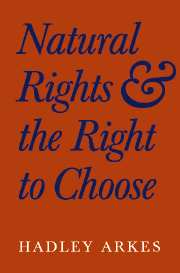
Gay Marriage Bill Threatens to Divide Tory Party

By Robin Phillips

David Cameron is facing a groundswell of opposition that could culminate in him being ousted as leader of the Tory Party.

The Marriage (Same-Sex Couples) Bill cleared its final Commons hurdle today in a vote of 366 to 161, although the victory for Government comes at a costly political price.

More than half of the Tory party voted for one or more amendments that would have protected liberty of conscience, but these amendments were cut down by David Cameron.

The Prime Minister is now facing a rebellion of 130 Tory MPs in a groundswell of opposition that could culminate in him being ousted as the Conservative leader prior to the 2015 general election.

The bill, which seeks to redefine the meaning of marriage, will now move to the House of Lords, which is expected to hold its first debate in July.


‘SOVIET-STYLE PERSECUTION’

The cat was out of the bag that the marriage bill is not about freedom at all after Government rejected three amendments that would have protected liberty of conscience, including one that would have allowed registrars to opt out of conducting gay marriages where another registrar was available and willing.

Former Tory Minister Ann Widdecombe declared that “this Bill is not about liberty and equality but about oppression and state orthodoxy, about Soviet-style persecution in the work place for an opinion given in a private context, about compelling conformity even where conformity is not necessary.”

Many senior Tories are beginning to worry that David Cameron’s pro-Europe and pro-homosexual policies have come at the expense of being able to hold the party together. Secretary of State for Defence, Philip Hammond, echoed the concerns of many senior Tories when he stressed last week that voters are angry.

The infighting was punctuated by a YouGov poll that showed the Conservative Party is at their lowest rating since 2000.

Meanwhile, David Cameron not only faces opposition from his own ranks but also from hundreds of Islamic leaders. Church leaders as well have warned that the Bill could have the effect of isolating young Christians who believe in the traditional definition of marriage.

Find out how to join Christian Voice and stand up for the King of kings (clicking on the link below does not commit you to join)

Please note that persons wishing to comment on this story must enter a valid email address. Comments from persons leaving fictitious email addresses will be trashed.
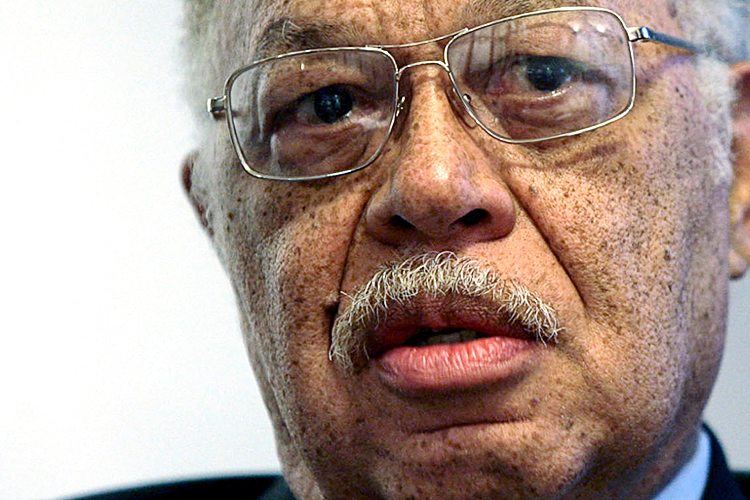
Hammond warns against redefining marriage

Rt Hon Philip Hammond MP

Secretary of State for Defence, Philip Hammond, has warned of the danger of redefining marriage.

Speaking on BBC’s Question Time, he said there was no great demand in the country for change and criticised the amount of parliamentary time devoted to the issue. “I have just never felt that this is what we should be focusing on,” he told the audience.

“This change does redefine marriage. For millions of people who are married, the meaning of marriage changes.

“There is a real sense of anger among many people who are married that any government thinks it can change the definition of an institution like marriage.

“There was no huge demand for this and we didn’t need to spend a lot of parliamentary time and upset vast numbers of people to do it,” he added.

The comments from such a senior Cabinet colleague will embarrass David Cameron, and encourage Parliamentary opposition to the measure.


Find out how to join Christian Voice and stand up for the King of kings (clicking on the link below does not commit you to join)


French Legalise ‘Gay Marriage’

Francois Hollande has signed the Bill into law
Francois Hollande

France’s president has signed into law a controversial bill making the country the ninth in Europe, and 14th globally, to legalise gay marriage, reports the BBC.

On Friday, the Constitutional Council rejected a challenge by the opposition, clearing the way for Francois Hollande to sign the bill.

The deeply unpopular Hollande said: “I have taken [the decision]; now it is time to respect the law of the Republic.”

The first ‘gay wedding’ could be held 10 days after the bill’s signing.

The Constitutional Council ruled  that same-sex marriage “did not run contrary to any constitutional principles,” and that it did not infringe on “basic rights or liberties or national sovereignty”.

It said the interest of the child would be paramount in adoption cases, cautioning that legalising same-sex adoption would not automatically mean the “right to a child”.

50% of the French electorate oppose adoption of children by homosexuals and the opposition group Manif Pour Tous say that a majority of the electorate oppose Hollande’s flagship measure.

New Zealand legalised ‘gay marriage’ last month.  France is now the 14th country to overturn God’s institution of marriage in which a man joins a woman in a one-flesh union.  Commentators have pointed out that basic anatomy denies the ability to be ‘one flesh’ to two homosexuals, mandating a redefinition of marriage.

France is also the ninth country in Europe to allow same-sex marriage.  The others  are Norway, Sweden, Iceland, Denmark, Belgium, the Netherlands, Portugal and Spain.

South Africa, Canada, Uruguay and Argentina have also changed the definition of marriage.

In January, a protest in Paris against the bill by Manif Pour Tous attracted some 340,000 people according to police – one of the biggest public demonstrations in France in decades. Organisers put the figure at 800,000.

Last month, a youth organiser for Manif Pour Tous, Samuel Lafont, was attacked at Odeon métro station by a homosexual gang. He was stabbed in the back six times, as well as sustaining other injuries. Two persons accompanying him were also hurt.

The following morning there were tweets on Twitter that celebrated what happened. One stated that having no news from Lafont for hours, s/he hoped that Lafont was dead but “not from worry”.
Find out how to join Christian Voice and stand up for the King of kings (clicking on the link below does not commit you to join)


The following morning there were tweets on Twitter that celebrated what happened and wished Lafont dead.  He and his friends are now recovering.

Same-Sex Marriage Debate

1

By Robin Phillips

Sherif Girgis defends real marriage

In our earlier posts ‘Can Ecclesiastical Marriage be Separated from Civil Marriage?‘ and ‘Why Gay Marriage is a Public Threat Part 2‘ I had occasion to quote from the book What is Marriage? by Sherif Girgis, Ryan Anderson and Robert George. This book is probably the most compelling defense of real marriage that is currently available. The website www.whatismarriagebook.com/ gives summaries of the book’s arguments in addition to further resources by the authors.

Last January there was a fascinating debate on C-span in which one of the book’s authors, Sherif Girgis, debated Andrew Koppelman on ‘gay marriage’ before an audience at the Harvard Law School. The entire debate can be watched here. Both thinkers have a background in law and have clearly spend considerable time considering the question from their differing perspectives of legal theory. The debate isn’t easy-going and can get pretty technical, but it is still definitely worth watching if you have a free hour. This was the most civil and rational debate I have ever seen on this topic which is usually charged with emotion.


Find out how to join Christian Voice and stand up for the King of kings (clicking on the link below does not commit you to join)

Please note that persons wishing to comment on this story must enter a valid email address. Comments from persons leaving fictitious email addresses will be trashed.

Niall Ferguson Was Right First Time

19
Niall Ferguson
Niall Ferguson

Scottish historian Niall Ferguson put  a public apology on his website yesterday after suggesting that the spend-your-way-out-of-recession approach of economist John Maynard Keynes was inspired by his homosexuality. (Read the BBC report, ‘Niall Ferguson apology over Keynes remarks.’)

The Harvard professor made the remarks at a conference in California on Thursday after being asked to comment on Mr Keynes’s famous observation that “in the long run we are all dead.” Dr Ferguson suggested that Keynes’ unconcern for future generations was related to being both gay and childless. He reportedly said that “it’s only logical that Keynes would take this selfish worldview because he was an ‘effete’ member of society.”

Ferguson’s remarks raised controversy throughout the internet, and he was quickly condemned for being homophobic, ignorant and even mad.

In his retraction, Dr. Ferguson said, “It is simply false to suggest, as I did, that his approach to economic policy was inspired by any aspect of his personal life. As those who know me and my work are well aware, I detest all prejudice, sexual or otherwise.”

Despite his retraction, Christian Voice believes Dr. Ferguson was right the first time. We have reported on the British economist John Maynard Keynes before, showing how his rejection of the Biblical “sowing and reaping principle” in favour of immediate gratification formed the basis both of his deviant sexual lifestyle and his economic theories. Recognizing the obvious connection between Keynes’ personal life and his economic theory is not a matter of sexual prejudice, but of history.

A paedophile who governed his life by the principle that “in the long run we are all dead”, Keynes was himself the first to suggest that his approach to economic policy was inspired by his immoral life. Keynes wrote, “When the accumulation of wealth is no longer of high social importance, there will be great changes in the code of morals. We shall be able to rid ourselves of many pseudo-moral principles which have hag-ridden us for two hundred years….”

As this quotation suggests, it is simply not possible to disengage Keynes’ economic theories from his worldview – a worldview deeply rooted in the deviance of his personal life. That is why we believe that Niall Ferguson was right the first time.


Find out how to join Christian Voice and stand up for the King of kings (clicking on the link below does not commit you to join)

Please note that persons wishing to comment on this story must enter a valid email address. Comments from persons leaving fictitious email addresses will be trashed.