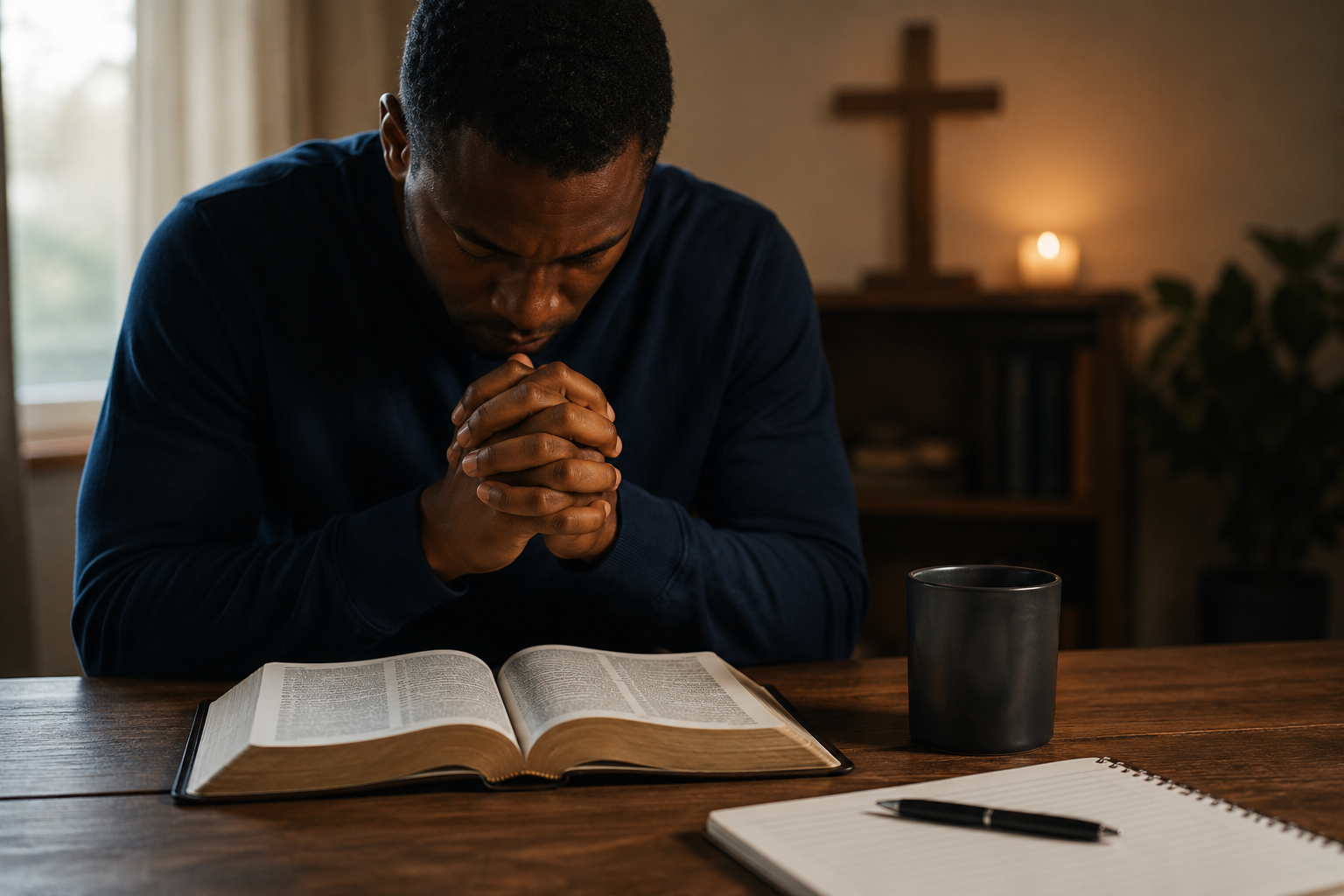
Kent County Council has voted to introduce the Lord’s Prayer at the beginning of its meetings, and the reaction tells you everything you need to know about the state of public life in Britain. Forty-eight councillors supported opening meetings with prayer, while 46 also backed closing them with the national anthem, which is hardly a riotous revolution. Yet even this modest return to reverence is enough to set off the usual alarms from those who seem happiest when public institutions are spiritually empty.
Some councillors wanted to replace prayer with a silent moment of reflection in order to reflect the area’s multi-faith culture. But silence is not neutrality when it is used to crowd out Christian worship; it is a more polite form of removal. Council Leader Linden Kemkaran was right to say she wanted the Lord’s Prayer to “take up the space” of that silence, because Britain does not need another nervous institutional compromise pretending not to know what it is.
Kent County Council’s decision to begin meetings with the Lord’s Prayer is exactly the sort of development that exposes how nervous modern institutions have become about Christianity in public life. What should be a straightforward acknowledgement of Britain’s heritage is now treated as if it were some bold and unsettling act.
Psalm 95:6-7 O come, let us worship and bow down: let us kneel before the LORD our maker. For he is our God; and we are the people of his pasture, and the sheep of his hand.
Support NCCSS / Christian Voice →
“A ridiculous farce”?
Green councillor Rob Yates called the change “a ridiculous farce,” saying he was “not paid by taxpayers to sing songs and pray.” That complaint sounds very modern: elected officials may preside over endless layers of bureaucracy, but heaven forbid they should pause to acknowledge the God whose moral order underpins the country they govern. Apparently, the public square is meant to be filled with procedure, but not prayer.
The National Secular Society added its own familiar protest, describing the move as “regressive and divisive,” which is the sort of language routinely deployed whenever Christianity refuses to stay quietly in the background. Reform UK councillor Christopher Hespe, who proposed the prayers, said he found the hostility “astonishing” and called the Lord’s Prayer part of heritage and roots. Quite so. A nation that cannot tolerate its own roots will eventually discover that it has become unrecognisable even to itself.
Prayers have not been said at Kent County Council meetings since 1987, which is revealing in itself. It means generations of public life have drifted further and further from what was once considered normal, and now basic Christian observance is treated as though it requires special justification.
Matthew 6:9-13 After this manner therefore pray ye: Our Father which art in heaven, Hallowed be thy name. Thy kingdom come. Thy will be done in earth, as it is in heaven. Give us this day our daily bread. And forgive us our debts, as we forgive our debtors. And lead us not into temptation, but deliver us from evil: For thine is the kingdom, and the power, and the glory, for ever. Amen.
Other Councils
Derbyshire County Council also introduced prayers at the start of meetings last year after coming under Reform UK control, which suggests that some councils still understand the difference between heritage and hostility to heritage. Public prayer in local government is not some exotic import; it is a reminder that civic authority is not self-made and should not behave as if it is.
By contrast, other councils have gone in the opposite direction. St Albans City and District Council voted to end prayers because they might “exclude or alienate individuals of different faiths or those without religious beliefs.” That argument has become the standard escape hatch of institutions that are afraid to defend anything at all. It sounds tolerant, but in practice it often means Christian tradition must keep retreating until the only thing left is blandness.
The deeper issue is not whether every person in the room shares the same belief, but whether public life still has the confidence to acknowledge the tradition that shaped it. If the answer is no, then the real exclusion is not caused by prayer but by the culture that cannot bear to hear it.
Proverbs 22:28 Remove not the ancient landmark, which thy fathers have set.
How did Arabic prayers make it to Council meetings?
Quite recently, during Birmingham’s annual mayor-making ceremony, an imam delivered a 30-second Qur’an reading in Arabic before providing an English translation to those present. This sparked outrage as Reform councillors later to the city’s newly appointed Lord Mayor, Zaker Choudhry, stating that: “Birmingham was a ‘diverse city made up of many different faiths and backgrounds’ but ‘official council meetings should remain inclusive and accessible to all residents regardless of religion or culture’ – and all readings and proceedings should be in English.As though it was not absurd enough to open an English meeting in Arabic, they read words from the Quran which was an Islamic prayer.
In our previous article, we asked a very important question: Would this level of “inclusivity” be welcomed in the other direction?
Can anyone seriously imagine a Christian pastor opening a council meeting with a Bible reading inside Saudi Arabia, Iran, Afghanistan, Pakistan, Qatar, Kuwait, Somalia or even Northern Nigeria without triggering outrage, arrests, or far worse? The answer, of course, is obvious.
The real issue is not whether Britain can accommodate difference; of course that’s why we have to write this article. The issue is whether Britain can still recognise the Christian foundations that made such accommodation possible in the first place. Public life should not have to apologise for sounding like Britain.
Psalm 33:12 Blessed is the nation whose God is the LORD; and the people whom he hath chosen for his own inheritance.
We are a Christian country
The United Kingdom is still a Christian nation in its history, its institutions, and its constitutional memory, however uncomfortable that truth may be for modern secular opinion. The King himself swears his oath of allegiance before God, which is not some decorative relic but a serious reminder that public authority is answerable to something higher than itself.
So why did this government get it so wrong? Why do so many officials behave as though prayer must be hidden, heritage must be softened, and Christian faith must be negotiated down to whatever will offend the fewest people in the room? That kind of timidity does not produce peace, it produces a country that no longer knows how to speak honestly about its own soul.
Britain does not need more managerial neutrality. It needs courage, memory, and a public square that is not embarrassed by prayer.
2 Chronicles 7:14 If my people, which are called by my name, shall humble themselves, and pray, and seek my face, and turn from their wicked ways; then will I hear from heaven, and will forgive their sin, and will heal their land.
Related articles
Why Is Speaking English in England Now a Debate? →
Defend Freedom for ‘Conversion Therapy’ →
Christian Voice falls foul of ‘Prevent’ →
Immigration: Welfare without wisdom’ →
Kemi Badenoch warns of a ‘new form of conversion therapy’ →
Why our rulers hate ‘Unite the Kingdom’ →
Holyrood Solves the Gender Debate by Removing Gender Altogether →
Jews or Muslims? Why Bondi Beach shows we cannot have both. →
How long will the righteous be slain in Nigeria/ →
Read and pray
READ: 2 Sam 23:3; Psa 82:3–4; Prov 14:34, 31:8–9; Isa 1:17; Matt 18:6; Rom 13:4; Eph 5:11.
PRAY: Pray that Britain will rediscover biblical truth, wisdom, and moral courage in public life.
Pray for the protection of Christian values, free speech, and the freedom to openly proclaim the Gospel.
Pray that leaders in government will govern with justice, discernment, and respect for truth rather than political ideology.
Pray for unity, peace, and genuine integration in communities across Britain without the erosion of the nation’s Christian foundations.
Let us know what YOU think in the comments below.
Support us!
We appreciate your support; it enables our research and helps us inform your prayers.
So click below to support Christian Voice and stand up for the King of kings
Click on the social media links below to share this post: