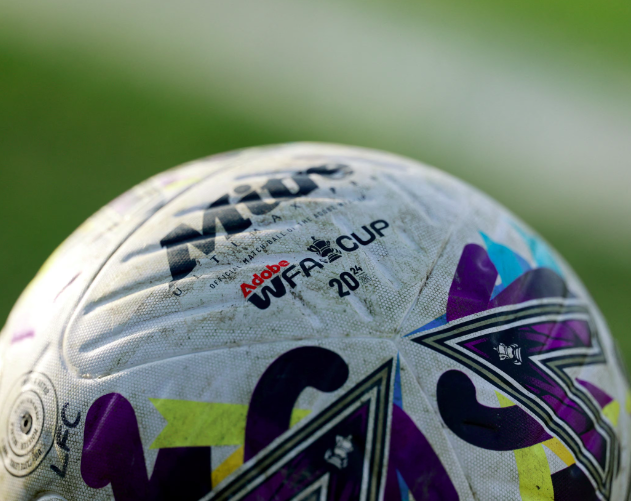
The Football Association (FA) has finally confirmed it will ban transgender women—individuals who have undergone male puberty- from participating in the women’s game, in a long-overdue admission of biological reality.
The policy, which takes effect from 1 June 2025, follows a Supreme Court ruling on 16 April, compelling the FA to align its practices with the law.
After years of placing inclusivity above integrity, fairness and player safety, the FA’s U-turn has been cautiously welcomed by campaigners as a long-awaited correction to a deeply flawed policy.
The governing body has now, under legal duress, conceded what many in the sporting world have argued for years: “that biology—not identity—must be the basis for female competition”.
A tardy shift that others made long ago
The FA’s about-turn, though appreciated, stands in stark contrast to the timelier responses of other sporting bodies. Rugby union and hockey acted years ago to restrict female categories to those born female, prioritising fairness and safety in contact sports.
England Netball too has now announced a ban on trans-identified males in its female category, with a new policy effective from 1 September 2025. The sport will instead offer a “mixed netball” category for men pretending to be women

And in a notable development aligning with the FA’s new position, English cricket, which had previously allowed “transgender women” to participate in grassroots female games, confirmed it will follow suit on the ban with immediate effect. These changes demonstrate a slow but growing recognition among governing bodies that fairness for women and girls is non-negotiable.
Support NCCSS / Christian Voice →
A climb-down disguised as compassion
Meanwhile, even in FA’s retreat, the body seems desperate to retain a veneer of moral high ground. Announcing the change, it promised to “reach out” to the approximately 20 transgender women currently playing, stressing the emotional hardship of those “who simply want to play the game they love.”
This belated sensitivity might ring less hollow had the same level of empathy ever been shown to female players forced to compete against biological males.
Nowhere in its statement is there any acknowledgement of the harm done: the compromised fairness, the safety risks, or the erosion of public trust in women’s sport. Instead, we’re offered the same weary messaging about inclusion, while biological females have been expected to stay silent or be labelled bigots.
Ask us to come and speak at your church →
Political endorsement with a caveat
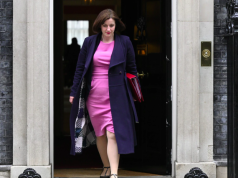
Downing Street cautiously welcomed the FA’s revised policy, pointing out that while individual sports can set their own guidelines, these must comply with the law.
A government spokesperson reiterated a simple truth many in authority have tried to ignore: “Biology matters when it comes to women’s sport.”
While the support is appreciated, this statement also exposes a gaping hole—namely, why has the Government allowed this confusion to persist for so long? Instead of clear legislative direction, policymakers have largely tiptoed around the issue, leaving female athletes to carry the burden of activism while institutions dithered.
Ideology above objectivity
While many athletes and women’s sports advocates have welcomed moves to restore fairness in female categories, some Members of Parliament and NHS Trusts are aggressively opposing the Football Association’s (FA) recent decision. Instead of acknowledging the long-standing concerns of female athletes who’ve raised red flags about competing against biological males, critics of the FA’s stance have painted the move as discriminatory,ignoring the broader implications for sport and women’s rights. Some NHS Trusts, stepping outside their core healthcare remit, have suggested that the policy could impact transgender mental health, as if the feelings of a small minority should override physical safety and equal opportunity for women in sport. Similarly, MPs voicing opposition have used the language of “inclusivity” while failing to address the inherent imbalance such “inclusivity” introduces to competitive fairness. This reaction reflects a troubling pattern where institutions seem more focused on signalling virtue than grappling with the consequences of their positions. If politicians and NHS bodies wish to defend fairness, they should be standing with women who have been sidelined, silenced, or forced to compete under unequal conditions. Instead, they are lending their authority to a cause that is increasingly at odds with both scientific reasoning and public opinion.Campaigners say ‘too little, too late’
Groups such as Sex Matters and SEEN in Sport welcomed the FA’s eventual shift—but not without critique. Fiona McAnena, campaigns director at Sex Matters, described the decision as “welcome but long overdue,” a sentiment shared widely across the grassroots sporting community. SEEN in Sport went further, slamming the FA’s prolonged inaction as “a failure of leadership.”
Indeed, while this is the correct course, they do not erase the years of neglect during which female athletes were left vulnerable—physically, emotionally and professionally. Campaigners have been vindicated, but their frustration remains palpable: it should never have taken a court ruling to affirm that women deserve their own sporting category.
Meanwhile, Olympic swimming star Sharron Davies, who has led a ten-year fight to stop biological men taking part in women’s sport, told The Sun she was delighted, and disgusted, by the FA’s “too little, too late” move.Stonewall’s dissonant chorus
Predictably, LGBT+ charity Stonewall denounced the FA’s decision, lamenting that it was made “too soon” and before the legal implications had been fully digested. Yet this ignores the reality that the law has now spoken—and more importantly, that the conversation on fairness and sex-based rights is no longer dominated by slogans and sentiment.
Stonewall’s rebuke also sits awkwardly against its longstanding influence over the FA through campaigns such as Rainbow Laces. But support for inclusion cannot come at the expense of reality.
Advocating for “inclusion at all costs” has brought women’s sport to the brink. The FA’s reversal marks a necessary, if overdue, recalibration. Others would do well to follow—quickly and unequivocally.
FA Told: ‘Ban Trans players’ →
Biological realities hit women’s rugby →
Scottish prison service to allow male criminals in female cells→
Paedophile changes gender before court case→
NHS to Fast-track Surgery for ‘Trans’ Patients→
Read and pray
READ: Isaiah 7:15,59:14; Mark 12:30-31; John 14:15; Col 3:2; Timothy 2:22; 2Pet 2:6-10; 2 Jude 1:7.
PRAY: for the repeal of woke laws in the UK.
Thank God for leaders speaking up against evil and wickedness
Pray that sodomy will not take over Britain.
Support us!
We appreciate your support; it enables our research and helps us inform your prayers.
So click below to support Christian Voice and stand up for the King of kings
Or fill in the form below to keep in touch:
Click on the social media links below to share this post: