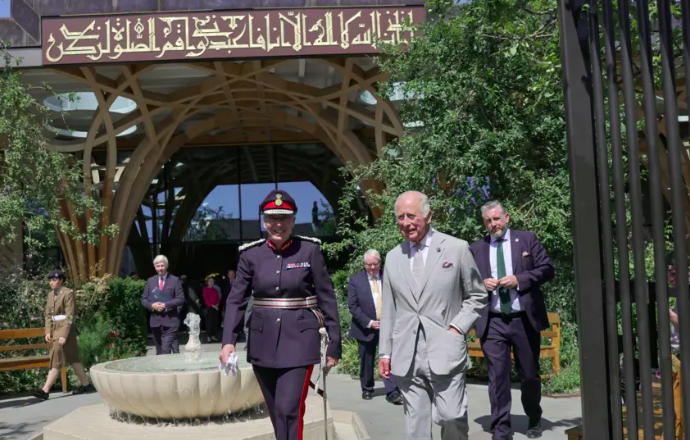
King Charles III has often spoken of his desire to be a monarch for people of all faiths. Yet, as churches across Britain continue to close, merge, or be converted into cafés, flats and entertainment venues, his latest appearance in Cambridge, however uncontroversial it may seem, given his longstanding association with the city and the University of Cambridge, is unlikely to reassure Christians who had hoped the Crown would place greater emphasis on preserving and promoting the nation’s Christian heritage.
During a visit to the Cambridge Central Mosque, the King praised “Europe’s first eco-mosque”, saying he was impressed by its design and by “all the care and attention which has been lavished on it”. He toured the building, removed his shoes before entering the prayer hall and was shown its environmental features, including solar panels, heat pumps and rainwater recycling.
Whether the King’s visit to the mosque was appropriate is beside the point. The concern is the silence surrounding the challenges faced by Britain’s Christian community. While the King praises a magnificent new mosque, Christians continue to report being marginalised in public life, facing restrictions when preaching in town centres, criticism for expressing biblical beliefs on issues such as sex and gender, and increasing pressure to keep their faith behind closed doors. The King swore to uphold the faith. Many Christians would be forgiven for wondering when they will see the same enthusiasm shown for the faith he is constitutionally bound to defend.
Return to the UK’s Christian Constitution →
The King’s Coronation
At his coronation on 6 May 2023, King Charles III took the Coronation Oath, which is required under the Coronation Oath Act 1688.
The oath includes several promises, including:
To govern the peoples of the United Kingdom and the other Realms according to their laws and customs.
To execute law and justice with mercy.
To maintain the Protestant Reformed Religion established by law.
To maintain and preserve the settlement of the Church of England, and to preserve the rights and privileges of its bishops and clergy. Those are not ceremonial titles without meaning. They reflect a constitutional duty to uphold the Christian foundations upon which the Crown itself rests.
For many Christians, the impression is that the monarchy is far more comfortable celebrating Britain’s growing religious diversity than defending the faith he swore by. Tolerance towards other religions need not come at the expense of Christianity, yet that increasingly appears to be the balance being struck.
Britain’s Christian inheritance deserves more than polite acknowledgement on ceremonial occasions. It deserves visible support from the very institution charged with protecting it. Admiring a magnificent mosque is easy. Speaking with equal conviction about the churches disappearing from towns and villages across the country would send a rather different message.
Watch why we can not serve two masters at once:
Now the defender of multi-faith
In June 2026, a significant change was made to the new definition of the monarch’s role. King Charles now protects “faith within the multi-faith nation”.
The notable addition to the King’s title appeared in the Sovereign Grant report 2025-26, from the annual review of the Royal Family’s finances that was published.
“His Majesty is Supreme Governor of the Church of England and protects the space for faith within the multi-faith nation”, Buckingham Palace states under the “official duties of the sovereign”.
Reflecting the role of the established church, the report continues to describe the King as “Head of the Church of England and Defender of the Faith.” It adds that “His Majesty also has a special role in bringing communities and faiths together, engaging with them across the regions and nations of the UK,” with the aim of fostering “a sense of pride, continuity and stability, whilst strengthening the UK’s social fabric and cohesion.”
The wording marks a shift from descriptions used during the reign of Queen Elizabeth II, who was referred to as the “Supreme Governor of the Church of England.” Similarly, the King’s relationship with the military is now described as providing “pastoral support to our Armed Forces,” replacing the previous reference to the monarch as “Head of the Armed Forces.”
The revised language is consistent with the King’s long-standing commitment to interfaith engagement. In 2022, he told faith leaders that he felt a “duty to protect the diversity of our country, including by protecting the space for faith itself and its practise through the religions, cultures, traditions and beliefs to which our hearts and minds direct us as individuals.”
The bigger question is, who are we as a nation?
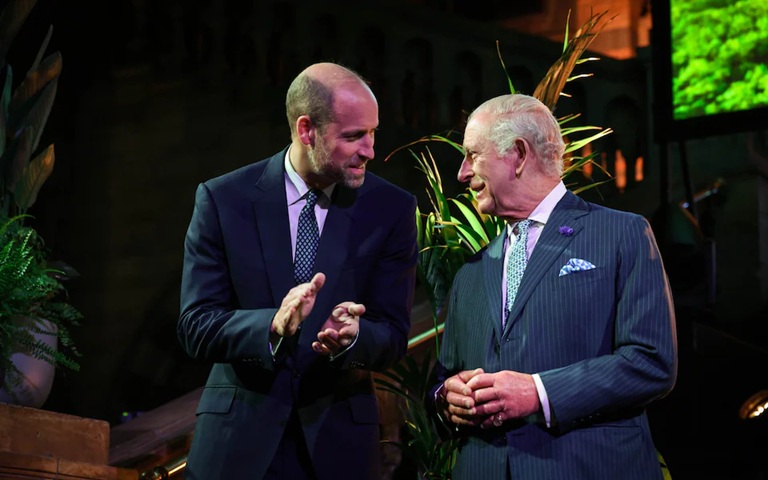
Meanwhile, following the 2019 Christchurch mosque attacks in New Zealand, Prince William described Islam as a religion of “peace and compassion” and pledged his support for Muslim communities affected by the tragedy. Beyond the symbolism of the visit, many within the Christian community have raised broader questions about whether such public displays of support signal a departure from the monarchy’s traditional role as the defender of Britain’s Christian heritage. Supporters, however, argue that the King’s approach reflects his wider constitutional responsibility to serve and engage with people of all faiths across the United Kingdom.
We must continue to pray for our King.
How to Join or Support Christian Voice →
Sold Churches
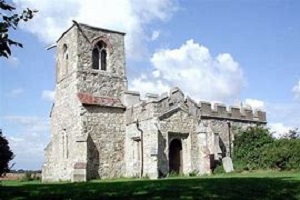
Across the country, historic churches are being sold, demolished or repurposed as congregations decline and parishes struggle to survive. Many of these buildings have served their communities for centuries, yet receive little public attention until they are facing closure. Meanwhile, a newly built mosque receives warm royal praise for its architecture and environmental credentials.
Among the churches recently placed on the market are St Mary’s Church in South Hylton, Sunderland, St Saviour’s Church in Bacup, Lancashire, St John’s Church in Crawshawbooth, Rossendale, St John’s Church in Smallbridge, Rochdale, and St Paul’s Church in Lindale, Cumbria, all former Church of England buildings now available for sale or alternative use through the Church Commissioners.
In Scotland, the picture is similar. St Andrew’s Church in Buckhaven, Fife, and Duntocher Trinity Church in Clydebank are among a growing number of Church of Scotland buildings placed on the market as part of a nationwide programme of closures and restructuring.
The Church of England estimates that around 20 church buildings are closed for worship each year, with many subsequently converted into homes, cafés, offices, gyms or other commercial premises. Supporters argue these sales preserve historic buildings that would otherwise fall into ruin. Critics see something far more symbolic: the gradual retreat of Christianity from the public square while the institutions that once stood at the heart of British life quietly disappear.
Previous Articles
‘Britain is a Christian nation’ teacher sacked →
Why was this Christian man arrested for saying these words? →
Why was this Christian man arrested for saying these words? →
City bans Muslim festivals →
Yom Kippur Attack exposes elite’s antisemitism →
Charles: Was Synagogue Attack ‘Out of the Blue’? →
Grooming gangs enquiry in disarray →
The Left have no moral compass! →
UK recognising ‘Palestinian State’ must bring judgment →
US Recognition of Jerusalem marks 1917 Centenary →
Christian Voice falls foul of ‘Prevent’ →
Support us!
We appreciate your support; it enables our research and helps us inform your prayers.
So click below to support Christian Voice and stand up for the King of kings
Or fill in the form below to keep in touch:
Click on the social media links below to share this post: