 Although the UK Parliament has now officially approved the creation of 3-parent babies, concerned citizens can still work to block the new measures at the implementation stage.
It will be up to the fertility regulator, the Human Fertilisation and Embryology Authority (HFEA), to decide whether a treatment can go ahead on a case-by-case basis. Consequently, UK citizens opposed to the new measures can still make a difference by writing to their MPs. Our lawmakers can put pressure on the HFEA to think through a number of problems and ramifications before allowing the practice to become widespread. Some of the problems the HFEA needs to wrestle with before allowing widespread implementation have been helpfully summarized on the CitizenGo website and are quoted below:
- None of the proposed techniques represents a cure for mitochondrial disease which will continue to appear randomly at birth. These techniques would only be applied to families already identified as being at risk of conceiving a baby with mitochondrial disease.
- The current proposals represent in no way whatsoever attempts to cure the condition in existing babies, but rather involve the creation of a completely new kind of human embryo whose genetic composition would be determined by using material from two maternal progenitor sources.
- The woman donating the healthy mitochondria would provide identifiable genetic material – no matter how minimal – to the embryo produced and the offspring would (at least in the case of one technique) have three biological parents.
- The proposed techniques are unequivocally germline genetic modification (unlike post-natal therapies such as blood or organ donation) and as such, changes made would be passed on to future generations with completely unknown consequences.
- At least one technique is in effect a cloning technique, thereby opening the door to full reproductive cloning, which is universally prohibited.
- Serious safety issues associated with the mitochondrial transfer and modification of the mammalian egg have already been identified in published studies. The last time one of the techniques was tried in humans, it resulted in an abortion and two stillbirths.
- Animal experiments in this field have shown decreased survival, inhibited growth and other horrifying abnormalities.
- A further consideration is harm to the women used as egg donors, as the procedure requires aggressive ovarian stimulation, which can lead amongst other complications to ovarian hyperstimulation syndrome which can be fatal.
- Modification of human eggs or early embryos for procreation using heritable interventions is widely prohibited in such international declarations and conventions as:
- The United Nations Education, Scientific and Cultural Organisation (UNESCO) Universal Declaration on the Human Genome and Human Rights which indicates in Article 24 that ‘germ-line interventions’ could be considered as practices which are ‘contrary to human dignity”.
- The Council of Europe’s Convention on Human Rights and Biomedicine which indicates in Article 13 that “an intervention seeking to modify the human genome may only be undertaken for preventive, diagnostic or therapeutic purposes and only if its aim is not to introduce any modification in the genome of any descendants”.
- The Charter of Fundamental Rights of the European Union which indicates in Article 3 that “In the fields of medicine and biology (…) the prohibition of eugenic practices, in particular those aiming at the selection of persons, must be respected”.
BACKGROUND
On 4th February, Christian Voice reported on the recent vote, in which 382 MPs voted in favour and 128 against the practice of creating 3-parent babies. Those voting against represented the views of the public, who are opposed. The amendment still has to go through the House of Lords, but it will most likely not face much opposition.
This law will become an amendment to the Human Fertilisation and Embryology Act 2008 and will come into effect in October 2015. Human trials can then begin immediately and the first babies could be born next autumn.
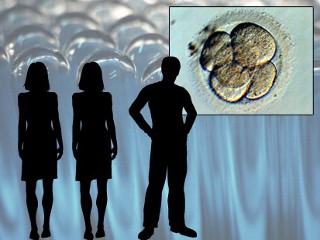
Oocyte modification, commonly called ‘three-parent in vitro fertilization (IVF),’ is the process by which damaged mitochondrial DNA (mtDNA) from the woman’s egg are replaced with healthy mtDNA of a female donor, thus allowing a child to be born with healthy mitochondria. Because the procedure replaces an egg’s defective mitochondrial DNA with healthy mDNA from a female donor’s egg, it essentially creates a baby with DNA from three people: the male and two females.
Developed by British scientists, this currently illegal procedure is aimed to prevent debilitating health conditions such as liver and brain deterioration and muscular dystrophy.
As many as 2,500 British women could undergo this treatment, allowing them to have biological children who do not inherit their mitochondrial diseases. Despite these benefits, many doctors and lawmakers oppose this controversial procedure on both ethical and health grounds.
Jacob Rees, an MP who voted against the amendment, said: ‘You are not curing somebody of something; you are creating someone different. People have compared it to blood transfusions. That is simply wrong.’
The procedure can potentially prevent a child from being born with a mitochondrial disease, but it cannot cure children already born with a disease. Much of the time, mothers are not aware that they are passing on mitochondrial diseases until the first child is born.
While 1 in 200 with some form of a mitochondrial disorder, only 1 in 10,000 babies are severely affected by this. As a result, not many births would be involved with the procedure.
The potential of creating three-parent babies has received backlash from several churches.
Auxiliary Bishop John Sherrington of Westminster stated on behalf of the bishops that human life should not be used as ‘disposable material,’ but must be respected and protected. He said further that while the ‘Church recognises the suffering that mitochondrial diseases bring and hopes that alternative methods of treatment can be found, it remains opposed on principle to these procedures where the destruction of human embryos is part of the process.’
Sherrington added elsewhere that it is ‘extraordinary that a license should be sought for a radical new technique affecting future generations without first conducting a clinical trial.’
Rev. Dr. Brenden McCarthy, the Church of England’s national advisor on medical issues, contested that more research and debate was needed before the procedure moved forward.
‘The Archbishops Council, which monitors this issue, does not feel that there has been sufficient scientific study or informed consultation into the ethics, safety and efficacy of mitochondria transfer.’
Some scientists have also raised concerns. Stuart Newman, professor of cell biology and anatomy at New York Medical College said he was ‘very disappointed’ in the vote. He described the three-parent baby procedure as one that essentially creates a human being from ‘bits and pieces of cells from different people.’
‘Scientifically, it you try to put together an organism from fragments of cells, it’s going to mostly not work. Frequently it will look normal, but there will be things wrong with it. That has been shown experimentally.
‘It is going to lead to children with conditions which, in some cases, will probably be worse than the conditions they are trying to avoid.’
Find out how to join Christian Voice and stand up for the King of kings (clicking on the link below does not commit you to join)

Please note that persons wishing to comment on this story must enter a valid email address. Comments from persons leaving fictitious email addresses will be trashed.