

NatWest is to close the UK bank accounts of the RT news channel, known previously as Russia Today.
The bank, part of the RBS (Royal Bank of Scotland) group, wrote a letter to RT on Monday 17th October 2016.
NatWest told its London office: “We have recently undertaken a review of your banking arrangements with us and reached the conclusion that we will no longer provide these facilities.”
The bank said its decision was final and it is “not prepared to enter into any discussion in relation to it.”
Nor does it seem to have been prepared for any media questions about the decision. More about that and the bank’s embarrassing u-turn below.
RT has been a thorn in the side of the UK Government for some time. The Russian government-owned station, broadcasting on Freeview channel 135, gives a pro-Russian slant in a UK media atmosphere dominated by a constant diet of anti-Russian stories from ‘official’ Western sources.
Recently, with the Russian-backed Syrian Government taking ground from UK and US client jihadist groups, the Foreign Office and US State Department have started to panic.
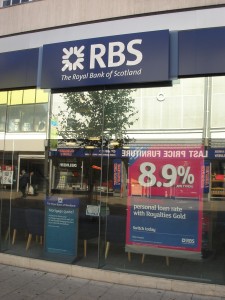
The bank gave no explanation to RT. But then they couldn’t tell the media the reasoning either, adding shambles to injustice. The whole RBS group will refuse to service RT, and if other banks follow suit, it will effectively make its UK operation untenable.
All through Monday the RBS press office was struggling to put together some kind of reasonable spin on the matter. But what can they say? RT is a legitimate media channel. It’s places like Turkey which close down media outlets because their slant doesn’t agree with the government line, isn’t it?
Downing Street has of course denied any involvement of the government in the NatWest decision.
“It’s a matter for the bank and it’s for them to decide who they offer services to, based on their own risk appetite,” a spokeswoman for Prime Minister Theresa May told reporters, as cited by Reuters.
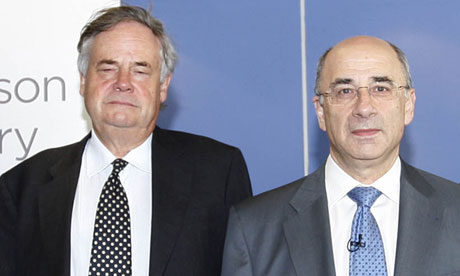
The fact that RBS is 70% owned by the taxpayer raises suspicion that someone has had a quiet word with Sir Howard Davies, the Chairman of RBS, and its Group Chief Executive Ross McEwan. We know how the establishment works in this country.
Dramatically, after waiting all day, at 6:15pm on Monday evening, NatWest appeared to back-track. A statement from Sarah Hinton-Smith at RBS was issued. It said:
“These decisions are not taken lightly. We are reviewing the situation and are contacting the customer to discuss this further. The bank accounts remain open and are still operative.”
We still do not know what was RT’s sin against political correctness. At least the RBS media machine has managed to string a few words together to express something coherent. But it contradicts what NatWest said earlier.
Earlier, the bank said its decision was final and it was “not prepared to enter into any discussion in relation to it.” Now, at the end of a trying day, the decision is suddenly open to discussion and under review.
In 2005, this ministry had its bank accounts closed by the Coop Bank. Our stance on homosexuality apparently breached their ‘diversity’ policies. The bank subsequently suffered a string of embarrassments and financial losses.
The NatWest/RT case may yet be resolved. In the meantime, RT, welcome to the Club of the Outsiders!
Find out how to join Christian Voice and stand up for the King of kings (clicking on the link below does not commit you to join but tells you all about it.)

Please note that persons wishing to comment on this story must enter a valid email address. Comments from persons leaving fictitious email addresses will be trashed.





“As nightfall does not come at once, neither does oppression. In both instances, there is a twilight when everything remains seemingly unchanged. And it is in such twilight that we all must be most aware of change in the air, however slight, lest we become unwitting victims of the darkness.” (US Justice William O. Douglas, 1976)
This isn’t quite the same thing as some Turkish newspapers being closed down in Turkey, or as Cuban newspapers not being allowed to be sold in the USA (N.B. I don’t know that this is the case).
I was always surprised that Russia Today was allowed to broadcast in this country in the way it does. It doesn’t beam. things in by satellite or pay the Isle of Man to broadcast them to us — no, it is officially fixed up with a Freeview channel. If you think back to the 1960s, any such arrangement (if it had been technically possible) would have been unthinkable.
But times have changed since the 1960s, and relations with the Soviet bloc had improved way beyond expectation. Latvia, Lithuania, Estonia, Poland and other countries are supposedly as close to us as France, with unprecedented freedom of access (for the time being). Allowing RT to broadcast here seemed a step in the right direction.
Now, however, we are in a situation in Syria with confused alliances and a lot of violence. It wouldn’t be unreasonable for the Government to have a frank look at this (rather than working through a partly nationalised bank).
Famously, Lord Hawhaw broadcast to this country during the Second World War, but he didn’t do it using the Droitwich transmitter, and he was hanged afterwards.
I think it would be reasonably to pass a new law requiring foreign broadcasters on Freeview and cable to be licensed, and the the Government to have the right to withdraw this licence when it was felt that the international situation or the behaviour of the foreign broadcaster generally justified it.
I hope you are joking. You want the UK to ban broadcasters who do not toe the government line?
Lord Haw Haw was jammed (not very successfully). This is a long-standing practice worldwide, when countries disagree. I don’t see why we have to provide the Russian government with a channel on our television transmitters. Do they do the same for the BBC ?
It’s fine when relations are good, but when relations are not good, it should be restricted. After all, we are operating trade embargoes on Russia at the moment.
How would you feel about a so-called ISIS television channel broadcasting from your local TV mast ? I bet Christian Voice would be the first to oppose any Muslim channels at all.
(Maybe these already exist in London or Birmingham, but not where I live).
Yes, the Russians do permit the BBC to transmit there. It’s called ‘freedom of expression’.
But is that the BBC World Service coming into Russia from outside Russia, or is the BBC actually allowed to have channels on Russian television masts ?
And how would you feel if your local Muslims got an ISIS channel transmitted locally from the same mast as the BBC, ITV, and all the others now ? Freedom of Expression ! Religious freedom , too.
This is like the famous Irish cake.
It seems to me that there is a distinction to be made between the baker as printer and the baker as publisher. Supposing Littletown University Press really does offer printing services at its own printing press to anybody who wants booklets or leaflets printed, then it can’t refuse to print Christian leaflets putting forward arguments against evolution. But it is within its rights, like any publisher, not to publish a book that it doesn’t want to publish, and no doubt its biology department would not be happy with an L.U.P. book along these lines, in the “L.U.P. Science Library” collection.
In the case of the bakery, when it ices a cake for somebody who turns up and wants a cake iced with his own message for his own purpose, then it’s acting as a printer, and if it offers customer-designed iced cakes, it should do one for him. On the other hand, if it is icing a range of cakes to put in its shop window as its own cakes on sale to the public who visit its shop, it is acting as a publisher, and need only publish the cakes it wants. Similarly, it will design its own Christmas cakes in a way which it feels is appropriate, perhaps not with Santa and reindeer even if there is a demand for them.
When it comes to the free speech offered to somebody with radically different politics from the patriotic norm (particularly as the possibility of armed conflict approaches, and so things like this had to change in the late 1930s), let’s switch to a fictitious Essex Independence Party to make things more neutral. You don’t tear down their posters, you allow them to speak in the marketplace, you may even allow them to use a room free in the town hall for meetings (if that is a facility made available to small groups, as in some towns it is). But when they have a mass rally in the marketplace, which the public may have to pay to police, I don’t think you go to the trouble and expense of setting up a special loudspeaker system to their specification, to aid their free speech. You don’t insist that all the bakers in the town display a range of “Free Essex” cakes in their windows. And you don’t arrange for them to broadcast Free Essex TV from the local television mast — not unless some wealthy backer pays for it, and even then you might well have misgivings. In an election, they would not qualify for much, if any, share of the time offered by the BBC because of their size and their previous lack of success. If RT were to break with the tradition of the BBC and other broadcasters, allowing generous extra time to potentially disruptive parties for political broadcast which might threaten at least to split the vote in an election, I’m not sure what the legal situation might be.
Then there’s the latest scare about major cybercrime, which has already closed down British hospitals from time to time.
Apparently some people have wi-fi controlled electric kettles, as well as baby alarms and various other devices, which gadgets can be used (thousands at once) to cause amazing damage elsewhere. Strange but true !
But having a direct connection into a television mast must be a much easier way to disrupt communications !