
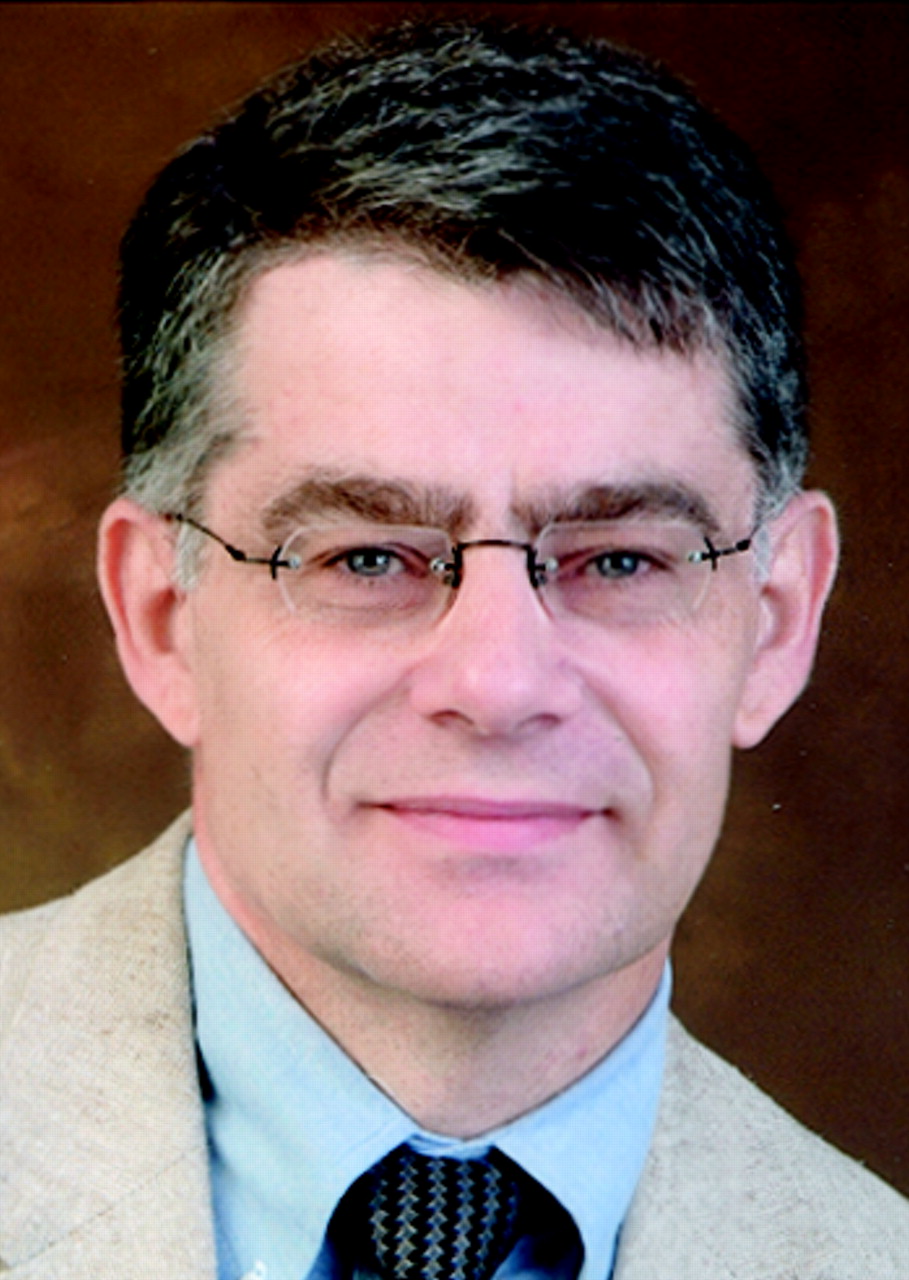
A leading doctor has slammed new guidelines prepared to replace the much-criticised Liverpool Care Pathway (LCP).
Writing in the Daily Telegraph, Dr Patrick Pullcino, Professor of Clinical Neuroscience at the University of Kent, says the draft guidelines prepared by the National Institute for Health and Care Excellence (NICE) are even worse than the LCP.
Christian Voice reported on the NICE guidelines last Wednesday (29th July 2015). Our report, based on a BBC article, was positive about the development. It seems we were wrong.
There can be no doubt the BBC article was based on a press release from NICE, who appear to have put a positive spin on their work, claiming that they were calling:
‘for basic daily checks to make make sure patients are well hydrated and nourished’. We observed this was ‘a radical departure from the LCP’. NICE went on to say that families would be encouraged to be more closely involved in care if appropriate and safe, and an example was given of ‘helping to give loved ones sips of water’. Further, there was a demand from NICE for clear communication and the involvement of patients and relatives in decisions.
However, Professor Pullicino describes the section on hydration (which begins at page 137 in the NICE document) as ‘a disaster of misinformation, distortion and ambiguity with at least one major error. It says that “death is unlikely to be hastened by not having clinically assisted hydration”. This is completely untrue. Not giving hydration is certain to kill someone if they can’t take hydration by mouth’.
(The erroneous statement about hydration is in section 8.6 on page 150.)
In one respect, the professor says the NICE draft guidelines are even worse that the LCP. ‘There is no mention of nutrition in the Nice document’, he says.
Baroness Neuberger led an independent review and wrote a highly critical report on the LCP in 2012. It was particularly harsh on the withdrawal of nutrition and hydration. Says Professor Pullicino, ‘Neuberger left no doubt that LCP practice on hydration and nutrition was inhumane in some cases. Neuberger said that “the default course of action should be that patients be supported with hydration and nutrition unless there is a strong reason not to do so”.’
An expression which occurs frequently in the draft guidelines is ‘the dying person’. But can we always be certain a person is actually dying? Professor Pullicino says:
‘Diagnosis of who was imminently dying was the core problem of the LCP and is no better in the Nice document. It includes a cookbook list of features that may suggest someone is dying but is totally inadequate to make a diagnosis and is not evidence-based. So we are back at the LCP in terms of the risk of putting patients who are not dying onto inappropriate and potentially lethal treatment.’
The Professor says he was ‘one of the first doctors to raise concerns about the Liverpool Care Pathway pushing elderly NHS patients to premature death’.
The whole idea of a ‘pathway’ leads one to question its destination. And if doctors are just guessing, or are under pressure to free up beds, the alarm bells should be ringing.
Professor Pullicino says: ‘This is so crucial that no new attempts to set up this sort of pathway should be made until we have research showing it is possible to accurately diagnose impending death. Until then, as Neuberger said, good quality compassionate care should be given without any pathway.’
Indeed, ‘One of the most dangerous aspects of the LCP was “anticipatory prescribing” where the physician wrote up sedatives and narcotic medication ahead of time. Nurses were empowered to use preset LCP criteria (eg pain, agitation) as a justification for increasing the dose. The result was a rapid increase of medication and a quick death for many LCP patients.’
He echoes the Neuberger Report by calling for ‘a senior responsible clinician accountable for all decisions in end-of-life care.’ The responsibility, he says, should not be delegated to a nurse. ‘Consultants must be restored to full care of, and responsibility for, their patients,’ he writes
Despite denials to the contrary, ‘Dehydration was a central mechanism of the deaths on the LCP. Despite the removal of the LCP, I still frequently witness severely dehydrated elderly patients on hospital wards. Unless it becomes standard, and monitored by the Care Quality Commission, that hospitals are obliged to give nutrition and hydration adequate for patients’ physiological needs at all times and regardless of prognosis, end-of-life care is going to remain lethal.
‘Evidence-based medicine is the gold standard for 21st-century health care. The LCP abandoned this and was disastrous not only for the patients but for all medicine. All physicians in general hospitals should use only evidence-based treatments and pathways, and Nice should ensure all pathways meet this standard. Its current proposal certainly does not.’
The NICE consultation process is described on its website. It is important that as many of those concerned about the treatment of particularly elderly patients respond. The consultation period ends on 9th September 2015.
Find out how to join Christian Voice and stand up for the King of kings (clicking on the link below does not commit you to join)

Please note that persons wishing to comment on this story must enter a valid email address. Comments from persons leaving fictitious email addresses will be trashed.





[…] Doctor slams NICE end-of-life guidelines » […]
It’s surprising that nobody has ever commented on this, so I shall have a go. It certainly is difficult in a sense to diagnose if somebody is dying, although in another sense we all are, and those judged to be in the final stages of a life-threatening illness particularly so.
What does seem clear to me is that if somebody is in that category of being in the final stages of a life-threatening illness where all this might apply, then they should be allowed to say “As far as I am concerned, I am dying now, and I would like to be allowed or even helped to die now”. This takes the decision away from the doctor, if he doesn’t know what he should do.
Some people will disagree with this, but it isn’t their death.
But we are all involved with mankind. ‘No man is an island, entire of itself’.
But you could use that as an excuse to stop people making all kinds of decisions of their own freewill . If you had a 25-year-old daughter who wanted to move to Chichester, you could say “No. I’m sorry dear, I don’t think that is a good idea”. No man is an island She has no right to make up her own mind. If I had an elderly cousin who was dying and wanted to die, something which all his family and medical staff agreed would be best for him, as he was definitely on his last legs, who is Stephen Green to say “Sorry, you can’t. No man is an island. I wouldn’t let my daughter move to Chichester, and I won’t let you die”
Would you allow people to smoke, or to climb dangerous mountains ? Fit healthy young people, not within a few days of death anyway ?
Perhaps you should go and re-read John Donne’s poem to get a bit of context.
” If a clod be washed away by the sea,
Europe is the less.”
But it’s barely noticeable, and it’s going to happen anyway ,and you can’t really do anything to stop it. Why would you want to ? Do you really want to construct a sea-wall between earth and heaven ?
There is no doubt what John Donne would vote in the forthcoming referendum, is there, no matter how it phrased ?
Now why not go away and read the rest. Did not know a referendum on the NICE end of life guidelines was being planned.