
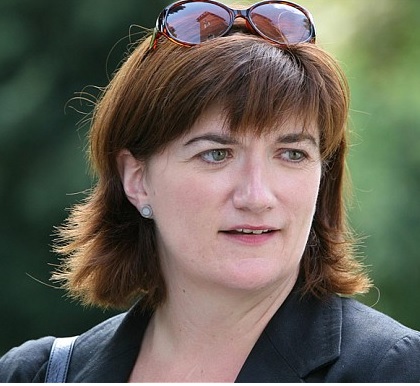
Education secretary Nicky Morgan has commissioned new guidance to schools for giving lessons about consent and rape to 11-year-olds. The new guidelines will start after the Easter holidays.
Scheduled to be taught in PSHE classes, the new lessons are supposed to give children “a better understanding of the society around them” so they can make smart choices and stay safe.
In an online statement, the PSHEA said: “The key learning set out in this guidance is respecting the rights of others, communication, negotiation and consider[ing] the freedom and capacity of others to make choices.” The association also said that students would learn that sexual activity for those under the age of 16 was illegal.
Additionally, students will learn about whether or not consent is attainable when a person is drunk, and the issue of gay rape will also be added to the curriculum later this year. Many of the lesson plans involve situational ethics and encourage the student to discuss what is right or wrong in these circumstances. For example, one of the questions is: “What misconceptions about consent would an alien get if their only evidence was from pornography?”
The Government has given formal guidelines for the classes, saying that the topic should be broached “before young people are sexually active,” because it will be ineffective after that. The proposal made sure to mention how acknowledgment of sexually active young people is not the same as “encouraging underage sexual activity.”
Ms Morgan publicized the measures on International Women’s Day and stressed that the curriculum will be age appropriate and in line with British values. The goal is to give instructors the tools and confidence to teach these difficult topics.
These guidelines were introduced amid growing concerns for the safety of children, particularly girls. Rising numbers of child “sexting” and child exploitation cases in Rotherham and Oxford are just some of the issues being cited.
Writing in The Sunday Times, Ms Morgan stated: ‘Mothers at the school gates often tell me about their worries for their daughters. They tell me that on top of the usual stress of school life and teenage years, they want to know their girls are being taught what a healthy relationship looks like and how to say “no.”‘
However, other parents are concerned that these classes could put even more pressure on children to engage in sexual activity at a young age, causing an “erosion of childhood.”
Family Education Trust spokeswoman Sarah Carter disagreed with the proposed effectiveness lessons, saying: ‘I work with vulnerable teenagers who have been groomed and this is not going to protect them. This creates the idea that you will find yourself in this situation so make sure you give express consent.’
This curriculum is not mandatory, and the PSHE Association has expressed disapproval of the fact that Morgan has made a harder push for these classes to be required in all schools.
The 60-page guidelines contain eight suggested lessons for teachers. By the end of the course students will understand what sexual consent is and what constitutes a healthy relationship (significantly, however, students are not taught that it is marriage that constitutes a healthy sexual relationship). They will also be taught about pornography and rape. See this article in The Daily Telegraph for a summary of these eight suggested lessons.
Despite these efforts, many are concerned that ‘consent lessons’ will do virtually nothing to help children stay safe, particularly girls. In a rape situation the assailant is not going to desist simply because the person he is attacking does not give consent. That is why child exploitation is a problem in the first place. The lessons do not address the root of the problem, which is men who think it is acceptable to take advantage of a child or woman. Instead, all these lessons will accomplish will be to lower important the barriers of innocent children by prematurely introducing them to the disordered side of sexuality.
In the cases of sexual activity between school children, schools should do more to promote chastity. Just because children engage in underage sexual activity does not mean it is right or normal, even if the parties involved have both consented.
Find out how to join Christian Voice and stand up for the King of kings (clicking on the link below does not commit you to join)

Please note that persons wishing to comment on this story must enter a valid email address. Comments from persons leaving fictitious email addresses will be trashed.








This proposal seems reasonable enough to me. When Robin writes “The lessons do not address the root of the problem, which is men who think it is acceptable to take advantage of a …. woman”, he forgets that half the pupils attending the lessons will be future men, and a better knowledge of what is not consent, laying them open to a charge of rape, might deter some of them when the opportunity arises later in life. Also, it is well known that most rape cases are not attacks on lonely roads by strangers, and to be clear about whether they have or have not given consent to an acquaintance could often be of help to the girl, at the very least in encouraging her to report what she will know to be an offence, after it has happened.
If parents have strong views about when various stages of courtship and marriage are acceptable, it is up to them to make their preferences clear to the children, not the school. Muslims certainly do this.
“The goal is to give instructors the tools and confidence to teach these difficult topics.” I don’t know if these words are Robin’s or Ms Morgan’s, but I suspect Robin’s. These are schools, not army camps. There is no question of instructors instructing people how to have sex, like instructing them how to use their rifle and keep it clean. Good teachers will deal with the problematical situations by discussion .
The government is determined to teach children that they may consent to things which God has forbidden.
” There is no question of instructors instructing people how to have sex, like instructing them how to use their rifle and keep it clean.” In fact, that is pretty much how these lessons are conducted.
You are right – Muslims ensure their children know that they must listen to their parents over and above anything the school might say.
Christian parents also tell their children what they believe is right and wrong.
The difference is that schools respect the views of Muslims but not of Christians, so whereas a school will refine its policy in deference to the Muslim culture of its pupils, children of Christian parents are told that it is their choice, their life and that the views of their parents do not have to be their own. Schools do not dare to upset Muslim parents so proactively ensure that this doesn’t happen; however, they leave Christian parents in the dark, knowing that they have nothing to fear from any reaction.
[…] is supported by government policy. In March this year the Education Secretary, Nicky Morgan, announced new guidelines for schools to give lessons about consent and rape to children as young as […]