
In the Dartford Magistrates Court
24th September 2012
Crown v Raj Bhachoo
Witness Statement of Stephen Green
I am Stephen Green of Wernlwyd, Pen-y-bont, CARMARTHEN, SA33 6QN, United Kingdom.
My areas of expertise are in the fields of societal morality, human sexuality, Biblical and theological studies and the interaction of Islam and Christianity.
I am a UK resident from birth and a graduate of the University of Cambridge holding the degree of Master of Arts in Engineering. I am currently National Director of Christian Voice, a UK prayer group.
From 1985 to 1992 I conducted extensive research into homosexuality, the homosexual lifestyle, homosexual political movements, the origins of homosexual desires, the law on sexual offences, homosexual sexual practices, levels of promiscuity, disease, offending, criminal statistics, healing from homosexual inclinations, theological assertions and implications and associated matters for a book entitled The Sexual Dead-End. The book, of which I was sole author, was published in 1992 with an index of 1100 names of persons and organisations and 1300 points of reference.
In 1994 I became the first national director of Christian Voice, a position I hold to this day.
Under my leadership Christian Voice conducted a study into the social and economic effects of immoral legislation in the United Kingdom and published this in the form of a booklet, Britain in Sin, in 1998.
Last year, Christian Voice published a leaflet about the Tesco company withdrawing from the Cancer Research ‘Race for Life’ and giving £30,000 to London Gay Pride.
The leaflet has been distributed widely outside Tesco stores.
I myself have distributed it outside Tesco stores in London before Christmas 2011 and in Gravesend on 4th February 2012, two weeks after Mr Raj Bhachoo was arrested while leafleting outside the same store.
At no time have I been arrested or asked by the police to stop giving out the leaflet.
When I distributed the leaflet in Gravesend outside Tesco, the store manageress called the police. I spoke to the police officer who attended. I asked if I would be arrested. He replied that I would not.
I am able to substantiate various statements made in the leaflet as follows:
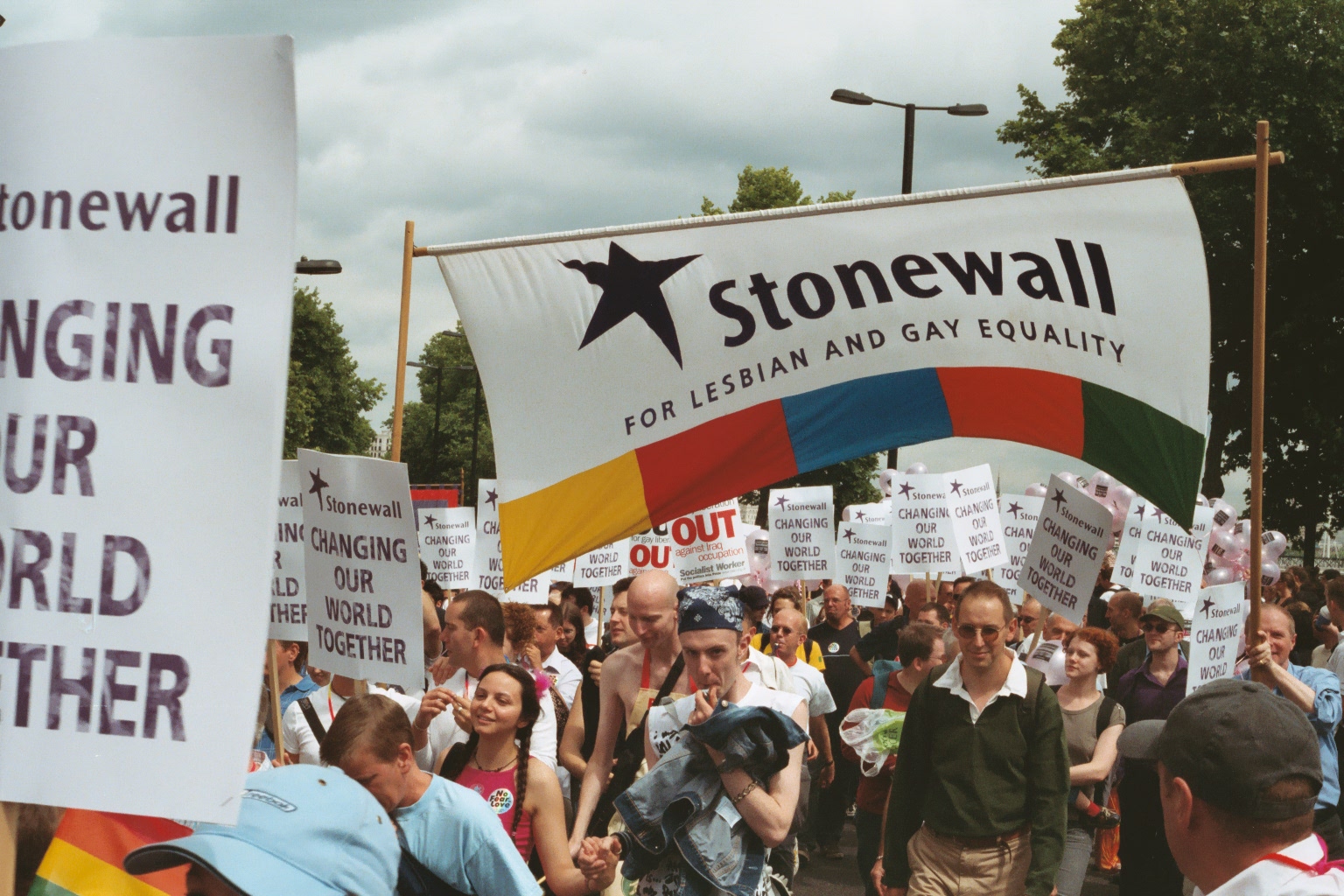
‘London Gay Pride Parade is a deliberately divisive,’
‘provocative and aggressive ‘
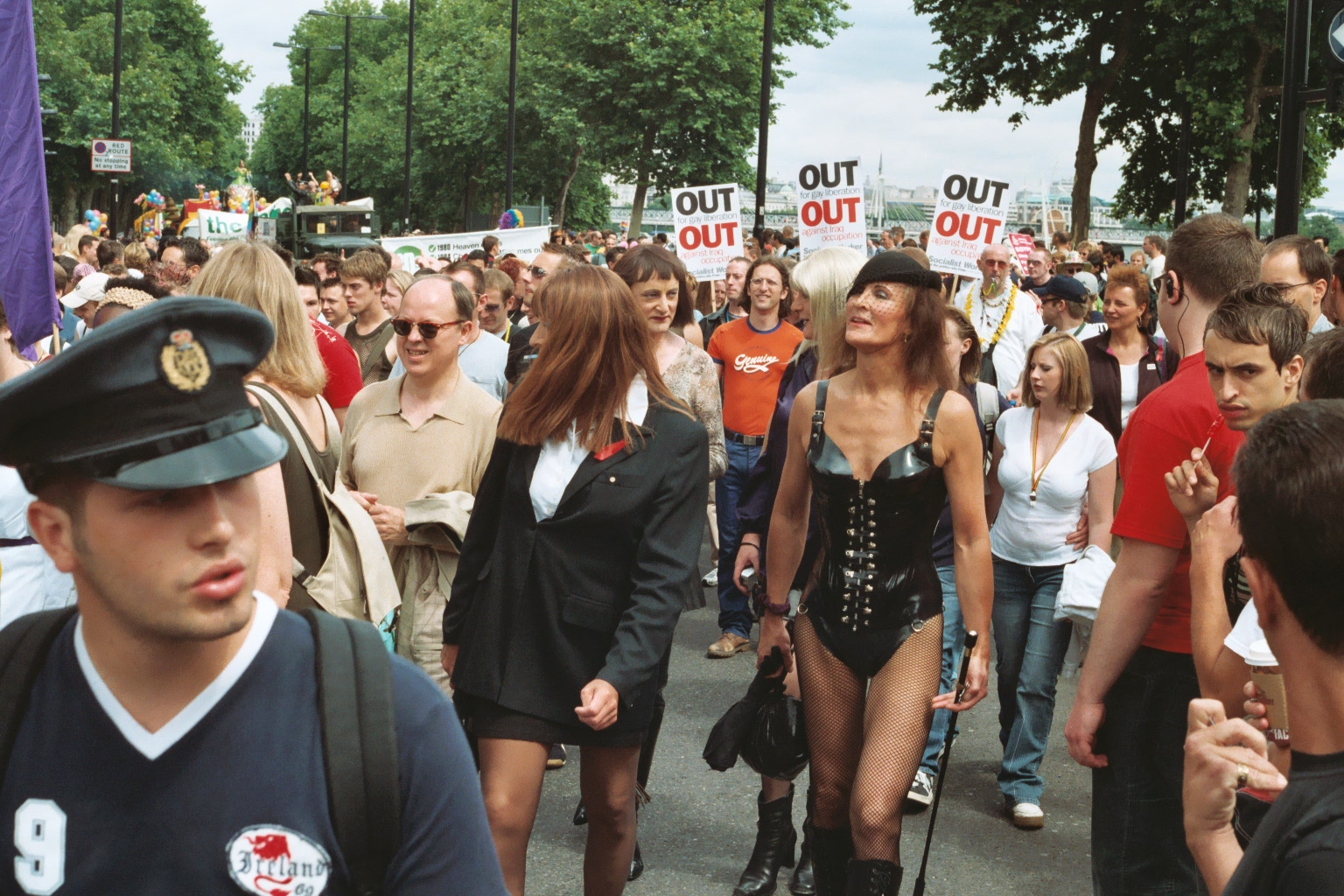
‘display of indecency and perversion.’

‘(1) Homosexuals claim to be 10% of the population on the basis of the dishonest Kinsey Report. The true figure from proper academic research is around 1.5%.’
Problems with Kinsey
Alfred Kinsey published two reports, “Sexual Behaviour in the Human Male” (1948) and “Sexual Behaviour in the Human Female,” (1953) Kinsey concluded that 10% of males were homosexual, a figure which sexual “progressives” rely heavily upon.
The U.S. Justice Department’s principal investigator of pornography, Dr Judith Reisman, said, “Alfred Kinsey was an insect specialist turned human sexuality researcher. … He and his co authors favored pansexuality…that is, they believed that all sexual activities were equally pleasurable and desirable. That included homosexuality, bisexuality, adult sex with children, anal and oral copulation, sex with animals, adultery, and so forth. The homosexual movement…used the theories of Kinsey to justify their way of life.” (New Dimensions March 1990 p48)
Another criticism of Alfred Kinsey is that instead of asking about sexual behaviour, he investigates “psychotic reactions and overt experience,” so that merely thinking about homosexuality turns the person into a Kinsey homosexual.
Lastly, Alfred Kinsey’s sample included prisoners and sex offenders together with volunteers drawn from people who in the early 1940s attended his lectures on sex research, and any of their friends who could be persuaded to join in. Such people were not indicative in the 1940s of the population at large.
The Tom Smith Survey
Professor Tom Smith of the University of Chicago managed to avoid both problems with Kinsey, in a major survey funded by the American Government, carried out in 1989 for the US General Social Survey Project and presented in February 1990 to the Conference of the American Association for the Advancement of Science. The survey involved some 1,400 adults in a national, full probability sample, rather than a self selected sample. It then asked what people actually do, rather than employ a vague combination of behaviour and psychosexual reactions.
Smith found 98.5% of adults to be exclusively heterosexual. He found that although 5.5% of Americans have had some overt homosexual experience since age 18, that just over a fifth of the 5.5% are still active homosexually. The 5.5% breaks down like this: 3.3% are now in a heterosexual relationship, 1.2% are in a homosexual relationship, 0.8% are not sexually active and 0.2% would not say. (Tom W Smith “Adult Sexual Behavior in 1989: Number of partners, frequency, and risk.” NORC University of Chicago November 1989)
The British Market Research Bureau Survey
British Market Research Bureau conducted a survey for the D.H.S.S. AIDS unit from February 1986 to February 1987. When men in the population at large were asked by BMRB about theirsexual orientation, 5% said they had felt attracted to someone of their own sex but had never had sexual contact, 2% said that they had had homosexual contact but “only once or very rarely,” less than 1% admitted to having sexual contact with someone of their own sex “fairly often” whilst 2% claimed to have had sexual contact “only ever” with people of their own sex. (Simon Orton and John Samuels “What we have learned from researching AIDS” British Market Research Bureau Ltd 1987 p323, 325)
The NATSAL Survey
The National Survey of Sexual Attitudes and Lifestyles (NATSAL) was conducted in Britain in the early 1990s. By the end of 1991, nearly 19, 000 men and women aged 16-59 had been interviewed for NATSAL I. Key findings that could be used for public health strategy, and for attempts to estimate the magnitude of the HIV epidemic, were published in ‘Nature’ in December 1992.
The full results of NATSAL I were released in a book published by Blackwell Scientific Publications in 1994 and then as a paperback by Penguin as ‘Sexual Behaviour in Britain’
The researchers concluded that only 6.1 % of men and 3.4% of women had had any homosexual experience at any stage (p226).
The incidence of bisexuality discovered by the Wellcome researchers amongst those reporting homosexual partners was huge. They concluded that 90.3% of that 6.1% of men, who had had an homosexual experience, had also had a female sexual partner. This would leave 0.6% of men being exclusively homosexual. For women, 95.8% of that 3.4%, who had had an homosexual experience, claimed also to have had a male partner, leaving 0.14% of women being exclusively homosexual (p211).
Barely 1% of men and less than 0.25% of women described their sexual experience as either mostly or exclusively homosexual (p183).
The report concluded that exclusively homosexual behaviour is rare (p227). It noted that for many, homosexual experience was youthful and transitory and unlikely to lead to a permanent behaviour pattern (p226), while the high prevalence of bisexual behaviour among homosexuals was well-documented (p211).
(Wellings Kaye et al. Sexual Behaviour in Britain, The National Survey of Sexual Attitudes & Lifestyles. London: Penguin Books, 1994)
(2) Homosexuals claim they were born that way, refusing to accept the evidence of ‘ex-gay’ men and women who have turned their backs on the gay lifestyle and been released from homosexual desires.
Psychologist Dr Clifford Allen MD, MRCP, DPM has stressed the importance of fathers in upbringing: ‘One must admit that to grow normally a boy must have a suitable man from whom he can learn normal reactions. The boy normally moulds his personality on his mother during the first few years of his life but then should unconsciously and even consciously copy his father. If he has no father, or his father is overshadowed by his mother, he cannot do so.’ (25 Clifford Allen “Homosexuality: Its nature causationn and treatment” Staples Press St.Albans, 1958 p47 48)
Genetic studies have ruled out the idea of a gay gene determining orientation. (6 Schmidt TE. Straight and Narrow? Leicester: IVP, 1995:138-141) Studies have been conducted on identical twins, who are genetic ‘clones’ of one another, having an identical genetic make up.
If sexual orientation was genetically determined, they both twins would exhibit the same orientation. But all studies have shown that they do not.
Research, on a sample of 167 homosexuals, showed that where brothers were identical twins, then if one sibling became homosexual, the other was also homosexual in 52% of cases. Only 22% of the fraternal twins of a homosexual were homosexual themselves. (Daily Telegraph 18/12/91 “Study of 167 homosexuals with twin or adoptive brothers” Northwestern University and Boston University)
One Testimony of a young man released from homosexual desires says:
‘I was born into a Christian home, and grew up with Christian values instilled into me from a very young age. However, I was abused by someone close to me when I was 5, and this had a huge impact on me in the years to come. From the age of seven, I started experimenting sexually with boys my age, and this continued into my teen years.
‘When I was 12, I came to believe that I was gay, and by the age of 14, I ‘came out’ to my family and friends. I was just not attracted to girls. I told my parents that I was gay and wanted nothing to do with God. Through my school, I managed to find support groups for LGBT young people and started attending one in Brighton. This helped to re-enforce my belief that I was born gay, and that I couldn’t change even if I wanted to. I started to hate Christians, and would often speak of them in a derogatory way.
‘When I was 16, I decided to run away from my parents. I wanted to live MY life MY way, to do as I pleased. I started living on my own, but even with this new-found freedom to do as I pleased and live a gay lifestyle, I still wasn’t happy. I felt empty on the inside.
‘I started attending a ‘gay church’, the Metropolitan Community Church (MCC) in Brighton. I learned their theology, and their interpretation of the scriptural passages concerning homosexuality. I started to think like they did and believe like they did. I wanted their beliefs and theology to be true. The MCC spoke of the God of love, yet never mentioned sin and judgement.
‘Whilst attending this ‘church’, something on the inside of me told me ‘this isn’t right’. Also during this time, I joined the website theologyonline.com to post on there the theology that I had learned at the MCC. I got a very harsh response from the Christians there, and I didn’t like it. However, the Lord used the words that they spoke to me to start to bring about conviction of sin. This all culminated on one night, on October 13th 2005, when at the leading of the website’s owner I gave my heart to the Lord. As I was saved through the ministry of a website, you can still find the post where I got saved here.
‘The Lord then started to work in me, changing my attitudes. I didn’t change overnight, but over the next two years, I could see myself changing as a person. Then one day, God made it possible for me to fall in love with a girl. I fell deeply in love with a Christian friend of mine. She didn’t feel the same back, but this was God’s way of showing me I was finally free, that I could be attracted to someone of the opposite sex.
‘I sit here writing this now after having just recently done an outreach at the ‘World Pride’ festival in London. I spoke to many people about my story, and I received mixed reactions, although many of them were sadly negative. What a transformation!
‘I am so thankful to the Lord for websites like www.theologyonline.com which provided a platform for me to hear the truth. I’m also very thankful that he brought Christians into my life who weren’t scared or ashamed to speak the truth that the lifestyle I was living was sinful and displeasing to God. So many in the Church today are spiritually disabled when it comes to speaking out against homosexuality, but if it hadn’t been for people rebuking me in my sin I wouldn’t be here today saved by the grace of God, through the power of the shed blood of Jesus on the cross.
‘In closing, I would like to leave you with the passage of Scripture found in 1 Corinthians 6:9-11, ‘Know ye not that the unrighteous shall not inherit the kingdom of God? Be not deceived: neither fornicators, nor idolaters, nor adulterers, nor effeminate, nor abusers of themselves with mankind, Nor thieves, nor covetous, nor drunkards, nor revilers, nor extortioners, shall inherit the kingdom of God. And such were some of you: but ye are washed, but ye are sanctified, but ye are justified in the name of the Lord Jesus, and by the Spirit of our God.’
‘I didn’t choose to have homosexual feelings, but I did choose not to have them. God is so good, to God be the Glory!’
Peter Greensmith on http://soldiersofchrist.org.uk/?page_id=234
(3) Homosexuals insist that all they want is to live their lives in peace, and yet they hold intimidating gay pride parades and their paid activists campaign for laws to silence their opponents and force the rest of us to respect their immorality.
The Stonewall homosexual lobby group say:
( http://www.stonewall.org.uk/what_we_do/parliamentary/2886.asp)
‘Incitement to Hatred
‘Stonewall has campaigned for a number of years for a specific law to extend existing criminal offences against incitement of racial and religious hatred to protect lesbian, gay and bisexual people too. We warmly welcome these much-needed measures.
‘Criminal Justice & Immigration Act
‘In May 2008, Parliament passed new legal protections against incitement to hatred on grounds of sexual orientation in Section 74 and Schedule 16 of the Criminal Justice and Immigration Act 2008. Stonewall believes that the newly-extended criminal offence of incitement to hatred will go some way towards addressing the hatred and violence directed towards lesbians, gay men and bisexuals in Britain at a time when homophobic attacks are on the increase. It sends a strong signal that such behaviour is unacceptable in a civilised society. Like race, a person’s sexual orientation is an intrinsic characteristic for which no citizen should ever feel under threat of verbal or physical violence.
‘Section 29JA
‘The House of Lords introduced an amendment to the incitement offence, tabled by Lord Waddington. Stonewall believes that Lord Waddington’s clause – now Section 29JA of the Public Order Act 1986 – is unnecessary and risks allowing some people of extreme views to seek to avoid prosecution by exploiting this loophole. The threshold of the new homophobic incitement offence is set very high. The Waddington amendment seeks to protect something that was never under threat.
‘The Government attempted to remove Lord Waddington’s amendment through the Coroners and Justice Bill. After several votes on this issue, the Government accepted the Lords position on Wednesday 12 November 2009 owing to the pressures of the parliamentary timetable. In the final vote in the House of Commons, on Monday 9 November 2009, elected Members of Parliament had disagreed with the Lords by a very significant majority of 200 votes.’
Section 29JA, to which Stonewall take such exception, states:
“29JA Protection of freedom of expression (sexual orientation).
“In this Part, for the avoidance of doubt, the discussion or criticism of sexual conduct or practices or the urging of persons to refrain from or modify such conduct or practices shall not be taken of itself to be threatening or intended to stir up hatred.”
(4) Homosexuals avoid discussing their dangerous, abusive, unnatural sexual practices, instead framing all their arguments in terms of ‘human rights’.
The Terrence Higgins Trust
One of the side effects of the AIDS crisis was that the pro-homosexual Terrence Higgins Trust was obliged to categorise homosexual acts according to “risk” and had therefore to define them.
“No Risk” activities, according to the Terrence Higgins Trust booklet, include:
‘solo masturbation and fantasy, sexy talking, massage away from the genital area, sex toys used on your own and kept for your own exclusive use, enemas and douches done by yourself to yourself.’ (“AIDS & HTLV III” 2nd. Edition Terrence Higgins Trust October 1985 p12)
“Low Risk” activities are said by the THT to be:
‘Mutual masturbation, group masturbation, dry kissing, dildos, vibrators, butt plugs etc. used with a partner, as long as each item is only ever used on one person, bondage, beating, whipping and spanking as long as the skin is not broken, general body to body contact and movement, penis to body contact, except between the thighs and buttocks, dripping hot candle wax onto the skin, body kissing and nipple nibbling as long as the skin is not broken.’ (ibid)
“Medium Risk” activity involves such as:
‘Kissing with the exchange of saliva (wet kissing or French kissing), Coitus interfemoris (penis-body contact between the thighs or buttocks), fingering (putting one or more fingers into the anus), shared douches and enemas, fellatio (cock sucking; not coming in the mouth may be safer than coming in the mouth, but both are medium risk, because there is always some leaking of fluid before orgasm, swallowing semen may not increase the risk further), cunnilingus, urination (water sports, golden showers etc.) as long as the urine does not enter the mouth, anus or eyes.’ (op cit p13)
“Higher Risk” activities are listed as:
‘(the sharing of) dildos, vibrators and butt plugs, anilingus (rimming or tonguing), brachio-proctic stimulation (fisting or fist-fucking), putting the hand, fist or forearm into the rectum. If the penis is inserted before, along-side or after the hand then this act enters the highest risk category .’ (ibid)
According to the Terrence Higgins Trust, brachio-proctic stimulation always results in ruptures of the rectal wall.
“Highest Risk” practices are listed as:
‘anal sex (f****** or s*******), any sex act which draws blood (including body-piercing), enemas and douches used before or after anal sex.’ (ibid)
(5) Homosexuals pretend their lives are just the same as everyone else’s, despite academic studies revealing promiscuity levels and associated ill-health in the gay world unheard of even in today’s sex-obsessed heterosexual society.
Evidence of psychiatric and social surveys
Faithfulness and exclusivity have little relevance in a homosexual context, as statistics on homosexual relationships, many from homosexual researchers, have shown again and again.
Some have argued that same-sex ‘marriage’ will encourage homosexual men to be more monogamous. Given what we know of homosexual relationships, this is unlikely. Even in longer-term gay relationships, one or both parties tend to have what they call ‘flings’, separately or even together. The words of pro-homosexual intellectual Andrew Sullivan are worth quoting in this regard: ‘there is more likely to be greater understanding of the need for extramarital outlets between two men than between a man and a woman’ The German psychologist and homosexual activist Martin Dannecker made a very similar admission in his book ‘Theories of Homosexuality’:
‘It is clear that homosexual relationships cannot be measured with the same standard applied to heterosexual relationships.’
The statistical research confirms these statements. A survey of homosexual behaviour patterns in the Danish towns of Copenhagen and Aarhus reported in 1984 that the average number of homosexual partners during the last year had been 18.1 for the Aarhus sample, and 28.2 for the men in Copenhagen. The authors of the survey, Peter Ebbesen, Robert J. Biggar and Mads Melbye, explain the greater promiscuity reported in Copenhagen as a product of more liberal attitudes. They write:
‘In the last decade a greater acceptance of homosexuality has developed in the Western world; and Copenhagen, in particular since 1970, has developed into a major tourist centre for HS men.’
Around the median number of sexual partners, the survey found very few ‘monogamous’ homosexual men: ‘In Copenhagen and Aarhus respectively, 8% and 9% reported that they had been monogamous during the past year, but 5% and 2% claimed to have had at least 100 sex partners during the same 1-year period.’
Martin Dannecker reports as follows on his own survey, the results of which are clearly comparable to what was found in Denmark. Young homosexuals were asked how many sexual partners they had had since their first sexual experience:
‘The homosexual men questioned by Reimut Reiche and myself gave the following picture: 11% up to 10 (partners); 9% 11 to 20; 80% more than 20 … In our survey of homosexual men, one in seven turned out to have had sex with more than 50 men in the previous year, which led us to view such high numbers as normal.’
Research in America shows a higher level of homosexual promiscuity even than that claimed by the men in the Danish and German surveys. The American homosexual activist Dr Morin, chairman of the American Psychological Association’s ethics committee conducted a study of 824 homosexual men to find that fear of AIDS had lowered their claimed numbers of partners from 70 per year in 1982 to 50 per year by 1984. McKusick et al reported claimed reductions from 76 to 47 over a similar period. Dr Hunter Handsfield, Director of the Seattle Sexually Transmitted Disease Control Program commented that in ‘the context of the severity of AIDS, these changes are almost ludicrous.’
In addition, the claimed numbers of partners are probably underestimated, because homosexuals often do not count every person with whom they have anonymous sex as a ‘partner.’ One 1980 survey asked homosexual males to keep a diary. The men had estimated that they had 60 partners per year on average, but the diaries confirmed the real figure to be around 100. Bell and Weinberg, authors of another large study, wrote:
‘During the course of research on AIDS it was discovered that the average homosexual who was interviewed had had 550 different sexual partners; the AIDS victims considered by themselves averaged 1,100 different sexual partners; some reported as many as 20,000. … For example, one homosexual reported: “I believe my estimate of 4,000 sex partners to be very accurate. I have been actively gay since I was 13 (thirty-one years ago). An average of two or three new partners per week is not excessive, especially when one considers that I will have ten to twelve partners during one night at the baths.”‘
In his paper ‘Monogamous or Not: Understanding and Counselling Gay Male Couples’ (2000) Professor Michael C. LaSala opened with the statement: ‘Mental health practitioners might be surprised to learn that many gay men establish and maintain relationships that allow outside sexual activity.’
Summing up the evidence, LaSala wrote: ‘McWhirter and Mattison (1984) found that all of the men in their sample of 156 couples who had been together over 5 years described their relationships as non-monogamous by mutual agreement or ‘open.’ In a nationwide survey of 1,749 gay men and lesbians, 10% of the gay men stated they were in open relationships (Bryant & Demian, 1994). Among a United Kingdom sample of 252 coupled gay men, 56.3% were in relationships that allowed for outside sex (Hickson et al., 1992). While the percentages vary, these findings suggest that a proportion of coupled gay men agree not to be sexually exclusive.’
The Biblical and traditional view of marriage is that it is sexually exclusive. Any sexual contact outside the marriage can give rise to a charge of adultery. Sexual faithfulness and emotional faithfulness are indistinguishable. In contrast, LaSala reported that a different standard operated for the homosexuals:
‘Shernoff (1995) stated that for coupled men who agree to be non-monogamous, the term fidelity does not mean sexual faithfulness but refers to the ’emotional primacy of the relationship between two men’ (p. 45). The sexually non-monogamous couples interviewed for McWhirter and Mattison’s (1984) study clearly stated that outside sex was solely recreational and added variety to their sex lives without interfering with their emotional commitments to their partners.’
The British National Health Service states:
‘Health checks for men
‘Sexual health checks
‘Gay men are at higher risk of certain sexually transmitted infections, such as gonorrhoea, than straight men.
‘You can get a free, confidential and anonymous sexual health check from your nearest genitourinary medicine (GUM) clinic.
‘HIV testing
‘Although HIV can affect anybody, in the UK gay men are the most commonly affected group, and the number of people with HIV continues to rise.’
(http://www.nhs.uk/Livewell/LGBhealth/Pages/LGBscreening.aspx)
‘The number of diagnoses of syphilis has risen substantially in the past decade in the UK. There have been several local outbreaks across England, the largest of which was in London between 2001 and 2004. Rates are highest among men who have sex with men.’ (http://www.nhs.uk/conditions/Syphilis/Pages/Introduction.aspx)
An editorial in the American Journal of Public Health stated:
‘Recent studies have suggested that homosexual behavior in men is associated with significant personal and public health problems due to several sexually transmitted diseases (STD). Gay men appear to be at greater risk than heterosexual men or women for gonorrhea, syphilis, anorectal venereal warts, and perhaps for genital and anorectal herpes simplex virus infections,’ as well as for several STDs outside the traditional sphere of venereology, including hepatitis A,2 hepatitis B,3 amebiasis,4 giardiasis4″, shigellosis,6 enteritis due to Campylobacter fetus,7 genital and anorectal meningococcal infection,8 and cytomegalovirus infection.9’ (H. Hunter Handsfield, MD, AJPH September 1981, Vol. 71, No. 9 p 989)
6 Tesco’s spin centres on ‘diversity’ as an ‘inclusive store’ – they even boast an ‘Out at Tesco’ webpage promoting homosexual activity amongst their employees and a page commending staff for taking part in the 2010 Gay Pride.
7 But such feelings of diversity and inclusiveness are not extended by homosexuals themselves to other people who in conscience cannot accept their way of life.
http://www.telegraph.co.uk/news/religion/8965869/Religious-groups-boycott-Tesco-over-senior-executives-evil-Christians-comment.html
2:50PM GMT 19 Dec 2011
‘Nick Lansley, Tesco’s head of research and development, said he was actively taking a stand “against evil Christians” who opposed the right of same-sex couples to marry.
‘In a message on his profile page on Flickr.com, he said: ‘“I’m…campaigning against evil Christians (that’s not all Christians, just bad ones) who think that gay people should not lead happy lives and get married to their same-sex partners.”
‘The remarks, which have now been removed from the photo sharing website, caused outrage among Christian groups, who said they would refuse to shop in the chain’s stores in protest.
‘Colin Hart, director of the Christian Institute, said: “I won’t be shopping at Tesco this Christmas, and I am repeatedly hearing from other Christians who have already come to the same conclusion.
‘“Mr Lansley is entitled to his opinions, and Christians are entitled to choose not to shop at Tesco.” ‘
From Nick Lansley’s blog:
http://techfortesco.blogspot.co.uk/2009/11/out-at-tesco-and-im-staffing-tesco.html
‘Yesterday, Tesco announced that a new staff network was now officially launched (see further down this post for the original message from our Communications team).
‘Called “Out At Tesco’, the network invites lesbian, gay, biexual and transgender members of Tesco staff to join. The network’s web site is at http://www.outattesco.com
‘‘Out At Tesco’ is all about raising awareness of gay people in our organisation; that ‘we are here’ and that we are welcome at Tesco too. It also highlights to gay staff that they ‘have a place to go’ to find friendship, mentoring, and social activities in their branch or office and across the company.
‘I will be mentoring gay colleagues to apply for promotions or new roles that they have not had the confidence to do so before. My mentoring helps to give them the mental tools to “be themselves”. They are, after all, normal worthy people but whose self-confidence may have suffered at the hands of prejudice, and they need to overcome this extra hurdle that their straight colleagues have never encountered.
‘Subject: Launch of “Out at Tesco” Network
‘From: Internal Communications
‘Sent: 12 November 2009 16:54
‘For information to all staff
‘We are delighted to announce the launch of the “Out at Tesco” Network for lesbian, gay, bisexual and transgender (LGBT) staff.
‘… The Out at Tesco Network has been formed to attract, support and develop gay, lesbian, bisexual and transgender people, by helping to create an environment in which they feel safe being themselves at work, whether or not they choose to be open about their sexuality.
‘The network organises regular networking and social events, has plans to roll out a mentoring service, and connects LGBT employees with each other.’
The Stonewall Awards have been running since 2006. They purpose to honour people who have advanced Stonewall’s pro-homosexual agenda in some way. They include categories such as:
Publication of the Year, Politician of the Year, Writer of the Year, Journalist of the Year, Broadcast of the Year, Community Group of the Year, Entertainer of the Year and Hero of the Year.
At the first Stonewall Awards, the broadcaster Chris Moyles was insulted by ‘winning’ an award called ‘Bully of the Year’ for real or imagined slights against homosexuals.
In 2007, this anti-award was renamed ‘Bigot of the Year’ and a shortlist was presented to Stonewall members to vote upon. It was ‘won’ by the Rt Rev Anthony Priddis, Bishop of Hereford, for opposing the appointment of a homosexual man as a youth officer in his diocese.
In 2008, Northern Ireland politician Iris Robinson was called ‘Bigot of the Year’, whilst in 2009 the insult went to journalist Jan Moir for a piece critical of the lifestyle of the late singer Stephen Gateley.
Another politician ‘won’ the award in 2010, Chris Grayling MP, after he suggested that hoteliers should have the right to decide that a homosexual couple could not share a double bed in an establishment which was the hoteliers’ own home.
With ‘Bigot of the year’ Stonewall show the intent to insult, humiliate and browbeat people in public life, and to engender an atmosphere in which public figures are intimidated into keeping their reservations about homosexuality to themselves.
The ‘Bigot’ award often has a short-list and Stonewall supporters are invited to vote upon it. In 2008, the shortlist included the Earl of Devon, who decided not to allow weddings at Powderham Castle because he had a moral objection to civil partnership celebrations, the Heinz company, for withdrawing and advertisement in which two men were seen kissing, Lillian Ladele, an Islington registrar who refused to perform civil partnerships because of her conscientious objection to same-sex unions, and the Bishop of Motherwell, who said homosexuals use the Holocaust to get sympathy.
The 2010 shortlist included author Frederick Forsyth, A.A. Gill of The Sunday Times, Rt Rev Arthur Roche, the Roman Catholic Archbishop of Leeds and hotelier Susanne Wilkinson.
In 2011, the ‘Bigot of the Year’ award shortlist included respected journalist Melanie Phillips, who was ‘awarded’ the title, Scottish entrepreneur Sir Brian Souter, Bishop Arthur Roche again, Bill Walker, MSP and myself. I was offended to be insulted in such a way, but the last thing I would have done was to report Stonewall to the police. I am grown-up enough to realise that people are allowed to hold contrary opinions to mine and that this nation safeguards the right to freedom of expression.
8 Christian hotel owners Peter and Hazlemary Bull were taken to court by a pair of gay men because they wouldn’t let them a double room. The fact that the Bulls won’t let a room to any couple who aren’t married cut no ice with these men – or with the court.
(‘Christian guesthouse owners lose appeal over ban on gay guests’ Daily Telegraph 10 Feb 2012)
9 Housing officer Adrian Smith was demoted and had his pay slashed by his employers, Trafford Housing Trust just for saying that full gay marriage, demanded now by homosexual campaigners, was ‘an equality too far.’
(‘Man demoted over gay marriage Facebook post sues employer’ – www.bbc.co.uk/news/uk-england-manchester-15426919 24 Oct 2011 – ‘Adrian Smith had his pay cut by 40% when he lost his managerial post at Trafford Housing Trust (THT) and was redeployed as an adviser’)